
Image Source: images.ctfassets.net
How Long To Let Toddler Cry It Out Safely: Expert Tips
Many parents wonder, “Is cry it out bad for toddlers?” and “How long can I let my 2 year old cry it out?”. The truth is complex, and there isn’t one single answer for “How long to let toddler cry it out” that fits everyone. Generally, experts suggest that when done correctly, short periods of crying as part of a sleep training method are not harmful for most toddlers, and the age to start cry it out toddler methods is often debated but typically considered after six months, though toddler methods differ. We will explore safe ways to approach letting toddler cry at bedtime within structured methods, looking at toddler sleep training cry it out duration and providing a toddler cry it out guide.
Why Sleep Is Hard for Toddlers
Toddlers are amazing little people. They are learning so much every day. This big learning can sometimes make sleep tricky. Their brains are busy. They are testing limits. They want to be independent. But they also still need you close.
This mix of feelings can make bedtime a fight. They might not want to miss out on fun. They might be scared of the dark. They might just want more time with mom or dad.
Also, their sleep needs change. They might drop a nap. This can make them overtired. Overtired toddlers often have more trouble falling asleep and staying asleep.
What Does “Cry It Out” Mean?
The term “cry it out” or “CIO” is used a lot. But it can mean different things. For some, it means putting a child down and not going back in until morning. This is called extinction. For others, it means using a method where you check on the child at set times. This is often called the Ferber method or graduated extinction.
The main idea behind these methods is to give the child a chance to learn to fall asleep on their own. When they cry, they are often showing they are unhappy about the change. But the goal is for them to find ways to comfort themselves.
It is important to know that “cry it out” does not mean ignoring your child completely at all times. It is a planned approach to help them learn a new skill: independent sleep.
Methods for Helping Toddlers Sleep
There are several ways parents try to help toddlers sleep better. Not all involve crying. But some do use short periods of crying within a plan.
Gentle Sleep Methods
These methods try to limit crying as much as possible. They might involve:
- Staying in the room while the child falls asleep. You slowly move further away over time.
- Sitting by the crib or bed. You offer comfort without picking up.
- Using bedtime fading. This means putting the child to bed later than usual. You find the time they actually fall asleep quickly. Then you slowly make bedtime earlier each night.
These methods can take longer to work. They might be a good choice if you are very worried about crying.
Extinction Methods (Cry It Out)
These methods involve leaving the child to cry for periods of time.
- Full Extinction: You put the child in bed awake. You leave the room. You do not go back in until the planned wake-up time. This method often leads to faster results. But it involves the most crying upfront.
- Graduated Extinction (Ferber Method): You put the child in bed awake. You leave the room. If they cry, you go back in to check on them at set times. These times get longer each time you check. You offer quick comfort (like a pat or a few words) but do not pick them up.
Let’s look more closely at the graduated extinction method toddler approach, as it’s commonly discussed alongside “How long to let toddler cry it out”.
Composing the Gradual Extinction Method
The graduated extinction method toddler style is different from the baby version. Toddlers can get out of bed. They can call for you. They can even have full conversations.
This method requires a plan and rules.
- Consistency is Key: You must do the same thing every time.
- Clear Rules: Toddlers need to know the rules. You can talk about the plan during the day. “Tonight, you will stay in your bed. Mom and Dad will check on you.”
- The Checks: This is where the timing comes in. You leave. If they cry, you wait a set number of minutes before going back.
Here is how the waiting times often work:
Checking Schedule (Example)
| Night | First Check (Wait Time) | Second Check (Wait Time) | Third Check and Later (Wait Time) |
|---|---|---|---|
| Night 1 | 5 minutes | 10 minutes | 15 minutes |
| Night 2 | 10 minutes | 15 minutes | 20 minutes |
| Night 3 | 15 minutes | 20 minutes | 25 minutes |
| And so on… | Times keep getting longer based on the plan | Times keep getting longer | Times keep getting longer |
Note: This is just an example. The exact times can vary based on different guides.
When you go in for a check:
- Keep it short (1-2 minutes).
- Speak softly.
- Say something like, “Mommy/Daddy is here. You are safe. It is time for sleep. I love you. Good night.”
- Do not turn on lights.
- Do not pick them up.
- Leave the room.
If they are out of bed when you check, gently lead them back. Do not scold or get angry. Just quietly put them back in bed.
Ascertaining Safe Duration
This is a major question for parents: “How long to let toddler cry it out safely?” And “What is a safe amount time toddler cry?”
There is no magic number of minutes that applies to every child. What feels safe and okay for one family might feel wrong for another. However, experts agree on some points about toddler sleep training cry it out duration:
- It’s usually short-term. If a method is working, the most intense crying typically lasts only a few nights.
- It should not last for hours and hours every single night for weeks. This is a sign that the method is not working or is not right for your child right now.
- Your comfort level matters. If you feel deep down that too much crying is happening, it’s okay to stop and try something else. Parent well-being is important too.
When considering how long let 2 year old cry it out or any toddler age, think about:
- The intensity of the crying: Is it a “grumpy” cry or a truly distressed, panicked cry?
- The pattern: Does the crying get less over a few nights? Or does it stay the same or get worse?
- Your child’s temperament: Some children handle change better than others. Some are more sensitive.
- Your family situation: Are there other children needing attention? Is your partner on board?
Letting toddler cry at bedtime within a plan like graduated extinction means allowing for short bursts of crying. The goal is not zero crying, but controlled, limited crying that decreases over time.
Ferber Method for Toddlers Timing
As mentioned, the Ferber method for toddlers timing uses the idea of checking in at set, increasing intervals. The key difference for toddlers is dealing with them being able to get out of bed and talk.
The standard Ferber timing chart (like the example table above) gives you a structure. You start with short waits (like 5 minutes). Then you wait longer (10, 15 minutes). The next night, you start with a slightly longer first wait (10 minutes) and increase from there (15, 20 minutes).
The maximum wait time is debated. Some guides suggest capping it at 20-30 minutes. Others say you can go longer. However, for a toddler who is distressed or repeatedly getting out of bed, checking in at reasonable intervals (even if they are still crying) is important for safety and consistency. The checks show you are not abandoning them, even if you are not giving in to their demands.
Remember, the timings are a guide. You might need to adjust slightly based on your child’s reaction. The goal is to give them enough time to try and settle, but not so long that you feel uncomfortable or they become overly panicked.
Is Cry It Out Bad for Toddler? Addressing Concerns
This is a big worry for parents. “Is cry it out bad for toddler?” Research on this topic is ongoing and sometimes conflicting, but many experts say that structured, short-term sleep training using methods like graduated extinction is not harmful for most healthy toddlers when done correctly.
Concerns often raised include:
- Stress: Does it cause too much stress? Short periods of crying can be stressful. But missing out on sleep is also stressful for both children and parents. Studies often look at stress hormones. Many studies show that after successful sleep training, stress hormone levels in children actually decrease. This might be because they are getting better sleep overall.
- Attachment: Does it harm the bond between parent and child? Experts say no. Your bond is built over many hours of love, care, and interaction during the day. A few nights of structured sleep training does not erase that strong connection. You are still there for them, providing safety and love outside of sleep training times.
- Future Emotional Problems: Will it cause problems later in life? Current research does not support this for typical, healthy children undergoing standard sleep training methods. In fact, getting enough sleep is very important for a child’s mood, behavior, and learning. Poor sleep can lead to problems.
However, cry it out methods are not right for every child or every family.
- Children with medical needs: If your child has health issues, especially related to breathing or digestion, talk to a doctor first.
- Children with anxiety: If your child is very anxious, especially about being left alone, a gentler method might be better.
- Families under extreme stress: If you are going through a major life change or are feeling overwhelmed, adding sleep training might be too much right now.
When considering “Is cry it out bad for toddler?”, think about your specific child, your family’s needs, and consult with their doctor if you have concerns. A safe amount time toddler cry within a plan is different from prolonged, ignored distress.
When Can You Start? Age to Start Cry It Out Toddler
The general advice for starting any cry-based sleep training method is often after 6 months. By this age, babies usually don’t need to eat during the night for health reasons (check with your doctor). They are also starting to learn self-soothing skills.
For toddlers (ages 1-3), the approach is different because they are older and more aware. The “CIO method toddler age” is typically referring to using adapted methods like graduated extinction from around 12 months and older.
- 12-18 months: This age group is often a good time. They understand simple rules but might not have the language skills to argue too much.
- 18-24 months: The “terrible twos” start! Toddlers are asserting their will. They can get out of bed. This age can be harder but still doable with clear rules and consistency. This is often when parents ask “How long let 2 year old cry it out?”.
- 2-3 years: Similar to 18-24 months. Consistency and clear communication (during the day!) about the plan are very important. Dealing with getting out of bed is a key part.
It is never too late to work on sleep habits. However, the methods change as children get older and their understanding grows.
Grasping Common Pitfalls
Trying sleep training with a toddler can be tough. Knowing the common problems can help you avoid them.
- Inconsistency: Doing the plan one night and giving up the next confuses the toddler. They learn that crying for a long time might work. You need to stick to the plan for at least 3-7 nights to see if it helps.
- Giving In Too Soon: Going back in before your set check time teaches the child that crying harder or longer works. It is hard to hear them cry, but sticking to the schedule is key for the method to work.
- Checks Are Too Long or Stimulating: If you stay too long during checks, pick them up, or talk too much, you can make the crying worse or get them more awake. Checks should be short and boring.
- Not Having a Good Bedtime Routine: A calm, regular bedtime routine signals to the toddler that sleep is coming. This helps them wind down. Skipping this makes settling harder.
- The Room Isn’t Sleepy: Is the room dark enough? Is it a good temperature? Is there background noise (like a fan or white noise machine)? Make the room a good place for sleep.
- Too Much Interaction After Leaving: If you keep going back in many times, it can become a game or give them attention. The point of the method is to teach them you won’t stay and entertain them at bedtime.
- Not Dealing with Getting Out of Bed: For toddlers, you must have a plan for when they leave their bed or room. This might mean quietly leading them back over and over again.
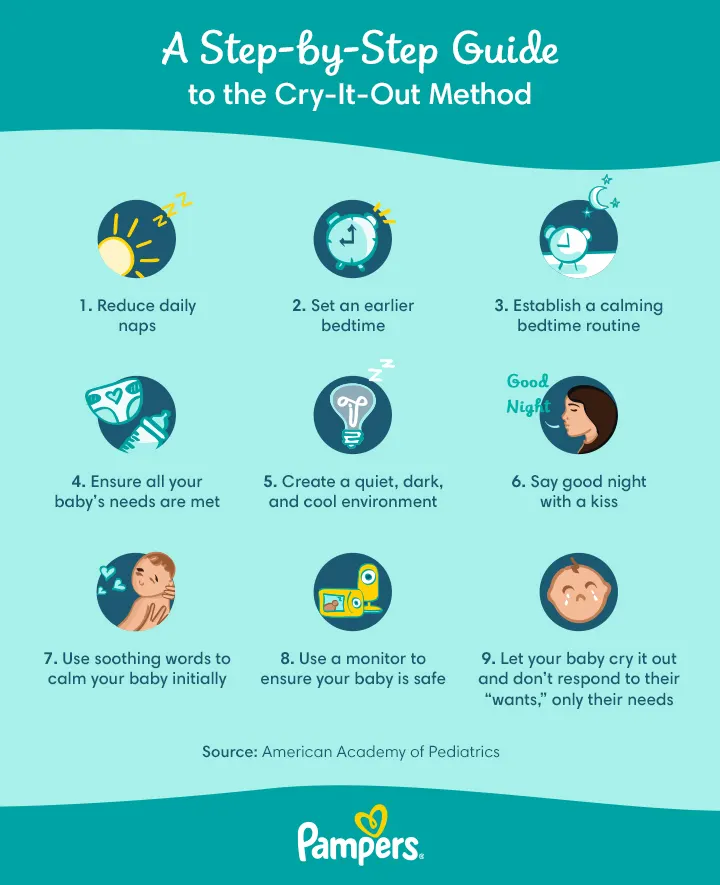
Developing a Toddler Cry It Out Guide
Putting together a plan helps you stay on track. Here is a simple guide outline:
- Decide on the Method: Will you use graduated extinction (checks) or full extinction (no checks)? For toddlers, graduated extinction is often preferred by parents as it feels less absolute.
- Talk About It (During the Day): Explain the new plan to your toddler in simple terms. “Tonight, you will sleep in your bed. Mom and Dad will check on you, but we won’t stay.”
- Perfect the Bedtime Routine: Make it calm, predictable, and about 20-30 minutes long. Example: Bath, PJs, Brush teeth, Stories, Quiet cuddles, Bed.
- Set the Bedtime: Choose a time based on when your toddler usually gets tired.
- Implement the Plan:
- Put your toddler in bed awake after the routine.
- Say goodnight and leave.
- If they cry, start your timer for the first check interval (e.g., 5 minutes).
- When the timer is up, go in for a quick, boring check (1-2 minutes). Do not pick up. Say your simple phrase. Put them back in bed if needed.
- Leave the room.
- If they cry again, set the timer for the next interval (e.g., 10 minutes).
- Repeat, increasing the wait time as planned.
- If they get out of bed between checks, quietly and calmly lead them back to bed without talking much.
- Handle Middle-of-the-Night Awakenings: Use the same method and timing for wake-ups during the night, after ruling out illness or other needs.
- Stay Consistent: Stick to the plan for every nap and every night for at least a week.
- Be Patient: It takes time. Some nights will be harder than others. There might be more crying at first.
This toddler cry it out guide gives you steps to follow. Remember that the specific toddler sleep training cry it out duration (how long they cry in total each night, and how long you wait before checks) is part of the method you choose and how your child responds.
When Cry It Out May Not Be Best
While many experts say it can be safe and effective, there are times when letting toddler cry at bedtime within these methods might not be the best approach:
- Illness: If your toddler is sick, coughing, or has a fever, they need comfort and care, not sleep training. Pause the plan.
- Teething: Teething pain can cause crying. Offer pain relief if needed and comfort your child. You can resume sleep training once teething pain is better.
- Major Life Changes: Moving house, a new sibling, starting a new school or daycare, parents traveling – these can all cause stress. It is often better to wait until things are settled before starting sleep training.
- Separation Anxiety is High: If your toddler is going through a strong phase of separation anxiety, being left alone, even with checks, might make it worse. Gentler methods focusing on presence might be better initially.
- Parental Discomfort: If you or your partner feel strongly against letting your child cry at all, it will be very hard to stay consistent. It is okay to choose a different method that feels better to you.
- Child is Not Gaining Weight Well: Always rule out hunger issues with a doctor before stopping night feeds in young toddlers or using methods that don’t allow for feeding if needed.
- Your Gut Says No: As a parent, your instincts matter. If something feels wrong or harmful to your child, pause and get help from a sleep consultant or doctor.
A safe amount time toddler cry is tied to the context. If the crying is due to a clear need (pain, illness, fear from a recent change), then leaving them to cry is generally not advised.
Other Ways to Help Toddlers Sleep
If cry it out methods feel wrong or are not working, there are other options.
- Bedtime Fading: As mentioned, this involves putting your child to bed later and slowly moving the time earlier. It reduces crying because you put them to bed when they are truly tired.
- The Chair Method: You sit on a chair next to your child’s bed until they fall asleep. Each few nights, you move the chair closer to the door, until you are out of the room. This involves your presence but teaches them to fall asleep without you right there.
- Stay-in-Room Method: Similar to the chair method, but you might stay in the room the whole night at first, perhaps on a mattress on the floor. You provide comfort but do not get in their bed with them.
- Positive Reinforcement: Focus on rewarding good sleep behaviors. Use a sticker chart for staying in bed or staying quiet.
- Wake-to-Sleep: If your toddler is waking at the same time each night, gently rouse them slightly about 15-30 minutes before the usual wake-up time. This can sometimes reset their sleep cycle.
Finding the right method depends on your child’s age, temperament, and your family’s needs and comfort level. What works for one family might not work for another.
Monitoring Success and Problems
How do you know if the sleep training is working? How do you know if the toddler sleep training cry it out duration is appropriate?
- Crying Decreases: The first few nights are often the hardest. Crying should get less in length and intensity over 3-7 nights.
- Falling Asleep Faster: Your toddler should start falling asleep more quickly at bedtime.
- Fewer Night Wakings: They should start sleeping for longer stretches or through the night.
- Better Mood During the Day: When well-rested, toddlers are typically happier, less fussy, and have fewer meltdowns.
- Your Family Is Getting More Sleep: Parents need sleep too! If the method is working, you should be getting more rest.
Signs that the method might NOT be working or might need adjustment:
- Crying Does Not Decrease: If after a week, the crying is just as long and intense every night.
- Crying Increases: If your child seems more distressed over time, not less.
- New Problems Start: Like increased separation anxiety during the day, though this is rare if the method is done with consistency and love during the day.
- Your Gut Feels Wrong: Trust your instincts.
If things are not getting better after 7-10 days of consistent effort, it might be time to try a different method, adjust the current one, or seek help from a sleep consultant or doctor.
Fathoming the Toddler Cry It Out Guide Summary
Let’s recap the key points when thinking about letting toddler cry at bedtime within a structured plan:
- It’s a Method, Not Neglect: CIO or graduated extinction is a planned approach to teach a skill.
- Age Matters: Toddlers require different strategies than babies (dealing with getting out of bed, communication). The CIO method toddler age is typically 12+ months.
- Consistency is King: Whatever method you choose, you must stick to it every night (and naps).
- Timing is Part of the Plan: Toddler sleep training cry it out duration within methods like Ferber involves planned waiting times that increase. There isn’t one “safe amount time toddler cry” in minutes for all, but it should not involve hours of intense crying night after night.
- Checks Are Quick and Boring: If using graduated extinction, checks should be short, calm, and avoid picking up.
- Preparation is Key: Have a solid bedtime routine and a sleep-friendly room.
- It’s Not For Every Child: Do not use these methods if your child is sick, in pain, or going through a major stressful change.
- Look for Progress: Crying should decrease over a few nights if the method is working.
- Trust Your Instincts: If it feels wrong, it’s okay to stop and find another way.
- Help is Available: Sleep consultants and doctors can offer support.
The question of “How long to let toddler cry it out safely” depends on the method, your child’s response, and your comfort level within a structured plan aimed at teaching independent sleep. It is about allowing brief, controlled crying that lessens over time, not ignoring a child in true distress for extended periods.
Frequently Asked Questions
h4: Is letting my toddler cry at bedtime harmful in the long run?
Most experts agree that structured, short-term sleep training methods involving some crying are not harmful to attachment or long-term emotional health for most healthy toddlers. Good sleep, which these methods aim for, is very important for a child’s health and mood.
h4: How long does the crying usually last with methods like Ferber?
The most intense crying usually happens during the first 2-3 nights. After that, crying typically decreases in length and intensity each night as the toddler learns the new skill. If crying does not decrease after a week, the method might not be working or needs adjustment.
h4: What do I do if my toddler keeps getting out of bed?
This is common with toddlers! If using a method with checks, calmly and quietly lead them back to bed each time you check on them. If not using checks, you still need a plan. This might involve repeatedly leading them back to bed with minimal interaction until they stay. Safety gates on the door might be needed initially, but the goal is for them to choose to stay in bed.
h4: When should I stop using cry it out?
You should stop if your child is sick, in pain (like bad teething), or if your family is going through a major stressful event. You should also consider stopping or changing methods if the crying is not decreasing after about a week of consistent effort, or if it just feels wrong to you as a parent.
h4: Can I use cry it out for naps too?
Yes, many parents use the same sleep training method for both nights and naps. However, nap training can sometimes be harder than night training. Be just as consistent with naps as you are with nights.