
Image Source: pbs.twimg.com
Why Football Is Better Than Soccer: The Real Debate
What makes American football better than soccer? American football is often considered better than soccer due to its strategic complexity, explosive scoring, intense physicality, and unique fan experience.
The eternal debate of American football vs soccer rages on in sports discussions worldwide. While both games are beloved by millions, a closer look reveals distinct qualities that elevate American football, or “football” as it’s known in the United States, above its globally dominant counterpart. This isn’t just about differing opinions; it’s about examining the core elements that make a sport compelling, exciting, and ultimately, superior. From the strategic chess match played out on the gridiron vs pitch to the sheer spectacle of football scoring, American football offers a brand of entertainment that soccer, despite its merits, simply cannot match.
The Strategic Depth of the Gridiron
One of the most compelling arguments for American football’s superiority lies in its intricate strategic depth. Unlike the flowing, often improvisational nature of soccer, American football is a game of meticulously planned plays, counter-plays, and adjustments. Every snap of the ball is the culmination of hours of study, practice, and whiteboard sessions.
Playbook Mastery
Consider the sheer volume and complexity of a football playbook. Each team has hundreds, if not thousands, of distinct plays, categorized by formation, personnel, and situation. Coaches and players must not only memorize these plays but also understand the countless variations and the precise execution required for each. This level of detailed planning and execution is a hallmark of elite competition and a significant differentiator from soccer.
Offensive and Defensive Chess
The football physicality is undeniable, but it’s the intelligent application of that physicality within a strategic framework that truly sets the sport apart. Offenses aim to create mismatches, exploit defensive weaknesses, and gain yardage through a combination of powerful runs and precise passes. Defenses, conversely, must anticipate offensive intentions, disguise their formations, and execute tackles with ferocious efficiency. This constant battle of wits, where each side attempts to outmaneuver the other, is a captivating element that keeps fans engaged.
Special Teams: The Unsung Heroes
Beyond offense and defense, American football features the crucial element of special teams. Field goals, extra points, punts, and kickoffs all involve unique strategies and highly specialized athletes. A perfectly executed special teams play can significantly shift momentum, demonstrating a further layer of strategic consideration that is largely absent in soccer.
Explosive Scoring and Constant Excitement
While soccer’s beauty can lie in its low-scoring thrillers, American football’s scoring system offers a more consistent and explosive form of excitement. The ability to score points through touchdowns, field goals, and even safeties creates a dynamic ebb and flow that keeps fans on the edge of their seats.
The Touchdown Spectacle
A touchdown in American football is a significant event. It’s often the result of a sustained drive, a moment of individual brilliance, or a perfectly executed team play. The celebration, the momentum shift – it’s a cathartic release of energy that punctuates the game. In contrast, scoring a goal in soccer, while momentous, is less frequent, and the build-up can sometimes feel longer.
Field Goals and the Tactical Advantage
Field goals add another dimension to scoring. They are not just consolation prizes; they are strategic decisions. A coach might opt for a field goal attempt in a situation where a touchdown seems unlikely, demonstrating a pragmatic approach to accumulating points. This tactical element, the calculated risk of attempting a kick from distance, adds another layer of suspense.
Football Scoring vs. Soccer’s Low-Scoring Nature
Let’s directly compare football scoring with soccer. A typical NFL game might see scores in the range of 20-30 points per team. This means there are multiple scoring opportunities throughout the game. Soccer games, on the other hand, often end with scores like 1-0 or 2-1. While a single goal can be incredibly impactful, the scarcity of scoring can sometimes lead to periods of less dynamic action, particularly in soccer defensive play.
The Unique Physicality and Athleticism
The physical demands of American football are unparalleled in most other sports. Players are conditioned for explosive bursts of speed, immense strength, and remarkable resilience. This physicality is not just for show; it’s integral to the game’s structure and excitement.
The Intensity of the Gridiron
The collision of players on the gridiron is a visceral experience. Tackles are forceful, blocks are brutal, and the sheer athletic power on display is awe-inspiring. This intensity, while requiring strict safety protocols, contributes to the game’s dramatic flair.
Soccer Athleticism vs. Football Physicality
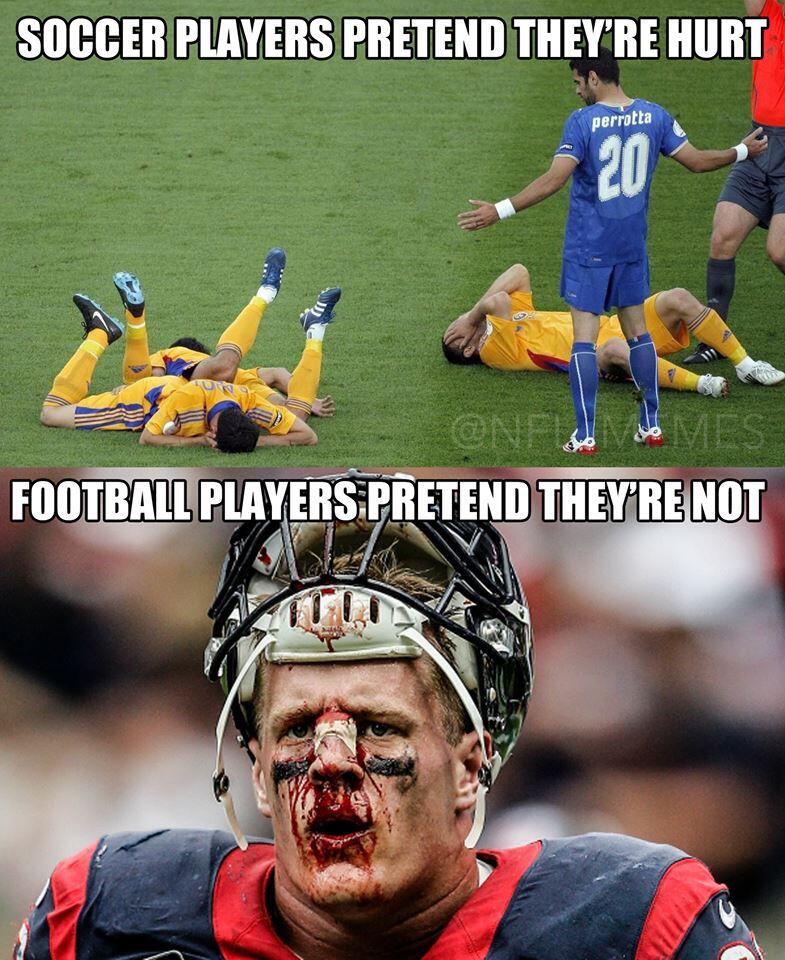
While soccer athleticism is undeniable, focusing on endurance and agility, football physicality is a different beast. Football players are specialized athletes trained for strength, power, and the ability to absorb and deliver impact. Quarterbacks, receivers, running backs, linemen – each position demands a unique blend of athleticism and brute force. This diversity of physical requirements within a single sport is remarkable.
The Element of Controlled Violence
There’s a certain art to the physicality of American football. It’s about applying force strategically and safely (as much as possible). The controlled violence, the precise application of power in a block or a tackle, is a fascinating aspect of the game. It’s not just about aggression; it’s about controlled, purposeful physical engagement.
The Spectacle and Fan Experience
The football fan experience is a cultural phenomenon. From the roar of the crowd in a packed stadium to the camaraderie of watching with friends, it’s an immersive and often communal event. The NFL, in particular, has perfected the art of game-day entertainment.
Game-Day Rituals
Football is more than just a game; it’s often a weekend ritual. Tailgating, team jerseys, passionate chants – these elements create a vibrant atmosphere that amplifies the excitement of the game itself. The build-up to a game, the pre-game analysis, and the post-game dissection all contribute to a rich fan culture.
NFL vs. Premier League: A Tale of Two Atmospheres
Comparing the NFL vs Premier League fan experiences highlights key differences. The Premier League boasts passionate, often vocal, fans with deep-seated club loyalties. However, the NFL offers a more structured, event-driven experience. The halftime show, the elaborate video boards, the synchronized cheers – these elements are designed to maximize entertainment throughout the entire event.
The Immersive Nature of Football Entertainment
The production value of an NFL game is second to none. Instant replays, expert commentary, and graphics that break down plays in detail all enhance the viewing experience. This level of polish contributes significantly to the overall football entertainment value. While the Premier League has its own unique charm, the sheer scale and theatricality of NFL broadcasts are often more captivating for a broader audience.
Football Strategy: A Deeper Dive
Let’s delve further into the nuances of soccer strategy versus American football strategy. Soccer’s strategy often revolves around possession, passing triangles, and exploiting space. It’s a game of continuous movement and strategic positioning.
Offensive Formations and Play Calling
In American football, offensive formations are highly specific and serve distinct purposes. A “I-formation” signals a run-heavy approach, while a “shotgun” formation often indicates a passing play. The play calling itself is a constant strategic battle. Will the coach call a run up the middle, a screen pass, or a deep bomb? The anticipation of these decisions is a major part of the game’s appeal.
Defensive Schemes and Blitz Packages
Defensively, teams employ various schemes like a “4-3” or a “3-4” defense, each with its own strengths and weaknesses. The art of the blitz – sending extra defenders to pressure the quarterback – is a high-risk, high-reward strategy that can drastically alter the course of a game.
Adapting to Opponents
Coaches spend countless hours scouting opponents, identifying their tendencies and vulnerabilities. This preparation allows for game plans that are specifically tailored to neutralize a particular team’s strengths and exploit their weaknesses. This level of granular strategic adaptation is a defining feature of American football.
Scoring Nuances: More Than Just Touchdowns
While touchdowns are the most exciting way to score in football, other scoring methods add to the game’s strategic complexity.
Field Goals: The Crucial Three Points
A field goal, worth three points, can be a game-changer. The decision to attempt a field goal versus going for it on fourth down is a significant strategic choice that often hinges on field position, game situation, and the kicker’s reliability.
Safeties: A Rare but Impactful Event
A safety, worth two points, occurs when an offensive player is tackled in their own end zone or commits a penalty there. Safeties are relatively rare but can provide a significant momentum swing and a much-needed boost in points.
Conversion Plays: Adding Another Layer of Strategy
After a touchdown, teams have the option to attempt an extra point (worth one point) or a two-point conversion (worth two points). This choice adds another strategic layer, especially in close games where every point counts.
The Athleticism Spectrum: Power vs. Endurance
It’s important to acknowledge the incredible soccer athleticism. Players possess remarkable cardiovascular endurance, agility, and ball control. The ability to maintain peak performance for 90 minutes, covering vast distances, is a testament to their conditioning.
Specialized Roles in Football
However, football’s athleticism is characterized by its specialization. Linemen are giants of strength and leverage, while wide receivers showcase explosive speed and acrobatic catching ability. Running backs require a unique combination of power, agility, and vision. This diversity of athletic requirements within a single sport is compelling.
Football vs. Soccer Defensive Play
In soccer defensive play, the focus is often on positioning, tackling, and intercepting passes. It’s a more fluid and less physically confrontational style of defending compared to American football. Football defense, on the other hand, involves powerful tackles, precise pursuit angles, and the ability to physically overpower offensive players. The nature of contact and the strategies employed in defense are vastly different and contribute to football’s unique appeal.
The Entertainment Value: A Comprehensive Package
Ultimately, the discussion of why football is better than soccer often comes down to the overall football entertainment value.
The Thrill of Every Play
In American football, almost every play has the potential for a game-changing moment. A long pass, a powerful run, a crucial defensive stop – these events keep the audience engaged from start to finish.
Storytelling Through the Game
The stop-and-start nature of football allows for compelling narratives to unfold. The drama of a close game, the comeback victory, the individual heroics – these elements are amplified by the game’s structure.
A Global Spectacle
While soccer is undeniably a global phenomenon, the NFL has carved out a significant international presence. The Super Bowl, in particular, is one of the most-watched sporting events in the world, showcasing the broad appeal of American football. The intensity of the NFL vs Premier League rivalry extends beyond just the on-field action, encompassing the cultural impact and fan engagement of each league.
Conclusion: A Matter of Preference, But Football Reigns Supreme
While both American football and soccer are exceptional sports that demand skill, strategy, and athleticism, the debate over which is “better” often leans towards American football due to its unique blend of strategic complexity, explosive scoring, intense physicality, and unparalleled fan experience. The intricate play-calling, the calculated risks, and the sheer power on display create a spectacle that is both intellectually stimulating and viscerally thrilling. While soccer offers its own brand of elegance and endurance, the comprehensive entertainment package of American football, from the nail-biting finishes to the strategic masterclasses, ultimately positions it as the superior sport for many.
Frequently Asked Questions (FAQ)
Q1: Is American football more popular than soccer globally?
A1: No, soccer is significantly more popular than American football globally. Soccer has billions of fans worldwide, whereas American football’s popularity is primarily concentrated in North America, although its international following is growing.
Q2: Which sport requires more athleticism?
A2: Both sports require incredible athleticism, but in different ways. Soccer demands exceptional cardiovascular endurance and agility for sustained play over 90 minutes. American football requires explosive power, strength, agility, and specialized skills for brief, intense bursts of action.
Q3: Why do American football games have so many breaks in play?
A3: The breaks in play in American football are crucial for strategic adjustments, player substitutions, and allowing for the complex execution of pre-determined plays. These pauses are integral to the game’s strategic depth and entertainment.
Q4: Is the physicality of American football dangerous?
A4: Yes, the physicality of American football carries inherent risks of injury. However, significant advancements in safety equipment, training, and rule modifications have been implemented to mitigate these risks.
Q5: Which sport has a higher scoring rate?
A5: American football generally has a higher scoring rate than soccer. This is due to different rules regarding how points are awarded and the offensive nature of the game’s structure.