
A fantasy football auction draft is a thrilling way to build your team. What is a fantasy football auction draft? It’s a draft where each manager has a set budget (usually $200) to bid on players. Can I win with a different strategy? Absolutely, as long as your strategy fits your league’s specific fantasy football auction rules and your personal approach. Who is the best at auction drafts? That’s a matter of debate, but successful drafters are those who prepare, adapt, and manage their auction draft budget effectively.
This comprehensive fantasy football auction draft guide will equip you with the knowledge and tools to dominate your league. We’ll cover everything from pre-draft preparation to in-draft tactics, ensuring you grasp the nuances of this exciting format and leave with the best auction draft strategy.
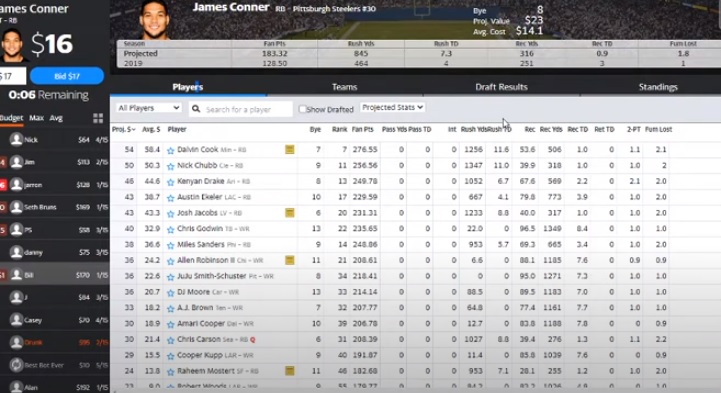
Image Source: footballabsurdity.com
Preparing for Your Auction Draft
Success in an auction draft hinges on meticulous preparation. Going in blind is a recipe for disaster. Here’s how to get ready:
1. Know Your League’s Fantasy Football Auction Rules
This is the absolute bedrock of your preparation. Every league can have slight variations, and knowing them is crucial.
- Budget: What is the total budget for each team? (e.g., $200, $150).
- Roster Size & Positions: How many players must you draft at each position (QB, RB, WR, TE, K, DEF, Flex, Bench)? This directly impacts how many players you’ll need and, therefore, how you allocate your budget.
- Keeper Rules: Are there any keepers allowed? If so, how many, and what’s their cost? This can dramatically alter player values, as a player you might otherwise avoid could be a steal if they’re a cheap keeper.
- Contract/Salary Cap (Less Common): Some leagues have more complex salary cap systems. Make sure you understand them fully.
- Blind Bidding vs. Open Bidding: Most leagues use open bidding, but it’s worth confirming.
2. Develop a Pre-Draft Player Ranking and Auction Draft Budget Allocation
This is where you start assigning real-dollar values to players. Don’t just rely on standard rankings; you need to create your own auction draft player values.
Creating Your Auction Draft Player Values
- Tiered Approach: Don’t just rank players 1 through 300. Group players into tiers. All players within a tier should have a similar perceived value. This helps you avoid overspending on one player when another of similar value is available.
- Positional Scarcity: Identify positions with less depth. These players will command higher prices. Quarterbacks and tight ends often fall into this category in some leagues. Running backs and wide receivers can also become scarce if you wait too long.
- Positional Tiers and Target Prices: Based on your league’s roster requirements, create target prices for players at each position. This isn’t a rigid rule, but a guideline. For example, in a $200 league, you might decide your top 3 RBs should cost $50-$70 each, your top WRs $40-$60, and so on.
- “Set-It-and-Forget-It” Players: Identify a few players you absolutely want and assign them a maximum dollar amount you’re willing to spend, even if it means overpaying slightly. This prevents you from losing out on your top targets due to indecision.
- Budget for Draft Picks: Don’t forget to allocate money for your later-round picks. You’ll need to fill out your bench with players who have upside, even if they aren’t household names. Budgeting $1-$5 for your last 5-10 roster spots is a reasonable starting point.
Sample Auction Draft Budget Allocation (Hypothetical $200 Budget)
| Position | Top Tier (1-2) | Second Tier (2-3) | Mid-Tier (3-4) | Depth/Bench | Total Target |
|---|---|---|---|---|---|
| QB | $30-$40 | $15-$25 | $5-$10 | $0-$5 | $50-$80 |
| RB | $50-$70 | $30-$45 | $15-$25 | $5-$10 | $100-$150 |
| WR | $40-$60 | $25-$35 | $15-$20 | $5-$10 | $85-$125 |
| TE | $20-$30 | $10-$15 | $5-$8 | $0-$5 | $35-$58 |
| K/DEF | $2-$5 | $1-$3 | $0-$1 | $0-$1 | $3-$10 |
Note: These are sample ranges. Your actual allocation will depend heavily on your league’s scoring, roster, and player availability.
3. Research Auction Draft Rankings
While you should create your own, consulting reputable auction draft rankings from various fantasy football experts is invaluable. Look for rankings specifically designed for auction drafts. These often provide dollar values or a tiered system that helps you gauge market prices.
- Identify ADP (Average Draft Position) Discrepancies: See where your preferred players are generally being valued by others. This can give you clues about potential bidding wars.
- Look for Undervalued Players: Auction rankings often highlight players who are consistently ranked higher than their perceived market value.
4. Leverage Mock Drafts
There’s no substitute for practice. Participate in as many mock auction drafts as possible.
- Simulate Real Scenarios: Try to replicate your league’s rules and budget in your mock drafts.
- Test Different Strategies: Experiment with spending early, saving money, targeting specific positions, or fading certain expensive players.
- Observe Bidding Patterns: Pay attention to how other virtual managers bid. Who inflates prices? Who hoards their money? This is crucial for understanding auction dynamics.
Mastering the Auction Draft: Your Fantasy Football Auction Strategy
Now that you’re prepared, let’s dive into the art of the auction itself.
5. Punting Positions: A Key Auction Draft Tip
A popular and often effective strategy is to “punt” certain positions. This means you intentionally decide not to draft a top-tier player at a specific position, saving your budget for other areas of need.
- Why Punt? It allows you to load up on elite talent at other positions, creating a significant talent advantage. If you can get two top-tier RBs for $100, and another manager spends $100 on one RB, you’ve gained a significant edge.
- Common Punting Positions:
- QB: Many managers punt QB by waiting until the end and grabbing two solid, but not elite, quarterbacks. This is viable in leagues where QB scoring isn’t overly concentrated.
- TE: Tight end depth is often scarce. Punting TE can mean waiting until the late rounds and grabbing a TE with upside.
- Kicker/Defense: These are almost always punted positions, drafted in the final rounds for minimal cost.
- Risks: Punting a position means you’re relying on later-round picks or waiver wire pickups to fill that role adequately. If those players don’t pan out, your team can suffer.
6. Budget Management: The Art of the Auction Draft Budget
Your $200 (or whatever your league’s budget is) is your lifeblood. How you spend it determines your fate.
- Don’t Blow Your Load Early: Resist the urge to get into bidding wars for the first few players that come off the board if they significantly overvalue your target price. There will be other opportunities.
- Know When to Overspend (Slightly): If a player you’ve identified as a cornerstone of your team is a bit pricier than you anticipated, it might be worth a slight overspend to secure them, especially if they represent a significant tier drop-off after them.
- Save Money for Bench Depth: A star-studded starting lineup with a weak bench is vulnerable to injuries and bye weeks. Ensure you have enough money left to grab players with upside for your bench.
- The “Anchor” Player: Consider spending a significant portion of your budget on 2-3 elite players across key positions (like RB and WR). These players form your “anchor” and provide a strong foundation.
- Don’t Be Afraid to Spend Your Last Dollar: If you have $5 left and there’s a player you want for your bench, spend it. Don’t leave yourself with unusable cash.
7. Player Nomination Strategy
How you nominate players is as important as how you bid.
- Nominate Players You Don’t Want: This is a classic auction draft tip. Start by nominating players who are highly overpriced in your rankings or players you have no intention of drafting. This forces other managers to spend their early cash and reveals their perceived values.
- Nominate Players to Trigger Bidding Wars: If you notice two other managers are desperate for a specific player, nominate them to force them to spend big.
- Nominate Players to Control the Draft Flow: Nominate a player at a position where you want to get a specific player or avoid the next tier of players.
- Don’t Nominate Your Top Targets Too Early: Unless you’re trying to get a specific player at a bargain price (which is risky), hold off on nominating your absolute must-haves until later in the draft when other managers might have less money or have filled their needs.
- Be Mindful of the “Last Man Standing”: If you’re near the end of the draft and have a lot of money left, you can nominate a player you think will be bid up to $1, knowing you can outbid most people or get them at a discount if others are tapped out.
8. Bidding Strategy: How to Win Fantasy Football Auction
This is where the rubber meets the road.
- Set Your Max Bid: Before a player is nominated, know the absolute maximum you’re willing to spend on them. Stick to it.
- Don’t Get Emotional: Bidding wars can be addictive. Don’t get caught up in the adrenaline and overspend. If a player is going for $10 more than your max, walk away.
- Watch Other Managers’ Budgets: Keep an eye on how much money other managers have left. This information is crucial for determining your bidding limits. If a manager has $100 left and you only have $20, you know you likely can’t win a bidding war for an expensive player against them.
- Leverage Your Knowledge of Auction Draft Player Values: If you see a player going for significantly less than their perceived value, jump in. Conversely, if a player is being wildly overvalued, let others waste their money.
- The “Quick Bid”: Sometimes, a quick, decisive bid can deter other potential bidders who are on the fence.
- The “Stare Down”: If you’re in a bidding war and the price reaches your max, don’t immediately concede. Wait until the last second. Sometimes, the other bidder will stop at their perceived limit, or you might get lucky and they forget to bid again.
- Consider the “Next Best Player”: If a bidding war escalates beyond your comfortable limit, immediately pivot to your next target. Is the player you’re fighting for significantly better than the next player on your list? If not, it might not be worth it.
- The Art of the “Feeler Bid”: Place a bid just to see what happens. If no one else bids, you might get a player for cheaper than you expected. If others jump in, you can easily walk away.
9. Roster Construction and Filling Needs
Once the draft is underway, you need to adapt your initial plan.
- Fill Core Needs First: Secure your top players at the most important positions (usually RB and WR) early, based on your rankings and budget.
- Don’t Reach for a Position: If you miss out on your top QB target and the next tier of QBs isn’t appealing, don’t force it. You can always grab a QB later.
- Bench Depth is Crucial: Look for players with upside on your bench. These are players who could break out or become valuable starters if injuries occur. Don’t just draft players because they have a cool name; consider their role, talent, and potential.
- Target Handcuffs: For your elite RBs, consider drafting their primary backup (a “handcuff”) if they are available at a reasonable price. This guarantees you a starter if your main guy goes down.
- Be Flexible: Your pre-draft rankings are a guide, not a scripture. The draft will evolve, and you must be prepared to adjust your strategy on the fly. If a player you didn’t expect to be available falls to you at a great price, snatch them up.
10. Late-Round Strategy and Final Picks
The endgame of the auction draft is as important as the beginning.
- Manage Your Remaining Budget: By the late rounds, you should have a good idea of your starting lineup and a few bench players. You’ll likely have limited funds.
- Target High-Upside Players: Look for players with a clear path to playing time or a chance to be a volume-based player. These are often rookies, players on new teams, or players in historically productive offenses.
- Draft Your Kicker and Defense: These positions are typically drafted last and cost very little. Don’t overspend here. Grab a solid option and move on.
- Don’t Forget Your Last Roster Spot: Even with minimal funds, try to draft a player who has some speculative upside.
Advanced Auction Draft Tactics
For those looking to truly master the auction draft, consider these advanced moves.
11. Reading the Room and Other Managers
The best auction drafters are astute observers.
- Identify Overpayers: Who in your league consistently bids too high for certain types of players? Use this information to your advantage. They are essentially giving you free money for your team.
- Identify Underpayers: Who is consistently getting great value? Be wary of them, as they might be making smart decisions.
- Spotting Desperation: If a manager has only one RB left to draft and a player they desperately need at that position is nominated, they will likely pay a premium.
- Recognizing “Tiers” of Scarcity: As certain positions get thinned out, the remaining players at those positions will see their prices inflate. Be aware of when this happens.
12. The “Tired Drafter” Play
As the auction progresses, fatigue can set in for some managers.
- Be More Alert: Stay engaged. When others start to lose focus, you can gain an edge.
- Exploit Overspending: Managers who are tired might overspend on players they don’t truly need just to get through the draft.
13. Leveraging Your Auction Draft Order (The Nomination Advantage)
While there isn’t a set “auction draft order” like in a snake draft, the person who nominates the first player has a significant advantage. This rotates throughout the draft.
- Early Nomination Power: The manager who nominates the first player gets to set the initial market. They can nominate a player they want to avoid bidding on, or a player they believe will be overvalued.
- Late Nomination Power: In the later stages, if you have a lot of money left, you can nominate a player you think others will be forced to bid on to fill out their rosters, potentially driving up the price for them and leaving you with the funds for a final quality pick.
Frequently Asked Questions (FAQ) About Auction Drafts
Q: How much should I spend on my first player in an auction draft?
A: There’s no single answer, but a common approach is to spend around 20-30% of your budget on your first two or three players. However, this can vary based on your overall strategy and how the draft unfolds. Some managers prefer to spend less initially and build a deeper bench, while others aim for elite talent early.
Q: Is it better to spend big on a few stars or get more depth?
A: This is a perennial debate in auction drafts. Generally, having a few elite players is crucial, but a strong bench is also vital for navigating injuries and bye weeks. The best strategy often involves finding a balance – securing 2-3 difference-makers while ensuring you have enough budget left to draft solid depth at other positions.
Q: What if a player I want is nominated and the bidding goes way over my budget?
A: This is a common scenario. The key is to have a predetermined maximum bid for every player and stick to it. If a bidding war erupts beyond your comfort level, simply walk away. There will be other players and other opportunities. Pivot immediately to your next target.
Q: How do I value players for an auction draft?
A: Player valuation for an auction draft involves looking beyond standard rankings. Consider positional scarcity, a player’s role, their supporting cast, and their potential for improvement. Creating your own dollar values or tiers based on your league’s specific rules and scoring is essential.
Q: When should I draft Kickers and Defenses?
A: These positions are almost universally drafted in the final rounds of an auction draft. They offer minimal positional advantage early on and are easily replaceable via the waiver wire. Save your budget for skill positions and draft your K and DEF with your remaining pocket change.
Conclusion
Dominating a fantasy football auction draft requires more than just picking the best players. It demands a well-thought-out strategy, diligent preparation, and the ability to adapt on the fly. By mastering your auction draft budget, understanding player values, and employing smart nomination and bidding tactics, you can build a championship-caliber team and truly win your fantasy football auction. Good luck, and happy drafting!