
What makes American football superior to soccer? American football offers a compelling blend of intense strategy, raw physicality, and explosive scoring opportunities that many find more captivating than the often slower-paced, lower-scoring nature of soccer. The complexity of play, the distinct roles of players, and the constant strategic adjustments by coaches create a unique and thrilling spectacle.
The debate between the merits of American football and soccer has raged for decades, with passionate fans on both sides championing their preferred sport. While soccer, or football as it’s known globally, boasts immense popularity and a rich history, American football presents a distinct set of attributes that arguably elevate its entertainment value and overall appeal. This article delves into the top reasons why many believe American football reigns supreme.
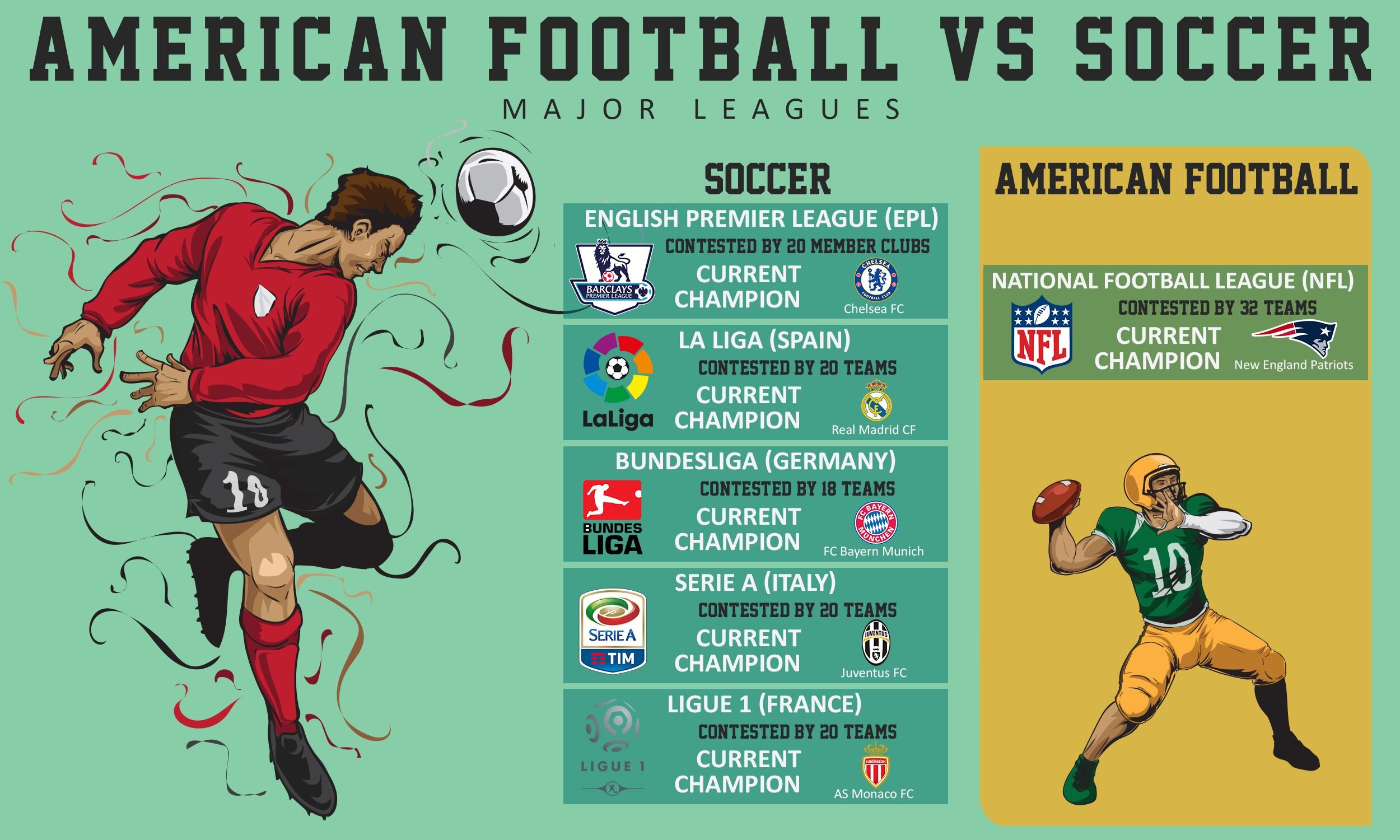
Image Source: images.squarespace-cdn.com
The Thrill of Strategic Depth
American football is a game of chess on a grass field. The intricate strategy involved in every play is unparalleled. Coaches meticulously plan offensive and defensive schemes, considering down and distance, field position, opponent tendencies, and player matchups. Each snap is a calculated risk, a tactical maneuver designed to gain an advantage.
Offensive Playbook Complexity
- Play Calling: Teams have extensive playbooks filled with hundreds of different formations, runs, and passes. The quarterback, often the “coach on the field,” must make split-second decisions based on the defense’s alignment.
- Blocking Schemes: Offensive linemen and tight ends must execute precise blocking assignments to protect the quarterback or open holes for running backs.
- Route Combinations: Receivers run a variety of routes, designed to exploit defensive coverages and create separation.
Defensive Scheme Ingenuity
- Blitz Packages: Defensive coordinators devise creative ways to pressure the quarterback, often sending extra defenders to disrupt the offense.
- Coverage Variations: Defenses employ different coverages, such as man-to-man or zone, to prevent big plays and force turnovers.
- Personnel Adjustments: Teams frequently substitute defensive players based on the offensive formation and the specific situation.
The constant back-and-forth of tactical adjustments and counter-adjustments creates a dynamic intellectual challenge for both players and spectators. Soccer, while possessing strategic elements, often relies more on fluid movement and individual skill within a less structured framework.
Unmatched Physicality and Athleticism
American football is undeniably a sport that demands immense physicality and diverse athleticism. Players are conditioned to endure brutal hits, showcase incredible strength, speed, agility, and endurance.
Player Specialization and Demands
- Linemen: Require immense strength and power for blocking and pushing.
- Running Backs: Need a combination of speed, agility, and toughness to break tackles.
- Wide Receivers: Possess speed, precise route-running ability, and the capacity to make contested catches.
- Quarterbacks: Need arm strength, accuracy, mobility, and the mental fortitude to lead the team.
- Defensive Players: Must have the physicality to tackle, the speed to chase down ball carriers, and the awareness to cover receivers.
The sheer impact of collisions in American football, while often criticized, is also a significant part of its appeal for many. It represents a test of will and physical dominance that is less pronounced in soccer. The ability of athletes to perform at such a high level while absorbing constant physical punishment is a testament to their dedication and training.
The Excitement of Scoring
One of the most significant differentiators is the way scoring occurs. American football delivers frequent and impactful scoring moments, primarily through touchdowns.
The Impact of Touchdowns
A touchdown is the ultimate prize in American football, worth six points, and often followed by a crucial extra point or a challenging two-point conversion attempt. These high-point plays dramatically shift momentum and create immediate excitement. The anticipation leading up to a potential touchdown, the execution of the play, and the ensuing celebration are visceral and deeply satisfying for fans.
Scoring Frequency and Significance
While soccer can have periods of intense offensive pressure, goals are relatively rare, often decided by a single point. In American football, the scoring is more consistent, with multiple touchdowns and field goals punctuating the game. This higher scoring frequency means that the outcome is often in doubt until the final seconds, and comebacks are more plausible.
Comparison of Scoring:
| Sport | Primary Scoring Event | Points for Primary Event | Typical Game Score Range (Recent Seasons) |
|---|---|---|---|
| American Football | Touchdown | 6 | 20-30 points per team |
| Soccer | Goal | 1 | 1-3 goals per team |
This difference in scoring naturally leads to more frequent moments of jubilation and dramatic swings in the game’s narrative.
The Flow of the Game: Stops and Starts for Strategic Advantage
The nature of game flow in American football, with its deliberate stops and starts between plays, allows for deep strategic immersion. Each play is a self-contained event, a mini-drama with a clear objective and outcome. This structure provides ample opportunity for analysis, prediction, and appreciation of the tactical nuances.
Huddles and Play Calling
Between plays, teams huddle to communicate the next offensive or defensive strategy. This pause allows coaches to assess the game situation and make crucial adjustments. For fans, it’s a chance to digest what just happened and anticipate what’s coming next.
Special Teams Plays
The inclusion of special teams—kickoffs, punts, and field goal attempts—adds another layer of strategic complexity and excitement. These units are highly specialized and can dramatically impact field position and scoring. The drama of a long field goal attempt or a game-winning kickoff return is palpable.
While soccer’s continuous flow can be exhilarating, the structured pauses in American football offer a different kind of engagement, one that highlights the intellectual and strategic battle between two coaching staffs.
Coaching Decisions: The Architect’s Influence
The role of coaching decisions in American football is paramount and directly influences the game’s outcome. Coaches are the architects of their teams, making critical calls on play selection, substitutions, and strategic adjustments throughout the game.
In-Game Adjustments
- Offensive Play Calling: A coach might switch from a run-heavy attack to a pass-heavy one based on defensive performance or time remaining.
- Defensive Adjustments: A defensive coordinator might bring more pressure or play softer coverage to counter the opponent’s strengths.
- Clock Management: Deciding when to run the ball, throw incomplete passes, or call timeouts to conserve or use time is a critical coaching skill.
The impact of a brilliant coaching decision or a costly error is often immediately evident, adding a layer of human drama to the game. This direct influence of leadership and strategic foresight is a core appeal of American football.
Spectacle and Entertainment Value
The overall entertainment value of American football is amplified by its dramatic structure, the explosive plays, and the constant tension. The combination of physicality, strategy, and the potential for sudden, game-changing moments creates an engaging spectacle.
Halftime Shows and Fan Experience
Beyond the on-field action, American football games are often elaborate productions. The energy of the crowd, the marching bands, the cheerleaders, and the elaborate halftime shows contribute to a unique fan experience. The build-up to a game, the tailgating culture, and the communal aspect of watching with friends and family all add to the sport’s allure.
Television Production
The way American football is broadcast on television is also highly optimized for entertainment. Multiple camera angles, instant replays, and expert analysis dissect every play, providing viewers with a comprehensive and engaging experience. This makes it easy for even casual fans to follow the action and appreciate the finer points of the game.
The Unique Culture of American Football
American football is deeply ingrained in the unique culture of the United States. From high school Friday nights to college Saturdays and professional Sundays, the sport permeates communities and provides a shared passion for millions.
Community and Identity
The sport fosters a strong sense of community and tribalism. Fans identify with their teams, wearing jerseys and painting their faces, creating a powerful collective identity. This shared experience is a significant part of the sport’s cultural significance.
Media and Narrative
The media coverage surrounding American football is extensive, creating narratives and storylines that captivate audiences. Player biographies, coaching rivalries, and season-long sagas build anticipation and emotional investment. The sport generates constant discussion and debate, further cementing its cultural presence.
Viewership and Global Reach
While soccer is the world’s most popular sport, American football boasts a massive and dedicated viewership within the United States. The NFL is one of the most profitable and influential sports leagues globally, attracting enormous audiences for its regular season games, playoffs, and the Super Bowl.
Dominance in the US Market
American football consistently dominates television ratings in the United States, outpacing all other sports. This indicates a strong preference among a significant portion of the population. The sheer scale of its domestic audience is a testament to its widespread appeal.
Global Growth
While soccer has a head start in global popularity, American football is steadily growing its international footprint. The NFL actively promotes the sport in countries around the world, with international games and increasing fan bases in Europe and Asia. This growing global interest suggests that the sport’s unique appeal is transcending borders.
Frequently Asked Questions (FAQ)
Is American football more popular than soccer worldwide?
No, soccer (football) is the most popular sport globally by a significant margin. However, American football is the most popular sport in the United States.
Why do people find American football more exciting than soccer?
Many find American football more exciting due to its higher scoring frequency, the dramatic impact of touchdowns, the intricate strategy, the physicality of the players, and the explosive nature of individual plays. The stop-and-start game flow allows for tactical analysis and anticipation.
What is the main difference in strategy between American football and soccer?
American football strategy is highly structured and specialized, with distinct play calls and formations for offense and defense. Soccer strategy is more fluid, emphasizing possession, movement, and individual player creativity within a less rigid framework.
How does the physicality of American football compare to soccer?
American football is significantly more physical, involving direct collisions and tackles. Soccer involves physical contact, but the emphasis is on endurance and agility rather than brute force, with fewer high-impact collisions.
What makes a touchdown so important in American football?
A touchdown is the highest-scoring play in American football, worth six points, and it represents the ultimate objective of advancing the ball into the opponent’s end zone. It often leads to dramatic shifts in momentum and game outcomes.
Can I enjoy American football without understanding all the rules?
Yes, you can enjoy American football even without a complete grasp of every rule. The basic objective of scoring touchdowns and the excitement of big plays are easily accessible. As you watch more, your appreciation for the strategy and nuances will grow.