
No, you generally should not wear football cleats for soccer due to significant differences in cleat design, stud patterns, and materials that can impact performance, safety, and adherence to the rules of the game. While both are types of specialized footwear designed for athletic performance, their specific functions dictate distinct features. This article will delve into the nuances of soccer cleats versus football boots, exploring their unique characteristics and why substituting one for the other isn’t advisable.
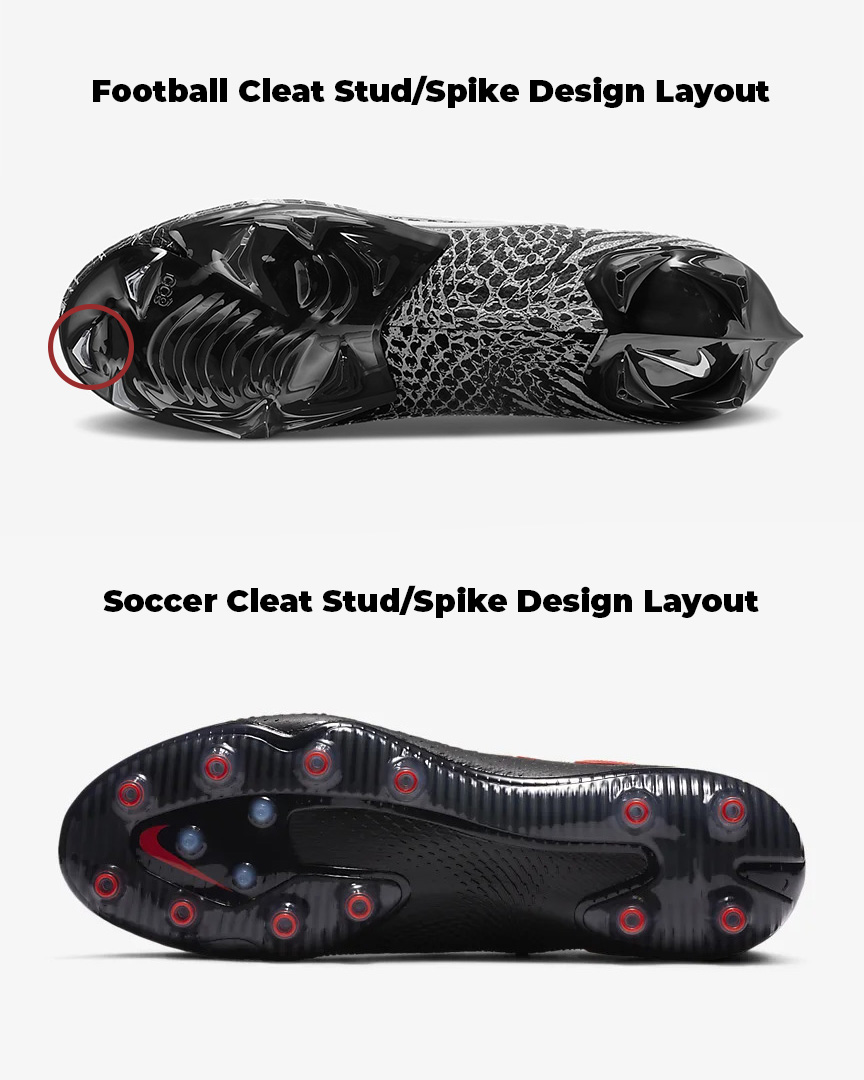
Image Source: juventussandiego.com
Deciphering the Cleat Differences: A Comprehensive Look
When you step onto a sports field, the right footwear is paramount. This is especially true for sports like soccer and American football, where traction, agility, and player safety are critical. While both football boots and soccer cleats share the fundamental purpose of providing grip, their designs are tailored to the specific demands of each sport. Let’s break down the key distinctions that make these two types of athletic footwear so different.
Soccer Cleats: Designed for Agility and Ball Control
Soccer cleats, also known as soccer shoes or football boots (in many parts of the world outside of North America), are engineered with the nuances of the beautiful game in mind. The primary focus is on enabling quick changes in direction, intricate ball control, and precise passing and shooting.
Stud Configuration and Material
The underside of soccer cleats is where some of the most significant differences lie.
- Stud Shape and Placement: Soccer cleats typically feature blunter, more rounded studs or blades. These are strategically placed to allow for maximum ground contact and to facilitate pivoting and quick turns without digging too deeply into the turf, which could lead to ankle injuries. The aim is to provide grip while allowing for smooth rotation.
- Stud Material: Most soccer cleats use hard plastic or rubber for their studs. These materials offer a good balance of durability and flexibility, providing reliable traction on various natural and artificial surfaces.
- Stud Length: Soccer stud lengths are generally shorter than those found on football cleats, especially for general-purpose cleats. This prevents excessive penetration into the ground, which is crucial for maintaining balance during rapid movements.
Upper Construction and Fit
The upper part of soccer cleats is designed to enhance ball feel and touch.
- Lightweight Materials: Soccer cleats are often made from lightweight synthetic materials, premium leathers (like kangaroo leather or calfskin), or modern microfiber fabrics. These materials are chosen for their ability to form to the foot, provide a snug fit, and allow players to feel the ball more effectively.
- Minimal Padding: To promote a closer feel with the ball, soccer cleats typically have minimal padding. The focus is on a streamlined, sock-like fit that hugs the foot.
- Laces: While many soccer cleats use traditional lacing systems for a customizable fit, some models feature laceless designs for an even cleaner striking surface.
Purpose and Performance Benefits
The design of soccer cleats directly contributes to specific on-field actions.
- Agility and Maneuverability: The stud pattern allows for sharp cuts and dodges, essential for dribbling past defenders.
- Ball Control: The smooth upper surfaces and lack of bulky elements facilitate better touch, passing accuracy, and shooting power.
- Speed: Lightweight construction helps players accelerate quickly and maintain speed.
- Injury Prevention: The stud design aims to reduce the risk of ankle rolls by not digging in excessively.
Football Boots: Built for Power and Stability
American football cleats, often referred to as football boots in the context of American football, are designed to support the explosive power, directional changes, and physical contact inherent in the sport. Traction and stability are the primary concerns.
Stud Configuration and Material
The underside of football cleats is typically more aggressive.
- Stud Shape and Placement: Football cleats often feature sharper, more pointed studs, or a combination of bladed and conical studs. These are designed to dig into the turf, providing maximum grip for explosive acceleration and deceleration. The placement of these studs can vary significantly depending on the player’s position.
- Linemen: Often use cleats with a higher number of studs distributed evenly across the sole for maximum stability and to prevent slipping during powerful pushes.
- Skill Positions (e.g., Wide Receivers, Running Backs): May have a more varied stud pattern, sometimes with longer, more pointed studs in the heel for quick bursts of speed.
- Stud Material: Football cleats can use a variety of materials, including hard plastic, metal, or a combination of both. Metal studs, in particular, offer superior grip but are often restricted in lower leagues or on certain types of fields due to safety concerns.
- Stud Length: Football cleats generally have longer and more aggressive studs than soccer cleats. This deep penetration into the ground is crucial for generating force and preventing slippage during powerful movements.
- Heel Spikes: Many football cleats feature a prominent heel spike or an extended heel section with additional studs. This is designed to provide additional leverage and stability during acceleration, especially for running backs and receivers.
Upper Construction and Fit
The upper of football cleats prioritizes support and protection.
- Robust Materials: Football cleats are typically constructed from more durable and supportive materials like synthetic leather, reinforced synthetics, or heavier-duty leathers. These materials are designed to withstand the constant lateral stress and impact of the game.
- Ankle Support: Many football cleats, especially high-tops, offer enhanced ankle support. This is critical for protecting players from the forceful lateral movements and potential tackles that can lead to ankle injuries.
- Padding: Football cleats generally have more padding than soccer cleats, particularly around the ankle and heel, to provide cushioning and protection.
Purpose and Performance Benefits
The design of football cleats directly supports the demands of American football.
- Explosive Acceleration and Deceleration: The aggressive stud patterns and longer studs allow players to dig into the turf for maximum power transfer.
- Stability and Support: The robust construction and, in many cases, high-top design provide essential ankle support and overall foot stability during aggressive movements and contact.
- Traction for Pushing and Blocking: Linemen, in particular, rely on their cleats to maintain a strong base for pushing and blocking.
- Protection: The more substantial construction offers a degree of protection against impacts.
The Crucial Question: Can I Wear Football Cleats for Soccer?
To reiterate the answer concisely: No, you generally should not wear football cleats for soccer. While both are athletic footwear designed for traction, the specific design philosophies behind soccer cleats and football boots are fundamentally different, leading to potential performance limitations and safety risks when one is used for the other’s sport.
Why the “No”? Diving Deeper into the Risks
Let’s explore the specific reasons why swapping your soccer cleats for football cleats (or vice versa) is a bad idea.
Safety Concerns
This is the most critical consideration.
- Ankle Injuries: The longer, sharper, and often metal studs on football cleats are designed to dig deeply into the ground. When a soccer player pivots or changes direction sharply, these studs can get stuck, failing to release from the turf. This can cause the ankle to twist unnaturally, leading to severe sprains or even fractures. Soccer cleats are designed with stud patterns that allow for easier rotation and release, minimizing this risk.
- Knee Injuries: When a cleat gets stuck, the force is transmitted up the leg, potentially leading to knee ligament injuries (like ACL tears) if the knee twists excessively.
- Opponent Injuries: The aggressive nature of football cleats can also pose a danger to other players. Stepping on an opponent with sharp or metal football studs can cause significant lacerations and injuries that would not occur with standard soccer cleats.
Performance Limitations
Beyond safety, performance will also suffer.
- Reduced Agility: The deep-digging nature of football studs can hinder the quick, sharp turns and pivots essential for soccer. You might find yourself slipping less in certain situations but being unable to make those crucial, rapid changes of direction.
- Impaired Ball Control: Football boots are not designed with ball feel in mind. Their bulkier uppers and reinforced construction can make it harder to execute delicate touches, passes, and shots with precision. The ability to feel the ball through your foot is paramount in soccer.
- Uneven Traction: The stud patterns on football cleats are optimized for the straight-line acceleration and deceleration common in football. They may not provide the ideal traction for the lateral movements and constant adjustments required in soccer, potentially leading to slipping in some situations or excessive grip in others.
Rule Violations
In organized soccer leagues, the type of footwear allowed is often regulated.
- FIFA Laws of the Game: Law 4 of the Laws of the Game, concerning Players’ Equipment, states that “Equipment must not have any addition or alteration that might be dangerous to another player.” Football cleats, with their potentially aggressive stud designs, could be deemed dangerous and therefore illegal for play.
- League and Tournament Rules: Specific leagues, tournaments, and even individual clubs may have their own rules about acceptable footwear, often explicitly prohibiting football cleats to ensure player safety.
Soccer Cleats vs. Football Cleats: A Detailed Comparison Table
To further illustrate the differences, let’s look at a direct comparison:
| Feature | Soccer Cleats | Football Cleats |
|---|---|---|
| Primary Purpose | Agility, ball control, quick turns | Power, acceleration, stability, traction |
| Stud Shape | Blunter, rounded, or bladed | Sharper, pointed, or conical, often more aggressive |
| Stud Material | Hard plastic, rubber | Hard plastic, rubber, metal (often restricted) |
| Stud Length | Generally shorter | Generally longer and more varied |
| Stud Pattern | Designed for rotation and release, lateral grip | Designed for maximum ground penetration and grip |
| Heel Spike | Typically absent | Often present, especially for skill positions |
| Upper Material | Lightweight synthetics, leather, microfiber | More robust synthetics, reinforced leather |
| Upper Construction | Minimal padding, streamlined for ball feel | More padding, reinforced for support and protection |
| Ankle Support | Low to medium (most are low-cut) | Medium to high (many are mid-cut or high-cut) |
| Weight | Generally lighter | Generally heavier |
| Flexibility | More flexible, especially in forefoot | More rigid, prioritizing stability |
| Primary Risk | Less aggressive stud patterns (can slip on wet turf) | Ankle sprains, knee injuries due to stud entrapment |
| Allowed in Soccer? | Yes, standard equipment | No, generally prohibited due to safety concerns |
Exploring Specific Footwear Types Within Each Sport
It’s important to note that within both soccer and football, there are specialized types of athletic footwear designed for different playing surfaces and player positions.
Soccer Variations:
- Firm Ground (FG) Cleats: The most common type, designed for natural grass fields. They have a mix of bladed and conical studs.
- Soft Ground (SG) Cleats: Feature longer, metal-tipped studs for exceptionally wet or muddy natural grass pitches. These offer the deepest penetration for maximum grip in soft conditions.
- Artificial Grass (AG) Cleats: Have a larger number of shorter, conical rubber or plastic studs designed to distribute pressure and prevent “clogging” on artificial turf.
- Turf Shoes: These are a popular alternative for playing on artificial turf or hard, dry surfaces. Turf shoes have numerous small rubber nubs instead of traditional studs. They offer good traction without the risk of studs getting stuck. They are an excellent option when traditional soccer cleats are not ideal.
Football Variations:
- Molded Cleats: These have studs permanently attached to the shoe, usually made of plastic or rubber. They are common at lower levels of play and on most surfaces.
- Detachable Cleats: Feature screw-in studs that can be replaced or swapped out, allowing for customization based on field conditions (e.g., longer studs for wet grass).
- High-tops, Mid-tops, and Low-tops: Football cleats come in various heights to offer different levels of ankle support, catering to player preferences and positions.
When Might There Be Confusion?
The primary source of confusion often stems from the term “football boots.” In Europe, Australia, and many other parts of the world, “football” refers to soccer. Therefore, “football boots” in these regions are equivalent to what North Americans call soccer cleats. In North America, “football” refers to American football, and “football cleats” or “football boots” refer to the footwear used in that sport. This linguistic difference can lead to misinterpretations when discussing specialized footwear.
The Bottom Line: Choose the Right Tool for the Job
When it comes to athletic footwear, specialization is key. The distinct demands of soccer and American football necessitate different cleat designs.
- For Soccer: Stick to proper soccer cleats or turf shoes depending on the playing surface. Their design prioritizes your agility, ball control, and, most importantly, your safety by minimizing the risk of stud entrapment and subsequent injuries. Wearing soccer cleats designed for your specific playing surface (FG, SG, AG) will further enhance your performance and comfort.
- For American Football: Use football cleats. Their robust construction, supportive designs, and aggressive stud patterns are built to withstand the rigors of the sport, providing the necessary traction and stability for explosive movements and physical contact.
Investing in the correct specialized footwear for each sport is not just about maximizing performance; it’s a crucial aspect of player safety. While the idea of using one type of cleat for multiple sports might seem convenient, the potential downsides far outweigh any perceived benefits. Always ensure you are using the appropriate athletic footwear for the game you are playing to protect yourself and your teammates.
Frequently Asked Questions (FAQ)
Q1: Are football cleats dangerous for soccer players?
Yes, football cleats can be dangerous for soccer players. Their longer, sharper studs are designed to dig into the turf for maximum grip in football. In soccer, this can lead to the studs getting stuck during sharp pivots, potentially causing severe ankle or knee injuries. They can also injure other players.
Q2: Can I wear soccer cleats for football?
While generally safer than wearing football cleats for soccer, wearing soccer cleats for football is not ideal. Soccer cleats lack the aggressive stud patterns and robust support needed for the explosive power, quick stops, and physical contact in football. You might find yourself slipping more or not getting the stability required.
Q3: What is the difference between soccer shoes and football boots?
In North America, “soccer shoes” are cleats designed for soccer. “Football boots” in this context refer to cleats for American football. However, outside North America, “football boots” are the common term for soccer cleats. The fundamental difference lies in their design, with soccer cleats prioritizing agility and ball control, and American football cleats focusing on power, stability, and aggressive traction.
Q4: Are metal cleats allowed in soccer?
No, metal cleats are generally not allowed in organized soccer play. The Laws of the Game by FIFA prohibit any equipment that could be dangerous to another player, and metal cleats fall into this category due to their potential to cause serious injury.
Q5: What kind of shoes should I wear for playing soccer on artificial turf?
For artificial turf, you should wear soccer cleats specifically designed for artificial grass (AG) or turf shoes. AG cleats have more numerous, shorter studs to prevent snagging and distribute pressure. Turf shoes, with their small rubber nubs, offer excellent grip and comfort on artificial surfaces without the risk associated with traditional studs.
Q6: Why do football cleats have different stud patterns for different positions?
Football cleats have varied stud patterns to suit the specific demands of each position. For example, linemen need maximum stability and traction for pushing, so they might have more studs across the sole. Skill positions like running backs and receivers, who need explosive acceleration, might have longer, more pointed studs in the heel for quicker bursts of speed.
Q7: Can I use soccer cleats on a very wet, muddy field?
For very wet, muddy fields, specialized Soft Ground (SG) soccer cleats are recommended. These have longer, metal-tipped studs that penetrate the soft ground more effectively to provide better traction. Regular Firm Ground (FG) cleats might not offer enough grip in such conditions.
Q8: What are turf shoes for in soccer?
Turf shoes are designed for playing soccer on artificial turf or hard, dry natural grass surfaces. They feature many small rubber nubs instead of traditional studs. This design provides good traction without the risk of studs digging in too deeply or getting clogged with turf, making them a safer and more comfortable option on these surfaces.
Q9: If I only play soccer occasionally and on artificial turf, can I just use my old football cleats?
Even for occasional play on artificial turf, using old football cleats is not advisable. The stud design of football cleats is fundamentally different and can lead to ankle twists or other injuries when making the quick directional changes common in soccer, even on artificial surfaces. It’s best to invest in appropriate soccer cleats or turf shoes for safety and optimal performance.