
In fantasy football, a crucial question arises each draft season: how many tight ends should I draft? The general consensus is that drafting one reliable tight end is usually sufficient for most standard fantasy leagues, though this can vary based on league settings and your specific draft strategy.
The tight end position in fantasy football is notoriously difficult to navigate. It’s often a wasteland after the top few elite options, leading many managers to question whether they should invest early or wait and hope to snag a late-round gem. This guide will delve deep into fantasy football tight end strategy, helping you make informed decisions about how many TEs to draft, when to target them, and how to approach this unique position. We’ll explore the concept of tight end scarcity, the allure of drafting a TE early, and the viability of a zero-TE draft strategy.
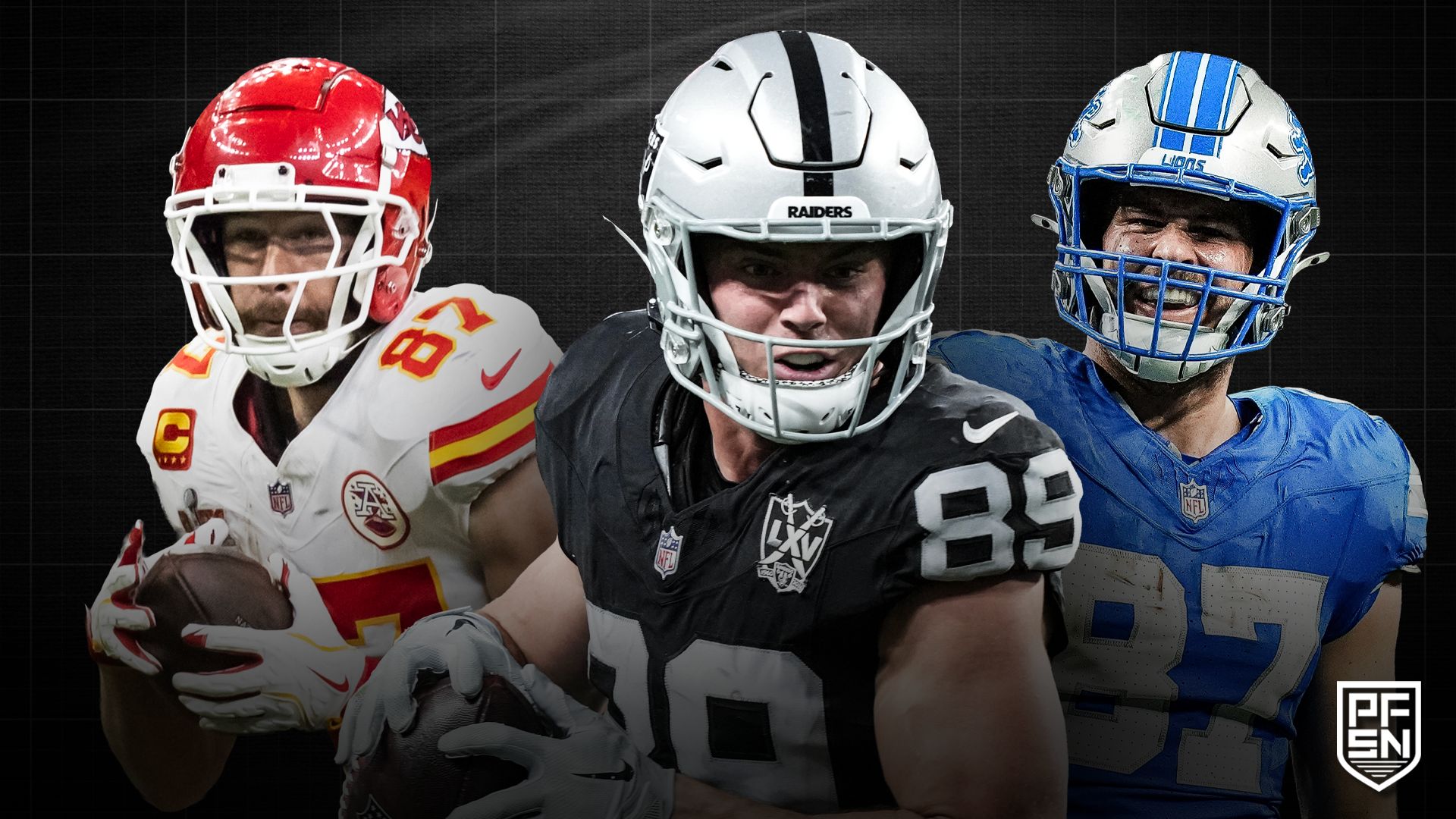
Image Source: statico.profootballnetwork.com
Deciphering Tight End Value: The Scarcity Factor
The tight end position presents a unique challenge in fantasy football due to its inherent tight end scarcity. Unlike quarterback or wide receiver, where you can often find viable options later in the draft or on the waiver wire, the drop-off in production at tight end after the top tier is significant. This means that securing one of the few truly elite tight ends can provide a substantial weekly advantage over your opponents.
Consider the difference in scoring between a top-tier TE and a replacement-level TE. This difference can often be the deciding factor in winning a close matchup. This disparity is what drives the perceived value of the elite tight ends and leads to the common question of whether you should draft a TE early.
Here’s a breakdown of why this scarcity exists:
- Limited Elite Options: Only a handful of tight ends consistently put up WR1 or TE1 numbers. These players are often involved in their team’s passing offense as primary targets.
- Role Dependence: Many tight ends rely heavily on their team’s offensive scheme and quarterback play. If the team’s passing game struggles, their tight end’s production will likely suffer.
- Blocking Duties: Unlike wide receivers, tight ends are also integral to the offensive line, often tasked with blocking. This can limit their involvement in passing routes and reduce their fantasy upside.
- Injury Prone: Like any position, tight ends can be susceptible to injuries, further diminishing the pool of reliable options.
This scarcity is a primary driver behind discussions about how many tight ends to draft. If you can’t find a reliable option, you might be better off filling other positions with more depth.
When to Draft a Tight End: A Strategic Approach
The timing of your tight end selection is a critical component of your overall fantasy football tight end strategy. There are generally three main approaches:
Drafting a TE Early
This strategy involves targeting one of the top-tier tight ends, often within the first few rounds of your draft.
Pros of Drafting a TE Early:
- Secures Elite Production: You lock in a player who is almost guaranteed to be a top performer at the position, giving you a significant weekly advantage.
- Avoids TE Wasteland: You bypass the stress of searching for a viable TE later in the draft or relying on the waiver wire.
- “Set it and Forget it”: A high-end TE can be a consistent contributor you don’t have to worry about week-to-week.
Cons of Drafting a TE Early:
- Opportunity Cost: You might be passing up on an elite wide receiver, running back, or even a top quarterback, which could be considered more valuable in some drafts.
- Can Be Overvalued: Sometimes, the perceived “elite” tight ends don’t always outperform mid-tier options by a significant margin.
Who are some potential TE draft targets if you decide to draft early?
- Travis Kelce (Kansas City Chiefs): Consistently one of the top tight ends, Kelce has a rare combination of volume, talent, and consistent production. His connection with Patrick Mahomes is undeniable.
- Mark Andrews (Baltimore Ravens): A dominant force when healthy, Andrews is a primary target in a potent Ravens offense. Lamar Jackson’s reliance on him makes him a weekly threat.
- T.J. Hockenson (Minnesota Vikings): After a strong showing in Minnesota, Hockenson has established himself as a top-tier option. His target share can be immense.
When you decide to draft a TE early, it’s crucial to have a clear target in mind and be aware of your league’s scoring settings, as they can influence the positional advantage.
Drafting a TE in the Mid-Rounds
This is often considered the sweet spot for many fantasy managers. You’re not reaching for a tight end at the expense of other premium positions, but you’re also not waiting until the last possible moment.
Pros of Drafting a TE in the Mid-Rounds:
- Balances Value: You can secure a solid TE1 while still building a strong core at other positions.
- More Options: The mid-rounds offer a deeper pool of TEs who have the potential to finish in the top 5-8 at the position.
- Flexibility: If a top TE falls to you unexpectedly, you can still grab them.
Cons of Drafting a TE in the Mid-Rounds:
- Less Certainty: While these players have upside, they may not have the same guaranteed volume or production as the elite few.
- Still a Gap: There can still be a noticeable production difference between these TEs and the absolute top-tier options.
What are some common TE draft targets in the mid-rounds?
- George Kittle (San Francisco 49ers): When healthy, Kittle is a yards-after-catch machine and a red-zone threat. His offense can be explosive.
- Darren Waller (New York Giants): Waller has shown he can be a dominant receiver when healthy. His target share in New York could be very high.
- Dallas Goedert (Philadelphia Eagles): Goedert is a key part of a high-powered Eagles offense and often sees significant targets.
Waiting on Tight End (Zero-TE Strategy)
This approach involves punting the tight end position early and filling your roster with other positions, aiming to find a late-round gem or a waiver wire pickup. This is often referred to as a zero-TE draft strategy.
Pros of a Zero-TE Draft Strategy:
- Maximizes Value at Other Positions: You can load up on elite RBs, WRs, or QBs, creating strong depth and a high ceiling at those positions.
- Avoids Reaching: You don’t spend early draft capital on a position where the drop-off is steep but not as extreme as some might think.
- Waiver Wire Opportunities: The TE position is often fluid, and good options can emerge on the waiver wire throughout the season.
Cons of a Zero-TE Draft Strategy:
- Weekly Disadvantage: You’re likely starting a TE who is a TE2 or even TE3, creating a consistent points deficit at that position.
- Requires Active Management: You’ll need to stay on top of waiver wire adds and drops to find a streamable tight end.
- Potential for Misses: Late-round tight end picks are often dart throws with a low probability of hitting big.
If you adopt a zero-TE approach, who are some late-round TE draft targets?
- Dalton Kincaid (Buffalo Bills): With Stefon Diggs gone, Kincaid could see a significant target increase in a pass-heavy offense.
- Michael Mayer (Las Vegas Raiders): Mayer has the talent and pedigree to become a top tight end. His role could expand with Aidan O’Connell.
- Jake Ferguson (Dallas Cowboys): Ferguson emerged as a reliable option last season and could continue to grow in the Cowboys’ offense.
The zero-TE draft strategy is a high-risk, high-reward approach that can work if you build a dominant team at other positions and find value late.
How Many Tight Ends Should I Draft? League-Specific Considerations
The answer to “how many tight ends should I draft?” is not a one-size-fits-all. It heavily depends on your league’s settings and scoring.
Standard Leagues (1 Tight End Starting)
In most standard fantasy leagues, you only start one tight end. This generally means you only need to draft one primary tight end.
- Strategy: Aim for a TE1. If you miss out on the top tier, you can either reach slightly for a solid TE2 or wait until the later rounds. Having a backup isn’t usually necessary unless you’re in a very deep league or the TE you drafted is injury-prone.
- Drafting Multiple TEs: Drafting a second tight end is generally not recommended unless you have a very deep bench or are specifically targeting a handcuff to your starter (though this is rare for TEs). The roster spot is usually better used on a player with higher upside at another position.
Tight End Premium (TEP) Leagues
In TEP leagues, tight ends receive bonus points for receptions, receiving yards, or touchdowns. This significantly elevates the value of the position.
- How Many TEs to Draft: In TEP leagues, you might consider drafting two tight ends, especially if you can secure two players with high target potential.
- Strategy: The scarcity factor becomes even more pronounced. You’ll likely need to draft a TE earlier than in standard leagues to secure a top option. The production difference between a TE1 and a TE2 in TEP leagues is often much larger.
- Drafting Multiple TEs: It’s more justifiable to draft a backup TE in TEP leagues. If your starter gets injured, or if you have two strong TEs, you can leverage the position. However, be mindful of over-investing.
Two Tight End Leagues (2-TE Leagues)
These leagues require you to start two tight ends every week. This fundamentally changes the fantasy football tight end strategy.
- How Many TEs to Draft: You absolutely must draft at least two, and often three, tight ends in 2-TE fantasy football leagues.
- Strategy: The scarcity is amplified to an extreme degree. You’ll need to identify players who can consistently produce at a TE1 or TE2 level. Drafting a TE becomes a much higher priority, and you might need to draft a TE earlier than you otherwise would.
- Drafting Multiple TEs: It’s essential to have depth. Your TE2 should ideally be a player you can confidently start. A third TE might be needed as a bye-week fill-in or as a high-upside stash. The value of even mid-tier tight ends increases dramatically.
Evaluating Tight End Draft Targets: Beyond the Rankings
When assessing TE rankings, it’s crucial to look beyond just the name and consider several factors that contribute to their fantasy production.
Target Share and Role
A tight end’s involvement in their team’s offense is paramount.
- High Target Share: Look for TEs who consistently receive a significant percentage of their team’s targets. This indicates they are a primary option in the passing game.
- Red Zone Involvement: TEs who are used frequently near the goal line have a higher chance of scoring touchdowns, which are often crucial for fantasy success.
- Offensive Scheme: Some offenses are more TE-friendly than others. Teams that utilize multiple tight ends or have a scheme that features the TE will provide more opportunities.
Quarterback Play
The quality of the quarterback throwing the ball to the tight end is a significant factor.
- Elite Quarterbacks: A tight end paired with an elite quarterback (like Kelce with Mahomes) benefits from the overall efficiency and volume of the passing game.
- Developing Quarterbacks: While there’s risk, a developing QB might also funnel targets to their TE as a safe option.
Offensive Line Performance
While not a direct statistical measure, the offensive line’s ability to protect the quarterback and create running lanes can indirectly impact TE production.
- Pass Protection: A strong offensive line allows the QB more time to find the TE.
- Run Blocking: If the TE is also a key blocker, a strong run game can open up play-action opportunities for them.
Consistency vs. Upside
When evaluating fantasy draft TE picks, consider whether you’re prioritizing consistent weekly production or players with high weekly ceilings.
- Consistent TEs: These players might have a lower ceiling but are reliable for 8-12 fantasy points every week.
- Upside TEs: These players might be boom-or-bust but have the potential for 20+ points on any given week, often due to red-zone usage or big-play ability.
Practical Draft Strategies for Tight Ends
Here are some practical tips to help you navigate the tight end position in your drafts:
- Know Your League Settings: As mentioned, this is the most crucial step. Understand your scoring (standard vs. TEP) and starting requirements (1 TE vs. 2 TE).
- Develop a Tiered Approach: Instead of just looking at rankings, group TEs into tiers. Once a tier is depleted, you’ve likely missed out on that level of production. This helps you decide when to pull the trigger.
- Target Strengths: If you have a strong roster at other positions, you might be more comfortable waiting on TE. If you have a weaker RB or WR corps, you might need to prioritize securing a solid TE early.
- Draft a Backup (Cautiously): If you draft a tight end in the early to mid-rounds, consider drafting a reliable backup only if they are significantly cheaper and have a reasonable chance of producing if your starter misses time. Avoid drafting two very similar players who share a bye week.
- Utilize Mock Drafts: Practice different scenarios. Try drafting a TE early, mid-round, and late to see how it impacts your overall roster construction.
Example: Tight End Tiers (Hypothetical)
This is a hypothetical example, as actual rankings shift weekly.
Tier 1 (Elite – Draftable within the first 4-5 rounds)
- Travis Kelce
- Mark Andrews
Tier 2 (High Upside TE1s – Draftable in rounds 5-7)
- T.J. Hockenson
- George Kittle
- Darren Waller
Tier 3 (Solid TE1s/High-End TE2s – Draftable in rounds 8-10)
- Dallas Goedert
- Trey McBride
- Evan Engram
Tier 4 (Potential Breakouts/Deep Sleepers – Draftable in rounds 11+)
- Dalton Kincaid
- Michael Mayer
- Jake Ferguson
In a standard league, if you miss out on Tiers 1 and 2, you might consider waiting until Tier 3 or even Tier 4, depending on how the draft unfolds and your comfort level.
The “Zero-TE” Draft Strategy in Action
The zero-TE draft strategy is more than just avoiding the position early; it’s a deliberate choice to prioritize other positions. Let’s say in a 12-team league, there are 12 starting tight ends needed, and perhaps 20 players who are reasonably considered startable.
If you decide on a zero-TE approach, you are essentially saying, “I will take the 13th-24th best players at RB, WR, and QB before I even consider my starting TE.”
Example Roster Construction (Zero-TE Focus):
- Rounds 1-5: Draft top RBs and WRs. Focus on volume and talent.
- Rounds 6-8: Target a QB or another high-upside RB/WR.
- Rounds 9-10: Take a dart throw at a TE. This player is a complete gamble, and you expect to replace them via waivers.
- Rounds 11-15: Load up on high-upside backups, handcuffs, and speculative adds at other positions.
The success of this strategy hinges on two things:
- Dominance at Other Positions: You need to be significantly better at RB, WR, and QB to offset the positional deficit at TE.
- Waiver Wire Acumen: You must be vigilant in identifying and acquiring waiver wire tight ends who are unexpectedly performing well. This might involve streaming the position, picking a different TE each week based on matchups.
2-TE Fantasy Football: A Different Ballgame
Starting two tight ends in 2-TE fantasy football leagues transforms the position from a luxury to a necessity. The implications for how many tight ends to draft are direct and significant.
- Increased Draft Priority: Tight ends will be drafted much earlier. If you’re in a 2-TE league and don’t draft a TE in the first 5-6 rounds, you might be looking at a significant disadvantage.
- Depth is Key: Having two players who can reliably score points at TE is crucial. You’ll need to draft at least two, and potentially a third for bye weeks or injury insurance.
- Targeting Volume: Look for tight ends on teams with limited receiving options or where the TE is a clear red-zone target. The more targets, the better in a 2-TE format.
Consider this: if there are 12 teams and you start two TEs, you need 24 starting tight ends. The pool of genuinely good tight ends shrinks rapidly. This is where tight end scarcity truly bites.
Frequently Asked Questions (FAQ)
Should I draft a backup tight end?
In standard leagues where you only start one TE, drafting a backup is generally not advised unless you are in a very deep league (e.g., 16+ teams) or your drafted TE has a high injury risk and the backup is significantly cheaper. In 2-TE leagues or TEP leagues, a backup becomes more important.
What if all the top tight ends are gone?
If you miss out on the elite tight ends, you have a few options:
- Wait: Continue drafting other positions and target a TE in the later rounds who has upside. Be prepared to stream the position from the waiver wire.
- Reach Slightly: If you feel there’s a significant drop-off after a certain point, consider taking a TE a round or two earlier than your initial plan to secure a more reliable option.
How does bye week impact my tight end decision?
Bye weeks are a factor for every position. If you draft a tight end, be aware of their bye week and have a plan for that week. In deeper leagues, you might consider drafting a second TE whose bye week differs from your primary TE.
When is the “tight end scarcity” most impactful?
Tight end scarcity is most impactful in leagues where you start two tight ends or in TEP leagues, as the demand for productive tight ends increases significantly.
Can a zero-TE strategy work in a 2-TE league?
No, a zero-TE draft strategy is not viable in 2-TE fantasy football leagues. The requirement to start two tight ends necessitates early investment in the position.
By thoroughly considering these strategies and understanding the nuances of tight end value, you’ll be well-equipped to answer the question, “How many tight ends should I draft in fantasy football?” for your specific league. Good luck with your draft!