
Image Source: lh6.googleusercontent.com
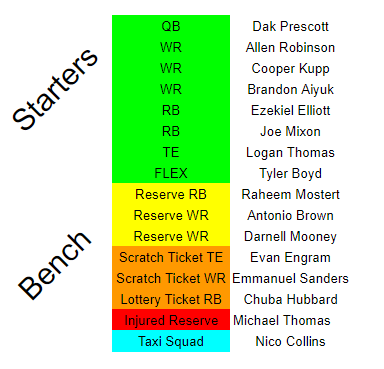
How Many Bench Players In Fantasy Football: Maximize Your Team
The fundamental question many fantasy football managers grapple with is: “How many bench players should I carry?” The answer isn’t a simple number; it’s a strategic decision that hinges on various factors unique to your league and your team. Generally, most leagues allow for 5-7 bench spots, but the optimal number depends on your draft strategy, the current state of your roster spots, and your approach to bench management.
The Core Decision: Balancing Depth and Opportunity
Carrying too many bench players can mean sacrificing valuable starting talent. Conversely, too few bench spots can leave you vulnerable to unexpected situations. The goal is to strike a balance that allows you to react to the unpredictable nature of the NFL season while not leaving too much potential production on the sidelines.
Key Considerations for Bench Size
Several elements directly influence how many players you should keep on your bench. Each of these plays a crucial role in shaping your team’s success throughout the season.
Injury Replacements: The Immediate Need
The most obvious reason to have bench players is to replace injured starters. A single injury to a key player can derail your week. Having a reliable backup ready to step in preserves your team’s competitiveness. Think about the positional scarcity in your league. If elite tight ends are rare, stashing a promising backup or even a committee player is wise.
Bye Weeks: Navigating the Schedule
Every team has a bye week. When your star players are off, you need viable replacements to fill those starting lineup slots. This is especially critical if multiple key players on your team share the same bye week. A well-stocked bench ensures you don’t have to rely on unproven or low-upside players to fill the void.
Waiver Wire Opportunities: Staying Ahead of the Curve
The waiver wire is a treasure trove for fantasy managers. However, if your bench is full of players with limited upside, you might be forced to drop a player who could have a breakout game just to pick up a hot waiver add. A smart bench allows you to take calculated risks on players who might emerge, without jeopardizing your current starters.
Player Depth: Building a Robust Core
Beyond immediate replacements, a deeper bench provides player depth. This means having multiple options at each position, creating a competitive environment within your own team. It also allows you to survive slumps or poor performances from your starters, giving you the flexibility to adjust your starting lineup based on matchups and form.
The Art of Bench Management
Effective bench management is more than just filling your bench spots. It’s about making informed decisions regarding who to keep, who to drop, and when to make those moves.
Evaluating Upside vs. Floor
When considering bench players, always weigh their potential upside against their guaranteed floor. A player with a high ceiling might be worth stashing even if their floor is low, especially if they have a clear path to increased playing time. Conversely, a player with a safe floor but limited upside might not be worth the bench spot if there are better options available.
Positional Needs and League Settings
Your bench composition should reflect your league’s settings and your team’s positional needs. In leagues with deep starting requirements (e.g., 3 Wide Receivers, 2 Running Backs), you’ll need more depth at those positions. If your league penalizes fumbles or interceptions heavily, you might prioritize QBs and RBs with good ball security.
The “Stash” Game: Identifying Future Stars
Part of smart bench management is the “stash” game. This involves identifying players who are currently injured, in a timeshare, or have a favorable future schedule, and keeping them on your bench with the expectation that their value will increase. This requires a keen eye for talent and a willingness to be patient.
Optimizing Your Bench Strategy by League Type
The ideal number of bench players can also vary depending on the specific type of fantasy football league you’re participating in.
Standard Leagues (e.g., 10-12 Teams, 9 Starters)
In a standard league, you typically have around 15-16 roster spots, with 9-10 players in your starting lineup. This leaves roughly 5-7 bench spots.
- Recommended Bench Players: 5-6
- Rationale: This allows for a couple of backup options at premium positions (QB, RB, WR) and a flex option or a tight end backup. It also provides some wiggle room for bye weeks and potential waiver wire grabs. You don’t want to be so deep that you’re dropping potential starters to make room for one-week fill-ins.
Keeper Leagues and Dynasty Leagues
Keeper and dynasty leagues fundamentally change the calculus for bench spots. The long-term value of players becomes paramount.
- Keeper Leagues: You may carry fewer “plug-and-play” bench players and more developmental prospects or players with high future potential. The ability to keep a certain number of players from year to year means your bench is also an investment in future seasons. You might have 4-5 bench spots, but the quality of those players is often higher.
- Dynasty Leagues: These leagues are all about the long game. You’ll often have larger rosters (e.g., 20-30 players) and need to carry more bench players to account for development, injuries, and the sheer volume of young talent. Your bench will be a mix of established players with solid floors, promising rookies, and even players on IR who have significant long-term upside. Expect to carry 8-12+ bench players in a dynasty format.
Best Ball Leagues
Best ball leagues are unique because there’s no waiver wire and no bench management after the draft. All your players are “active” in a sense, and your optimal lineup is automatically set each week.
- Focus: In best ball, your draft strategy dictates your roster composition. You draft for depth across all positions, assuming injuries and bye weeks will occur. You’ll want to draft at least two players at each skill position and often three at RB and WR to ensure you have quality options. The concept of a “bench” in the traditional sense doesn’t exist; every drafted player is a potential starter.
Sample Bench Compositions Based on Roster Size
Let’s look at how your bench might be structured given different total roster sizes and starting lineup requirements.
Example 1: Standard 12-Team League (16 Roster Spots, 9 Starters)
- Total Roster Spots: 16
- Starting Lineup: 1 QB, 2 RB, 2 WR, 1 TE, 1 FLEX, 1 K, 1 DEF (9 starters)
- Bench Spots: 16 – 9 = 7
Sample Bench Composition:
| Position | Number of Players | Notes |
|---|---|---|
| QB | 1 | Backup QB, especially if your starter has injury concerns or a tough bye. |
| RB | 2 | High-upside backups or players with handcuff potential. |
| WR | 2 | Promising rookies, players with potential to emerge, or bye-week fill-ins. |
| TE | 1 | Backup TE or a prospect with upside if your starter is injury-prone. |
| FLEX/RB/WR | 1 | Another player at a premium position to enhance depth. |
| Total | 7 |
Example 2: Deeper League (20 Roster Spots, 10 Starters)
- Total Roster Spots: 20
- Starting Lineup: 1 QB, 3 RB, 3 WR, 1 TE, 1 FLEX, 1 K/DEF (10 starters)
- Bench Spots: 20 – 10 = 10
Sample Bench Composition:
| Position | Number of Players | Notes |
|---|---|---|
| QB | 1 | Reliable backup, especially in leagues with high QB scoring. |
| RB | 3 | Multiple backups, handcuff players, and players in committees with upside. |
| WR | 3 | Strong depth, high-upside players, and players with favorable upcoming schedules. |
| TE | 1 | Backup TE or a high-upside prospect. |
| FLEX/RB/WR | 2 | Additional depth at RB or WR, or players to stash with breakout potential. |
| Total | 10 |
Strategic Drafting for Bench Depth
Your draft is the foundational step in building a successful team, including your bench. A good draft strategy will proactively address the need for player depth.
Early Rounds: Target High-Upside Starters
In the early rounds, prioritize securing elite starting lineup talent at your core positions (QB, RB, WR). These are the players who will anchor your team.
Mid-Rounds: Balancing Stars and Depth
As the draft progresses into the middle rounds, you should start thinking about player depth. This is a great time to:
- Draft a backup QB: If you have an elite QB, consider drafting a solid backup who can fill in during bye weeks or if your starter misses time.
- Target high-upside RBs and WRs: Look for players in committee situations, rookies with potential, or established players on new teams. These players represent excellent bench management opportunities.
- Secure a solid TE: If you didn’t get an elite TE, drafting a reliable option with a decent floor can be beneficial.
Late Rounds: High-Risk, High-Reward Stashes
The late rounds are perfect for taking shots on players with significant upside but perhaps some question marks. This is where you build your bench with players who could vastly outperform their draft position. Think about:
- Handcuff RBs: The backup to a star running back. If the starter goes down, the backup often becomes an RB1.
- “Breakout” Candidates: Players who have shown flashes of talent but haven’t put it all together yet.
- Players in New Systems or with New Coaching: Changes can unlock potential.
- Injured Players with High Upside: Players on injured reserve (IR) can be stashed without taking up a regular bench spot, if your league allows.
Waiver Wire Moves: Continuous Bench Management
The waiver wire is where you actively manage your bench throughout the season. This involves:
- Dropping Underperformers: If a player on your bench isn’t performing and there are better options on the waiver wire, don’t hesitate to cut them.
- Picking Up Hot Adds: Identify players who are seeing increased opportunity due to injuries or scheme changes on their team.
- “Streaming” Defenses and Kickers: While not ideal for long-term bench spots, you might temporarily fill a bench spot with a defense or kicker with a favorable matchup for that week.
- Monitoring News: Stay up-to-date on NFL news, practice reports, and depth chart changes. This will give you an edge in identifying waiver wire gems.
Adapting Your Bench Strategy as the Season Progresses
Your bench strategy isn’t static; it needs to evolve as the season unfolds.
Early Season: Focus on Upside and Bye Week Coverage
In the first few weeks, your primary focus should be on identifying players with breakout potential and ensuring you have coverage for your Week 4-8 bye weeks.
Mid-Season: Address Weaknesses and Trade Opportunities
As the season progresses, you’ll have a better idea of your team’s strengths and weaknesses. Use your bench to:
- Shore up your starting lineup: If you have a surplus of talent at one position, consider trading a bench player for a starter at a position of need.
- Target players with good playoff schedules: As you approach the fantasy playoffs, knowing your players’ schedules in Weeks 14-17 becomes crucial.
Late Season: Focus on Playoff Starters and Handcuffs
In the final weeks, your bench should primarily consist of players who can either start in your starting lineup during the playoffs or are valuable handcuffs to your own playoff starters.
Frequently Asked Questions (FAQ)
Q1: What is the ideal number of bench players in fantasy football?
A1: The ideal number of bench players typically ranges from 5 to 7 in standard leagues, but this can fluctuate based on league settings, roster size, and your overall draft strategy.
Q2: Should I carry a backup quarterback?
A2: It’s often advisable to carry a backup quarterback, especially if your starter is injury-prone, has a difficult bye week, or plays in a league with high QB scoring.
Q3: How important are handcuffs on my bench?
A3: Handcuff running backs are very important for player depth. If your starting RB goes down, their backup often sees a significant increase in workload and fantasy value.
Q4: When should I drop a bench player?
A4: You should consider dropping a bench player if they are consistently underperforming, have a minimal role, and there are better waiver wire options available that fit your team’s needs.
Q5: Can I win fantasy football with a small bench?
A5: While it’s possible, a smaller bench significantly increases your risk. You’ll be more vulnerable to injuries and bye weeks, forcing you to rely heavily on the waiver wire.
Q6: How does my bench strategy change in dynasty leagues?
A6: In dynasty leagues, your bench is crucial for long-term development. You’ll carry more players, focusing on rookies and prospects who have the potential to become future stars, alongside your current starters.
By carefully considering these factors and implementing a consistent bench management strategy, you can build a more resilient and competitive fantasy football team, maximizing your chances of success throughout the season.