
Do you ever wonder why we call footballs “pigskins”? The nickname comes from the fact that the earliest footballs were indeed made from inflated pig bladders, covered in animal hide for durability. This intriguing connection to animal parts is a fascinating piece of American football history and a testament to the evolution of sporting equipment.
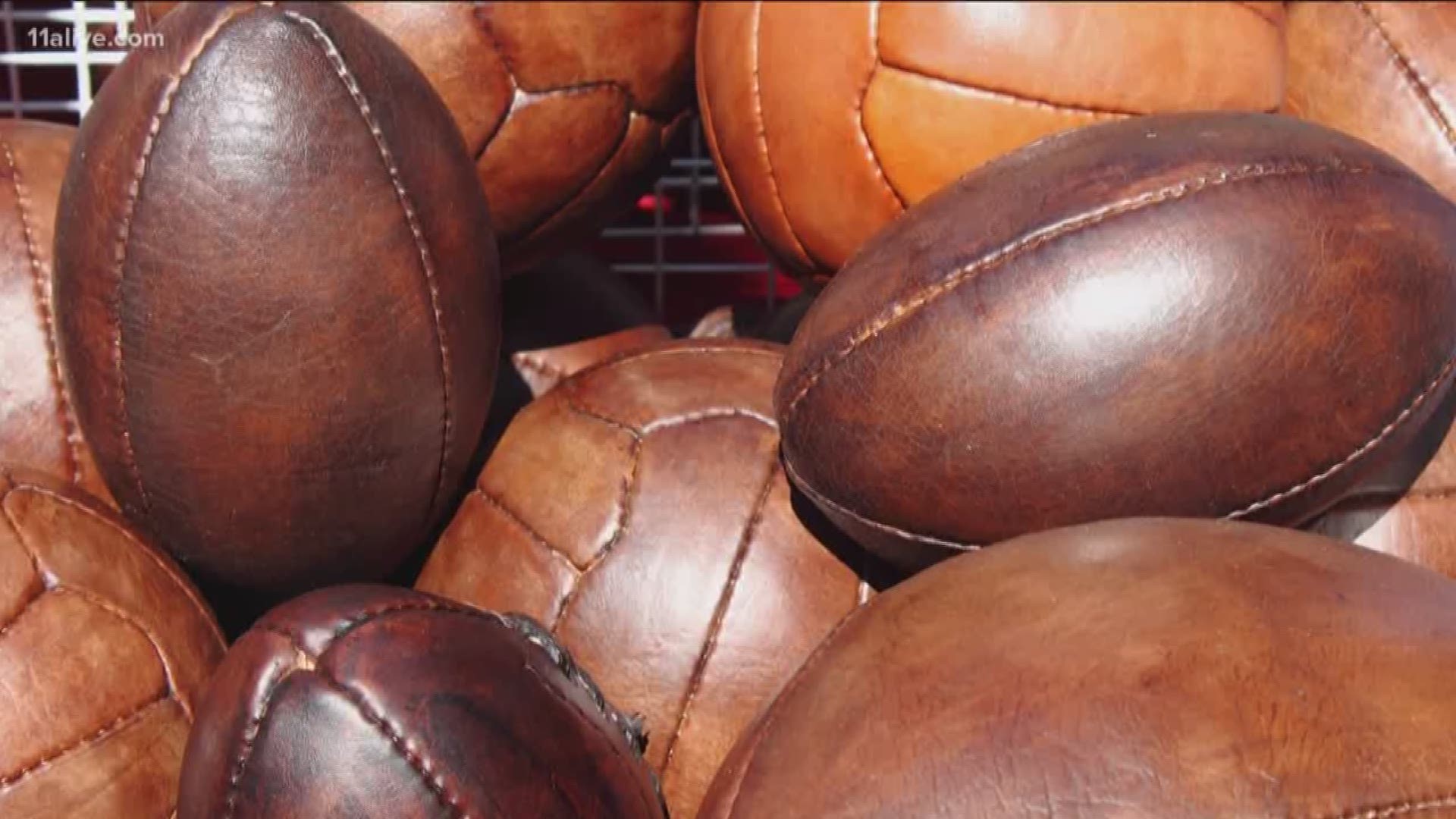
Image Source: media.11alive.com
The Humble Beginnings of the Football
The journey of the football from a simple inflated organ to the precision-engineered spheres we see today is a captivating story rooted in football origins. Before the organized, codified sport of American football emerged, various ball games were played across different cultures. These early games often used readily available materials.
Early Forms of Ball Games
Across the globe, people have played games involving kicking or throwing balls for centuries. Ancient civilizations like the Greeks and Romans had games that bear a resemblance to modern football, though the “balls” themselves were far from what we recognize.
- Ancient Greece: Games like “Episkyros” involved players throwing and catching a ball, often made from stuffed leather or animal bladders.
- Ancient Rome: The Roman game “Harpastum” was a rougher version of Episkyros, also utilizing similar types of balls.
- Medieval Europe: Games involving kicking a ball were popular, with various descriptions of balls made from inflated animal stomachs or bladders, covered with leather.
These early forms of ball games laid the groundwork, but it was in the 19th century, particularly in England and later in the United States, that the sport we know as football began to take shape.
The Pig Bladder: The First “Football”
The direct lineage to the term “pigskin” is firmly established in the earliest days of the sport. When the game started to formalize, particularly at universities, a practical and accessible material was needed for the ball.
- The Pig Bladder: The bladder of a pig, when properly cleaned and inflated, provided a roundish, somewhat resilient shape that could be kicked and thrown. This was a readily available resource, particularly in agricultural societies.
- Covering for Durability: While the bladder provided the core, it was too delicate on its own for the rigors of a game. To make it more durable and easier to handle, these bladders were typically covered with stitched pieces of animal hide, often cowhide. This outer casing gave the ball a more consistent shape and protected the fragile bladder inside.
So, the very first iteration of what would become the American football was, in essence, a pig’s bladder encased in leather. This is the fundamental reason behind the enduring pigskin nickname origin.
The Evolution of Ball Construction
The transition from a natural bladder to modern synthetic materials reflects a significant leap in sporting equipment evolution. Each change was driven by the need for better performance, consistency, and durability.
From Bladders to Laced Balls
As the game grew in popularity and became more physically demanding, the limitations of simple bladder-and-hide constructions became apparent. The shape was often inconsistent, and the stitching could wear out quickly.
- Improved Stitching Techniques: Craftsmen began to develop more robust stitching methods to create a more stable and predictable shape. This was crucial for developing passing and kicking accuracy.
- The Introduction of Laces: A significant innovation was the introduction of laces. Initially, these were used to tie the casing together after the bladder was inserted and inflated. Over time, these laces became an integral part of the ball’s design, providing a grip for quarterbacks to throw spirals. This was a pivotal moment in American football history.
Materials and Manufacturing in the 19th and 20th Centuries
The late 19th and early 20th centuries saw a more systematic approach to ball construction. Manufacturers began to standardize sizes, shapes, and materials.
- Horsehide and Cowhide: While pig bladders were the earliest core, leather footballs became the standard. Horsehide and cowhide were favored for their toughness and ability to hold their shape when inflated. The quality of the leather and the tanning process became crucial factors in ball production.
- Standardization of Shape: The oval shape, distinct from the rounder balls used in soccer or rugby, began to emerge. This shape was found to be more conducive to throwing and carrying in the developing game of American football.
- The Goodyear Blimp and Early Rubber: Interestingly, early attempts to create synthetic bladder materials were explored. For instance, Goodyear experimented with rubber bladders, but they were not as successful as animal bladders for a long time.
The Modern Football: Precision Engineering
Today’s footballs are marvels of engineering, far removed from their pig bladder ancestors. Yet, the echoes of the past remain in the terminology.
- Synthetic Materials: Modern footballs use synthetic leather or composite materials that offer superior durability, water resistance, and a consistent grip in all weather conditions.
- Butyl Bladders: Instead of animal bladders, butyl rubber bladders are used. These are highly effective at retaining air and maintaining the ball’s shape.
- Precise Aerodynamics: The stitching and the pebble-grain texture of the surface are carefully designed to optimize grip and aerodynamics, allowing for the precise passes that are a hallmark of modern football.
Despite these technological advancements, the term “pigskin” persists, a linguistic fossil from a time when the game’s equipment was far more rudimentary.
The Etymology of “Football” and the “Pigskin” Connection
Delving into the etymology of football reveals that the name itself is straightforward: a game played with the feet and a ball. However, the “pigskin” association is more specific to the object of the game.
Why “Football”?
The name “football” is believed to have originated from medieval European games where the ball was indeed kicked with the foot. Unlike sports like tennis or handball, where the ball is primarily struck with hands or implements, these early games emphasized foot play.
The “Pigskin” Specificity
The term “pigskin” is not a general descriptor for all balls used in foot-based games. It specifically refers to the material used for early footballs.
- Material as Identifier: When a particular material becomes strongly associated with an object, it can often lead to a nickname based on that material. Think of calling a letter “junk mail” or a car a “gas guzzler.”
- Sensory and Associative Memory: The texture, smell (when wet), and very nature of an inflated pig bladder covered in leather likely made a strong impression on players and spectators. This visceral connection cemented the term.
How the Nickname Stuck
The persistence of the term “pigskin” is a testament to several factors:
- Tradition and Nostalgia: As the sport grew, the nickname became ingrained in the culture. It evokes a sense of history and the gritty, down-to-earth nature of early sports.
- Rhyme and Alliteration: While not the primary reason, “pigskin” has a certain punchiness that makes it memorable and easy to say, perhaps contributing to its widespread adoption.
- Early Media: Writers and journalists covering the nascent sport likely adopted the term, further popularizing it.
The Pigskin Nickname in Modern Sports
Even though modern footballs are no longer made from pig bladders, the nickname “pigskin” remains a beloved and widely used term.
Cultural Persistence
The term “pigskin” is more than just a colloquialism; it’s a cultural touchstone for fans of American football. It connects the present-day, high-tech sport to its humble, perhaps even slightly unsavory, origins.
- Fan Language: You’ll hear announcers, players, and fans alike refer to the “pigskin” without a second thought. It’s a natural part of the lexicon.
- Media and Merchandise: The term frequently appears in sports media, team branding, and merchandise, reinforcing its cultural relevance.
Is it Still Accurate?
From a literal standpoint, the term is no longer accurate. However, in language, nicknames often evolve to represent concepts or historical associations rather than strict material accuracy.
- Metaphorical Meaning: “Pigskin” has become a metonym for the game of football itself. When someone says, “Let’s go play some pigskin,” they clearly mean American football.
- Historical Legacy: The nickname serves as a constant reminder of the sport’s journey and the ingenuity of those who shaped it.
Key Takeaways: Pigskin’s True Origin
To summarize the pigskin nickname origin, we can point to a few core elements:
- Materiality: The earliest footballs were constructed using inflated pig bladders as the core.
- Durability: These bladders were covered with stitched animal hide (often cowhide) to create a usable ball.
- Dominant Material: For a significant period, pig bladders were the primary internal component, making them synonymous with the ball itself.
- Cultural Embedding: The term became deeply ingrained in the language of the sport due to tradition, media, and the evocative nature of the material.
The story of the pigskin is a compelling illustration of how a simple, practical solution in the early days of a sport can evolve into a cherished nickname that transcends its literal meaning, linking modern athletes to the very beginnings of the game. The football origins are fascinating, and the pigskin nickname is a direct, tangible link to those early days of American football history and the ingenuity behind early ball construction and leather footballs.
Frequently Asked Questions (FAQ)
Q1: Were all early footballs made from pig bladders?
A1: While pig bladders were the most common material for the internal bladder of early footballs due to their availability and suitability for inflation, other animal bladders may have been used as well. The key was finding a readily available, inflatable organ.
Q2: When did footballs stop being made from pig bladders?
A2: The transition was gradual. While pig bladders were common through the late 19th century and into the early 20th century, advancements in rubber and synthetic materials began to replace them. By the mid-20th century, most official footballs used manufactured bladders.
Q3: Is the term “pigskin” offensive?
A3: In the context of sports, the term “pigskin” is generally not considered offensive. It is a widely accepted and often affectionate nickname with historical roots in the game’s equipment. However, like any colloquialism, its reception can depend on the context and audience.
Q4: What are modern footballs made of today?
A4: Modern footballs are typically made with an outer casing of synthetic leather or composite materials. The internal bladder is usually made of butyl rubber, which holds air pressure more effectively than natural materials.
Q5: Did other sports also use pig bladders for their balls?
A5: Yes, many early ball sports, including soccer and rugby, also used inflated animal bladders, often covered in leather, for their balls. The “pigskin” nickname is specific to football, but the practice of using animal bladders was widespread in the early history of ball sports.