
What is the safest and most effective way to tackle in football? The safest and most effective way to tackle in football involves a combination of proper tackling technique, consistent practice through tackling drills, and a deep understanding of tackling fundamentals. Focusing on the shoulder tackle and wrapping up in football are key components for both safety and efficacy.
Football is a game of explosive collisions, and at its heart lies the tackle. A successful tackle stops an opponent’s advance, swings momentum, and can even create game-changing turnovers. However, the physicality of the sport also brings inherent risks. This guide delves into the essential elements of how to tackle in football safely and effectively, ensuring players can perform this critical action with confidence and minimize the potential for injury. We’ll explore proper tackling technique, the role of dedicated tackling drills, and the importance of mastering tackling fundamentals for players of all ages, from youth football to the professional level.
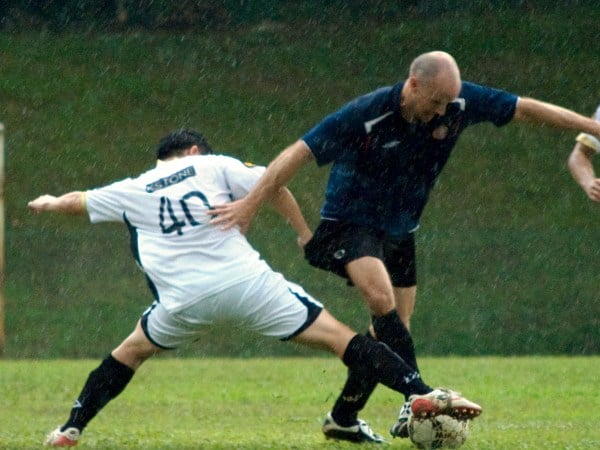
Image Source: www.activesgcircle.gov.sg
Mastering Tackling Fundamentals: The Foundation of Safe Play
Before diving into advanced techniques, it’s crucial to grasp the core principles of tackling. These foundational elements are the bedrock upon which all successful and safe tackles are built. Without a solid understanding of these basics, players are more susceptible to injury and less likely to execute effective tackles.
The Philosophy of Defensive Tackling
Defensive tackling isn’t just about bringing a player down; it’s a controlled act of aggression. It requires an athletic stance, anticipation, and the ability to move with purpose. The primary goal is to stop the ball carrier, but doing so without unnecessary force or improper technique is paramount. This means prioritizing player welfare while still achieving the objective on the field.
Key Principles for Effective Tackling
- Head Up, Eyes Forward: This is arguably the most critical rule. Always keep your head up and eyes focused on the ball carrier. This allows you to see the play develop, track the runner, and adjust your approach. Looking down at your feet or the ground before impact is a recipe for disaster, leading to potential neck injuries.
- Low and Level: The most powerful and safest tackles are made from a low position. Aim to get your shoulder below the ball carrier’s waist. This leverage makes it harder for them to break the tackle and reduces the risk of them running over you. A level tackle means avoiding spearing – driving your head down into the opponent.
- Explosive Approach: Build momentum as you close the distance. This doesn’t mean reckless sprinting; it means controlled acceleration towards the target. A good approach allows you to generate force upon impact.
- Surprise and Speed: The element of surprise can make a tackle easier. When closing in, try to be explosive and decisive. Hesitation often leads to missed tackles or less effective ones.
Proper Tackling Technique: The Mechanics of Bringing Down an Opponent
Understanding the “how” of tackling involves breaking down the physical movements into distinct, manageable steps. Each step, when executed correctly, contributes to a successful and safe tackle. This is where proper tackling technique truly shines.
The Shoulder Tackle: Your Primary Weapon
The shoulder tackle is the cornerstone of safe and effective tackling in football. It utilizes the strongest parts of the body – the shoulder and the chest – to make contact, minimizing the risk of head-to-head collisions.
Steps to Executing a Shoulder Tackle:
- The Stance: Begin in an athletic, balanced stance. Knees should be bent, back relatively straight, and arms ready. This allows for quick adjustments and explosive power.
- The Approach: Close the distance with controlled speed. Keep your head up and eyes on the ball carrier.
- The Drive: As you get close, dip your shoulder and drive through the ball carrier’s legs or midsection. Think about driving through them, not just into them.
- The Wrap: This is a critical component. As your shoulder makes contact, your arms should immediately come around the ball carrier’s legs or waist. This is wrapping up in football, securing the tackle and preventing the runner from breaking free.
- The Drive Through: Continue to drive your legs and lower your body, pushing the ball carrier backward or to the ground. Use your legs to generate power.
The Importance of “Wrapping Up”
Wrapping up in football is as vital as the initial hit. A tackle isn’t complete until the ball carrier is down or his forward progress is stopped. Wrapping your arms around the player secures them, preventing them from shedding the tackle with arm extensions or fighting for extra yards.
- Securing the Ball Carrier: A strong wrap stops the runner from turning their body or using their arms to push defenders away.
- Preventing Injury: By controlling the opponent’s body, a good wrap helps prevent them from twisting unnaturally or creating awkward impacts.
- Tackling Form: The wrap is a direct extension of proper tackling form. It’s the finishing touch that ensures the tackle is completed effectively.
Open-Field Tackling: A Different Challenge
Open-field tackling presents a unique set of challenges. Without the confines of the sidelines or other players to help funnel the runner, you’re often on your own. This requires a different approach, emphasizing pursuit angles and controlled, sure tackling.
Techniques for Open-Field Tackling:
- Pursuit Angles: Don’t run directly at the ball carrier. Instead, run at an angle that cuts off their potential escape routes. This forces them to either run towards you or make a sharp cut, which slows them down.
- Crowd the Runner: As you approach, reduce the space between you and the ball carrier. This limits their options for evasion.
- Use Your Arms and Shoulder: In open-field situations, a strong shoulder tackle followed by a secure wrap around the legs is often the most effective method. Avoid lunging or diving, as this can lead to missed tackles and potential injuries.
- “Chop” the Legs: Sometimes, in open-field tackles, it’s safer and more effective to drive your shoulder into the ball carrier’s thighs or knees, aiming to disrupt their balance and bring them down by their legs. This is particularly useful against faster, elusive runners.
Tackling Drills: Honing Your Skills Through Repetition
Theory is one thing, but practice is where true mastery lies. Consistent work on tackling drills is essential for developing the muscle memory, timing, and confidence needed to execute tackles effectively and safely. These drills should progressively build from basic mechanics to more game-like scenarios.
Foundational Tackling Drills for Youth Football and Beyond
For tackling drills for youth football, the focus is heavily on safety and proper form. Coaches must ensure that drills are conducted in a controlled environment with an emphasis on technique over power.
Key Drills to Incorporate:
- The “Stance and Rip” Drill: Players start in an athletic stance. A coach calls out a direction, and the player explodes forward, dropping their shoulder and driving an imaginary ball carrier. This emphasizes initial footwork and shoulder engagement.
- The “Hit and Stick” Drill: Two players stand facing each other, a few yards apart. One player (the tackler) approaches, aims for the chest or shoulder of the “ball carrier,” and makes contact, driving through and wrapping up. The ball carrier offers mild resistance. This teaches initial contact and the wrap.
- The “Tackle Bag” Drill: Using a tackling dummy or bag is a staple. Players practice their approach, shoulder drive, and wrap-up motion against a stationary, forgiving target. This allows for maximum repetition without direct player-on-player contact.
- Variations: Include drills where the bag is at different heights or slightly moving to simulate game conditions.
- The “Mirror Drill”: One player runs, and the other mirrors their movements, staying a safe distance behind and to the side. This teaches pursuit angles and maintaining balance while tracking an opponent.
- “Form Tackling” Drills: These drills specifically focus on the sequence of the tackle:
- Head up, eyes on the target.
- Lowering the shoulder.
- Driving through the legs.
- Wrapping up.
- Finishing the tackle by driving.
Progression of Tackling Drills
It’s vital to progress drills gradually to ensure player safety and skill development.
A Sample Progression Pathway:
- Stationary Drills: Focus on individual mechanics without movement (e.g., shadow tackling, striking a stationary pad).
- Controlled Movement Drills: Introduce light movement and resistance (e.g., hitting a tackling dummy, controlled one-on-one with a passive opponent).
- Dynamic Drills: Incorporate more realistic movements and situational play (e.g., open-field tackling drills with a fleeing ball carrier, tackling drills with mild resistance in a confined space).
- Game-Situation Drills: Simulate game scenarios with full intensity but controlled contact (e.g., tackling drills with a moving ball carrier and defensive teammates).
Tackling Safety: Prioritizing Player Welfare
The discussion on tackling in football is incomplete without a strong emphasis on tackling safety. The health of players is paramount, and adhering to safety guidelines can significantly reduce the incidence and severity of injuries.
The Importance of Proper Equipment
While technique is king, appropriate equipment provides a crucial layer of protection.
- Helmets and Shoulder Pads: These are non-negotiable. Ensure they are well-maintained, fitted correctly, and meet current safety standards.
- Mouthguards: Essential for protecting teeth, jaw, and preventing concussions.
- Appropriate Footwear: Cleats that provide good traction help prevent slips and awkward falls.
Coaching Responsibility in Tackling Safety
Coaches play a pivotal role in ensuring safe tackling practices.
- Teach, Teach, Teach: Consistent teaching and reinforcement of proper technique are key.
- Supervise Closely: Always monitor drills and practice to identify and correct unsafe habits immediately.
- No “Lead with the Head”: Emphasize that any tackle involving leading with the crown of the helmet is illegal and dangerous.
- Controlled Contact: Discourage gratuitous aggression or unnecessary hits. The goal is to make the tackle, not to inflict damage.
- Concussion Protocols: Coaches must be knowledgeable about concussion symptoms and follow established protocols for any player suspected of a concussion.
Player Responsibility in Tackling Safety
Players also have a duty to prioritize their own safety and the safety of their teammates.
- Listen to Your Body: Report any pain or discomfort to coaches.
- Wear Your Gear: Ensure all protective equipment is worn correctly.
- Practice What You’re Taught: Execute techniques as instructed.
- Avoid Risky Behavior: Don’t engage in unnecessary helmet-to-helmet contact or aggressive play outside the scope of proper technique.
Advanced Tackling Concepts: Fine-Tuning Your Approach
Once the fundamentals are solid, players can refine their tackling with more nuanced techniques.
The “Wrap and Roll” Technique
This is an extension of the wrap-up. After securing the ball carrier, the tackler drives their legs and uses their body weight to roll the opponent to the ground. This adds control and ensures the ball carrier is fully stopped.
Tackling Across the Body
While often seen as a last resort, tackling across the body can be effective when executed correctly. It involves driving your shoulder into the side of the ball carrier, with your arms wrapping around their waist or legs. The key here is to avoid twisting your neck or head.
Deciphering Tackle Scenarios
Interpreting different game situations helps dictate the best tackling approach.
- Sideline Tackles: Use the sideline to your advantage. Force the runner towards it, limiting their escape routes and allowing you to tackle them out of bounds or into the sideline.
- Inside Tackles: When tackling inside the tackle box, leverage and power are key. Aim to get low and drive through the ball carrier’s legs to bring them down.
- Run-Down Tackles: These often occur when a defender is chasing a ball carrier. Focus on maintaining a good pursuit angle and then closing the distance with speed and control.
Tackling Drills for Youth Football: Safety First, Skill Second
For younger players just learning the game, tackling drills for youth football must be approached with extreme caution and a primary focus on safety. Many youth leagues have adopted “flag football” or “limited contact” rules to mitigate risks, but where tackling is permitted, the emphasis is on teaching the core principles without high-impact collisions.
Key Principles for Youth Tackling Drills:
- No Contact Until Proficient: Players should demonstrate mastery of tackling form on dummies and in controlled drills before any live, albeit limited, contact is introduced.
- Emphasize Wrapping Up: This is the most important takeaway for young players. Teaching them to grab and hold the runner is crucial.
- Head Safety: Constant reminders to keep the head up and away from the point of contact.
- Small Group Instruction: Breaking down into smaller groups allows coaches to provide more individualized attention and correction.
- Positive Reinforcement: Encourage good technique and effort, celebrating safe and effective tackles.
Age-Appropriate Drills:
- “Hawk” Tackles: Players practice the motion of reaching out and grabbing a flag from a teammate running past at a controlled speed. This teaches pursuit and the concept of stopping a runner without direct collision.
- “Two-Hand Touch” Drills: Similar to flag football, but players practice making a two-hand touch on the ball carrier. This develops the eye-hand coordination and timing needed for tackles.
- Tackle Bag Drills: As mentioned earlier, these are excellent for developing the mechanics of the shoulder tackle and wrap.
- “Shield Tackles”: One player holds a large pad or shield, and the tackler drives into it, practicing the initial contact and drive phase.
Frequently Asked Questions (FAQ)
Q: Is it ever okay to lead with your head when tackling?
A: Absolutely not. Leading with the head, also known as “spearing,” is illegal in most football leagues and is extremely dangerous. It can lead to severe neck and head injuries, including paralysis and concussions. Proper tackling technique always emphasizes keeping your head up and out of the point of contact.
Q: How can I improve my open-field tackling?
A: Open-field tackling relies heavily on pursuit angles, closing speed, and controlled contact. Practice mirroring drills to improve your ability to stay with a runner. Focus on approaching at an angle that cuts off their escape routes. When closing, maintain balance and use a strong shoulder tackle followed by a wrap of the legs. Avoid lunging or diving, as this often results in missed tackles.
Q: What’s the difference between a “wrap” and a “grab”?
A: A “wrap” in football tackling refers to encircling the ball carrier with your arms and torso. This provides maximum control and security. A “grab” might be a quick, less secure handhold. For effective tackling, the goal is always a firm, comprehensive wrap around the ball carrier’s legs or waist, followed by a driving motion.
Q: How often should tackling drills be practiced?
A: Tackling is a skill that requires constant refinement. Ideally, tackling drills should be a regular part of practice sessions, especially during the pre-season and early season. The frequency might decrease slightly during the season to manage player fatigue, but the focus on technique should remain consistent.
Q: What are the most common tackling mistakes?
A: Common mistakes include leading with the head, not getting low enough, lunging or diving, failing to wrap up, and not driving through the tackle. Each of these can lead to missed tackles, ineffective tackles, or increased risk of injury.
By consistently practicing proper tackling technique, understanding the importance of tackling fundamentals, and prioritizing tackling safety through drills and proper coaching, players can become more effective and secure on the football field. The shoulder tackle and wrapping up in football are the cornerstones of this approach, applicable from tackling drills for youth football to the most advanced levels of the sport, ensuring the game remains both exciting and as safe as possible. Mastering defensive tackling is a continuous journey of learning and refinement.