
Yes, in some limited situations, you can use football cleats for baseball, but it’s generally not recommended due to significant differences in design and function that can impact performance and safety.
When you’re on the baseball diamond, every piece of equipment plays a crucial role. Your cleats, in particular, are your connection to the ground, affecting your ability to run, pitch, field, and hit. This brings up a common question for athletes: Can I use football cleats for baseball? While the answer isn’t a simple yes or no, diving into the specifics reveals why using the right footwear is paramount. This article will explore the differences between football and baseball cleats, discuss cleat compatibility, and examine whether using soccer cleats for baseball is a viable option, all while keeping readability in mind. We’ll also touch upon baseball spikes, metal cleats baseball, molded cleats baseball, and baseball shoe alternatives.
Image Source: cdn.media.amplience.net
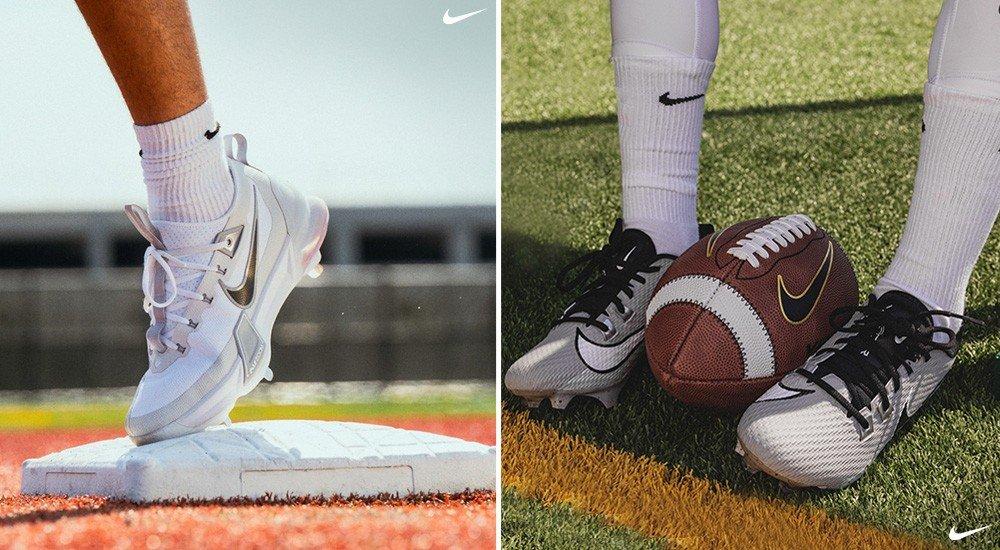
The Fundamental Differences: Football vs. Baseball Cleats
Football and baseball are sports that demand different movements and interactions with the playing surface. This leads to distinct designs in their respective footwear.
Stud Design and Placement
- Football Cleats: Football cleats are designed for explosive bursts of speed and sharp lateral movements. They often feature longer, more aggressive studs, especially in the forefoot and heel, to provide maximum traction for quick changes of direction, blocking, and pushing off. The stud patterns are typically engineered to dig into softer ground for grip.
- Baseball Cleats: Baseball cleats, on the other hand, are optimized for the specific actions of the game. They prioritize traction for sprinting to bases, quick stops, and maintaining balance during swings and throws. The stud placement is crucial. Often, there are more studs spread across the sole, with a focus on the forefoot for pushing off during pitching and batting. The heel stud is usually prominent for stability.
Cleat Length and Aggressiveness
- Football Cleats: Many football cleats, especially those for linemen, can have very long and aggressive studs. These are meant to provide deep penetration into the turf or grass, offering superior grip.
- Baseball Cleats: Baseball cleats tend to have shorter, less aggressive studs. This is to prevent players from digging in too deeply, which could lead to ankle injuries during quick pivots or slides. The rules also govern the length and material of cleats in baseball to ensure fairness and safety.
Flexibility and Support
- Football Cleats: Football cleats often offer more ankle support, particularly high-top models, to protect against tackles and forceful impacts. The overall construction can be more rigid to withstand the demands of the sport.
- Baseball Cleats: Baseball cleats generally prioritize flexibility in the forefoot, allowing for the natural motion of batting and running. While some offer ankle support, it’s usually less pronounced than in comparable football footwear.
Material and Construction
- Football Shoes Baseball: The materials used in football cleats can be more robust to handle the physical contact. The soles are built for durability under extreme stress.
- Baseball Spikes: Baseball spikes, especially metal cleats baseball, are engineered for lightness and responsiveness. Molded cleats baseball offer a good balance of durability and comfort.
Why Using Football Cleats for Baseball is Problematic
The differences in design are not merely aesthetic; they have practical implications on the baseball field.
Safety Concerns
- Ankle Injuries: The longer, more aggressive studs on football cleats can dig too deeply into the baseball infield or outfield. This can cause unnatural twisting of the ankle during pivots, slides, or sudden stops, significantly increasing the risk of sprains or even more severe ligament damage. Baseball cleats are designed with stud lengths and patterns that minimize this risk.
- Hypermobility: The rigid construction of some football cleats might restrict the natural movement of the foot and ankle, which are crucial for the agility required in baseball.
Performance Limitations
- Reduced Agility: While football cleats excel at digging in for straight-line speed and lateral force, they might hinder the nuanced movements needed in baseball, such as the quick footwork of an infielder or the precise balance of a hitter.
- Inconsistent Traction: The stud patterns on football cleats are not optimized for the specific actions of baseball. This could lead to slippage in some situations or excessive digging in others, both of which can negatively impact performance. For instance, the aggressive heel stud on a football cleat might not be ideal for the quick, rotational movements of a baseball swing.
Rule Violations
This is a critical point. Many baseball leagues, from youth levels to professional organizations, have specific rules regarding footwear.
- Metal Cleats: In some leagues, metal cleats baseball are allowed, but with restrictions on length and material. Football cleats, even if they have metal spikes, may not conform to these regulations.
- Prohibited Studs: Rules often explicitly prohibit certain types of studs or stud configurations that are common on football cleats. Using such footwear could lead to the player being benched or even disqualified.
Exploring Baseball Shoe Alternatives
Given the drawbacks of using football cleats for baseball, what are the best options for baseball players?
Molded Cleats Baseball
- Advantages: Molded cleats are a popular choice, especially for younger players or those playing on well-maintained fields. They offer good traction without the excessive digging risk of metal cleats. They are generally more comfortable, lighter, and more flexible than metal cleats.
- When to Use: Ideal for a wide range of players and field conditions. They provide a good balance of performance and safety.
Metal Cleats Baseball
- Advantages: Metal cleats offer the superior traction, especially on softer or uneven fields. They are preferred by many pitchers and power hitters who rely on maximum grip for their movements.
- When to Use: Best suited for experienced players on fields where maximum traction is essential. However, it’s crucial to be aware of league rules regarding metal cleats.
Turf Shoes Baseball
- Advantages: Turf shoes baseball are an excellent option for practice or games on artificial turf. They have numerous small rubber nubs or a pattern that provides excellent grip on artificial surfaces without damaging them. They offer great comfort and are often used for batting practice or as an alternative to cleats.
- When to Use: Primarily for artificial turf fields or for training sessions where cleated footwear might be inappropriate.
Can I Use Soccer Cleats for Baseball? (Using Soccer Cleats for Baseball)
This is another common question. Soccer cleats, like football cleats, have their own specific design considerations.
Soccer Cleat Design
- Studs: Soccer cleats typically feature shorter, more rounded studs designed for grip on grass fields. The stud pattern is optimized for the kicking and lateral movements common in soccer. Many soccer cleats have a prominent toe stud for added grip when pushing off for powerful kicks.
- Flexibility: Soccer cleats are generally very flexible, allowing for a wide range of motion in the foot.
- Ankle Support: Most soccer cleats are low-cut, offering minimal ankle support.
Soccer Cleats Baseball Compatibility
- Toe Stud: The prominent toe stud often found on soccer cleats is a major issue for baseball. This stud can dig too deeply into the dirt, similar to overly aggressive football cleats, and pose a significant risk of ankle injury during baseball movements.
- Stud Placement: While the studs are generally shorter than football cleats, their placement might not be ideal for baseball’s specific demands, potentially leading to less efficient traction for running and quick cuts.
- Rule Violations: As with football cleats, soccer cleats may also violate baseball league rules concerning stud type, length, or placement, particularly the toe stud.
Therefore, using soccer cleats for baseball is generally not recommended due to the safety risks associated with the toe stud and potentially suboptimal stud patterns.
Deciphering Cleat Compatibility Baseball: A Comprehensive Look
When we talk about cleat compatibility baseball, we’re really asking if footwear designed for one sport can safely and effectively be used in another. The answer, as we’ve seen, is usually no.
Here’s a breakdown of why cleat compatibility is so important:
The Science of Traction
Traction isn’t just about having spikes; it’s about how those spikes interact with the ground. Different sports require different types of traction:
- Explosive Starts: Football needs grip for immediate acceleration.
- Lateral Cuts: Football and soccer require traction for quick side-to-side movements.
- Rotational Power: Baseball needs grip for pitching, batting, and turning to throw.
- Sprinting: Baseball and soccer require good traction for straight-line speed.
The design of a cleat is a direct response to these specific needs.
Material Matters: Metal vs. Molded vs. Rubber
- Metal Cleats Baseball: Offer the deepest penetration and thus the best grip, especially on soft surfaces. However, they can damage fields and, if not designed correctly, increase injury risk.
- Molded Cleats Baseball: Made of plastic or rubber, these studs are permanently attached. They provide good traction without the aggressive penetration of metal, making them safer and better for field preservation. They are often lighter and more flexible.
- Turf Shoes Baseball: These don’t have traditional “cleats” but rather many small rubber or plastic nubs. They are ideal for artificial turf and provide a secure grip without digging into the surface.
The Rulebook and Your Gear
It’s crucial to consult your league’s specific rules and regulations regarding footwear. These rules are in place for player safety and fair play. Using non-compliant footwear can lead to:
- Forfeiture of the game.
- Player disqualification.
- Liability issues for the team or league.
A Comparative Glance: Football, Soccer, and Baseball Cleats
To summarize the differences and help with cleat compatibility baseball, here’s a table:
| Feature | Football Cleats | Soccer Cleats | Baseball Cleats |
|---|---|---|---|
| Primary Purpose | Explosive power, blocking, lateral movement | Kicking, running, agility | Running, pitching, batting, fielding pivots |
| Stud Design | Longer, aggressive, varied shapes; often deep | Shorter, rounded, toe stud common; good for grass | Varied (molded/metal), balanced for all actions |
| Stud Length | Can be quite long, especially in the heel | Generally shorter, but toe stud can be an issue | Moderate, with regulations on length |
| Traction Focus | Maximum grip for bursts and cuts | Balanced grip for running and kicking | Optimized for baseball-specific movements |
| Flexibility | Varies, some are more rigid | High flexibility | Good flexibility in the forefoot |
| Ankle Support | Often higher cut, more support | Typically low cut, minimal support | Varies, but generally balanced |
| Safety Risk in Baseball | High due to aggressive studs; ankle injury | High due to toe stud; ankle injury risk | Lowest when compliant with rules |
| League Rules | Often prohibited | Often prohibited (especially toe stud) | Specific rules on material, length, and shape |
Baseball Spikes: The Nuances of Baseball Footwear
When discussing baseball footwear, the term “baseball spikes” is often used interchangeably with cleats. However, the distinction between metal and molded cleats is significant.
- Metal Baseball Spikes: Provide the ultimate in traction. They are favored by players who need to dig in for maximum power and speed, such as pitchers delivering a fastball or batters exploding out of the box. The design of metal baseball spikes must adhere strictly to regulations regarding stud diameter, length, and tip shape to prevent injury.
- Molded Baseball Spikes: Offer a safer and more versatile alternative. The studs are part of the shoe’s sole, providing reliable grip without the sharp edges or deep penetration potential of metal. They are generally more comfortable for extended wear and are a good choice for players of all levels.
Frequently Asked Questions (FAQ)
Can I wear football cleats to baseball practice?
While you might be able to wear football cleats to practice, it’s still not ideal. The risk of injury remains, and you won’t be practicing the same traction and feel you’d get from proper baseball cleats. It’s best to stick to baseball-specific footwear or even turf shoes for practice if you don’t have your baseball cleats with you.
Are football shoes baseball safe for baseball?
No, football shoes baseball are generally not safe for baseball. The aggressive stud designs are not suited for the biomechanics of baseball and can significantly increase the risk of ankle injuries.
What if my league allows football cleats?
If your league explicitly allows football cleats (which is highly unlikely for most organized baseball), you would still need to ensure they meet any specific regulations your league might have regarding stud length or material. However, even if technically allowed, the design is still suboptimal for baseball performance and safety.
Can I use soccer cleats for baseball games?
It is strongly advised against using soccer cleats for baseball games. The toe stud on many soccer cleats is a particular hazard, and the overall design is not optimized for baseball movements, leading to increased injury risk and compromised performance. Always check your league’s rules for footwear regulations.
Are turf shoes good enough for a baseball game?
Turf shoes baseball are excellent for practices and games played on artificial turf. For natural grass fields, traditional cleats (molded or metal, according to league rules) generally provide superior traction. While you might get away with turf shoes on a natural field in a pinch, they won’t offer the same level of grip needed for aggressive baseball movements.
What are the most important considerations for baseball shoe alternatives?
The most important considerations are safety, league rules compliance, and performance. You want a shoe that provides adequate traction without posing an injury risk, meets all regulatory requirements, and allows you to perform your best on the field.
Conclusion: Stick to the Right Footwear
In summary, while the immediate temptation might be to grab whatever cleats you have available, using football cleats for baseball, or soccer cleats for baseball, is a risky proposition. The specialized designs of each sport’s footwear are there for a reason: to optimize performance and, most importantly, to ensure player safety.
Always prioritize using proper baseball cleats that comply with your league’s rules. Whether you choose molded cleats baseball for a balance of safety and performance, or metal cleats baseball for maximum grip where permitted, ensure they are designed for the diamond. For practice or turf play, turf shoes baseball offer a great alternative. By equipping yourself with the right baseball spikes, you’re not just playing the game; you’re playing it smarter and safer.