
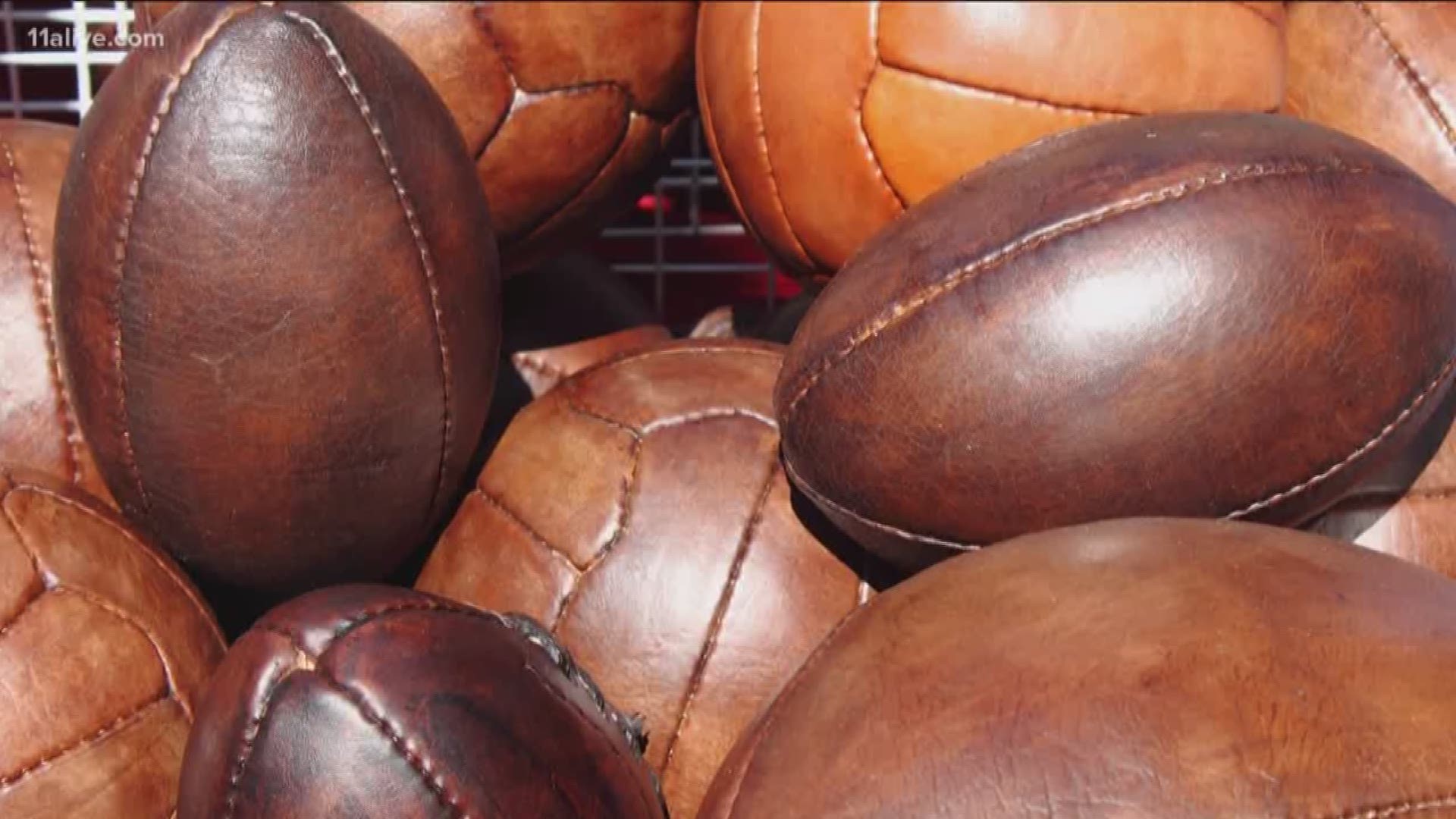
Image Source: media.11alive.com
Why Are Footballs Called Pigskin: The Real Story
The common nickname “pigskin” for an American football likely originated from the material used in very early footballs, which were often made from inflated pig bladders. While modern footballs are made from leather, the historical association with pig bladders led to the persistent nickname.
The history of sports names is full of intriguing quirks, and the journey of the football’s moniker is no exception. Today, when we think of an American football, we picture a distinct, prolate spheroid shape, typically brown, made of leather, and stitched with laces. But the term “pigskin” conjures a different image, one of an animal’s hide. So, why are footballs called pigskin? The truth lies deep in the American football origin and the evolution of the game and its equipment.
The Myth vs. The Reality: Deciphering Football’s Nickname
It’s a common misconception that modern footballs are actually made from pigskin. This is simply not true. The vast majority of official and recreational American footballs are crafted from cowhide leather. This is due to several factors, including durability, grip, and the availability of larger, more consistent hides compared to pig bladders.
However, the nickname “pigskin” is not entirely baseless. Its roots are firmly planted in the early football materials used when the sport was just beginning to take shape. To truly understand why footballs are called pigskin, we need to travel back in time to the nascent stages of what would eventually become American football.
The Dawn of Football: Early Days and Improvised Equipment
The history of American football is a fascinating chronicle of adaptation and innovation. In the mid-19th century, when the game was evolving from its rugby and soccer roots, equipment was rudimentary. There were no specialized sporting goods manufacturers churning out perfectly molded footballs. Instead, players and enthusiasts made do with what was available.
From Round to Oblong: The Shape of Things to Come
Early footballs were often round, much like soccer balls. However, as the game developed, particularly with the influence of innovations like the forward pass, a more elongated shape became advantageous for throwing and carrying. This shift in shape was driven by the practical needs of the players and the evolving rules of the game.
The Humble Beginnings of the Football’s Form
In these early days, the bladder of an animal was a readily available and suitable material for creating a ball. While other animal bladders might have been used, pig bladders were particularly common. They were relatively large, sturdy when inflated, and could be sewn into a roughly spherical or oval shape.
- Pig Bladders: These were inflated and then encased in leather or other materials to provide a more durable and consistent shape.
- Other Materials: Early footballs also saw the use of materials like cowhide, rubber, and even tightly wound string. However, the pig bladder was a significant early component.
The Pig Bladder’s Role in Early Football
The pig bladder served as the internal structure of the early football. It was inflated to give the ball its volume and shape, and then a covering was added to protect it and provide a surface for kicking and gripping. This covering was often made from leather, hence the connection between pig bladders and the eventual use of leather in leather football history.
This method of construction, using an inflated bladder within a stitched casing, is a key reason behind the enduring “pigskin” moniker. Even as the sport progressed and manufacturing techniques improved, the memory of these early balls persisted.
The Shift to Leather: A More Robust Future
As the sport gained popularity and organized leagues began to form, the demand for more consistent and durable equipment increased. The limitations of relying solely on pig bladders became apparent. Pig bladders were prone to bursting, and their shapes could be irregular, leading to an inconsistent playing experience.
The Evolution of Sporting Goods
This period marked a significant shift in sporting goods history. Manufacturers began to focus on creating balls that were more robust and uniform. Cowhide emerged as the preferred material for the outer casing due to its strength, toughness, and ability to hold a consistent shape.
- Cowhide’s Advantages:
- Durability: Cowhide is significantly more resistant to wear and tear than pig bladders.
- Consistency: Hides from cows offered larger and more uniform pieces of leather, allowing for the creation of more standardized ball shapes.
- Grip: The natural texture of tanned cowhide provided a better grip for players, which was crucial for throwing and catching.
The Birth of the Modern Football
By the late 19th and early 20th centuries, the design of the American football began to solidify. The iconic prolate spheroid shape was becoming standard, and cowhide was the material of choice for the outer shell. Laces were added to help players grip the ball and facilitate a more secure hold during passes.
Even with the transition to cowhide, the nickname “pigskin” stubbornly clung to the ball. This is a common phenomenon in football terminology and origins of sports names; established nicknames often persist even when the original reasons for them have changed.
The Psychology of Nicknames: Why “Pigskin” Stuck
Several factors contribute to the longevity of the “pigskin” nickname:
- Historical Resonance: The term directly harks back to the American football origin and the early days of the game when pig bladders were a primary component. This historical connection gives the nickname a certain authenticity and nostalgia.
- Memorability: “Pigskin” is a catchy and memorable word. It’s more evocative and distinctive than simply calling it a “leather ball.”
- Cultural Association: Over time, the nickname became deeply ingrained in the culture of American football. It’s the term used in casual conversation, sports commentary, and even in some official contexts.
- Misunderstanding: As mentioned earlier, many people simply assume the balls are made of pigskin, perpetuating the name without knowing its true history.
The nickname is a testament to how language evolves and how historical artifacts can leave an indelible mark on our terminology. The football game evolution saw a dramatic change in materials, but the name remained.
Modern Football Construction: A Glimpse Behind the Seams
Today’s footballs are sophisticated pieces of sporting equipment, designed for optimal performance. The construction process involves several key stages:
Materials of a Modern Football
A typical American football consists of:
- Cover: This is usually made from cowhide leather. For professional games, specific grades of leather are used to ensure optimal grip and durability. Some recreational balls might use synthetic materials.
- Bladder: Unlike the historical pig bladders, modern footballs use synthetic rubber or butyl bladders. These are more durable, airtight, and provide consistent inflation.
- Lining: Several layers of fabric and nylon are used to reinforce the ball and maintain its shape under pressure.
- Laces: These are typically made from leather or synthetic materials and are sewn into the cover.
The Manufacturing Process
- Cutting the Panels: The leather is cut into specific shapes that will form the outer shell of the football.
* Sewing the Panels: The panels are carefully sewn together, often by hand, to create the characteristic prolate spheroid shape. The laces are attached during this process.
* Inserting the Bladder: The synthetic bladder is inserted into the partially assembled cover.
* Inflation: The bladder is inflated to the correct pressure.
* Finishing: The ball is inspected, cleaned, and branded.
This intricate sporting goods history showcases the progression from simple, readily available materials to highly engineered products.
Why is Pigskin Still the Dominant Term?
Despite the shift away from actual pig bladders and the use of cowhide for the outer shell, the nickname “pigskin” continues to be widely used. This is a fascinating aspect of football naming conventions.
- Tradition: The power of tradition is immense in sports. The term “pigskin” is so deeply embedded in the culture of American football that it’s unlikely to be replaced.
- Nostalgia: The nickname evokes a sense of the past, of simpler times when the game was played by amateurs with whatever materials they could find.
- Cultural Identity: “Pigskin” has become a part of the cultural lexicon surrounding American football, as synonymous with the sport as “touchdown” or “field goal.”
The history of American football is a narrative of continuous development, and “pigskin” is a linguistic artifact that has survived these transformations.
A Comparative Look: Other Sports and Their Nicknames
It’s interesting to note that many sports have nicknames for their equipment that don’t directly reflect their current materials. For example:
- Basketballs are often called “the orange,” even though modern balls come in various colors and materials.
- Baseballs are made of cork, rubber, and yarn covered in leather, but we don’t have a common nickname that reflects this composition.
The persistence of “pigskin” highlights how deeply rooted certain terms can become, often detached from their literal origins.
The Enduring Legacy of the Pig Bladder
While the pig bladder is no longer a functional part of a modern football, its legacy lives on in the nickname. It’s a linguistic echo from the American football origin that reminds us of the game’s humble beginnings and the ingenuity of those who played it. The term “pigskin” is more than just a nickname; it’s a piece of the sport’s history and a testament to how language can preserve the memory of past practices.
The football game evolution has been remarkable, transforming from a loosely organized pastime to a global phenomenon. Yet, in the common parlance, the ball that flies down the field is still, affectionately, called pigskin. This enduring term underscores the rich tapestry of football terminology and the fascinating journey of origins of sports names.
The story of why footballs are called pigskin is a perfect example of how the past continues to inform the present, even in the most unexpected ways. It’s a reminder that behind every common term, there’s often a story waiting to be told, a connection to history that shapes our understanding of the games we love.
Frequently Asked Questions About Football Nicknames
Q1: Are modern footballs made of pigskin?
A1: No, modern American footballs are typically made from cowhide leather. The nickname “pigskin” comes from the historical use of inflated pig bladders in very early footballs.
Q2: Why did they use pig bladders in early footballs?
A2: Pig bladders were readily available, relatively durable when inflated, and could be sewn into a suitable shape for a ball in the early days of the sport when specialized sporting equipment was scarce.
Q3: When did footballs stop being made with pig bladders?
A3: While there isn’t an exact date, the transition away from pig bladders towards more robust leather casings and synthetic bladders occurred gradually throughout the late 19th and early 20th centuries as the sport became more organized and the demand for consistent equipment grew.
Q4: Is “pigskin” an official term for a football?
A4: “Pigskin” is widely used as a colloquial and affectionate nickname for an American football. While not an official technical term, it is deeply ingrained in football terminology and culture.
Q5: Does the NFL use pigskin balls?
A5: No, the NFL uses official footballs made from high-quality cowhide leather, specifically engineered for professional play. However, the nickname “pigskin” is still commonly used by players, coaches, and fans to refer to these balls.