
American style football is often called the “gridiron sport” because the distinctive pattern of yard lines and hash marks on the American football field resembles a cooking gridiron, a metal frame used for broiling food over heat.
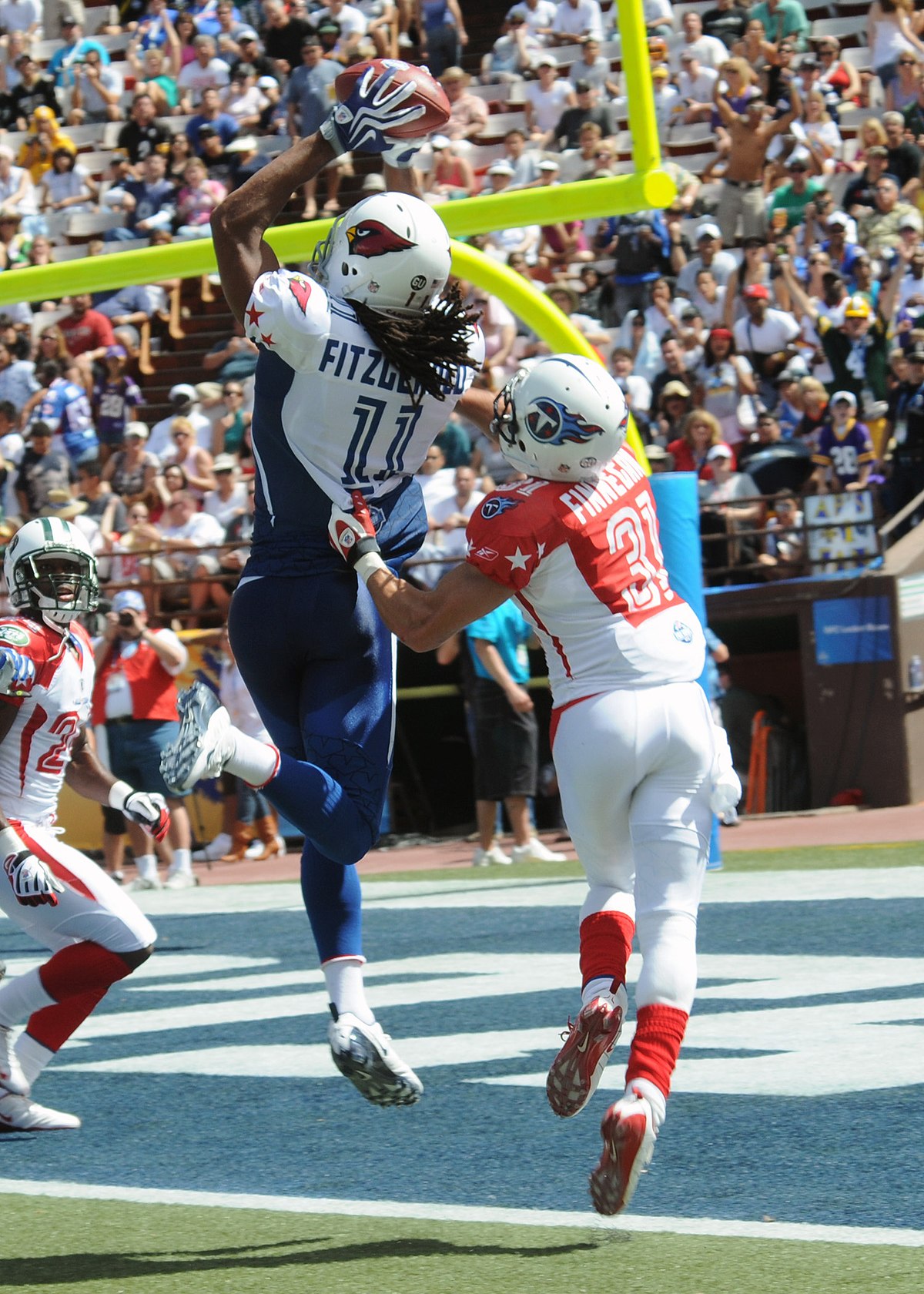
Image Source: upload.wikimedia.org
The Visual Connection: A Tale of Lines and Cooking
The nickname “gridiron” for American football is a vivid descriptor, instantly conjuring an image that resonates with the sport’s unique visual identity. It’s a nickname born not from complex strategy or historical figures, but from something far more down-to-earth: the very ground upon which the game is played. The football field markings, when viewed from above, create a striking visual resemblance to a traditional cooking gridiron.
Tracing the Roots of the Nickname
The origin of this moniker is often attributed to the early days of the sport, when football field markings were indeed very basic, yet the crisscrossing lines were a prominent feature. Unlike other sports played on vast, uninterrupted expanses of green, the American football field is a meticulously organized and heavily marked territory. These markings are not arbitrary; they are essential for the game’s flow, dictating distances, boundaries, and strategic positioning.
The term “gridiron” itself describes a frame, typically made of metal bars, used for grilling or broiling. Think of the crosshatches on a steak or a piece of chicken after it’s been cooked on one of these devices. This is precisely the pattern that the yard lines and hash marks create on the American football field.
Deconstructing the Field: What Makes it a Gridiron?
To truly appreciate why the term “gridiron” is so fitting, we need to examine the key components of the sports field:
- Yard Lines: These are the most prominent features, running horizontally across the width of the playing field dimensions. They are marked every five yards, with the fifty-yard line being the central dividing mark. These lines clearly delineate the progress of the game and are fundamental to understanding the sport’s objective: to advance the ball down the field.
- Hash Marks: These are shorter lines that run vertically from the sidelines towards the center of the field. They are positioned in specific intervals, typically at ten-yard increments. The purpose of the hash marks is to ensure that the ball is placed in a consistent location for subsequent plays, particularly after the ball goes out of bounds or a penalty occurs. They break up the long expanse of the field into smaller, manageable segments.
- Sidelines and End Lines: These define the outer boundaries of the field of play. The sidelines run along the length of the field, while the end lines mark the width at each extremity, where the end zones are located.
When you combine these elements, especially the yard lines intersecting with the hash marks, the visual effect is a dense, linear pattern that strongly suggests the parallel and perpendicular bars of a gridiron. It’s a visual metaphor that has stuck, becoming an intrinsic part of the sport’s lexicon.
The Purpose of the Gridiron: More Than Just a Pretty Pattern
The gridiron lines on an American football field are far more than just an aesthetic choice; they are critical to the strategic and tactical execution of the game. Without these markings, the sport would be chaotic and nearly impossible to officiate.
Precision in Play
The yard lines provide a clear, tangible representation of distance. For players, coaches, and spectators alike, these lines communicate crucial information:
- Down and Distance: The position of the ball relative to the yard lines immediately tells everyone how many downs the offensive team has remaining to gain a specific yardage (the “first down marker”). This is the fundamental rhythm of offensive play in American football.
- Field Position: Knowing where the ball is on the field is paramount for decision-making, from play-calling to strategic substitutions. A team deep in their own territory will play differently than a team poised to score in the opponent’s red zone.
- Clock Management: While not directly marked on the lines, the progression of the ball down the field is intrinsically linked to time. Every yard gained or lost impacts how much time is left on the clock.
Hash Marks: Ensuring Fairness and Structure
The hash marks contribute significantly to the structured nature of the game:
- Ball Placement: They ensure that the ball is placed centrally or closer to one of the sidelines in a consistent manner, preventing teams from gaining an unfair advantage by consistently having the ball placed in a more favorable position relative to the sidelines.
- Play Variety: The varying positions of the hash marks encourage different play-calling strategies. When the ball is on a hash mark, the offense has less of the field to work with on one side, potentially leading to more runs or short passes in that direction, or a deliberate attempt to stretch the field to the wider side.
Beyond the Gridiron: Stadium Layout and Spectator Experience
While the term “gridiron” primarily refers to the field markings, it has also broadened to encompass the entire sporting environment. The stadium layout of American football venues often reflects the intensity and structure of the game itself. The design of a gridiron stadium is typically focused on maximizing visibility of the football field dimensions and creating an immersive experience for fans.
The sheer scale of most American football stadiums, coupled with the clear demarcation of the playing area, amplifies the “gridiron” effect. From the stands, the intricate network of lines appears even more pronounced, reinforcing the nickname. The precise layout of seating, concessions, and other facilities is all geared towards complementing the spectacle unfolding on the field.
Comparing the Gridiron to Other Sports Fields
The term “gridiron” is unique to American football. When we look at other popular sports, their playing fields have different characteristics and, consequently, different nicknames or lack thereof.
The Football Pitch: A Different Kind of Field
In soccer, the playing area is commonly referred to as a “pitch.” The football pitch has far fewer markings than an American football field. It has center lines, penalty boxes, and goal areas, but it lacks the dense network of yard lines and hash marks. The emphasis is on open space and fluid movement, rather than the segmented, yardage-based progression of American football. The playing field dimensions of a soccer pitch can also vary more than those of an American football field, adding to its less rigidly defined appearance.
Other Sports Fields: Variations in Markings
- Basketball Court: Marked with lines for the three-point arc, free-throw lines, and boundaries. These are functional but don’t create a grid-like pattern.
- Baseball Diamond: Characterized by bases forming a diamond shape, with foul lines extending outwards. Again, a distinct geometry, but not a grid.
- Tennis Court: Defined by boundary lines, a net, and service boxes. Simple and functional.
The gridiron lines of American football are therefore a defining visual characteristic that sets it apart from virtually every other major sport played on a marked field. This distinctive visual is the primary reason for the enduring nickname.
The Evolution of the Gridiron
The football field markings we see today have evolved over time. Early forms of football had much simpler fields. As the sport became more organized and strategic, the need for more precise markings became apparent.
Early Days: Simpler Markings
In the nascent stages of American football, fields were often less elaborately marked. The concept of precise yardage was developing, but the visual representation was not as standardized. Early games might have had fewer lines, relying more on observation and less on a dense grid system.
Standardization and the Modern Gridiron
The professionalization of the sport, the establishment of governing bodies like the NCAA and the NFL, and the increasing complexity of offensive and defensive strategies all contributed to the standardization of the American football field. The current system of yard lines, hash marks, and end zone markings is a product of this evolution, designed to support the intricate rules and strategic nuances of the game. The precise playing field dimensions and the clarity of the field markings are essential for fair play and the spectator’s ability to follow the action.
Why the Nickname Persists
The nickname “gridiron” is more than just a descriptive term; it has become deeply ingrained in the culture of American football.
Cultural Significance
- Nostalgia and Tradition: The term evokes a sense of history and tradition, connecting modern fans to the origins of the sport.
- Brand Identity: “Gridiron” has become almost synonymous with American football itself, appearing in sports journalism, fan discussions, and even team branding.
- Accessibility: For newcomers to the sport, understanding the term “gridiron” offers a simple, visual key to comprehending the sport’s structured nature. It’s a readily available explanation for the sport’s appearance.
The Gridiron as a Metaphor
Beyond its literal visual resemblance, the “gridiron” can also be seen as a metaphor for the strategic battlefield of American football. Each line represents a battleground, a territory to be fought over, with the ultimate goal of crossing the opponent’s line. The complex network of lines mirrors the intricate strategies and plays that teams devise.
Conclusion: A Name Rooted in Visual Identity
The American style football is called the “gridiron sport” because the visual layout of the American football field, with its uniform yard lines and hash marks, strongly resembles a cooking gridiron. This distinctive appearance is not merely aesthetic; it is fundamental to the game’s structure, strategy, and officiating. The term “gridiron” is a testament to how a simple visual comparison can become a powerful and enduring part of a sport’s identity, encompassing not just the football field markings but the very essence of the game played upon it within the broader stadium layout and field of play.
Frequently Asked Questions (FAQ)
Q1: Is the term “gridiron” used in other sports?
No, the term “gridiron” is almost exclusively used to refer to the sport of American football. Other sports have their own specific terms for their playing fields, like “pitch” for soccer or “court” for basketball.
Q2: Are the markings on an American football field always the same?
Yes, professional and college American football fields adhere to very specific regulations regarding their playing field dimensions and field markings. While there might be minor variations in sponsor logos or team colors, the fundamental layout of yard lines, hash marks, sidelines, and end zones is standardized for consistency and fair play.
Q3: What are the exact dimensions of an American football field?
An American football field is 100 yards long between the goal lines, with 10-yard end zones at each end, making the total playing area 120 yards from one end line to the other. The width of the field is 53 1/3 yards (160 feet).
Q4: Why are hash marks important in American football?
Hash marks are important because they determine where the ball is spotted for the next play, especially after a play ends near a sideline or with an incomplete pass. They help ensure that the ball is placed in a consistent and fair location, influencing offensive and defensive strategy.
Q5: Does the “gridiron” nickname apply to Canadian football as well?
While Canadian football shares many similarities with American football and is also played on a field with yard lines, the term “gridiron” is less commonly used for it. The visual resemblance still exists, but the nickname is more deeply associated with the American version of the sport. Canadian football fields also have some different markings and dimensions.