
Yes, you can technically use football cleats for softball, but it’s generally not recommended due to significant differences in design, safety, and performance. While both are athletic shoes with cleats for traction, the specific needs of each sport lead to distinct footwear features.
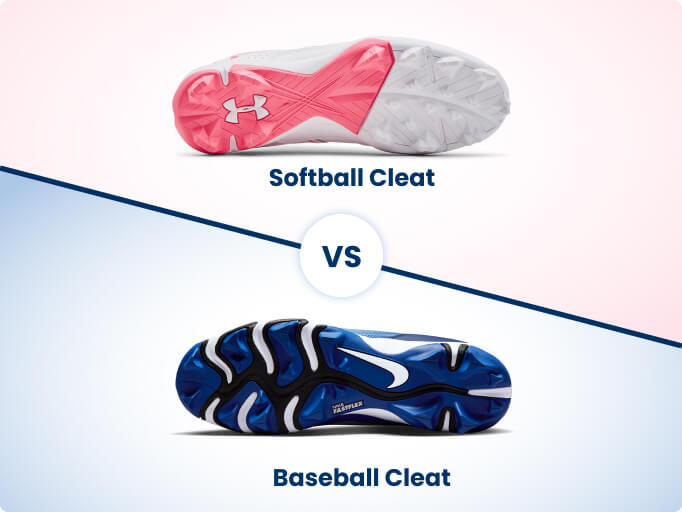
Image Source: images.contentstack.io
Deciphering Football Cleat Differences
Football footwear is designed for explosive, lateral movements and forward momentum on turf or grass. The studs are typically longer and more aggressive to dig into the ground, providing maximum grip for quick cuts, tackles, and sprints. This aggressive stud pattern is a primary reason why football cleats aren’t ideal for the softball field.
Stud Patterns and Materials
Football cleats often feature a wider variety of stud shapes and placements. You’ll commonly find:
- Conical Studs: These are good for quick pivots and lateral movements.
- Blade Studs: These offer enhanced grip for straight-line speed and acceleration.
- Combination Studs: Many football cleats mix both types to cover various performance needs.
The materials used for football studs can also be harder and more durable, designed to withstand the immense forces of the sport.
Upper Construction
The uppers of football cleats are usually built for durability and ankle support, especially for linemen and linebackers. This can mean more padding and stiffer materials. While this offers protection, it can also limit flexibility and breathability, which are crucial for comfort and agility on the softball diamond.
Examining Cleat Compatibility in Softball
Softball, while sharing some movement similarities with football, has its own unique demands. The infield dirt, grass, and the specific motions of pitching, batting, and fielding require a different kind of traction and shoe construction.
Softball Cleat Design
Softball cleats are specifically engineered for the nuances of the game. Their design prioritizes:
- Traction for Pivoting: Softball players frequently pivot on the balls of their feet, especially when fielding ground balls or rounding bases.
- Comfort for Extended Wear: Games can be long, requiring comfortable footwear that doesn’t fatigue the player.
- Reduced Risk of Injury: The stud patterns are designed to prevent excessive digging that could lead to ankle sprains or other injuries.
Baseball vs. Softball Cleats
It’s also important to differentiate between baseball and softball cleats, as there are subtle but important differences.
Baseball Shoe Types
Baseball cleats tend to have a more aggressive cleat pattern, particularly in the heel, to provide traction for pitching and fielding. They are often designed for the faster pace and specific movements of baseball.
Softball Cleat Types
Softball cleats, especially for fastpitch, often feature a more rounded stud pattern or a combination of blunted and rounded cleats to allow for easier rotation and less risk of the cleat digging too deeply into the dirt. Metal cleats are common in higher levels of baseball and softball, offering superior grip, but there are also molded plastic and rubber options.
The Risks of Using Football Cleats for Softball
The core issue with using football cleats for softball lies in their stud design. Football cleats are built for deep penetration into the ground, which can be problematic on a softball field.
Excessive Stud Length and Aggressiveness
Football studs, particularly the longer ones found on many models, can dig too deeply into the infield dirt. This can cause:
- Ankle Injury: When a stud digs in too much, especially during a quick pivot or slide, it can force the ankle into an unnatural and potentially injurious position, leading to sprains or fractures.
- Reduced Agility: Instead of allowing for smooth rotations, overly aggressive cleats can catch the dirt, hindering quick changes in direction.
- Field Damage: In some cases, overly aggressive cleats can cause more significant damage to the playing surface, which can be a concern for field maintenance.
Weight and Flexibility
Football cleats are often heavier and more robust to handle the rigors of that sport. This added weight can be a disadvantage in softball, leading to quicker fatigue. The stiffness that provides ankle support in football can also restrict the natural flex of the foot needed for effective fielding and running in softball.
Interchangeable Cleats
Some football cleats, and increasingly some baseball and softball cleats, offer interchangeable cleats. This feature allows players to swap out cleat types based on field conditions or personal preference. However, even with interchangeable cleats, the fundamental design and stud patterns intended for football may not translate well to softball. The base that holds the cleat might still be designed with different leverage points in mind.
Legal and League Regulations
Before considering using football cleats, it’s crucial to check the specific cleat regulations for your league or organization.
Cleat Regulations
Many softball leagues, especially at lower levels or for younger players, have strict rules about the type of cleats allowed.
- Prohibited Stud Types: Leagues often ban metal cleats or cleats with specific sharp or pointed designs to enhance player safety.
- Molded Cleats: Molded rubber or plastic cleats are generally the safest and most widely accepted.
- Football Cleat Bans: Due to the potential for injury, many softball governing bodies will explicitly prohibit the use of football cleats. It’s always best to err on the side of caution and consult your league’s rulebook or officials.
Footwear for Softball: What to Look For
When selecting footwear for softball, prioritizing the right features will enhance your performance and safety.
Key Features of Softball Shoes
- Cleat Pattern: Look for a cleat pattern designed for softball, typically with a mix of rounded and blunted studs, often with a more concentrated pattern under the ball of the foot and heel for pivoting and acceleration.
- Lightweight Construction: Lighter shoes reduce fatigue, allowing you to play at your best for longer.
- Ankle Support: While not as rigid as some football cleats, a good softball cleat will offer moderate ankle support without sacrificing flexibility.
- Breathability: Mesh and breathable materials in the upper help keep your feet cool and dry.
- Durability: Softball cleats need to withstand the demands of sliding, pitching, and running on various surfaces.
Types of Softball Footwear
- Molded Cleats: These are the most common and safest option, made entirely of rubber or plastic. They offer good traction without the risk of deep ground penetration.
- Metal Cleats: Favored by more experienced players at higher levels for their superior grip, especially on softer ground. However, they are often restricted by league rules.
- Turf Shoes: While not technically cleats, turf shoes have a patterned rubber sole that provides excellent traction on artificial turf fields and are a great option for training or when cleats are prohibited.
Footwear for Football: A Different Beast
The demands of football necessitate footwear that is fundamentally different from softball shoes.
Essential Football Footwear Characteristics
- Aggressive Traction: The primary goal is maximum grip for explosive movements and stopping power.
- Robust Ankle Support: High-top designs and firm ankle collars are common to protect against the high-impact nature of the sport.
- Durability: Football cleats must withstand the forces of tackles, collisions, and constant digging into the ground.
- Weight: While weight is a factor, durability and traction often take precedence.
Comparing Football and Softball Footwear
Here’s a simplified comparison to highlight the key differences:
| Feature | Football Cleats | Softball Cleats |
|---|---|---|
| Primary Purpose | Explosive forward/lateral movement, maximum grip | Pivoting, acceleration, balanced traction |
| Stud Design | Longer, sharper, varied patterns (blades, cones) | Shorter, blunter, more rounded, optimized for pivots |
| Ankle Support | Typically higher and more rigid | Moderate, balancing support with flexibility |
| Weight | Often heavier for durability | Lighter for speed and reduced fatigue |
| Flexibility | Can be stiffer | More flexible for agile footwork |
| Field Interaction | Deep ground penetration | Balanced grip and rotation on dirt and grass |
| Injury Risk | Higher risk of ankle injury if used for softball | Designed to minimize common softball injuries |
Can You Use Baseball Cleats for Softball?
The question of using baseball cleats for softball is more nuanced. While baseball cleats are closer in design to softball cleats than football cleats are, there are still differences.
Baseball Cleat Nuances
- Pitcher’s Toe: Baseball cleats often have a reinforced toe area, particularly on the medial side, to withstand the abrasion from pitching. This isn’t typically a major issue for softball, though it doesn’t necessarily hurt.
- Heel Cleats: Baseball cleats sometimes feature more pronounced heel cleats for greater traction when pitchers drive off the mound. This extra traction in the heel could potentially pose a minor risk for quick pivots in softball, but it’s far less extreme than football cleats.
- Stud Patterns: While similar, the exact placement and shape of studs might differ slightly to optimize for the specific movements of each sport.
Generally, using baseball cleats for softball is much more acceptable than using football cleats. Many players do so, and the differences are often minor enough not to pose a significant problem, especially at recreational levels. However, if you’re playing at a competitive level or have concerns about footwork and safety, dedicated softball cleats are always the best choice.
Frequently Asked Questions (FAQ)
Q1: Are football cleats bad for softball?
Yes, football cleats are generally considered bad for softball because their aggressive stud patterns can dig too deeply into the dirt, increasing the risk of ankle injuries. Their weight and stiffness can also hinder agility and cause fatigue.
Q2: Can I wear baseball cleats for softball?
In most cases, yes. Baseball cleats are much more similar to softball cleats than football cleats are. While there are minor differences, baseball cleats are usually a safe and functional alternative for softball, particularly at recreational levels. Always check league regulations.
Q3: What is the main difference between football cleats and softball cleats?
The main difference lies in the stud design. Football cleats have longer, more aggressive studs for maximum grip in various conditions, while softball cleats have shorter, often blunter studs optimized for pivoting and quick movements on a dirt and grass field, reducing the risk of injury.
Q4: Are metal cleats allowed in softball?
This depends entirely on the league. Many youth leagues and some amateur leagues prohibit metal cleats due to safety concerns. Higher-level competitive leagues often allow them. Always check your specific league’s rules.
Q5: What kind of footwear is best for softball?
The best footwear for softball are shoes specifically designed as softball cleats. These offer the right balance of traction, support, flexibility, and safety for the movements involved in the sport. Molded cleats are a popular and safe option for most players.
Q6: Can I use turf shoes for softball?
Yes, turf shoes are an excellent option for softball, especially on artificial turf fields or when cleats are not allowed. They provide good traction without the aggressive digging of cleats, making them safe and versatile. They are also great for practices and training.
Q7: What are interchangeable cleats?
Interchangeable cleats are cleat spikes that can be screwed into and out of the cleat shoe. This allows players to swap them out for different types (e.g., metal, molded rubber, different lengths) depending on field conditions or league rules. Some football, baseball, and softball shoes feature this technology.
By prioritizing footwear designed specifically for the demands of softball, players can ensure better performance, comfort, and most importantly, safety on the field.