
So, you want to be a football scout? Can you get paid to find football talent? Yes, you absolutely can! Becoming a football scout involves a keen eye for potential, a deep knowledge of the game, and a methodical approach to identifying football players. This guide will walk you through the entire process, from gaining essential experience to mastering the art of football recruitment.
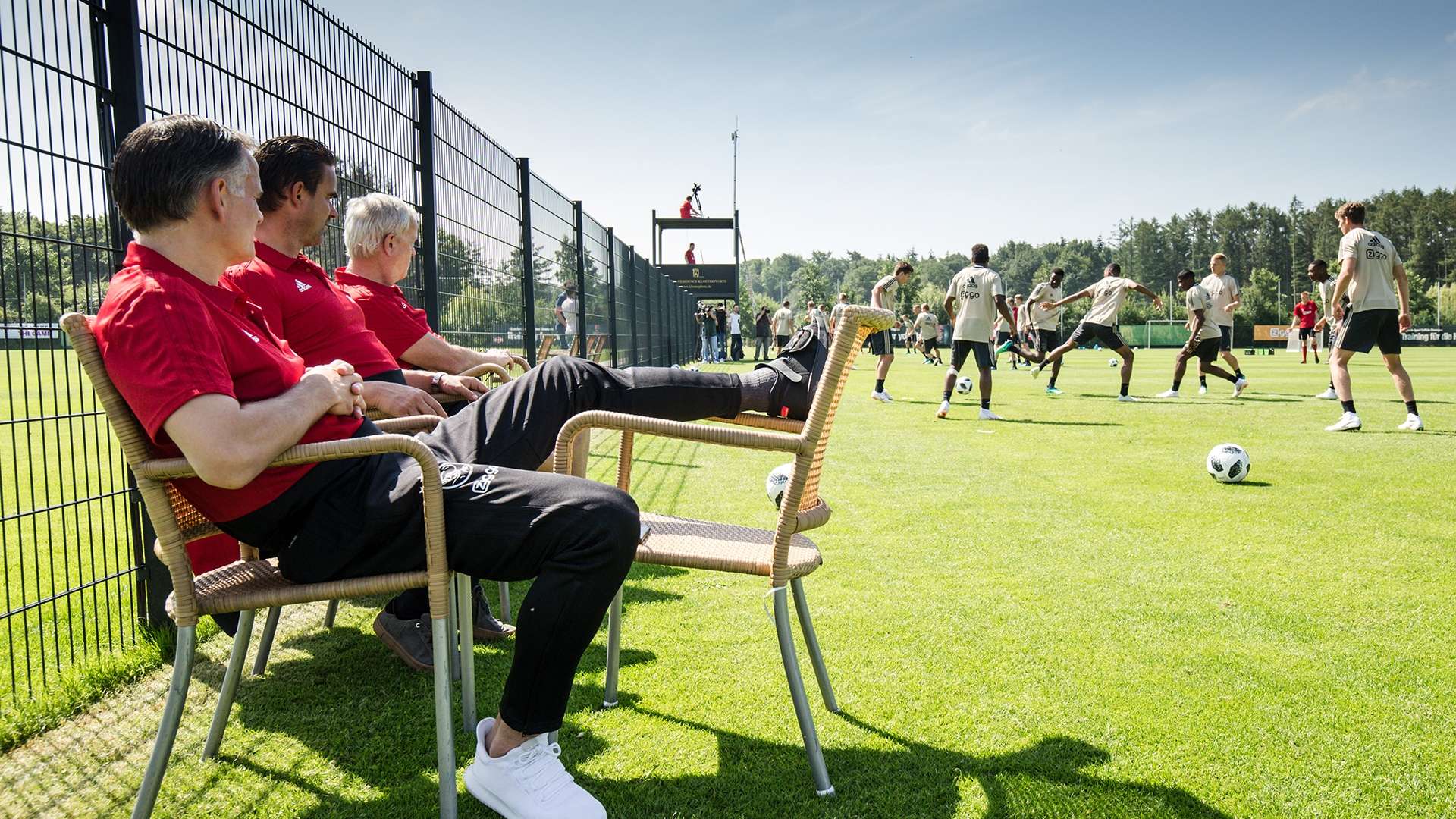
Image Source: assets.goal.com
The Foundation: Developing Your Scouting Acumen
Football scouting is more than just watching games. It’s about seeing what others miss, recognizing raw talent, and understanding how a player’s attributes translate to success on the pitch. It requires a blend of intuition and objective analysis. If you’re passionate about football and have a knack for spotting future stars, this career path could be for you.
What Does a Football Scout Do?
At its core, a football scout is responsible for finding football talent. This involves attending matches at various levels, from youth academies and amateur leagues to professional fixtures. Scouts observe players, analyze their strengths and weaknesses, and compile detailed reports for clubs or organizations. Their goal is to identify players who fit the specific needs and playing style of their team. This could mean looking for a speedy winger, a dominant central midfielder, or a reliable defender.
The job entails:
- Player Identification: Spotting players with potential, even if they aren’t yet polished.
- Performance Analysis: Evaluating how players perform in different game situations.
- Reporting: Creating comprehensive reports on players’ technical, tactical, physical, and psychological attributes.
- Networking: Building relationships with coaches, agents, and other scouts.
- Market Knowledge: Staying informed about player movements, contract situations, and emerging talent.
Essential Qualities of a Successful Scout
Football scouting demands a unique set of skills and personal attributes. It’s not just about liking football; it’s about dedicating yourself to the craft of identifying football players.
- Sharp Observation Skills: The ability to notice subtle movements, tactical understanding, and individual brilliance.
- In-depth Football Knowledge: A deep grasp of tactics, formations, playing styles, and player roles.
- Objectivity: The capacity to assess players without bias, focusing on facts and potential.
- Patience and Persistence: Finding hidden gems often takes time and repeated viewings.
- Excellent Communication: Clearly conveying findings in written and verbal reports.
- Integrity and Discretion: Handling sensitive information about players and clubs responsibly.
- Adaptability: Being able to scout in various conditions and at different levels of the game.
The Pathway to Scouting: Building Your Experience
There isn’t a single, rigid pathway to scouting, but certain experiences and steps significantly boost your chances. Many successful scouts start at the grassroots level and work their way up.
1. Play the Game
Having played football yourself, even at an amateur level, provides invaluable insight. You’ve experienced the pressures of a match, the tactical demands, and the physical exertion. This firsthand knowledge helps you relate to players and better assess their abilities and mindset.
- Local Leagues: Participate in amateur or semi-professional leagues.
- Coaching Youth Teams: Coaching younger players offers a chance to develop tactical understanding and player development knowledge.
2. Get Involved at Grassroots Level
The foundation of football recruitment often lies in amateur and youth football. Volunteering or taking on roles in local clubs is a fantastic starting point.
- Assistant Coach: Work closely with a coach, learning about team strategy and individual player development.
- Team Manager: Take responsibility for a team’s organization and on-field decisions.
- Volunteer Scout: Offer your services to a local club, even if unpaid initially. This shows initiative and allows you to practice your skills.
3. Gain Coaching Qualifications
Formal coaching badges not only enhance your knowledge but also demonstrate your commitment to the game and provide a structured learning environment.
- FA Coaching Badges (or equivalent): These courses cover coaching methodologies, player analysis, and tactical approaches.
- Specialized Courses: Look for courses specifically on talent identification or sports analysis.
4. Attend Matches Regularly
Become a regular fixture at games across different age groups and leagues. This is where you’ll hone your ability to spot talent and develop your eye for detail.
- Local Fixtures: Watch your local team, but also explore other nearby clubs.
- Youth Tournaments: These are often breeding grounds for future stars.
- Non-League Football: Many talented players ply their trade in these leagues.
5. Network with Professionals
Building connections within the football world is crucial. Talk to coaches, scouts from other clubs, and even sports agents.
- Informational Interviews: Reach out to scouts and ask them about their experiences and advice.
- Attend Football Events: Conferences, workshops, and seminars are great places to meet people.
- Social Media: Professional platforms like LinkedIn can be useful for connecting with industry professionals.
Developing Your Scouting Techniques
Effective scouting techniques are the backbone of identifying promising players. It’s a process that requires a structured approach to observation and analysis.
The Core Principles of Player Evaluation
Player evaluation is a multifaceted process. You need to look beyond just goals scored or tackles made.
- Technical Ability: Ball control, passing accuracy, dribbling skill, shooting technique, heading ability, defensive actions.
- Tactical Awareness: Positional sense, decision-making, understanding of formations, ability to read the game, movement off the ball.
- Physical Attributes: Pace, stamina, strength, agility, balance, aerial ability.
- Psychological Attributes: Determination, leadership, composure, work rate, resilience, coachability, attitude.
Creating a Scouting Report
A well-structured scouting report is essential for communicating your findings. It should be objective, detailed, and easy to understand.
Scouting Report Template (Example)
| Section | Details |
|---|---|
| Player Information | Name, Date of Birth, Position(s), Current Club, Height, Weight |
| Match Details | Date, Competition, Venue, Teams Playing, Final Score |
| Performance Summary | Overall impression of the player during the match. |
| Technical Skills | |
| – Ball Control | First touch, trapping ability, close control under pressure. |
| – Passing | Range, accuracy, weight of pass, decision-making in passing. |
| – Dribbling | Ability to beat opponents, change of pace, effectiveness in tight spaces. |
| – Shooting | Power, accuracy, technique, finishing from various angles. |
| – Heading | Attacking and defensive heading, timing of jump, power. |
| – Tackling/Defending | Timing, technique, positioning, ability to win duels, interception skills. |
| Tactical Awareness | |
| – Positioning | Where the player is on the pitch, effectiveness in their role. |
| – Decision Making | When to pass, dribble, shoot, or tackle. Effectiveness of decisions. |
| – Movement | Off-the-ball movement, creating space, supporting teammates. |
| – Game Reading | Anticipation of play, understanding opponent’s tactics. |
| Physical Attributes | |
| – Pace/Acceleration | Speed over short and long distances. |
| – Stamina | Ability to maintain performance throughout the match. |
| – Strength | Ability to hold off opponents, win physical duels. |
| – Agility/Balance | Ability to change direction quickly, maintain balance. |
| Psychological Aspects | |
| – Work Rate | Effort, commitment, tracking back. |
| – Composure | Performance under pressure, decision-making in key moments. |
| – Leadership | Communication, inspiring teammates. |
| – Attitude | Discipline, respect for officials, reaction to setbacks. |
| Areas for Improvement | Specific aspects of the player’s game that need development. |
| Potential Rating | Overall assessment of the player’s future potential (e.g., Elite Prospect, Good Potential, Average, Needs Development). |
| Recommendation | Whether the player is recommended for further observation, trial, or signing. |
Utilizing Football Analytics
In the modern game, football analytics plays an increasingly vital role in player evaluation. Data can provide objective insights that complement traditional scouting methods.
- Key Performance Indicators (KPIs): Track metrics like passes completed, tackles won, interceptions, distance covered, and successful dribbles.
- Advanced Metrics: Analyze expected goals (xG), expected assists (xA), defensive actions per 90 minutes, and pass completion maps.
- Video Analysis Software: Tools that allow for frame-by-frame review and statistical tracking of player performance.
- Data Visualization: Presenting data in clear, understandable formats to support decision-making.
By combining on-field observation with data analysis, scouts can build a more complete picture of a player’s capabilities and potential.
Getting Your Foot in the Door
Securing your first scouting role can be challenging, but persistence is key.
1. Target Specific Clubs or Organizations
Do your research. Identify clubs whose scouting departments you admire or whose playing style aligns with your analytical approach.
- Club Websites: Look for “careers” or “vacancies” sections.
- Networking: Ask your contacts if they know of any opportunities.
2. Consider Non-Traditional Routes
If direct scouting roles are scarce, consider adjacent positions.
- Analyst Roles: Many clubs employ performance analysts who work closely with scouts. This can be a stepping stone.
- Academy Roles: Working within a club’s academy system, perhaps in coaching or administration, can expose you to the scouting process from the inside.
- Sports Agent Assistant: Working for a sports agent can provide exposure to player contracts, transfers, and the business side of football, which often intersects with scouting.
3. Freelance or Volunteer Scouting
In the early stages, offering your services for free or as a freelance scout can be a viable option.
- Smaller Clubs: Approach smaller professional or semi-professional clubs that may not have a dedicated scouting department.
- Football Websites/Blogs: Contribute scouting reports or player analysis to reputable football media outlets.
4. Build a Portfolio
As you gain experience, start compiling a portfolio of your scouting reports. This serves as a tangible demonstration of your skills and analytical abilities.
- Highlight Your Best Reports: Select reports that showcase your thoroughness and insight.
- Include Data Analysis: If you use football analytics, include examples of your data-driven insights.
Advanced Scouting: Specializations and Future Trends
As you progress, you might consider specializing in certain areas of football recruitment.
Specializing Your Skills
- Geographic Scouting: Focusing on a specific region or country, becoming an expert in the talent pool there.
- Positional Scouting: Developing a deep specialization in evaluating players for a particular position (e.g., goalkeepers, strikers).
- Technical Scouting: Focusing on the biomechanics and technical execution of players.
- Data Scouting: Roles that heavily rely on statistical analysis and predictive modeling.
The Impact of Technology on Scouting
Technology is rapidly changing the landscape of football scouting.
- Video Scouting Platforms: Services that provide access to thousands of hours of match footage, allowing for remote analysis.
- AI and Machine Learning: Tools are being developed to identify patterns and predict player potential using vast datasets.
- GPS Tracking Data: Provides detailed insights into player movement, work rate, and physical output.
Frequently Asked Questions (FAQ)
Q1: Do I need a degree to become a football scout?
While a formal degree isn’t always mandatory, many scouts find degrees in sports science, sports management, or related fields beneficial. These programs often provide foundational knowledge in physiology, psychology, and analytics, which are crucial for player evaluation.
Q2: How much do football scouts get paid?
Scout salaries vary widely depending on the level of the club, experience, and whether the role is full-time or part-time. Entry-level or freelance scouts might earn a modest income, while scouts for top-tier clubs can earn a substantial salary. Many start part-time while holding other jobs.
Q3: How long does it take to become a professional football scout?
There’s no set timeline. Some individuals may break into scouting within a few years through dedicated effort and networking, while for others, it might take a decade or more. It depends on opportunities, continuous learning, and developing a strong reputation.
Q4: What is the difference between a scout and a sports agent?
A scout’s primary role is to identify talent for a club. A sports agent, on the other hand, represents players, managing their careers, negotiating contracts, and marketing their image. While their roles are distinct, they often interact closely within the football transfer market.
Q5: How important is knowing football analytics for scouts?
Football analytics is becoming increasingly important. While traditional “eye test” scouting remains vital, data provides an objective layer of analysis that can confirm or challenge qualitative assessments. Scouts who can interpret and utilize data are highly valued.
Conclusion: Your Journey into Football Scouting
Becoming a football scout is a challenging yet incredibly rewarding career. It requires dedication, continuous learning, and a genuine passion for the game. By building a solid foundation of knowledge, gaining practical experience, refining your scouting techniques, and embracing new technologies like football analytics, you can carve out a successful pathway to scouting and contribute to the success of a football club. Start watching, start learning, and never stop seeking out the next big talent. The world of football recruitment awaits those with the vision to see it.