
The ultimate goal in fantasy football is to win. Winning often requires employing smart strategies, and sometimes, that means knowing how to “cheat” – meaning, using every available advantage to outmaneuver your opponents. This guide will explore the art of maximizing your team’s potential, from draft day to the championship game, by dissecting key aspects of successful fantasy football management. We’ll cover everything from innovative drafting strategies and adept waiver wire pickups to the intricacies of trade advice, identifying sleepers and avoiding busts, and how to leverage your knowledge in dynasty leagues and keeper leagues.
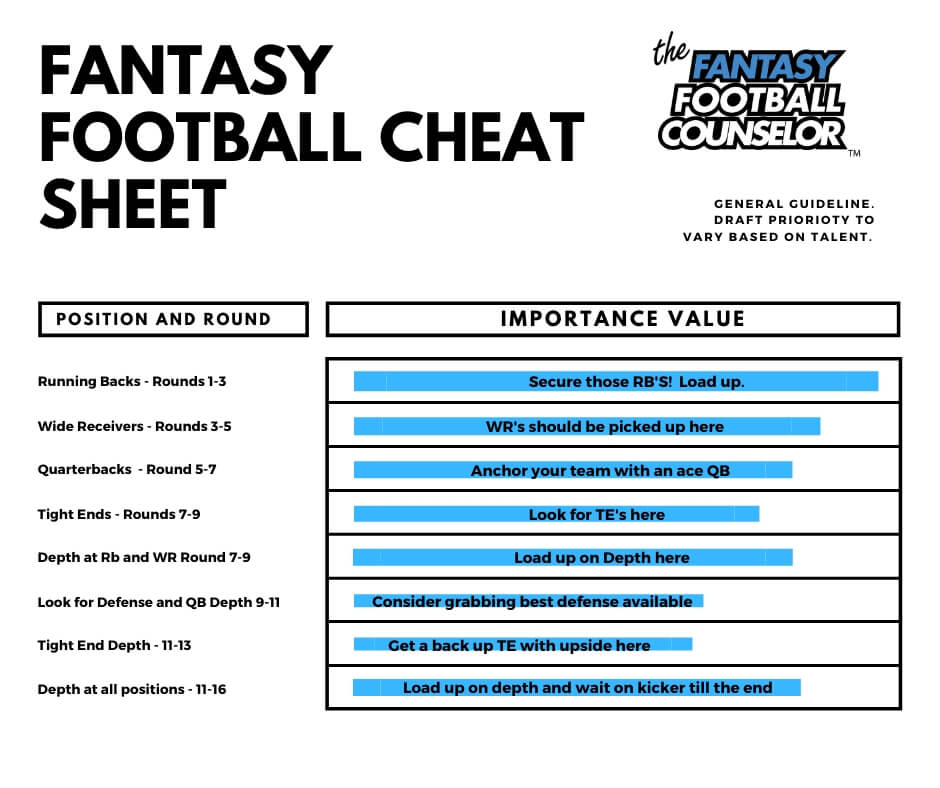
Image Source: thefantasyfootballcounselor.com
Mastering the Draft: Building Your Championship Core
The draft is where your season is often won or lost. A well-executed draft can set you up for success, while a poor one can leave you scrambling all year. Let’s dive into how to approach the draft like a seasoned pro.
Fathoming ADP Analysis: Knowing Where the Value Lies
ADP analysis (Average Draft Position) is your compass for navigating the draft. It tells you where players are generally being picked. Your goal isn’t just to draft the best players, but to draft players who are undervalued based on their ADP.
- Targeting Value: Look for players consistently falling past their typical draft spot. These are players you might be able to acquire later than you’d expect.
- Avoiding Overvalued Players: Conversely, be wary of players being drafted significantly ahead of their projected performance. You don’t want to overspend draft capital on someone likely to disappoint.
- ADP Trends: Pay attention to how ADP shifts as the draft approaches. News, injuries, and training camp reports can drastically alter a player’s perceived value.
Strategic Drafting Strategies: Beyond the Obvious
Simple drafting strategies won’t cut it. You need to be adaptable and have a plan that accounts for your league’s unique characteristics.
The Anchor RB Strategy
This is a popular approach where you prioritize securing one of the top-tier running backs early in the draft.
- Benefits: Elite running backs often have a higher floor and ceiling than other positions, giving you a reliable weekly advantage.
- Execution: Secure your RB1 in the first round, then consider filling other needs with players who offer upside or value in later rounds.
Zero-RB Approach
This strategy deliberately avoids drafting running backs in the early rounds, instead focusing on elite wide receivers, tight ends, or quarterbacks.
- Benefits: It allows you to capitalize on the perceived value of top wide receivers and avoid the injury-prone nature of some running backs. You can then target high-upside committee backs or pass-catching backs in the middle to late rounds.
- Execution: Load up on other positions early and find your starting running backs in the middle rounds by identifying players in good offenses with expanded roles.
Tight End Anchor
Similar to Anchor RB, this involves securing a top-tier tight end early.
- Benefits: Elite tight ends can provide a significant advantage at a position that often has a large gap between the top players and the rest of the field.
- Execution: Draft a top-5 tight end in the first few rounds and then build the rest of your team, being mindful of other positions.
Going for Elite QBs
In leagues where quarterbacks score a lot of points, securing one of the top 2-3 signal-callers can be a significant advantage.
- Benefits: A top quarterback can provide a consistent high score each week, a luxury not all teams have.
- Execution: Draft your elite QB in the middle rounds, often after securing your core offensive skill players.
Player Rankings: Your Draft Day Bible
Player rankings are essential, but they shouldn’t be followed blindly. They are a guide, not a dictator.
- Customization is Key: Adapt generic rankings to your league’s specific scoring settings.
- Positional Scarcity: Consider which positions have a deeper talent pool and which ones fall off a cliff quickly.
- Tier-Based Drafting: Group players into tiers. Once a tier is depleted, you know you need to draft a player from the next available tier, regardless of strict ranking order.
The Waiver Wire: Your Secret Weapon for In-Season Success
The draft gets you to the starting line, but the waiver wire wins you championships. This is where you find waiver wire pickups that can dramatically alter your team’s trajectory.
Identifying Emerging Talent: The Art of the Pickup
- Volume is King: Look for players whose snap counts or target shares suddenly increase. A change in role often precedes a breakout.
- Injury Replacements: When a starter goes down, their backup is often the immediate waiver wire target. Prioritize backups in high-powered offenses.
- Matchup Exploitation: Sometimes, a player might be a good short-term pickup if they have a favorable upcoming schedule.
Effective Waiver Wire Strategy
- Don’t Be Afraid to Drop: If a player isn’t performing, cut them. Use that roster spot for someone with more upside.
- Monitor News Closely: Keep up with team reports, injury updates, and coaching changes. These can reveal hidden gems.
- Prioritize Potential Over Past Performance: Don’t get stuck on a player’s name or draft status. Focus on who is currently producing or has the best chance to produce.
The Trade Game: Navigating the Market with Skill
Trade advice is crucial for fine-tuning your roster and addressing weaknesses. Smart trades can vault your team into contention.
Evaluating Trade Offers
- Know Your Team’s Needs: Are you strong at WR but weak at RB? Or vice-versa? Target trades that fill your holes.
- Player Value Assessment: What is a player truly worth in your league? Consider their current production, future potential, and remaining schedule.
- Opponent’s Needs: Try to identify what your opponent needs and what they might be willing to give up.
Crafting Winning Trades
- Don’t Trade for the Sake of Trading: Only make moves that demonstrably improve your team.
- Leverage Strengths: If you have an abundance of talent at one position, use it to acquire talent at a weaker position.
- Target Players on the Rise: Acquiring a player who is undervalued but on an upward trend can be a huge win.
- Be Willing to Overpay Slightly for Need: Sometimes, paying a little extra to fill a critical need is worth it.
Identifying Sleepers and Avoiding Busts
The difference between a winning and losing team often comes down to finding sleepers – players who outperform their draft position – and avoiding busts – players who significantly underperform.
Unearthing Sleepers
- New Coaching Schemes: A change in coaching can unlock a player’s potential.
- Offensive Line Improvement: A better offensive line can boost the performance of running backs and protect quarterbacks.
- Volume Increases: Players with a clear path to increased targets or carries are prime sleeper candidates.
- Talent Over Situation: Sometimes, a supremely talented player stuck in a bad situation can still shine if their situation improves.
Dodging Busts
- Unstable Quarterback Situations: A shaky quarterback can drag down the value of their receivers and running backs.
- O-Line Woes: A terrible offensive line makes it difficult for any skill player to succeed.
- Tough Schedules: While schedules can change, a historically difficult slate of opponents for a team’s offense is a red flag.
- Injury History: Players with a significant history of injuries are always a risk.
Dynasty and Keeper Leagues: Long-Term Roster Management
Dynasty leagues and keeper leagues require a different approach than redraft leagues. You’re not just playing for this year; you’re building for the future.
Dynasty League Strategies
- The Rebuild: If your team is not competitive, it might be time to trade veteran assets for draft picks and young talent.
- The Window: If your team is built to contend, focus on acquiring proven players and maximizing your championship window.
- Asset Management: Every player on your roster is an asset. Evaluate their long-term potential and trade value accordingly.
- Rookie Drafts: Mastering the rookie draft is paramount. Identify the top talent and build your team around them.
Keeper League Tactics
- Value Retention: Identify players who you can keep at a lower cost than their market value.
- Contract Decisions: In leagues with contract systems, carefully manage your salary cap and player contracts.
- Balancing Present and Future: You need to win now, but you also need to ensure you have players to keep for future seasons.
Comprehending Scoring Settings: The Foundation of Your Strategy
Your league’s scoring settings are the most critical factor in determining player value. What is valuable in one league might be less so in another.
Point Per Reception (PPR) Leagues
- Increased Value for Receivers and Pass-Catching RBs: Players who catch a lot of passes get a significant boost.
- Target Leaders: Focus on wide receivers and tight ends who command a high target share.
- Pass-Catching Backs: Running backs who are heavily involved in the passing game become more valuable.
Standard (Non-PPR) Leagues
- Emphasis on Yards and Touchdowns: Players who rack up rushing yards and score touchdowns are king.
- Volume Rushing Backs: Workhorse running backs who get a high volume of carries are often top-tier picks.
- Deep Threats: Wide receivers who specialize in big plays and touchdowns are highly coveted.
Half-PPR Leagues
- A Blend of Both: This format offers a middle ground, giving a slight advantage to pass-catchers while still valuing yardage and touchdowns.
Other Scoring Nuances
- Tight End Premium: Leagues that award more points for tight end receptions or yards can make elite tight ends even more valuable.
- QB Scoring: Leagues with higher scoring for quarterbacks (e.g., 6 points for passing touchdowns) can make drafting a top-tier QB more critical.
- Defensive Scoring: If your league has detailed defensive scoring (e.g., points for sacks, interceptions, defensive touchdowns), understanding defensive player matchups becomes more important.
Advanced Techniques for Fantasy Football Dominance
Beyond the core strategies, several advanced tactics can give you an edge.
Schedule-Adjusted Projections
- Weakening Defenses: Identify teams with notoriously poor defenses against the run or pass and target their offensive players.
- Defensive Strength of Schedule: Conversely, identify teams with strong defenses and consider fading their offensive players in key matchups.
Target Share Analysis
- Dominant Targets: Players who consistently receive a large percentage of their team’s targets are less reliant on volume and more likely to produce.
- Emerging Target Earners: Watch for players whose target share is increasing week over week, even if their overall numbers haven’t exploded yet.
Red Zone Usage
- Goal-Line Backs: Running backs who consistently get carries near the end zone have a higher touchdown upside.
- Red Zone Targets: Wide receivers and tight ends who are targeted frequently in the red zone are prime touchdown candidates.
Opponent Matchup Awareness
- Targeting Weaknesses: Are you playing against a team that struggles against the run? Target your best running backs. Does their secondary give up a lot of yards? Start your top receivers.
- Leveraging Bye Weeks: Plan ahead for bye weeks. Secure backup players at key positions or make trades to avoid having to start a zero at a crucial spot.
Frequently Asked Questions (FAQ)
Q1: What is the best drafting strategy?
There’s no single “best” strategy. The most effective approach is to be adaptable, aware of your league’s scoring, and informed by ADP analysis and player rankings. Strategies like Anchor RB or Zero-RB can be successful if executed well.
Q2: How do I find good waiver wire pickups?
Focus on players seeing increased volume (targets, snaps), backups for injured starters, and players with favorable upcoming matchups. Regularly monitor news and team reports.
Q3: When should I consider making a trade?
Make trades when they address a weakness on your team or when you can acquire a player who you believe will outperform their current valuation. Always ensure the trade improves your team.
Q4: What are sleepers and busts?
Sleepers are players who are expected to significantly outperform their draft position or ADP. Busts are players who are drafted high but fail to meet expectations. Identifying them requires research into team situations, coaching, and player talent.
Q5: How do dynasty leagues differ from redraft leagues?
In dynasty leagues, you keep your entire roster year after year, making long-term player development and asset management crucial. Keeper leagues allow you to keep a select number of players, requiring a balance between immediate production and future potential.
Q6: Why are scoring settings so important?
Scoring settings dictate player value. A player who scores 1000 receiving yards and 5 touchdowns might be highly valuable in standard leagues but even more so in PPR leagues where receptions also earn points. Always adjust your draft and waiver wire strategy based on your league’s scoring.
By applying these principles, you can move beyond simply participating in fantasy football and start mastering it. It’s a game of skill, information, and adaptability. Good luck out there!