
What is the most important aspect of a football helmet? The most critical element is achieving a proper football helmet fit. A well-fitting helmet is paramount for player safety, protecting against serious head injuries. This guide will walk you through everything you need to know about football helmet sizing and ensuring a secure, protective fit for any player.
A football helmet isn’t just a piece of equipment; it’s a shield. When it fits correctly, it acts as an extension of the player, absorbing impact and distributing force away from the skull. If it’s too loose or too tight, it can be ineffective or even cause discomfort and distraction. This comprehensive guide will cover how to measure for a football helmet, explore football helmet fitting tips, and explain how to adjust a football helmet for optimal protection. We’ll delve into youth football helmet fitting, discuss football helmet chin strap adjustment, the role of football helmet cheek pads, and the importance of securing a football helmet.
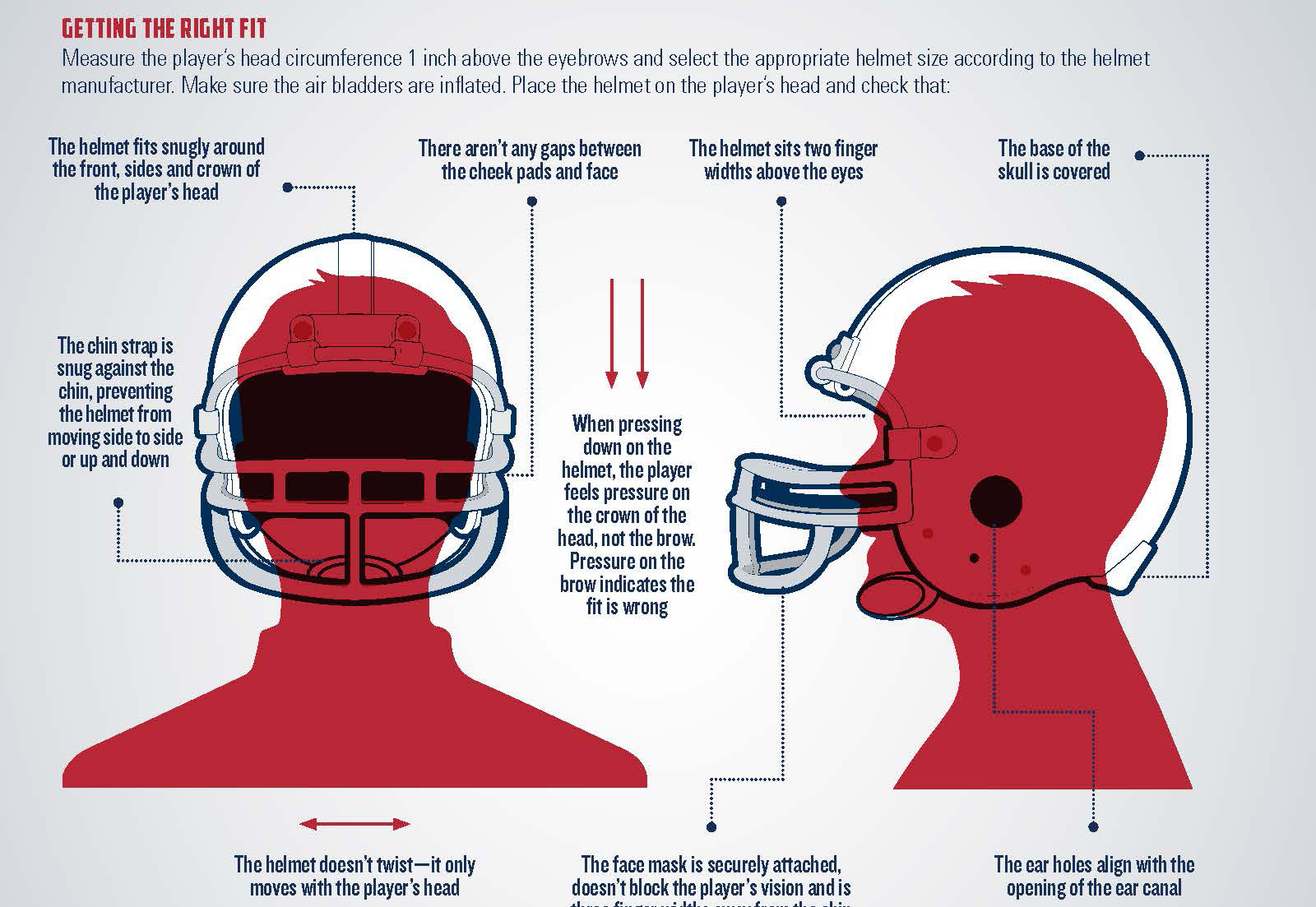
Image Source: www.nata.org
The Foundation: Why a Proper Fit Matters
Before we dive into the “how,” let’s reinforce the “why.” A football helmet’s primary job is to protect the brain. It does this through a combination of a hard outer shell, impact-absorbing foam liners, and a secure suspension system. For this system to work effectively, the helmet must be snug against the player’s head.
- Injury Prevention: The most compelling reason for a proper fit is to minimize the risk of concussions and other traumatic brain injuries (TBIs). A loose helmet can shift on impact, failing to protect the areas it’s designed to shield.
- Comfort and Performance: An ill-fitting helmet can be distracting, leading to a player focusing more on adjusting their gear than on the game. Discomfort can also affect a player’s stamina and overall performance.
- Durability and Longevity: While not the primary concern, a properly fitted helmet can also experience less wear and tear from constant shifting and pressure points.
Your Football Helmet Size Guide: Measuring for Success
The first step in ensuring a proper football helmet fit is accurately determining the player’s head size. This is where your football helmet size guide comes into play. Most manufacturers provide specific sizing charts, but the universal starting point is circumference.
How to Measure for a Football Helmet: The Head Circumference Method
- Gather Your Tools: You’ll need a flexible measuring tape. If you don’t have one, a piece of string or ribbon and a ruler will work.
- Find the Widest Part: Wrap the measuring tape around the widest part of the player’s head. This is typically about one inch above the eyebrows and just above the ears.
- Keep it Snug but Not Tight: The tape should be snug against the head, but not so tight that it deforms the head or the tape itself.
- Note the Measurement: Read the measurement in inches or centimeters. This number is crucial for comparing against manufacturer sizing charts.
Example: If the tape measure reads 22 inches, this is your starting point for selecting a helmet size.
Using Manufacturer Sizing Charts
Once you have the head circumference, consult the specific football helmet size guide provided by the manufacturer you are considering. Helmets are often categorized by sizes like Youth Small, Youth Medium, Youth Large, Adult Small, Adult Medium, Adult Large, etc.
Table 1: Sample Football Helmet Sizing (Illustrative – Always check actual manufacturer charts)
| Size | Head Circumference (Inches) | Head Circumference (Centimeters) |
|---|---|---|
| Youth Small | 20 – 20.5 | 51 – 52 |
| Youth Medium | 21 – 21.5 | 53 – 54 |
| Youth Large | 22 – 22.5 | 56 – 57 |
| Adult Small | 22 – 22.5 | 56 – 57 |
| Adult Medium | 23 – 23.5 | 58 – 60 |
| Adult Large | 24 – 24.5 | 61 – 62 |
| Adult XL | 25 – 25.5 | 63 – 64 |
Important Note: Sizes can vary between brands. Always refer to the specific brand’s sizing chart for the most accurate results. A helmet that fits one brand’s “Medium” might be different for another.
The Crucial Test: Fit Checks and Adjustments
Measuring is just the first step. The real test of a proper football helmet fit comes from physically trying it on and performing a series of checks. This is where football helmet fitting tips become invaluable.
Initial Try-On: The Snugness Test
- Place the Helmet: Gently place the helmet on the player’s head. It should feel snug, but not painful.
- Shake Test (Side-to-Side): With the chin strap unbuckled, have the player shake their head gently from side to side. The helmet should not slide around significantly. If it moves more than an inch in any direction, it’s likely too large.
- Shake Test (Front-to-Back): Have the player nod their head forward and backward. Again, the helmet should remain relatively stable. A significant forward or backward shift indicates a poor fit.
- Forehead Fit: The helmet should sit level on the head, with the front rim about one to two finger-widths above the eyebrows. It should not be tilted too far back, exposing the forehead, nor too far forward, obstructing vision.
Adjusting a Football Helmet: Fine-Tuning the Fit
Most modern football helmets have adjustment mechanisms to fine-tune the fit. This is crucial for achieving that perfect, secure feeling.
Inflatable Bladders
Some helmets feature inflatable air bladders in the crown and cheek pad areas.
- How to Use: Typically, there’s a small inflation valve. Gently squeeze the air into the valve until the helmet feels snug and secure against the head. Avoid over-inflating, which can cause discomfort.
- Deflation: If you need to loosen it, press the valve to release air.
Adjustable Suspension Systems
Other helmets use adjustable straps or dials within the helmet’s internal structure.
- How to Use: These often involve pulling on straps or turning a dial at the back of the helmet to tighten or loosen a webbed suspension system. The goal is to create even pressure around the entire head.
Football Helmet Cheek Pads: Essential for a Secure Seal
Football helmet cheek pads play a vital role in securing the helmet and providing a snug fit around the face.
- Function: They fill the space between the player’s cheeks and the helmet’s sides. When properly fitted, they should be snug enough to prevent the helmet from tilting excessively or sliding forward when the player makes sudden movements.
- Thickness: Cheek pads come in various thicknesses. If the helmet is slightly too large overall, thicker cheek pads can help compensate. Conversely, if the helmet is a bit snug, thinner pads might be needed.
- Replacement: Cheek pads can wear out or get compressed over time. Replacing them with new, appropriately sized pads is a common way to refresh the fit of an older helmet.
Football Helmet Chin Strap Adjustment: The Final Frontier of Security
The chin strap is the final piece of the puzzle, securing the helmet to the player’s head. Proper football helmet chin strap adjustment is critical for keeping the helmet in place during play.
- Buckle Placement: The chin strap should buckle comfortably just below the chin, in the crease where the jaw meets the neck.
- Snugness: When buckled, the strap should be snug enough to prevent the helmet from tilting forward or backward. You should be able to slide only one or two fingers between the strap and the player’s chin.
- Strap Length: Ensure excess strap material is neatly tucked away so it doesn’t become a snagging hazard.
- Jaw Protection: The chin cup or strap should also provide some level of jaw protection. It should sit comfortably under the chin, not press painfully into the jawbone.
Securing a Football Helmet: The Complete Check
After making any adjustments, perform a final series of checks to ensure the helmet is securely fastened and properly fitted.
- The “Wiggle” Test: With the chin strap buckled and snug, have the player shake their head vigorously. The helmet should not move. Try to intentionally rotate it left or right – it should feel like one solid unit with the head.
- Forward Tilt Test: Ask the player to lean forward. The helmet should stay put.
- Backward Tilt Test: Ask the player to tilt their head back. The helmet should not slip down over their eyes.
- Chin Strap Comfort: Ensure the chin strap isn’t digging in or causing discomfort.
- Vision Check: The helmet should not obstruct the player’s peripheral vision. The front rim should be about one to two finger-widths above the eyebrows.
Youth Football Helmet Fitting: Special Considerations
Youth football helmet fitting often involves specific nuances due to the developing bodies of young athletes.
- Growth: Children grow quickly. While you want a snug fit now, consider that a player might outgrow a helmet within a season. It’s better to have a slightly looser helmet that can be adjusted with pads than one that is already too tight. However, never compromise safety for the sake of a few extra months of use.
- Weight Distribution: Ensure the helmet doesn’t feel excessively heavy for the child. A properly fitted helmet will distribute its weight evenly.
- Ease of Use: Younger players might need assistance with their chin straps. Teach them the proper way to buckle and tighten it, but be prepared to help initially.
Advanced Fitting Tips and Considerations
Beyond the basic steps, several other factors contribute to an optimal fit.
Football Helmet Cheek Pads: Beyond Basic Snugness
Cheek pads are often overlooked, but they are crucial for a comprehensive fit.
- Contact: They should make firm but comfortable contact with the sides of the face. This contact helps stabilize the helmet during lateral movements.
- Breathing and Speaking: While snug, the cheek pads shouldn’t make it difficult to breathe or speak clearly.
- Customization: Some high-end helmets offer interchangeable cheek pads of different thicknesses for a truly custom fit.
Face Cages and Facemasks
The facemask also needs to be securely attached. Ensure all mounting screws are present and tightened. The facemask should not wobble or become detached.
Hair and Headbands
- Hair: Players with long hair should tie it back securely, ideally in a low ponytail that won’t interfere with the helmet or chin strap.
- Headbands: If a player wears a sweatband or headband, it should be thin and placed beneath the helmet, not on top. Thicker headbands can interfere with a proper fit.
Regular Checks and Maintenance
- Periodic Re-evaluation: As players continue to play, their head shape can subtly change, and helmet padding can compress. It’s a good practice to re-check the helmet fit periodically, especially at the start of a new season.
- Inspect for Damage: Always inspect the helmet for cracks, dents, or excessive wear. Damaged helmets should be replaced immediately.
Common Pitfalls to Avoid
- “It’s just a little loose”: This is a dangerous mindset. Any looseness compromises protection.
- “He’ll grow into it”: Never put a player in a helmet that is too large, hoping they will grow into it. Safety must be the priority.
- Over-tightening: While snugness is key, over-tightening the chin strap can cause discomfort, headaches, and even impede breathing.
- Ignoring Frayed Straps or Worn Pads: These components are vital for maintaining a secure fit. Replace them when they show signs of wear.
- Buying Online Without Measuring: Always measure first, and then consult size charts. Relying on a generic “large” or “medium” without verifying is a gamble.
Frequently Asked Questions (FAQ)
Q: How often should a football helmet be replaced?
A: While there’s no single answer, most experts recommend replacing a football helmet every 3-5 years, or sooner if it shows signs of damage, wear, or if the fit can no longer be properly adjusted. The materials degrade over time, reducing their protective capabilities.
Q: Can I adjust a football helmet myself?
A: Yes, most adjustments can be made by the player or a parent/coach. This includes tightening chin straps, adjusting internal suspension systems, or inflating/deflating air bladders.
Q: My child’s helmet fits well, but it feels too heavy. What should I do?
A: Helmet weight is a factor, but safety is paramount. Ensure the helmet is properly measured and fitted according to the manufacturer’s guidelines. If it genuinely feels too heavy for the player’s neck strength, consult with a coach or equipment specialist. Modern helmets are designed to balance protection with weight.
Q: What are “reconditioned” helmets?
A: Reconditioned helmets have been inspected, repaired, and restored to a safe playing standard. However, for maximum safety, it’s always best to purchase new helmets if possible, especially for youth players.
Q: Does the facemask affect the helmet fit?
A: While the facemask doesn’t directly adjust the helmet’s fit on the head, its secure attachment is part of overall helmet integrity. Ensure it’s firmly attached and not loose.
By following these detailed steps and football helmet fitting tips, you can ensure that any player is wearing a helmet that offers the best possible protection. A proper football helmet fit is not just about comfort; it’s about safety and peace of mind on the field.