
No, football cleats should not be used for baseball. While both sports involve cleats, the design and purpose of each are significantly different, making football cleats unsuitable and potentially dangerous for baseball.
The world of athletic footwear is vast and specialized. When you step onto a field, whether for football, baseball, soccer, or any other sport, the shoes you wear play a critical role in your performance and safety. Many athletes, especially those just starting out or those who might have a pair of cleats lying around from another sport, wonder about cleat compatibility between different activities. A common question that arises is: Can football cleats be used for baseball? The short, and most important, answer is no. There are fundamental differences in cleat types and their design that make them sport-specific. This article will delve into why this is the case, exploring the differences between football cleats and baseball shoes, and what you need to know before stepping onto the diamond.
Image Source: cdn.media.amplience.net
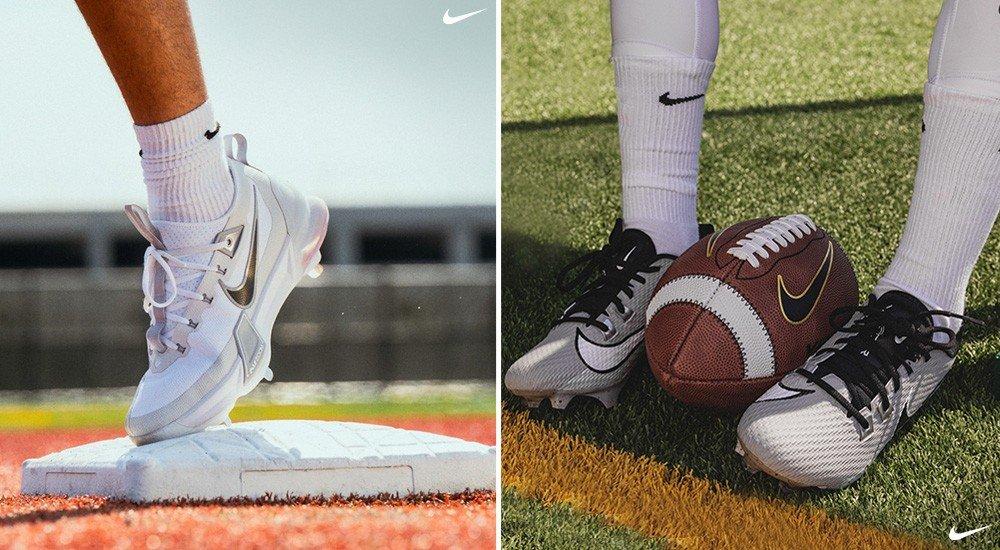
The Foundation of Footwear: Why Specialization Matters
Every sport demands unique movements and pressures from its athletes. This is where specialized athletic footwear comes into play. From running shoes to basketball sneakers to hiking boots, each type of shoe is engineered with specific biomechanical needs in mind. For sports played on grass or dirt, cleats are essential for traction. However, not all cleats are created equal. The differences between cleats for different sports are not merely aesthetic; they are functional and, crucially, safety-related.
Deciphering Cleat Design: A Sport-Specific Approach
The primary purpose of any cleat is to provide grip, preventing slippage and allowing athletes to generate explosive power for running, cutting, and changing direction. However, the nature of these movements, the surfaces played on, and the rules governing each sport dictate how cleats are designed.
Football Cleats: Built for Power and Stability
Football is a game of immense power, quick bursts, and often, forceful collisions. Players need to generate a lot of force to push off the ground, block, tackle, and accelerate. This is reflected in the design of football cleats:
- Mid-top and High-top Designs: Many football cleats feature mid-top or high-top collars. This provides ankle support, which is crucial for stability during high-impact movements and can help reduce the risk of ankle sprains, a common injury in the sport.
- Cleat Stud Patterns: Football cleats typically have a more aggressive and varied stud pattern. This often includes longer, wider studs, especially in the heel and along the edges, to provide maximum traction for pushing off and making sharp cuts. The sheer number and placement of studs are designed to dig into the turf or grass for superior grip.
- Toe Cleats: A significant feature of many football cleats is the presence of a cleat in the toe area. This toe cleat aids in acceleration and allows players to get a strong push-off from a standing start.
- Durability: Football cleats are often built with more robust materials to withstand the rigors of constant contact and demanding play.
Baseball Cleats: Precision and Agility
Baseball, on the other hand, is a sport of explosive bursts, quick changes in direction, and a strong emphasis on balance and agility. The movements involved include sprinting to first base, fielding ground balls with a quick drop, and powerful swings. Baseball shoes are engineered with these specific actions in mind:
- Low-top Design: Most baseball cleats are low-tops. This allows for maximum ankle mobility, which is important for the quick, agile movements required in the infield and outfield. Greater ankle flexibility helps players stay balanced and react faster.
- Cleat Stud Patterns: Baseball cleats generally have a different stud configuration. They often feature a circular pattern or rows of shorter, blunter studs. The aim here is to provide good traction for acceleration and stopping, but without digging in so aggressively that it hinders quick directional changes or causes players to get “stuck.”
- No Toe Cleats (Generally): Crucially, most baseball cleats do not have a cleat in the toe area. This is a critical difference. A toe cleat on a baseball field can catch on the dirt or grass during certain movements, leading to awkward falls and increasing the risk of ankle or knee injuries. This is the primary safety concern when considering the use of football cleats in baseball.
- Lightweight Construction: Baseball players often make many explosive sprints. Lightweight cleats can contribute to faster times and less fatigue over the course of a game.
Comparing Baseball vs. Soccer Cleats: Another Important Distinction
It’s also worth noting the differences between baseball vs soccer cleats, as many people might confuse these as well. While both are designed for agility, soccer cleats tend to have thinner, conical studs for better ball control and maneuverability on softer surfaces. They also lack the aggressive toe cleat found in football shoes.
The Dangers of Using Football Cleats in Baseball
Now, let’s directly address why the answer to “Can football cleats be used for baseball?” is a resounding no. The differences in cleat design translate directly into potential safety hazards.
The Toe Cleat Problem: The Biggest Risk
As mentioned, the toe cleat is the most significant concern. Imagine a baseball player making a sharp turn to field a ground ball, or accelerating out of the batter’s box. If a football cleat’s toe stud digs into the dirt or grass at the wrong angle, it can act like a pivot point, forcing the ankle or knee into an unnatural and potentially injurious twist. This can lead to:
- Ankle Sprains and Tears: The cleat catching can wrench the ankle, causing ligament damage.
- Knee Injuries: Similar forces can transmit up to the knee, potentially leading to ligament tears like ACL injuries.
- Falls and Fractures: The unexpected catching of a cleat can cause a player to lose balance and fall awkwardly, resulting in fractures or other impact injuries.
Traction Imbalance: Hindering Performance and Causing Injury
The aggressive stud patterns on football cleats are designed for digging deep and maximizing traction in a sport that involves a lot of straight-line power and lateral pushing. While this sounds good, in baseball, it can be detrimental:
- Restricted Agility: The deep-digging studs can make it harder for a baseball player to make those quick, sharp cuts and changes of direction needed for fielding or base running. This can slow them down and make them less effective.
- Increased Stress on Joints: If the cleats dig in too much, it can put undue stress on the ankles, knees, and hips when a player needs to pivot or stop quickly.
Ankle Support vs. Mobility: A Crucial Trade-off
While the ankle support offered by mid-top and high-top football cleats might seem beneficial, it can actually be a disadvantage in baseball. Baseball players rely on a full range of ankle motion for fielding ground balls, throwing, and maintaining balance. The restrictive nature of higher-cut football cleats can impede this necessary mobility, potentially affecting performance and even leading to compensations that could cause other issues.
What About Turf Shoes?
It’s important to distinguish between cleats and turf shoes. Turf shoes, often used for practice or on artificial turf surfaces, have a multitude of small rubber nubs instead of sharp metal or molded plastic cleats. These are generally safe for various sports and offer good traction on turf. However, they still don’t provide the specific benefits of dedicated baseball shoes for a dirt and grass field. If you’re playing baseball, especially on natural surfaces, proper baseball cleats are recommended.
Types of Cleats to Consider for Baseball
When choosing baseball shoes, you’ll encounter a few variations:
- Molded Cleats: These are the most common type and are generally good for younger players or less demanding leagues. The cleats are molded directly into the outsole of the shoe. They are typically less aggressive than metal cleats and are allowed in almost all leagues.
- Detachable Cleats: These cleats can be screwed into the shoe and replaced. They offer versatility, allowing players to choose different cleat types (plastic or metal, depending on league rules) and to replace worn-out cleats.
- Metal Cleats: Primarily used by older, more experienced players, metal cleats offer superior traction. However, they are often restricted to higher levels of play (like high school or college) due to their aggressive nature and the potential for injury on certain surfaces or during collisions. Most youth leagues prohibit metal cleats.
Cleat Material and Length
- Plastic/Rubber: The most common and safest.
- Metal: Offer the best traction but come with the highest risk of injury and are often prohibited in youth leagues. League rules are paramount here.
When Might You See Similarities in Cleats?
It’s not entirely impossible to find some overlap in the concept of cleats across sports, but the execution is where the differences lie. For instance, both football and baseball require grip. However, the type of grip and the way it’s achieved are what differentiate them. Even soccer cleats, while designed for different movements, have a distinct stud pattern that is not ideal for baseball. The goal is always to match the footwear to the specific demands of the sport.
Making the Right Choice for Your Game
When it comes to playing baseball, investing in proper baseball shoes is not just about enhancing performance; it’s about ensuring your safety. Trying to make do with football cleats is a risk that simply isn’t worth taking.
Here’s a summary of key considerations when choosing baseball footwear:
- Check League Rules: Always familiarize yourself with the specific rules of your league regarding cleat types (metal vs. molded, maximum cleat length).
- Consider Age and Skill Level: Younger players or those new to the sport often benefit more from molded cleats, which are generally safer and more versatile.
- Playing Surface: While most baseball is played on natural grass and dirt, if you frequently play on artificial turf, you might also consider specialized baseball turf shoes.
- Fit and Comfort: Ensure the shoes fit well and are comfortable, allowing for a full range of motion.
Conclusion: Prioritize Safety and Performance
The question of whether football cleats can be used for baseball has a clear answer: no. The specialized design of each type of cleat is crucial for the specific demands and safety requirements of the sport. The presence of toe cleats and the aggressive stud patterns on football cleats pose a significant risk of injury to baseball players. Always opt for footwear designed specifically for the sport you are playing. Choosing the right athletic footwear is a fundamental step in ensuring both your performance on the field and your well-being. Stick to baseball shoes for baseball, and keep your football cleats for the gridiron.
Frequently Asked Questions (FAQ)
Q1: Can I use my old football cleats for baseball practice?
A1: While it might seem like a minor issue for practice, it’s still not recommended. The toe cleat on football shoes can still catch and cause injury even during practice drills. It’s best to use proper baseball footwear from the start.
Q2: Are baseball shoes different from soccer cleats?
A2: Yes, they are. Soccer cleats typically have conical studs for agility and ball control, while baseball cleats have different patterns and often longer studs for traction on dirt and grass. Crucially, baseball cleats are designed to minimize the risk of catching due to toe cleats, which are common on football cleats but not baseball ones.
Q3: What kind of cleats are best for youth baseball?
A3: For youth baseball, molded plastic or rubber cleats are generally recommended. They provide good traction without being overly aggressive, and they are allowed in virtually all youth leagues. Metal cleats are often prohibited for safety reasons.
Q4: Why do baseball cleats not have toe cleats?
A4: Baseball cleats typically lack toe cleats to prevent them from catching in the dirt or grass during quick directional changes, pivots, or accelerations. This is a crucial safety feature to reduce the risk of ankle and knee injuries.
Q5: Can I use turf shoes for a baseball game?
A5: Turf shoes can be used for baseball practice, especially on artificial turf. However, for games on natural grass and dirt, proper baseball cleats (molded or metal, depending on league rules) will provide superior traction and support necessary for the game. They offer a different type of grip compared to cleats.
Q6: What are the main differences between football cleats and baseball shoes?
A6: The main differences include the presence of toe cleats on many football cleats (which are absent on baseball shoes), the stud patterns (more aggressive and varied on football cleats), and the height of the shoe (football cleats often have mid or high-top designs for ankle support, while baseball shoes are typically low-top for ankle mobility).
Q7: If I play multiple sports, can I use one type of cleat for all?
A7: It is strongly advised against using the same cleat type for multiple sports. Each sport has unique demands, and specialized footwear ensures optimal performance and, more importantly, safety. Using football cleats for baseball, or even soccer cleats for baseball, can lead to injuries.
Q8: Are metal cleats always better than molded cleats for baseball?
A8: Metal cleats offer superior traction, but they also carry a higher risk of injury and are not allowed in all leagues. Molded cleats are safer, generally more affordable, and suitable for most levels of play. The “best” type depends on league rules, player age, and playing surface.
Q9: How do I know if my cleat type is legal for my league?
A9: Always check your league’s official rulebook or ask your coach or league administrator. They will have specific regulations on cleat material, length, and whether toe cleats are permitted.
Q10: What are “turf shoes” in the context of sports footwear?
A10: Turf shoes are a type of athletic footwear designed for use on artificial turf or hard surfaces. Instead of sharp cleats, they have numerous small rubber or plastic nubs that provide traction without digging into the surface as aggressively as cleats. They are a good option for practices or games on turf but are generally less effective than traditional cleats on grass and dirt.