
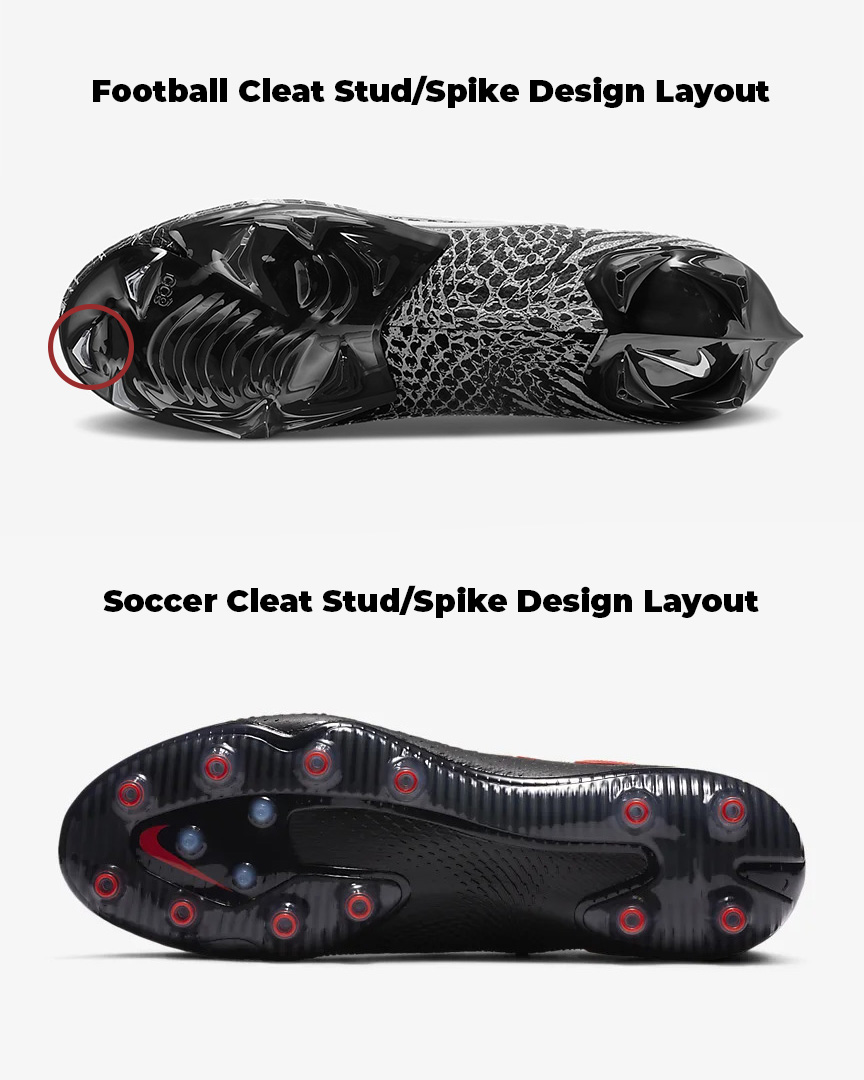
Image Source: juventussandiego.com
Can You Use Soccer Cleats for Football? Your Ultimate Guide
Yes, in certain situations and with specific considerations, you can use soccer cleats for football. However, it’s not always ideal and can depend heavily on the playing surface, the type of football being played (American football vs. soccer), and the specific design of the cleats. This guide will delve into the nuances of interchanging soccer and football cleats, helping you make the best choice for your game.
Deciphering the Differences: Football Cleats vs. Soccer Cleats
To truly grasp whether you can use soccer cleats for football, we first need to understand the fundamental differences between the two types of footwear. While both are designed for traction and agility on the field, their construction is tailored to the unique demands of each sport.
Stud Configuration and Purpose
The most significant distinction lies in the stud patterns on the outsole.
-
Soccer Cleats: Soccer cleats typically feature a conical or bladed stud pattern, often with a mix of both. The primary goal is to provide grip for quick changes in direction, pivoting, and stopping on natural grass or artificial turf. The studs are generally shorter and more numerous than those found on football cleats. Many soccer shoes for football players might consider these for agility-focused positions.
-
Football Cleats: Football cleats, particularly for American football, often have more aggressive and strategically placed studs. They are designed to offer superior traction for explosive movements like sprinting, cutting, and tackling. The studs can be longer, wider, and more concentrated in areas where a player needs maximum grip. This is especially true for defensive backs or wide receivers who rely on quick bursts of speed and sharp turns.
Midsole and Ankle Support
The midsole and ankle support also differ, reflecting the varied impacts and movements in each sport.
-
Soccer Cleats: Soccer cleats generally have a more flexible midsole, allowing for better feel and control of the ball. Ankle support varies, with low-cut models being the most common for freedom of movement.
-
Football Cleats: Football cleats often incorporate a more rigid midsole to provide stability and support during high-impact collisions and lateral movements. Ankle support is a critical feature, with mid-cut and high-cut options designed to protect against ankle rolls and provide a secure fit. This is a crucial factor when considering football boot alternatives if your primary footwear is soccer-oriented.
Material and Durability
The materials used in both types of cleats are chosen for performance and durability, but with slight variations.
-
Soccer Cleats: Uppers are often made from lightweight synthetic materials or soft leather for comfort and ball touch. Durability is important, but flexibility and responsiveness are usually prioritized.
-
Football Cleats: Football cleats may use more robust synthetic materials or reinforced leather to withstand the harsher impacts and demands of the sport. The construction is often built to be more durable for the rigors of tackles and heavy-duty play.
Can Soccer Cleats Be Used for Football? The Practicalities
Now, let’s address the core question: can you use soccer cleats for football? The answer is a qualified “yes,” but with important caveats.
Playing Surface Matters Most
The type of playing surface is arguably the most critical factor determining the suitability of soccer cleats for football.
-
Natural Grass: On well-maintained natural grass fields, soccer cleats with shorter, conical studs can offer adequate traction for many football players, especially for positions that don’t involve constant, heavy contact or extremely sharp cuts. If you’re a lighter player or in a less demanding position, soccer cleats might suffice.
-
Artificial Turf: This is where things get trickier. Many modern artificial turf fields require specific types of cleats. Traditional soccer cleats with longer, bladed studs can sometimes dig too deeply into the turf, leading to an increased risk of ankle injuries. Conversely, some artificial turf fields are designed for multi-purpose use, and soccer cleats might be perfectly acceptable. It’s always best to check the specific guidelines for the turf you’ll be playing on. Soccer turf shoes for football can be a good compromise if available.
-
Indoor Surfaces: For indoor football or 7-on-7 leagues played on courts, soccer turf shoes or indoor soccer shoes are the appropriate choice. Standard soccer cleats with metal or hard plastic studs can damage indoor playing surfaces.
Position and Playing Style
Your position on the football field and your playing style will heavily influence whether soccer cleats are a viable option.
-
Offensive Linemen/Defensive Linemen: These positions require immense power, stability, and the ability to drive through opponents. The shorter, more flexible studs of soccer cleats generally won’t provide the necessary grip and support for these demanding roles. Traditional football cleats with longer, more aggressive studs are essential.
-
Running Backs/Wide Receivers/Defensive Backs: Players in these positions rely on explosive acceleration, sharp cuts, and agility. While soccer cleats can offer decent agility, the limited ankle support and the stud pattern might not provide the same level of confidence and traction as specialized football cleats, especially during quick changes of direction under pressure.
-
Quarterbacks: Quarterbacks generally don’t experience the same level of direct impact or aggressive cutting as other positions. They might find soccer cleats to be comfortable and provide sufficient grip for their movements on the field.
Risk of Injury
This is a paramount concern when considering using soccer cleats for football.
-
Ankle Sprains: The primary risk associated with using soccer cleats for football, particularly on certain artificial turf surfaces, is an increased risk of ankle sprains. Soccer cleats’ stud patterns, especially bladed ones, can “catch” in the turf, causing the ankle to twist unnaturally.
-
Lack of Support: The generally lower ankle support in most soccer cleats can leave football players more vulnerable to injuries during high-impact plays or when landing awkwardly.
Comparing Football Shoes vs. Soccer Cleats: Key Features
To further illustrate the differences, let’s compare specific features.
| Feature | Soccer Cleats | Football Cleats (American Football) |
|---|---|---|
| Stud Type | Conical, bladed, often shorter and varied | Longer, wider, sometimes detachable, more aggressive |
| Stud Purpose | Agility, pivoting, quick changes of direction | Explosive acceleration, stopping, cutting, stability |
| Midsole | Flexible, enhances ball feel | Firmer, provides stability and impact absorption |
| Ankle Support | Generally low-cut, emphasizes freedom of movement | Low, mid, and high-cut options for increased support |
| Upper Material | Lightweight synthetics, soft leather | Durable synthetics, reinforced leather |
| Weight | Often lighter | Can be heavier, prioritizing durability and support |
| Traction Focus | Lateral movement and grip for kicking | Forward propulsion, lateral stability, and power |
Can Soccer Cleats Be Used for Football on Different Surfaces?
Let’s break down surface suitability:
Natural Grass
- Pros: Soccer cleats can perform reasonably well on natural grass, especially if the studs are not excessively long or sharp. They offer good agility.
- Cons: If the grass is wet or muddy, the grip might be less than ideal compared to football cleats designed for such conditions. Lighter players or those in less contact-heavy positions will fare better.
Artificial Turf
- Pros: If the turf is specifically designed for multi-purpose use and has a shallower pile, some soccer cleats (particularly those with shorter, conical studs) might be acceptable. Soccer turf shoes for football are often a better choice here.
- Cons: The main concern is the potential for longer or bladed studs to dig too deeply, increasing the risk of ankle injuries. Always check the specific recommendations for the artificial turf field.
Indoor/Turf Fields (Artificial Grass with Rubber Infill)
- Pros: Soccer turf shoes with small, rubber nubs are ideal for these surfaces. They provide excellent traction without damaging the field.
- Cons: Standard soccer cleats with hard plastic or metal studs should never be worn on these surfaces, as they can cause significant damage and pose a safety hazard.
Football Boot Alternatives and Considerations
If you’re considering using soccer cleats for football, or looking for alternatives, here are some points to ponder:
-
All-Around Cleats: Some brands offer “hybrid” cleats designed to bridge the gap between soccer and football. These might have a slightly different stud configuration or a bit more ankle support than traditional soccer cleats.
-
Turf Shoes: For training or games on artificial turf or indoor surfaces, soccer turf shoes are a great option. They offer good grip without the same injury risk as bladed cleats.
-
Ankle Braces: If you decide to use soccer cleats for football and are concerned about ankle support, wearing an ankle brace can provide an extra layer of protection.
-
Weight vs. Support: Decide what’s more important for your game. Soccer cleats are often lighter, favoring speed and agility. Football cleats can be heavier but offer superior support and power transfer.
-
Cost: Football cleats can sometimes be more expensive due to their specialized construction and durability requirements. If you’re just starting or playing casually, soccer cleats might be a more budget-friendly option.
Best Cleats for Football and Soccer: When to Stick to the Sport-Specific
While interchangeability is sometimes possible, the “best” cleats are almost always sport-specific.
-
For Soccer: Lightweight, flexible cleats with a focus on touch, agility, and a varied stud pattern for natural grass are ideal.
-
For Football: More robust cleats with aggressive stud patterns for maximum traction, enhanced ankle support, and durable construction are paramount for performance and safety.
Using Soccer Boots for Football: A Practical Approach
If you find yourself needing to use soccer boots for football, here’s how to approach it:
-
Inspect Your Soccer Cleats:
- Stud Length and Shape: Are the studs relatively short and conical? Or are they long and bladed? Shorter, conical studs are generally safer and more versatile for football.
- Ankle Support: How much ankle support do the cleats offer? Low-cut cleats will offer less protection than mid or high-cut options.
- Outsole Flexibility: Are they very flexible or quite rigid? More rigidity can offer better stability for football movements.
-
Consider the Playing Field:
- Natural Grass: Generally the safest bet for using soccer cleats.
- Artificial Turf: Proceed with caution. Shorter, conical studs are preferable. Always check field guidelines.
- Indoor: Absolutely avoid standard soccer cleats.
-
Evaluate Your Position and Play Style:
- If you’re an agile player in a non-contact position, soccer cleats might work.
- If you’re in a heavy-contact position or rely on explosive power, dedicated football cleats are highly recommended.
-
Prioritize Safety:
- If you have any doubts about the grip or support, err on the side of caution and seek out proper football cleats. Ankle injuries can be debilitating.
Common Myths and Misconceptions
-
Myth: All soccer cleats are the same.
- Reality: There’s a wide variation in stud patterns, from soft ground (SG) to firm ground (FG) to artificial grass (AG) and turf (TF). Understanding these differences is key.
-
Myth: Football cleats are just tougher soccer cleats.
- Reality: While both prioritize traction, the specific design of football cleats is geared towards different forces and movements, especially concerning ankle stability and explosive power.
-
Myth: You can use any soccer cleat on any artificial turf.
- Reality: This is a dangerous misconception. Specific turf types require specific cleat designs to prevent injury.
Frequently Asked Questions (FAQ)
Q1: Can I wear my soccer cleats for American football practice?
A1: For practice, especially if it’s on natural grass and involves less intense drills, your soccer cleats might be acceptable. However, for game-like intensity or if practicing on turf, it’s safer to use football cleats.
Q2: What about the studs on soccer cleats? Are they too short for football?
A2: For some football movements, especially those requiring maximum forward propulsion, the shorter studs on many soccer cleats might not provide as much grip as dedicated football cleats. However, for agile movements, they can be sufficient.
Q3: Will my soccer cleats be okay for flag football?
A3: Yes, for flag football, which is generally a non-contact sport played on a variety of surfaces, soccer cleats (especially turf shoes or those with shorter, conical studs) are usually perfectly fine.
Q4: Can I use football cleats for soccer?
A4: While technically possible, it’s generally not recommended. Football cleats are often heavier, stiffer, and have more aggressive studs that can hinder ball control, agility, and potentially damage the soccer field. You also risk getting penalized if your football cleats don’t meet soccer regulations.
Q5: Are there specific soccer cleats better suited for football?
A5: Soccer cleats with shorter, conical studs and a more supportive upper might be more adaptable for football than those with long, bladed studs. Look for cleats designed for firm ground or artificial grass.
Q6: What are the main dangers of using soccer cleats for football?
A6: The primary dangers include increased risk of ankle sprains due to studs catching on turf and insufficient ankle support compared to football cleats.
Q7: Should I choose soccer turf shoes for football if I play on artificial grass?
A7: Yes, soccer turf shoes with rubber nubs are an excellent and safe option for playing football on artificial grass or turf fields. They provide good grip without the risk of injury associated with bladed cleats.
In conclusion, while the allure of using just one pair of cleats for both sports is strong, prioritizing safety and performance means understanding the distinct requirements of each game. Soccer cleats can be a temporary or situational solution for football, but for consistent and safe play, especially in competitive settings, investing in a pair of dedicated football cleats is the most prudent choice. Always assess your playing surface, position, and personal comfort to make the best decision for your game.