
How do you win a fantasy football auction draft? You win by meticulously planning your auction draft budget, identifying the best auction draft players, and skillfully outmaneuvering your opponents to maximize fantasy draft value. This in-depth guide will walk you through the entire process, transforming you from a fantasy football novice to an auction draft champion.
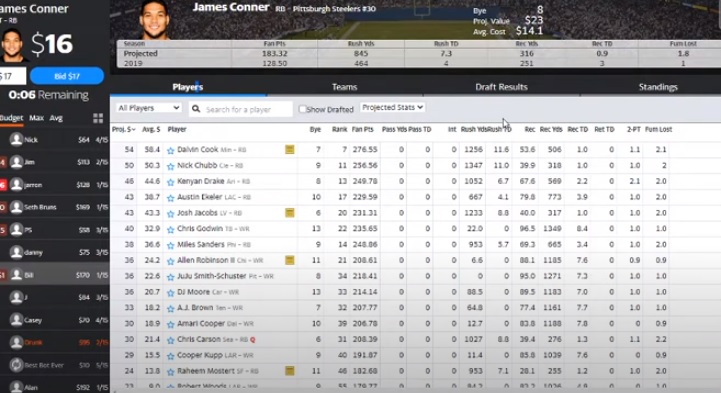
Image Source: footballabsurdity.com
Fathoming the Auction Draft: A Paradigm Shift
The auction draft is a fundamentally different beast than a snake draft. Instead of a predetermined order, each team is allocated a set budget – usually $200, though this can vary – to spend on players. Every player is available to every team, creating a dynamic and often chaotic environment. This format truly separates the managers who have done their homework from those who are just along for the ride. Your fantasy football draft strategy needs to be flexible, adaptable, and underpinned by a deep understanding of player values.
The Auction Draft Budget: Your Financial Blueprint
Your auction draft budget is the cornerstone of your success. Think of it as your financial blueprint for the season. Going into the draft without a clear budget strategy is like going into battle without a plan.
Setting Your Budget Priorities
- Anchor Players: Decide how much you’re willing to spend on your top-tier players. Will you go for one or two elite guys, or spread your money more evenly?
- Mid-Tier Value: Identify the players who offer solid production at a reasonable price. These are the guys who can form the backbone of your team.
- Late-Round Steals: Don’t forget the bargain bin! There will always be players undervalued by the masses.
Budget Allocation Examples
Here’s a sample budget allocation breakdown for a $200 budget, showing different approaches:
| Category | Strategy A (Stars & Scrubs) | Strategy B (Balanced) | Strategy C (Value Hunter) |
|---|---|---|---|
| Elite Tier (Top 5-10) | $70 – $90 | $50 – $70 | $30 – $50 |
| High-End WR/RB | $40 – $60 | $30 – $50 | $20 – $35 |
| Mid-Tier Stars | $20 – $30 | $20 – $30 | $15 – $25 |
| Solid Starters | $10 – $20 | $10 – $20 | $10 – $15 |
| Bench Depth | $5 – $10 | $5 – $10 | $5 – $10 |
| Fills/Sleepers | $0 – $5 | $0 – $5 | $0 – $5 |
Key Takeaway: There’s no single “right” way. It depends on your risk tolerance and your fantasy football draft rankings.
Deciphering Fantasy Football Auction Values
This is where the real work happens. Fantasy football auction values are not static; they fluctuate based on ADP (Average Draft Position), news, injuries, and team situations. Your job is to understand these values and exploit discrepancies.
Creating Your Personal Player Rankings
While general fantasy football draft rankings are helpful, you need to create your own based on your league’s scoring system and roster requirements.
Factors Influencing Your Values
- Scoring Format: PPR (Point Per Reception) leagues significantly increase the value of pass-catching running backs and high-volume wide receivers. Standard leagues favor volume and touchdown-scoring.
- Roster Requirements: How many QBs, RBs, WRs, TEs, and Flex players do you need? This dictates how many players you’ll target at each position.
- Player Consistency: Some players are boom-or-bust, while others provide reliable weekly production. Factor this into your perceived value.
- Injury History: A player with a nagging injury might be undervalued, but is the risk worth the potential reward?
Identifying the Best Auction Draft Players
The best auction draft players are those who consistently outperform their perceived value. These are the players you’ll build your strategy around.
Top-Tier Targets
These are your potential league winners. Be prepared to spend a significant portion of your budget here.
- Elite QBs: Patrick Mahomes, Josh Allen, Jalen Hurts
- Workhorse RBs: Christian McCaffrey, Austin Ekeler, Bijan Robinson (rookie hype)
- Dominant WRs: Justin Jefferson, Ja’Marr Chase, Tyreek Hill
- Elite TEs: Travis Kelce (if still dominant)
Mid-Tier Value Picks
This is where you can build depth and find crucial contributors.
- Solid WR2/Flex Plays: Players who can step up into WR1 roles due to situations or injuries.
- RBBC Leaders: Running backs in committees who still get significant touches and goal-line work.
- Emerging Tight Ends: Players poised for a breakout year.
Late-Round Bargains & Sleepers
These are the players who can drastically improve your team if they hit.
- Backup RBs: Those with clear paths to significant touches if the starter goes down.
- Deep WRs: Players on teams with high passing volume or who are the next man up.
- Rookie Dart Throws: Especially at RB and WR, where opportunities can arise quickly.
Winning the Auction Draft: Advanced Techniques
Knowing player values is one thing; executing them in the heat of the draft is another. This is where your auction draft tips become crucial.
The Art of Nomination
Who you nominate and when is as important as who you draft.
Nomination Strategies
- Tier 1 Players Early: Nominate your absolute top-tier players early to get a sense of how aggressive your league mates will be. This also helps you establish a baseline for spending.
- Targeted Nominations: Nominate players you don’t want to overpay for, forcing others to spend their money.
- Positional Runs: If several owners are weak at a certain position, consider nominating a strong player at that position to force them into a bidding war.
- Deflating Other Teams: Nominate players you believe are overvalued to drain your opponents’ budgets.
Managing Your Auction Draft Budget in Real-Time
Your pre-draft budget is a guide, not a rigid rulebook. You need to adapt as the draft unfolds.
Key Budget Management Tactics
- Know When to Pull the Plug: If a player is going for significantly more than your perceived value, walk away. There will be other opportunities.
- Don’t Be Afraid to Overspend (Slightly): If a player is a perfect fit for your team and you’re only slightly over your valuation, it might be worth it.
- Keep an Eye on Opponent Budgets: Pay attention to how much money your opponents have left. This can inform your decisions on whether to bid aggressively or save your cash.
- The “Money Out” Strategy: As the draft progresses and many owners have spent most of their budget, you can afford to bid more aggressively on the remaining players you want.
Maximizing Fantasy Draft Value: The Final Push
Maximizing fantasy draft value is about more than just getting the most points; it’s about getting the most bang for your buck.
Late-Round Strategy
- Target Backup QBs and TEs: Secure reliable backups for your key skill positions, especially if you waited on drafting them.
- Stockpile Upside: Draft players with high potential for the season, even if their floor is low. Injuries happen, and these players could be league winners.
- Kicker and Defense: These positions are often the last to be drafted. Don’t overspend. Identify a reliable defense or kicker and grab them with your remaining funds.
The Importance of a Fantasy Football Draft Cheatsheet
While you can’t rely solely on a fantasy football draft cheatsheet, it’s an invaluable tool for organization and reference.
Building Your Cheatsheet
- Player Tiers: Group players into tiers to easily identify when a tier is being depleted.
- Positional Needs: Mark your positional needs and potential targets.
- Budget Estimates: Include your estimated auction values for key players.
- Injury Notes: Keep track of any significant injuries that might affect player value.
Auction Draft Tips: Mastering the Nuances
Beyond the core strategies, several auction draft tips can give you an edge.
Positional Scarcity
- Running Backs: The scarcity of true workhorse running backs is a constant in fantasy football. Be prepared to pay a premium for them.
- Tight Ends: Beyond the top 2-3, the tight end position can be a wasteland. Identifying a solid TE early can be a significant advantage.
Rookies and Second-Year Players
- Rookie RBs: Historically, rookie running backs have a higher chance of breaking out due to volume. Do your research on draft capital and landing spots.
- Second-Year WRs: Players who had a decent rookie year often make a big leap in their second season.
Vegas Lines and Over/Unders
- High-Scoring Games: Target players on teams projected to be in high-scoring games.
- Offensive Line Strength: Research offensive line rankings. A strong O-line boosts the fantasy value of its running backs and quarterbacks.
The “Do Not Draft” List
- Injury-Prone Players: While tempting, be wary of players with a history of significant injuries.
- Aging Stars: Stars on the decline can still be drafted, but their price should reflect their diminishing returns.
Frequently Asked Questions (FAQ)
Q1: How much should I spend on my first player in an auction draft?
A1: This is highly dependent on your overall strategy and the player you’re targeting. If you’re going for an elite player like Justin Jefferson, you might allocate 30-40% of your budget ($60-$80). If you prefer a balanced approach, your first player might cost $40-$50. Always have a maximum price in mind and stick to it.
Q2: What is a “zero RB” strategy in an auction draft?
A2: The “zero RB” strategy involves intentionally avoiding drafting running backs with your early draft capital. Instead, you focus on securing elite wide receivers and perhaps a top quarterback or tight end. The idea is to then target running backs in the middle and later rounds who have a path to volume or are in committees, hoping to find value and avoid injury-prone early-round RBs. In an auction, this means being willing to spend a bit more on those mid-to-late round RBs when others might be depleted.
Q3: How do I handle surprise bids from opponents?
A3: Stay calm and stick to your valuation. If an opponent is suddenly driving up the price of a player you wanted, let them have him. Use that as an opportunity to pivot to another player on your list who might be available for less. It’s a sign they really want that player, and you can use that knowledge to your advantage later.
Q4: When should I start bidding on a player?
A4: You don’t necessarily need to be the first to bid on a player. Wait to see if there’s interest. If a player you really want is being bid up and is approaching your maximum value, then it’s time to jump in. Conversely, if a player you like is not getting any bids and is well below your value, you can snag them for a bargain.
Q5: How do I prepare for injuries during the draft?
A5: While you can’t predict injuries, you can build a roster that has depth at key positions. In an auction draft, this means not spending your entire budget on starters. Having $5-$10 left for a few speculative bench players can provide crucial insurance if your starters go down. Always have a few backup options in mind for each position as the draft progresses.
Q6: What is a “fantasy football draft cheatsheet” for an auction draft?
A6: An auction draft cheatsheet is a personalized document that lists players, their estimated auction values, their tier, and your positional needs. It helps you track spending, identify value, and make quick decisions during the draft. It’s more of a guide than a rigid script, allowing for flexibility based on how the draft unfolds.
Q7: How do I win fantasy football auction?
A7: To win fantasy football auction drafts, you need a solid auction draft budget, a deep understanding of fantasy football auction values, the ability to identify the best auction draft players, and a flexible fantasy football draft strategy. You must master nomination, manage your money effectively, and continuously strive to maximize fantasy draft value. A well-crafted fantasy football draft cheatsheet is also essential.
By following these principles and adapting them to your specific league and draft environment, you’ll be well on your way to consistently winning your fantasy football auction drafts. Remember, preparation, adaptability, and a cool head are your greatest assets. Good luck!