
Yes, you absolutely can trip an opponent in football, but it’s a foul and will result in penalties if a referee catches it. Tripping is considered illegal contact and is a common way players try to stop opponents, especially when they are trying to prevent a score. The intent behind tripping can range from a tactical move to gain an advantage to a moment of frustration, but regardless of the motivation, the consequences are usually the same: a free kick for the opposing team, and potentially a yellow card for the offending player, depending on the severity and context of the infraction.
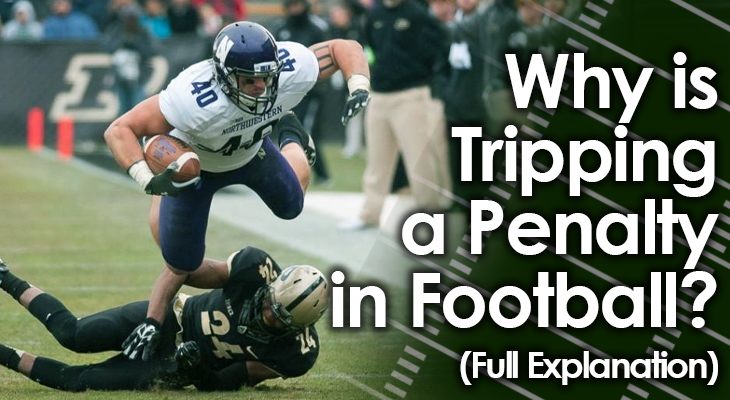
Image Source: footballadvantage.com
The Mechanics of Tripping in Football
Tripping in football involves using your legs or feet to deliberately impede an opponent’s progress, causing them to fall or stumble. This can be done in several ways:
- The “leg-out”: This is the most common form, where a player extends a leg in front of an advancing opponent.
- The “block”: While not always a trip, a player might position their body in a way that their legs become an obstacle, leading to a trip.
- The “tackle from behind” with the leg: A player might slide in to tackle, but if their primary aim or action is to sweep the opponent’s legs from under them, it’s tripping.
The Laws of the Game, specifically Law 12, detail what constitutes a foul. Tripping falls under “unsporting behaviour” and “commits an offense against an opponent.” It’s a direct infringement that can significantly impact the flow and fairness of the game. Player safety is a major concern for football’s governing bodies, and actions like tripping are discouraged to prevent injuries.
Fouls and Their Consequences
When a referee identifies a trip, they will blow their whistle to stop play and award a free kick to the team that was fouled. The location of the free kick depends on where the foul occurred:
- Direct Free Kick: If the tripping occurred outside of the offending player’s own penalty area, the fouled team is awarded a direct free kick. This means they can score directly from the kick.
- Penalty Kick: If the tripping occurred inside the offending player’s own penalty area, the result is a penalty kick. This is a high-stakes opportunity for the attacking team, with only the goalkeeper to beat from 12 yards out.
Beyond the free kick or penalty, the referee also has the discretion to issue disciplinary sanctions.
Disciplinary Sanctions: Yellow and Red Cards
The referee’s decision to issue a card is based on the nature and impact of the foul.
- Yellow Card: A caution is typically given for tripping if it is deemed to be careless or reckless. This serves as a warning to the player and can lead to a sending-off if they accumulate two yellow cards in the same match. A yellow card is often shown for a trip that might be a professional foul – an intentional foul to stop a dangerous attack, often when a player is the last line of defense. This is done to prevent a score or to break up a promising attack.
- Red Card: In more severe cases, a trip can result in a direct red card. This happens if the trip is considered “serious foul play” or “violent conduct.” For example, a trip from behind with excessive force, or a trip that causes significant injury, would warrant a straight red. A red card means the player is sent off the field and cannot be replaced, leaving their team with one less player for the remainder of the match.
The referee’s interpretation of the event is paramount. What might look like an accidental stumble to one spectator could be seen as a deliberate trip by the referee.
Types of Fouls Related to Tripping
While the core offense is tripping, several related fouls can occur during attempts to impede an opponent. These often involve the use of legs or feet:
- Kicking: Striking an opponent with the foot or leg is a foul. This can be a deliberate kick or an uncontrolled swing of the leg.
- Pushing: While not directly involving the legs, a player might push an opponent to knock them off balance, potentially leading to a trip.
- Charging: This involves making contact with the shoulder or body. However, if the charge is made with the legs or feet, it can easily become a tripping offense.
- Obstruction: This is a broader term that can include using the body to block an opponent’s path without making contact. However, if the obstruction is achieved by using the legs in a way that causes a trip, it becomes a tripping foul.
When is Tripping a Foul?
The distinction between a legitimate challenge and a foul can be nuanced. The Laws of the Game provide guidance:
- Careless: When a player shows a lack of attention or consideration when making a challenge.
- Reckless: When a player shows contempt for the safety of their opponent.
- Using Excessive Force: When a player exceeds the necessary force required for a challenge.
Tripping calls are made when any of these criteria are met and a player’s legs or feet are used to impede an opponent.
Player Safety and Sportsmanship
The emphasis on player safety is a cornerstone of modern football. Tripping, especially when executed with force or from behind, can lead to serious injuries such as ankle sprains, knee ligament tears, and even fractures. Referees are trained to identify and penalize these actions rigorously to protect players.
Sportsmanship is also a key factor. Deliberately tripping an opponent, particularly when they are in a scoring position or attempting a delicate skill, is seen as unsportsmanlike. It goes against the spirit of fair play and can lead to a breakdown in the game’s decorum. A player who consistently trips opponents may be perceived as playing dirty, impacting their reputation and the team’s image.
Context Matters: The Referee’s Perspective
Referees have a difficult job in judging these situations, as they must assess intent and impact in split seconds. Several factors influence their decision on tripping calls:
- Contact with the Leg/Foot: The foul must involve the leg or foot being used to impede the opponent.
- Intent: Was the action deliberate or accidental? A clumsy tackle might be distinguished from a malicious trip.
- Force: The amount of force used is a critical factor.
- Location on the Field: A trip in the penalty area has more severe consequences than one in midfield.
- Game Situation: Was the player trying to prevent a clear goal-scoring opportunity? This could influence the disciplinary sanction.
Visualizing Tripping Incidents
Imagine a striker making a run towards the goal. A defender, unable to catch up, might instinctively stick out a leg to block their path. If the striker’s leg is caught by the defender’s outstretched leg, causing them to fall, it’s a trip.
Consider a midfield battle. Two players are vying for the ball. One player tries to shield the ball with their body. If, in doing so, they also use their leg to subtly hook or impede the opponent’s stride, causing them to stumble, this could also be deemed a trip.
The angle of the challenge and whether it’s from the front or behind can also play a role in the referee’s interpretation and the severity of the penalty.
The Impact of Tripping on Game Disruption
Tripping fouls can significantly disrupt the flow of a football match.
- Stoppages in Play: Each foul requires the referee to stop the game, blow the whistle, and administer the restart. Frequent tripping incidents lead to a stop-start game, reducing the overall entertainment value and momentum.
- Loss of Attacking Momentum: For the attacking team, a trip means losing possession and the chance to build an attack or score. For the defending team, it means breaking up the opponent’s rhythm.
- Psychological Impact: Repeated tripping fouls can frustrate players, leading to further fouls and a more aggressive, less skilled game. It can also impact the confidence of the player who has been fouled, making them more hesitant.
Notable Examples of Tripping Calls
History is littered with infamous tripping incidents that have shaped matches and careers. Think of a crucial knockout game where a last-ditch trip prevents a certain goal, leading to a penalty and the elimination of a favored team. These moments, while sometimes controversial, highlight the importance of these rules.
Table 1: Common Scenarios Leading to Tripping Calls
| Scenario | Potential Foul | Referee’s Decision |
|---|---|---|
| Defender sticks out a leg to stop a striker | Tripping | Direct Free Kick / Penalty |
| Player uses foot to unbalance opponent | Tripping | Direct Free Kick / Penalty |
| Sliding tackle that sweeps opponent’s feet | Tripping / Serious Foul Play | Direct Free Kick + Card |
| Player uses leg to block opponent’s stride | Tripping | Direct Free Kick / Penalty |
Preventing a Score: The Tactical Use of Tripping
One of the most significant reasons why tripping is a foul is its effectiveness in preventing a score. When an attacker is clear through on goal, or about to make a decisive pass or shot, a defender might resort to a trip as a last resort. This is often a calculated risk.
- Consequences vs. Conceded Goal: The defender might reason that conceding a free kick or even a penalty is better than conceding a guaranteed goal.
- Professional Foul: Such a trip is often classified as a “professional foul” and typically results in a yellow card. The intention is to stop play and prevent a score, acknowledging the tactical, albeit illegal, nature of the act.
The Philosophy Behind the Rules
The Laws of the Game are designed to ensure fairness, safety, and continuous play. Tripping violates these principles by:
- Unfair Advantage: It grants an unfair advantage to the player committing the foul by illegally impeding an opponent.
- Player Safety Risk: It poses a significant risk of injury.
- Game Disruption: It stops the natural flow of the game.
Alternative Ways to Defend
Football offers numerous legal ways to dispossess an opponent or stop their progress:
- Tackling: A clean tackle, where the player plays the ball with their foot and makes minimal contact with the opponent’s leg, is legal.
- Interceptions: Reading the game and cutting out passes.
- Positioning and Marking: Staying close to an opponent to deny them space.
- Blocking (Legal): Using the body to shield the ball or impede an opponent without using the legs to trip.
What Happens After a Tripping Foul?
Once a tripping foul is called and the appropriate restart (free kick or penalty) is awarded, play continues. If a yellow card was shown, the player must be more careful for the remainder of the match. If a red card was shown, they are ejected and their team must play with fewer players. The psychological impact on both teams can be substantial, potentially changing the entire dynamic of the game.
Frequently Asked Questions (FAQ)
Q1: Can a player intentionally trip an opponent without being penalized?
A1: No, if the referee sees the trip and deems it intentional or reckless, a foul will be called. Accidental trips that don’t impede an opponent significantly might be played on, but deliberate tripping is always a foul.
Q2: What is the difference between a trip and a slide tackle?
A2: A slide tackle is legal if it’s a genuine attempt to play the ball and is executed without fouls like tripping, kicking, or serious foul play. If a slide tackle involves using the leg to sweep an opponent’s legs, it becomes a trip.
Q3: If a player trips an opponent, will they always get a yellow card?
A3: Not necessarily. A yellow card is typically given for careless or reckless tripping, or for a professional foul to prevent a goal. If the trip is exceptionally violent or dangerous, it could result in a straight red card. Some very minor, incidental contact might not even be called as a foul.
Q4: Can you trip an opponent with your hand?
A4: While the term “trip” specifically refers to using the legs or feet, using hands to knock an opponent over is also a foul. It would typically be classified as pushing or holding, but the outcome (a free kick) is similar.
Q5: How do referees decide if a trip is a penalty or just a free kick?
A5: The location of the foul determines this. If the tripping foul occurs within the offending player’s own penalty area, it is a penalty kick. If it occurs outside the penalty area, it is a direct free kick.
Q6: What happens if a player is tripped and injured?
A6: If a player is tripped and injured, the referee will stop play. The fouled player receives medical attention. The offending player will be penalized according to the severity of the trip (free kick, penalty, yellow card, or red card). If the injury is severe due to a reckless or intentional trip, the repercussions for the offending player can be significant, including potential suspensions.
Q7: Does the ball have to be nearby for a trip to be a foul?
A7: Not necessarily. While many tripping fouls occur when players are challenging for the ball, a player can be penalized for tripping an opponent even if the ball is not immediately present, as long as it is done to impede their progress or for unsportsmanlike reasons.
Q8: How do referees differentiate between an accidental stumble and a deliberate trip?
A8: Referees look for indicators of intent, such as the extension of a leg, the angle of the challenge, the force used, and whether the player was genuinely attempting to play the ball or simply impede the opponent. The player’s body language and the context of the situation are crucial.
In conclusion, while the art of defending involves legally impeding opponents, tripping is a clear violation of the Laws of the Game. It’s a foul that prioritizes player safety and sportsmanship, ensuring that football remains a fair and exciting spectacle. The correct application of fouls and penalties, including tripping calls, is essential for maintaining the integrity of the sport.