
The ability to read football plays is crucial for players and coaches alike. Reading football plays involves deciphering the intentions of the opposing team by analyzing their formations, player alignment, and tendencies before and during a play. This skill allows for better defensive adjustments, more effective offensive strategies, and ultimately, a greater chance of success on the field.
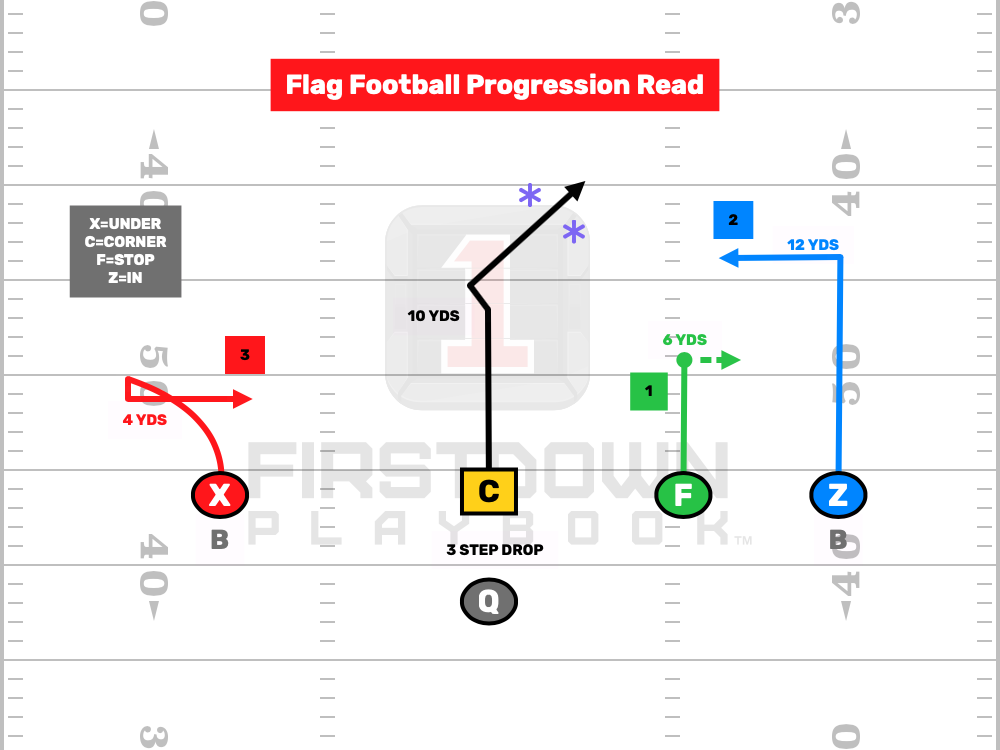
Image Source: firstdown.playbooktech.com
Fathoming Offensive Play Design
At its core, football play calling is a strategic art form. Offensive playbooks are filled with intricate designs, each with a specific purpose. These offensive playbook basics aim to exploit defensive weaknesses, create mismatches, and gain yardage. To truly master reading football plays, one must first grasp how offenses are constructed.
Offensive Line Blocking Schemes: The Foundation
The offensive line is the first line of defense for the quarterback and the first line of attack for the running game. Their blocking schemes dictate the flow of the play.
Understanding Different Blocking Schemes
- Zone Blocking: In zone blocking, offensive linemen are assigned a specific area (a zone) to block rather than a particular defender. They work together, moving laterally as a unit, to create running lanes. This requires excellent footwork and communication.
- Man Blocking: With man blocking, each offensive lineman is responsible for blocking a specific defender one-on-one. This is more of a power-based scheme, relying on individual strength and technique.
- Combination Blocks: These involve two linemen working together to block a single defender, often to create a double-team. Once the defender is engaged, one of the linemen can peel off to block a second-level defender.
- Pulling and Trapping: Linemen, typically guards or tackles, will “pull” from their assigned position to lead the blocking for a running back or to block a defensive player coming through a gap. A “trap” block involves an offensive lineman intentionally letting a defensive player penetrate the line of scrimmage before blocking them from the side.
Football play diagramming is essential for visualizing these schemes. Diagrams clearly illustrate which player blocks which defender and in what manner.
Deciphering Offensive Formations
Offensive formations provide initial clues about the play that might be called. They dictate where the offensive players are positioned relative to the line of scrimmage and each other.
Common Offensive Formations and Their Implications
| Formation | Key Personnel | Potential Plays |
|---|---|---|
| I-Formation | QB, RB, FB, 2 WR, TE | Power run, draws, play-action passes, bootlegs. FB’s presence signals potential lead blocking. |
| Shotgun | QB in shotgun, RB next to or behind QB, 2+ WR, 0-2 TE | Quick passes, screens, RPOs, outside zone runs, draws. QB’s depth offers more time. |
| Pistol | QB directly behind RB, RB offset forward | Hybrid of I-formation and shotgun. Good for play-action, draws, and counters. |
| Empty Set | QB, 5 WR, no RB or TE on the field | Primarily pass plays, forcing defense to spread out. Can be used for draws or QB runs. |
| Heavy/Jumbo | QB, RB, 2+ TE, fewer WR (often 1 or 0) | Run-heavy, power football, short yardage. TE’s can seal edges or block down. |
Understanding offensive schemes involves recognizing these formations and associating them with likely plays. A team that frequently runs out of the I-formation will likely continue to do so unless they show a tendency to disguise.
Quarterback Pre-Snap Reads: The First Level of Defense
The quarterback is the primary reader of the defense before the snap. Their ability to process information quickly and accurately is paramount. Quarterback pre-snap reads involve several key observations.
What the Quarterback Looks For
- Defensive Personnel: Are there more defensive backs or linebackers on the field? This suggests a likely pass or run defense.
- Alignment of Defensive Linemen: Are they head-up, shaded inside or outside? This can indicate potential blitzes or run-stopping intentions.
- Linebacker Depth: Are linebackers aligned on the line of scrimmage, a yard or two back, or further? Deeper linebackers might be dropping into coverage, while those on the line could be blitzing.
- Safety Depth: Are safeties deep (two-high) or closer to the line of scrimmage (one-high or split)? Deep safeties often indicate a softer coverage, while closer safeties might signal a blitz or aggressive run defense.
- Nickel/Dime Packages: The presence of extra defensive backs (nickel or dime) usually means the defense is anticipating a pass.
Based on these reads, the quarterback can make adjustments to the play, such as changing the protection scheme (blocking assignments) or calling an audible (changing the play entirely).
Comprehending Defensive Strategies
To effectively read offensive plays, one must also understand how defenses operate and attempt to counter offensive schemes. Decoding defensive formations is the first step in this process.
Types of Defensive Alignments
Defenses deploy various formations to achieve different objectives. The most common formations dictate player responsibilities and liabilities.
Common Defensive Formations
| Formation | Key Personnel/Alignment | Primary Objective |
|---|---|---|
| 4-3 | 4 defensive linemen, 3 linebackers, 4 defensive backs (2 corners, 2 safeties) | Balanced approach, good against both run and pass. Linebackers are key in coverage and run support. |
| 3-4 | 3 defensive linemen, 4 linebackers, 4 defensive backs | More flexibility for blitzing from linebackers. Linemen often occupy blockers to free up blitzers. |
| Nickel | 4 DL, 2 LB, 5 DB (typically 3 CBs, 2 Safeties) | Primarily pass defense, replacing a linebacker with an extra defensive back. |
| Dime | 3 or 4 DL, 1 or 2 LB, 6+ DB | Heavily pass-oriented, designed to prevent big plays through the air. |
The personnel and their alignment provide a wealth of information. For example, seeing a Nickel package often means the offense is likely to pass, and the defense is prepared for it.
Fathoming Coverage Schemes: Zone vs. Man
The way defenders cover receivers is critical. This is where the concept of reading zone defense and reading man to man coverage becomes vital.
Reading Zone Defense
In zone defense, each defender is responsible for a specific area or “zone” of the field. Their job is to cover any receiver who enters their zone.
- How to Read Zone:
- Identify the “Hooks” or “Halos”: Linebackers and safeties who drop into shallow zones are often key. They can provide clues about the type of zone coverage.
- Observe Dropping Patterns: How do the defenders drop? Do they pass off receivers, or do they stay in their zones?
- Look for Soft Spots: Zone defenses inherently have soft spots. Identifying these areas is crucial for quarterbacks. Are the seams between zones open? Is the area over the middle being adequately covered?
- Defensive Communication: Sometimes, defenders will point or communicate coverage. This can be hard to see from afar but is a valuable clue.
- Tendencies: Does the defense consistently play Cover 2 (two deep safeties, five underneath zones)? Cover 3 (three deep, four underneath)? Cover 4 (four deep, three underneath)?
When reading zone defense, offenses look to create opportunities by stretching the zones, throwing into vacated areas, or using crossing routes to force defenders out of their assigned space.
Reading Man to Man Coverage
In man-to-man coverage, each defender is assigned to cover a specific offensive player.
- How to Read Man Coverage:
- Defender’s Alignment: Is the defender playing “press” (lined up directly on the receiver at the line of scrimmage), “off-man” (a few yards off), or “off-coverage” (further off, giving a cushion)? Press coverage is more aggressive and aims to disrupt the receiver’s timing.
- Defender’s Leverage: Is the defender playing the receiver to the inside or outside? This can signal an intent to funnel the receiver into help or prevent them from getting to the sideline.
- Support Behind the Coverage: In Cover 1 man, there’s one deep safety. In Cover 0, there’s no deep safety, leaving the secondary vulnerable to deep throws if blitzing.
- Mismatch Opportunities: If a slower linebacker is covering a fast wide receiver, that’s a significant mismatch that an offense will try to exploit.
Reading man coverage is about identifying favorable matchups and exploiting them, or recognizing when the defense is attempting to jam and disrupt the receiver’s route.
Blitz Packages: Applying Pressure
Blitzing involves sending extra players (often linebackers or defensive backs) to rush the quarterback. This aims to disrupt the passing game and force quick decisions.
Recognizing Blitz Tendencies
- Personnel Groupings: Teams that blitz a lot often have versatile linebackers or safeties.
- Formation Adjustments: Defenders might shift their alignment just before the snap, indicating a potential blitz.
- Linebacker/DB Alignment: Linebackers or defensive backs who line up on the line of scrimmage, or aggressively toward the offensive tackle, are often candidates for a blitz.
- Defensive Coordinator Tendencies: Familiarity with the opposing defensive coordinator’s philosophy is crucial. Some coaches are known for aggressive blitzing.
When reading a blitz, the offensive line must adjust their blocking assignments, and the quarterback needs to make quick, decisive throws, often to screens or hot routes (routes designed to get open quickly against a blitz).
Putting It All Together: Football Strategy Explained
Mastering football plays is not just about individual recognition; it’s about synthesizing all the information to make strategic decisions. Football strategy explained in this context means understanding the interplay between offense and defense.
The Art of Football Play Calling
Football play calling involves selecting the right play at the right time, based on the situation, the opponent’s tendencies, and the offensive team’s strengths.
Factors Influencing Play Calling
- Down and Distance: Short yardage situations often call for runs or short passes. Third and long situations are typically pass-heavy.
- Field Position: Red zone plays differ from plays called on your own 20-yard line.
- Game Clock: Teams with a lead might run the ball more to kill the clock, while teams that are behind will pass more frequently to score quickly.
- Opponent’s Strengths and Weaknesses: If the opponent has a dominant pass rush, you might call more quick passes or runs. If their secondary is weak, you might attack through the air.
- Your Team’s Strengths: Play calling should leverage your team’s best players and schemes.
Reading a Play in Progress
Once the ball is snapped, the reading continues. The initial pre-snap reads are confirmed or contradicted by the action on the field.
Post-Snap Reads for Offense
- Blocking Integrity: Did the offensive line hold up? Were there any missed assignments or blocks?
- Defender Movement: How did the defenders react? Did a blitz come? Did a linebacker drop deep?
- Receiver Separation: Did the receivers get open?
- Ball Carrier’s Vision: For running backs, it’s about hitting the hole created by the blocking.
Post-Snap Reads for Defense
- Run or Pass Identification: Did the play develop into a run or a pass?
- Blocking Scheme Recognition: Was it zone, man blocking, or a gap scheme?
- Receiver Routes: What routes are the receivers running? Are they clearing out, running intermediate routes, or coming back short?
- Quarterback’s Intention: Is the quarterback scrambling, looking to throw deep, or checking down?
Advanced Concepts in Play Reading
Beyond the basics, there are more nuanced aspects to reading football plays.
RPOs (Run-Pass Options)
RPOs are plays where the quarterback has the option to hand off the ball to a running back or throw it to a receiver, based on a defender’s reaction.
Reading RPO Defenders
The quarterback reads a specific defender (often a linebacker or defensive end).
* If the defender attacks the run: The quarterback pulls the ball and throws a pass.
* If the defender drops into pass coverage: The quarterback hands the ball off to the running back.
Play-Action Passing
Play-action is a deceptive tactic where the quarterback fakes a handoff to a running back to draw in linebackers and safeties, creating opportunities for deep passes.
Defending Play-Action
Defenders must maintain their discipline and not overcommit to the fake handoff. Linebackers and safeties need to read the quarterback’s eyes and body language, as well as the actions of the offensive linemen, to determine if it’s a true run or a play-action pass.
Mastering the Art of Football Play Reading
The journey to mastering football plays is continuous. It requires dedication, study, and an inquisitive mind. Whether you’re a player looking to improve your instincts or a coach refining your game plan, the principles of reading formations, blocking schemes, and coverage tells are fundamental.
Practice and Film Study
The most effective way to improve play reading is through consistent practice and diligent film study.
Key Practice Drills
- Pre-snap recognition drills: Players practice identifying defensive formations and potential plays before the snap.
- Situational drills: Running plays in specific down-and-distance scenarios to practice reading responses.
- Film study sessions: Analyzing game film to identify tendencies, formations, and player habits of opponents.
By breaking down each component – football play diagramming, understanding offensive schemes, decoding defensive formations, football play calling, reading zone defense, reading man to man coverage, offensive line blocking schemes, quarterback pre-snap reads, and football strategy explained – you build a comprehensive framework for success.
Frequently Asked Questions (FAQ)
Q1: What is the most important factor when reading a football play?
A1: While many factors are crucial, a quarterback’s pre-snap read of defensive alignment, personnel, and tendencies is arguably the most important initial step in reading a play.
Q2: Can I learn to read football plays by watching games on TV?
A2: Yes, watching games with an analytical mindset can help. Pay attention to the formations, how defenders react, and the outcome of plays. However, hands-on practice and focused film study are more effective for deeper learning.
Q3: Who is primarily responsible for reading the defense?
A3: The quarterback holds the primary responsibility for reading the defense before and during a play. However, coaches, offensive linemen, and even receivers play a role in recognizing defensive adjustments.
Q4: How do offensive linemen read defensive stunts?
A4: Offensive linemen look for the alignment and movement of defensive linemen. If a defensive lineman shifts their weight or alignment, it could signal a stunt or blitz. They rely on communication with their fellow linemen and often pre-snap calls from the quarterback or center.
Q5: What is the difference between Cover 2 and Cover 3 zone defense?
A5: In Cover 2, two safeties play deep, covering one-half of the field each, and five underneath defenders cover specific zones. In Cover 3, three defenders play deep zones (cornerbacks and one safety), and four underneath defenders cover zones.