
Toddlers can safely have Motrin, which is ibuprofen, every 6 to 8 hours. It is very important not to give more than four doses in a 24-hour period. Always base the dose on your child’s weight. Do not use their age alone. Always read the medicine label carefully. For the safest use, talk to your child’s doctor or pharmacist first. They can give the best advice for your toddler.
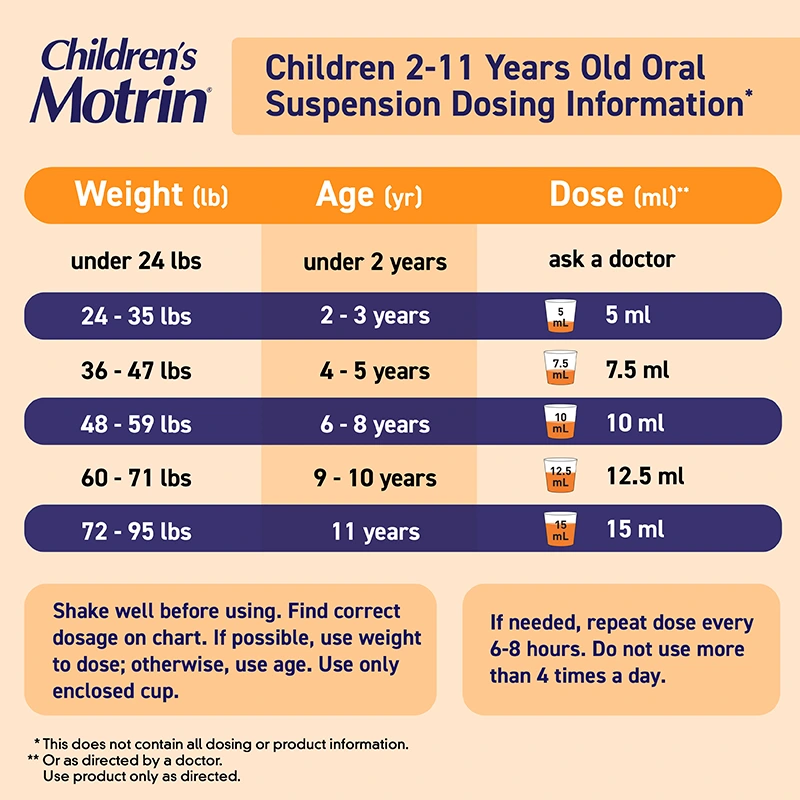
Image Source: images.ctfassets.net
Grasping Motrin for Toddlers
Motrin is a common medicine. It helps ease pain and lower fever. Its active ingredient is ibuprofen. Ibuprofen belongs to a group of medicines. These are called NSAIDs. NSAIDs stand for non-steroidal anti-inflammatory drugs. They work by blocking chemicals in the body. These chemicals cause pain and swelling.
Many parents keep Motrin at home. It is a good choice for young children. But using it correctly is key. Giving too much can be harmful. Giving too little might not help. Knowing the right way to use it keeps your child safe. This guide will help you use Motrin the right way.
Why Toddlers Might Need Motrin
Toddlers often get sick. They might have a fever. They might feel pain. Motrin can help with many of these issues.
Here are common reasons doctors suggest Motrin:
- Fever: Motrin for fever in toddlers can bring down a high temperature. Fever is a sign of illness. It often comes with colds or flu.
- Pain Relief: Toddlers get aches and pains. This can be from teething. It can be from minor injuries. Earaches or sore throats also cause pain. Motrin can make them feel better.
- Inflammation: Sometimes, a toddler might have swelling. This is not common. But Motrin can help reduce it.
It is always wise to know the cause of your toddler’s discomfort. If you are unsure, call your doctor. They can help you decide if Motrin is the best choice.
The Crucial Role of Weight-Based Dosing
Finding the safe Motrin dose toddlers need is very important. This is not based on age. It is based on your child’s weight. Children grow at different rates. A 2-year-old might weigh more or less than another 2-year-old. So, weight is the key factor.
Using a child’s weight helps you give the right amount of medicine. It makes sure they get enough to help. It also stops them from getting too much. Too much Motrin can be dangerous. It can cause serious side effects.
Always weigh your child before giving medicine. Use a scale that measures in pounds or kilograms. If your child’s weight changes, adjust the dose. Your doctor or pharmacist can help you find your child’s current weight. They can also tell you the exact dose.
Finding the Right Dose for Your Toddler
The right ibuprofen dosage for toddlers is vital. It must be exact. Always use the dosing syringe or cup that comes with the medicine. Do not use kitchen spoons. These spoons are not accurate. They can give too much or too little medicine.
Most liquid Motrin for toddlers comes in one strength. This is usually 100 mg of ibuprofen per 5 mL. Always check the label to confirm. Sometimes, different strengths exist.
Here is a general guide for safe Motrin dose toddlers based on weight. This is for children aged 6 months to 12 years. Always check the label of your specific Motrin product. Always talk to your doctor.
Motrin Dosing Guide for Toddlers (100 mg / 5 mL strength)
| Child’s Weight (Pounds) | Child’s Weight (Kilograms) | Dose (mL) |
|---|---|---|
| 12-17 lbs | 5.5-7.9 kg | 1.25 mL |
| 18-23 lbs | 8.0-10.9 kg | 1.875 mL |
| 24-35 lbs | 11.0-15.9 kg | 2.5 mL |
| 36-47 lbs | 16.0-21.9 kg | 3.75 mL |
| 48-59 lbs | 22.0-26.9 kg | 5 mL |
| 60-71 lbs | 27.0-32.9 kg | 6.25 mL |
| 72-83 lbs | 33.0-37.9 kg | 7.5 mL |
| 84-95 lbs | 38.0-43.9 kg | 8.75 mL |
Important Note: Do not give Motrin to children under 6 months old. Always talk to a doctor before giving medicine to babies. This table is a general guide. Your doctor might give you a different dose. Follow your doctor’s specific advice.
How Often Can You Give Motrin?
Motrin frequency toddler rules are strict. You must follow them closely. This keeps your child safe.
After giving a dose, wait. You should wait at least 6 to 8 hours before the next dose. Do not give it sooner than 6 hours. This time allows the medicine to work. It also lets your child’s body process the medicine. Giving it too soon can lead to too much medicine in their system. This increases the risk of side effects.
There is also a maximum daily Motrin toddler limit. You should not give more than four doses in any 24-hour period. Keep a log of doses given. Write down the time and amount. This helps you remember. It also helps you avoid giving too much.
Example:
If you give Motrin at 8:00 AM, the next dose should be at 2:00 PM (6 hours later) or 4:00 PM (8 hours later).
If you give it at 8:00 AM, 2:00 PM, 8:00 PM, and 2:00 AM, that is four doses in 18 hours. This is fine. But you cannot give another dose until 8:00 AM again. This ensures no more than four doses in 24 hours.
Motrin timing between doses toddler is not flexible. Always stick to the 6- to 8-hour rule. Never guess. When in doubt, wait longer. Or call your doctor.
Motrin for Fever in Toddlers
Fever is common in toddlers. It often signals an infection. Motrin can help bring down a high fever. It can also make your child feel more comfortable.
When using Motrin for fever in toddlers, watch your child. The medicine may take about an hour to start working. The fever should start to drop. Your child may also seem less irritable. They might play a little.
Sometimes, a fever does not go away. Or it might come back quickly. This can happen before the next dose is due. Do not give an extra dose. Stick to the 6- to 8-hour rule. If your child seems very sick, call your doctor. High fever in young children needs medical attention. Especially if it lasts long.
Also, remember that a fever itself is not always bad. It is your body’s way of fighting infection. The goal of Motrin is to ease discomfort. It also helps if the fever is very high. It does not always need to make the fever completely disappear.
Key Motrin Guidelines for Toddlers
Following these Motrin guidelines for toddlers is key. They help ensure safe use.
- Always Check the Expiry Date: Medicine can lose its strength over time. It can also become unsafe. Always check the date on the bottle. Throw away expired medicine safely.
- Use the Right Strength: Liquid Motrin for babies and toddlers often comes in one strength. But older children might use a different one. Always ensure you have the correct bottle for your child’s age group. For toddlers, it’s usually 100 mg / 5 mL. Read the label to be sure.
- Measure Precisely: Use the dosing device that comes with the medicine. This is usually a syringe or a small cup. Kitchen spoons are not accurate. A wrong dose can be harmful.
- Shake the Bottle: Always shake the liquid Motrin bottle well. Do this before each use. This mixes the medicine. It makes sure the dose is even.
- Give with Food or Milk: Giving Motrin with food or milk can help. It can reduce upset stomach. Some children might get stomach pain without food.
- Store Safely: Keep all medicines out of reach of children. Store Motrin in a cool, dry place. Keep it away from direct sunlight. The bathroom cabinet might not be the best. It can get humid.
- Know When to Call the Doctor: If your child’s fever does not go down, call your doctor. If their pain gets worse, call your doctor. If new symptoms appear, call your doctor. If your child seems very unwell, seek medical help right away. Trust your gut feeling.
What if Your Toddler is 2 Years Old?
The question “how much Motrin for 2 year old?” is common. For a 2-year-old, the same rules apply. The dose still depends on their weight. Age is not the main guide.
A 2-year-old might weigh anywhere from 24 to 35 pounds (11 to 15.9 kg) on average. But some might be smaller. Some might be larger. This is why weight is crucial.
If your 2-year-old weighs, for example, 28 pounds (about 12.7 kg), the recommended dose would be 2.5 mL (from the table above). If they weigh 38 pounds (about 17.2 kg), the dose would be 3.75 mL.
Always measure their current weight. Then look at the dosing chart. Or, even better, ask your child’s doctor. They can tell you the exact amount. The frequency rules also stay the same. Wait 6 to 8 hours between doses. Do not give more than four doses in 24 hours.
Remember, every child is different. What works for one 2-year-old might not be right for another. Always personalize the dose based on their weight.
Potential Motrin Side Effects in Toddlers
Like all medicines, Motrin can have side effects. Most Motrin side effects toddler experiences are mild. They usually do not last long. Knowing what to look for is smart.
Common and Mild Side Effects:
- Upset Stomach: This is common. Giving Motrin with food or milk can help.
- Nausea or Vomiting: Your child might feel sick. They might throw up.
- Diarrhea: Loose stools can happen.
- Constipation: Some children might have trouble going to the bathroom.
- Heartburn: Your child might feel discomfort in their chest or throat. They might be too young to say “heartburn.” They might just seem fussy.
- Dizziness or Drowsiness: Your child might seem a bit sleepy or clumsy.
These side effects usually go away on their own. If they bother your child a lot, talk to your doctor.
More Serious Side Effects (Call a doctor right away):
These are rare. But they need quick medical help.
- Allergic Reaction:
- Hives (itchy bumps on the skin)
- Swelling of the face, lips, tongue, or throat
- Trouble breathing
- Severe rash
- Wheezing (noisy breathing)
- Sudden drop in blood pressure (child looks pale, weak)
- Stomach Bleeding:
- Black, tarry stools (poop)
- Vomit that looks like coffee grounds
- Severe stomach pain
- Kidney Problems:
- Changes in how much your child pees (peeing less than usual)
- Swelling in feet, ankles, or hands
- Unusual tiredness
- Liver Problems:
- Yellowing of the skin or eyes (jaundice)
- Dark urine
- Severe tiredness
- Signs of Overdose:
- Severe drowsiness
- Confusion
- Very fast heartbeat
- Ring in ears
- Seizures (fits)
- Trouble breathing
If you see any of these serious signs, get medical help immediately. Go to the emergency room or call 911. Always trust your instincts as a parent. If your child seems very unwell, do not wait.
When Not to Use Motrin
Motrin is safe for most toddlers. But there are times when you should not use it.
- Under 6 Months Old: Do not give Motrin to babies younger than 6 months. Their kidneys are not fully developed. This makes it harder for them to handle the medicine. Always use acetaminophen (like Tylenol) for babies under 6 months. And only use it after talking to a doctor.
- Allergy to NSAIDs: If your child has ever had a bad reaction to ibuprofen or aspirin, do not give them Motrin. This could be an allergy.
- Asthma: Children with asthma can sometimes have a bad reaction to ibuprofen. It can make their breathing worse. Talk to your doctor before giving Motrin if your child has asthma.
- Dehydration: If your child is very dehydrated (not enough fluids), Motrin can be risky. It can harm their kidneys. Make sure your child drinks plenty of fluids when they are sick.
- Certain Health Conditions: Children with kidney disease, liver disease, heart problems, or bleeding disorders should not take Motrin. Or they should only take it under strict doctor supervision.
- Taking Other Medicines: Some medicines do not mix well with Motrin. For example, blood thinners or some high blood pressure medicines. Always tell your doctor about all medicines your child takes. This includes over-the-counter ones.
Combining with Other Medications
Sometimes, parents want to alternate Motrin and acetaminophen (like Tylenol). This is to control fever or pain better. It can be done safely. But it needs careful timing.
You can give Motrin and acetaminophen at different times. For example, give Motrin. Then 3-4 hours later, if the fever is still high, give acetaminophen. Then wait another 3-4 hours for the next Motrin dose. This way, you are giving different medicines. You are also spreading out the doses.
Important: Do not give both medicines at the same time. Also, do not give doses of the same medicine too close together. Always know which medicine you are giving and when. Keep a clear record. And always stay within the maximum daily dose for each medicine.
It is often best to just use one medicine at a time. This simplifies things. If one medicine is not enough, talk to your doctor. They can give advice on alternating.
Storing Motrin Safely
Proper storage helps keep Motrin effective and safe.
- Out of Reach: Always keep Motrin bottles locked up or high up. Make sure children cannot reach them. Child-resistant caps are good. But curious toddlers can often figure them out.
- Cool, Dry Place: Store Motrin at room temperature. Keep it away from heat and direct light. A bathroom cabinet can get hot and humid. A high shelf in a linen closet or pantry is often better.
- Original Bottle: Keep the medicine in its original bottle. This helps you remember what it is. It also has the dosage and expiry date.
Final Thoughts on Safe Motrin Use
Using Motrin for your toddler needs care. It can be a very helpful medicine. It helps bring down fever and ease pain. But safety comes first.
Remember these key points:
- Weight-based dosing is vital. Age is not enough.
- Measure carefully. Use the right tool.
- Follow the 6- to 8-hour rule. Do not give too often.
- Do not exceed four doses in 24 hours.
- Watch for side effects. Know when to call a doctor.
- Never give to babies under 6 months.
- Talk to your doctor or pharmacist. They are your best resource for advice.
By following these expert guidelines, you can use Motrin safely. You can help your toddler feel better. Your careful actions make a big difference in their comfort and safety.
Frequently Asked Questions (FAQ)
How much Motrin can a 2-year-old have?
A 2-year-old’s Motrin dose depends on their weight, not just their age. Check the dosing chart in this guide. For example, a 28-pound toddler would get 2.5 mL of the common 100 mg/5 mL strength. Always weigh your child first. Always confirm with your doctor or pharmacist.
How often can I give Motrin to my toddler for fever?
You can give Motrin every 6 to 8 hours for fever. Do not give it more often than every 6 hours. Do not give more than four doses in a 24-hour period.
Is it safe to alternate Motrin and Tylenol for a toddler?
Yes, it can be safe to alternate Motrin (ibuprofen) and Tylenol (acetaminophen). You would give one medicine. Then wait 3-4 hours. Then give the other medicine if needed. This helps keep fever down. But be very careful with timing. Do not give doses too close together. Always stick to the daily limits for each medicine. Talk to your doctor about this plan.
What if my toddler throws up the Motrin dose?
If your toddler throws up the Motrin dose right after taking it, wait. Do not give another dose right away. It is hard to know how much they absorbed. Wait for the usual 6 to 8 hours before the next scheduled dose. If you are worried, call your doctor.
Can I give Motrin to my toddler for pain from a fall?
Yes, Motrin can help with pain from minor falls. It can help with aches and swelling. Give the correct weight-based dose. Watch for side effects. If the pain is severe, or your child seems seriously hurt, call your doctor. Do not rely only on medicine for serious injuries.
How long does Motrin take to work in toddlers?
Motrin usually starts to work within 30 to 60 minutes. You should see a drop in fever. Or your child might seem more comfortable if they were in pain. The effects can last for 6 to 8 hours.
What is the maximum daily Motrin toddler can have?
A toddler should not have more than four doses of Motrin in a 24-hour period. This is the maximum daily limit. Make sure to track the times you give the medicine. This helps avoid giving too much.