
When your toddler is sick, you want to help them feel better fast. Often, this means thinking about giving them medicine for fever or pain. Motrin, a common brand name for ibuprofen, is one medicine parents reach for. A big question is: How often can you give a toddler Motrin? Generally, you can give a toddler Motrin every 6 to 8 hours, but this depends on their weight and the specific product label. Can you give a 2 year old Motrin every 4 hours? Usually, no. Motrin is typically given every 6 to 8 hours, not every 4 hours like some other medicines. Always check the instructions on the package and talk to your doctor if you are unsure.
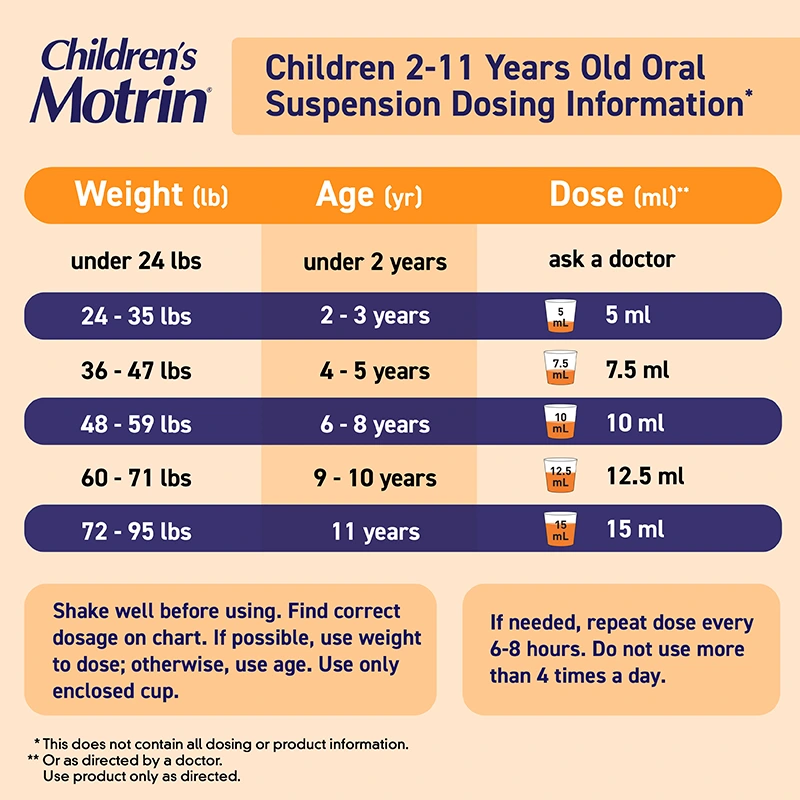
Image Source: images.ctfassets.net
Why Give Motrin to Toddlers?
Toddlers can get fevers and aches often. Things like teething, ear infections, colds, or other common sicknesses can make them uncomfortable. Motrin (ibuprofen) is a medicine that can help with these issues. It works by reducing swelling, redness, and pain. It also helps bring down fever.
Giving the right amount at the right time is key. Too little medicine might not help. Too much medicine or giving it too often can be harmful. It’s important to know the rules for using Motrin safely for your little one.
Finding the Right Amount: Grasping Toddler Motrin Dosage
Giving the correct amount of Motrin to your toddler is very important. It’s not a one-size-fits-all situation. The right dose depends mainly on your child’s weight.
Why Weight Matters Most
Medicine instructions for children often use weight to figure out the dose. This is because medicine works in the body based on size. A larger child usually needs a little more medicine than a smaller child for it to work the same way. Age is also a factor, but weight is usually the most important guide for dosage. This helps make sure the medicine is safe and works well. Using toddler Motrin dosage by weight is safer than just using age. You can find charts on the Motrin box or bottle that show how much to give based on weight.
Checking the Label and Concentration
Motrin for babies and children comes in different strengths. It might be called “Infant Drops” or “Children’s Suspension.” These have different amounts of the active medicine (ibuprofen) in each small amount of liquid.
- Infant drops are usually stronger. They have more medicine in a smaller amount of liquid.
- Children’s suspension is less strong. You need to give a larger amount of liquid to get the same dose of medicine.
Always check the label to see which kind you have. The label will say how many milligrams (mg) of ibuprofen are in each milliliter (mL) or teaspoon (tsp). For example, it might say “100 mg per 5 mL.” Using the right strength is crucial to avoid giving too much or too little. Always use the syringe or cup that comes with the medicine to measure the dose correctly. Kitchen spoons are not accurate for measuring medicine.
General Dosage Guide
Here is a general guide based on weight. But remember, this is just a guide. Always check the package instructions for the specific product you have and follow your doctor’s advice. The amounts needed for Ibuprofen dosage for toddlers age 1 to 3 years old will vary based on their weight within that age group.
| Child’s Weight (in pounds) | Child’s Weight (in kilograms) | General Dose (mg of Ibuprofen) | Typical Liquid Amount (based on 100mg/5mL strength) |
|---|---|---|---|
| 12-17 lbs | 5.5 – 7.7 kg | 50 mg | 2.5 mL (1/2 tsp) |
| 18-23 lbs | 8.2 – 10.4 kg | 75 mg | 3.75 mL |
| 24-35 lbs | 10.9 – 15.9 kg | 100 mg | 5 mL (1 tsp) |
| 36-47 lbs | 16.4 – 21.4 kg | 150 mg | 7.5 mL (1.5 tsp) |
| 48-59 lbs | 21.8 – 26.8 kg | 200 mg | 10 mL (2 tsp) |
Note: Motrin is usually not given to infants under 6 months old. Always check the age limit on the box.
This table shows the amount of ibuprofen (in milligrams) needed based on weight. The liquid amount is an example for one common strength (100mg in 5mL). If you have a different strength, the liquid amount will be different even if the milligram dose is the same. Read the label carefully! If the label dose is slightly different from this table for your child’s weight, follow the label or your doctor’s advice.
How Often Can You Give Motrin? Interpreting the Timing
Once you know the right amount to give, you need to know how often it is safe to give another dose. This is just as important as the amount.
The Typical Schedule (Every 6-8 Hours)
For most toddlers, Motrin (ibuprofen) is given every 6 to 8 hours as needed. This means you should wait at least 6 hours before giving the next dose. Waiting 8 hours is even better if your child is comfortable. This timing is crucial for Motrin for toddler fever how often you can give it. It allows your child’s body to process the medicine safely.
Why Not More Often? (Risk of Overdose)
Giving Motrin more often than every 6 hours can lead to too much medicine building up in your child’s body. Ibuprofen is processed by the kidneys. Giving it too often or in too large amounts can stress the kidneys. It can also increase the chance of side effects, like stomach upset or even more serious issues. Sticking to the 6-8 hour schedule helps prevent these problems.
How Long to Use Motrin
Motrin should only be used for a short time to treat temporary fever or pain. For fever, it’s usually okay to use for a few days. For pain, it might be used for a week or less, depending on the cause. If your child’s symptoms last longer than a few days, or if they get worse, you should stop the medicine and call your doctor. Long-term use of ibuprofen is not recommended for toddlers without a doctor’s okay.
Fathoming How Long Motrin Works
Parents often want to know how long does Motrin last in toddler. This helps them know when the next dose might be needed or if the medicine is working.
When You Should See Improvement
Motrin usually starts to work fairly quickly. For fever, you might see their temperature begin to drop within 30 to 60 minutes after giving a dose. For pain, your child might start to feel better within an hour or two. The effects of one dose usually last for 6 to 8 hours. This is why the medicine is typically given every 6 to 8 hours.
What if it Wears Off Sooner?
Sometimes, it might seem like the fever comes back or the pain returns before 6 hours have passed. It can be tempting to give another dose early. However, you must wait at least 6 hours since the last dose before giving another one. Giving it sooner could lead to an overdose.
If symptoms return quickly, there are a few things you can do:
* Try comfort measures: For fever, offer fluids, dress in light clothing, or give a lukewarm bath. For pain, offer comfort, distraction, or other non-medicine methods recommended by your doctor.
* Check the dose: Did you give the correct amount based on weight and the medicine’s strength?
* Consider if another medicine is needed or if you should call the doctor: If symptoms are severe or don’t improve with the correct dose and timing, it’s time to get medical advice.
When can I give my toddler more Motrin? Only after at least 6 hours have passed since the last dose. Ideally, wait 8 hours if symptoms allow.
Staying Safe: Deciphering Toddler Ibuprofen Side Effects and Warnings
Like all medicines, Motrin can have side effects. Most are mild, but it’s important to know what to look for. Understanding toddler Ibuprofen side effects helps you use the medicine safely.
Common Side Effects
The most common side effect is stomach upset. This can include:
* Nausea (feeling sick to the stomach)
* Vomiting (throwing up)
* Stomach pain
Giving Motrin with food or milk can help reduce the chance of stomach upset.
Serious, Less Common Side Effects
More serious side effects are not common, but they can happen. These need immediate medical attention.
* Allergic reaction: Signs can include hives (itchy bumps), rash, swelling (especially of the face, tongue, or throat), or trouble breathing. This is a medical emergency.
* Stomach bleeding: Signs can include black, tarry stools or vomiting that looks like coffee grounds.
* Kidney problems: Long-term or high-dose use can affect the kidneys. Signs might include less frequent urination or swelling.
* Liver problems: Rare, but possible with overdose.
* Increased risk of bleeding: Ibuprofen can affect blood clotting, which is usually only a concern in specific situations or with other medicines.
When to Call the Doctor
You should call your doctor or get medical help if your child:
* Shows signs of a serious allergic reaction.
* Has signs of stomach bleeding.
* Has a fever or pain that doesn’t get better after a few days of using Motrin.
* Has new or worsening symptoms.
* Seems very sick or gets worse after taking the medicine.
* Has any other worrying symptoms after taking Motrin.
Always read the warning section on the medicine label. It will list potential side effects and when to seek help.
Knowing the Limit: Comprehending the Max Dose
There is a limit to how much Motrin a toddler can safely have in a single day. This is called the maximum daily dose. It is put in place to prevent serious side effects and overdose.
What is the Maximum Daily Dose?
The max dose of Motrin for toddler is usually based on their weight. A common guideline is a maximum of 40 mg of ibuprofen per kilogram of body weight per day (or about 20 mg per pound per day). However, you should never give more than the total number of doses recommended on the package in 24 hours, even if it seems like less than this weight-based maximum.
For example, if the label says to give a dose every 6-8 hours, this means no more than 4 doses in a 24-hour period (if given every 6 hours) or no more than 3 doses (if given every 8 hours).
It is crucial to keep track of when you give each dose. Write it down if needed. This helps you avoid giving a dose too early or giving too many doses in one day.
Why Sticking to the Max Matters
Going over the maximum daily dose greatly increases the risk of serious side effects, especially problems with the stomach, kidneys, or liver. It is better for your child to be a little uncomfortable while waiting for the next dose than to risk a dangerous overdose. If you find yourself wanting to give more than the maximum dose because your child is still in pain or has a high fever, it’s a sign you should call your doctor. They can help you figure out what else might be wrong or suggest other ways to manage the symptoms.
Picking the Right Medicine: Acetaminophen vs. Motrin for Toddlers
Parents often wonder whether to use Motrin (ibuprofen) or Tylenol (acetaminophen) for their toddler. Both are common medicines for fever and pain, but they work in slightly different ways. Understanding Acetaminophen vs Motrin for toddlers can help you choose.
How They Work Differently
- Ibuprofen (Motrin): This is a Non-Steroidal Anti-Inflammatory Drug (NSAID). It works by reducing swelling, redness, pain, and fever. It targets inflammation.
- Acetaminophen (Tylenol): This medicine works mainly in the brain to reduce fever and pain. It does not reduce swelling.
When to Use Each
- Ibuprofen (Motrin): Often chosen when there is also inflammation, like with teething pain, sore throat pain, or minor injuries that cause swelling. It is also very effective for fever.
- Acetaminophen (Tylenol): A good choice for fever reduction and pain relief where swelling is not a main issue. It is often easier on the stomach than ibuprofen.
Which is Better for Fever? For Pain?
Both medicines are good at reducing fever and pain. Some studies suggest ibuprofen might be slightly better or last a little longer for fever, but both are effective. The choice often comes down to what your child tolerates best, the type of pain (is there inflammation?), and the recommended dosing schedule (acetaminophen can often be given every 4-6 hours, while ibuprofen is every 6-8 hours).
It’s important to note:
* Acetaminophen is safe for infants under 6 months (use the infant drops). Ibuprofen is generally not recommended for babies under 6 months unless directed by a doctor.
* Always use the correct children’s strength and dose for the specific medicine you choose.
Can You Use Both? Giving Toddler Motrin and Tylenol
Sometimes, a doctor might suggest using both Motrin and Acetaminophen for a toddler with a high fever that is hard to control or severe pain. This is called alternating or staggering the medicines. It’s important to be very careful and organized if you do this.
The Alternating Method Explained
When you alternate, you give one medicine, then about 3-4 hours later give the other medicine. Then, about 3-4 hours after that, you give the first medicine again, and so on. This way, your child gets a dose of a fever or pain medicine about every 3-4 hours, but they are getting different medicines each time. This helps ensure they don’t get too much of either medicine in a short period.
- Example:
- 12:00 PM: Give Motrin.
- 3:00 PM: Give Acetaminophen (3 hours after Motrin).
- 6:00 PM: Give Motrin (3 hours after Acetaminophen, but 6 hours after the last Motrin dose).
- 9:00 PM: Give Acetaminophen (3 hours after Motrin, but 6 hours after the last Acetaminophen dose).
This method allows you to give medicine more often overall, but you are still respecting the individual safe dosing intervals for each medicine.
Why Some Parents Do This (Or Doctors Recommend It)
Alternating medicines can be helpful for:
* High fevers that come back quickly.
* Severe pain that isn’t fully controlled by one medicine alone.
Giving toddler Motrin and Tylenol this way can keep levels of fever or pain relief more steady.
Cautions and When Not to Alternate
Alternating requires very careful tracking of times and which medicine was given. If you get confused, it is easy to accidentally give too much of one medicine, which can be dangerous.
- Only do this if your doctor tells you to. They can give you a clear schedule based on your child’s weight and the specific products you have.
- Write it down. Keep a log of the time, the medicine given (Motrin or Acetaminophen), and the dose. This is the best way to avoid mistakes.
- Don’t do it if you are tired or likely to get confused.
- Make sure you are using the correct dose for each medicine based on your child’s weight.
For many simple fevers or pains, just using one medicine at a time is enough and is simpler to manage. Only add alternating if your doctor suggests it and you feel confident you can track it accurately.
Important Tips for Giving Motrin Safely
Here are some key things to remember when giving Motrin to your toddler:
Always Use the Provided Syringe or Cup
Never use kitchen spoons (teaspoons or tablespoons) to measure liquid medicine. They are not accurate and can lead to giving the wrong dose. Children’s medicine comes with a special syringe, dropper, or measuring cup marked in milliliters (mL) or sometimes teaspoons (tsp). Use only that tool to measure the exact amount needed. Clean it after each use.
Double-Check the Concentration
Before you measure, always look at the label to see the concentration (e.g., 100 mg per 5 mL). Make sure the dose you are measuring matches your child’s weight on the chart for that specific concentration. Using infant drops by mistake when you should use children’s suspension can easily lead to an overdose because the infant drops are much stronger.
Don’t Give to Infants Under 6 Months
Motrin (ibuprofen) is generally not recommended for babies younger than 6 months old. Their kidneys are still developing, and ibuprofen can be harder on them. If your baby under 6 months has a fever or pain, use acetaminophen (Tylenol for infants) after checking with your doctor, or follow your doctor’s specific instructions.
When in Doubt, Ask Your Doctor
It is always best to ask your child’s doctor or a pharmacist if you are not sure about something. This includes:
* The correct dose for your child’s weight.
* How often you should give it.
* If it is safe to give with other medicines your child is taking.
* How long you should use it.
* What to do if your child throws up a dose.
* Any concerns about side effects.
They are there to help you give medicine safely and effectively.
Summing It Up
Giving Motrin to a toddler can help manage fever and pain. The most important things to remember are:
- Dose by Weight: Always figure out the dose based on your child’s weight, using the chart on the specific product you have.
- Check Concentration: Make sure you are using the correct type of Motrin (infant vs. children’s) and know its strength.
- Timing is Key: Generally, give Motrin every 6 to 8 hours, not more often. Wait at least 6 hours between doses.
- Know the Max: Do not give more than the total recommended doses in a 24-hour period.
- Measure Carefully: Use the syringe or cup that came with the medicine.
- Watch for Side Effects: Be aware of possible stomach upset and rare but serious side effects.
- Ask for Help: If you have any questions or concerns, call your doctor or pharmacist.
By following these guidelines, you can use Motrin safely to help your toddler feel better when they are sick.
Frequently Asked Questions (FAQ)
H4: What if my toddler throws up the Motrin right after I give it?
If your toddler throws up the medicine within 15-20 minutes of taking it, they probably didn’t absorb much of it. You can usually give the dose again. If they throw it up later, or if you aren’t sure how much they kept down, do not give another dose right away. Wait until the next scheduled dose time. If they keep throwing up and can’t keep medicine down, call your doctor.
H4: Can I give Motrin for teething pain?
Yes, Motrin can be used for teething pain as it helps reduce pain and swelling. Make sure to give the correct dose based on weight and follow the timing (every 6-8 hours).
H4: Is it better to give Motrin on an empty stomach or with food?
Giving Motrin with food or milk can help lower the chance of stomach upset, which is a common side effect. It is generally recommended to give it with food if possible.
H4: What should I do if I accidentally give too much Motrin?
If you accidentally give a little too much, or give it too soon, call your child’s doctor or the Poison Control Center right away. Have the medicine bottle handy so you can tell them the type, strength, and how much and when it was given. They can tell you if you need to do anything or if your child needs to be seen. Don’t wait to see if side effects happen.
H4: Can I give Motrin to my toddler if they have asthma?
Talk to your doctor before giving Motrin (ibuprofen) to a child with asthma. Ibuprofen can sometimes make asthma symptoms worse in some people. Acetaminophen might be a safer choice, but always ask your doctor.
H4: My toddler’s fever came back after 4 hours. Can I give Motrin now?
No, you must wait at least 6 hours since the last dose of Motrin. Giving it sooner can lead to too much medicine in the body. You can try comfort measures for the fever. If the fever is very high or your child is very uncomfortable, you could consider alternating with acetaminophen only if directed and guided by your doctor. Otherwise, wait for the 6-hour mark.