
No, you generally cannot wear baseball cleats for football, and it’s not a good idea due to significant differences in design and safety considerations. While both sports require footwear for traction, the specific needs of football are not met by baseball cleats, posing a risk of injury.
Image Source: cdn.media.amplience.net
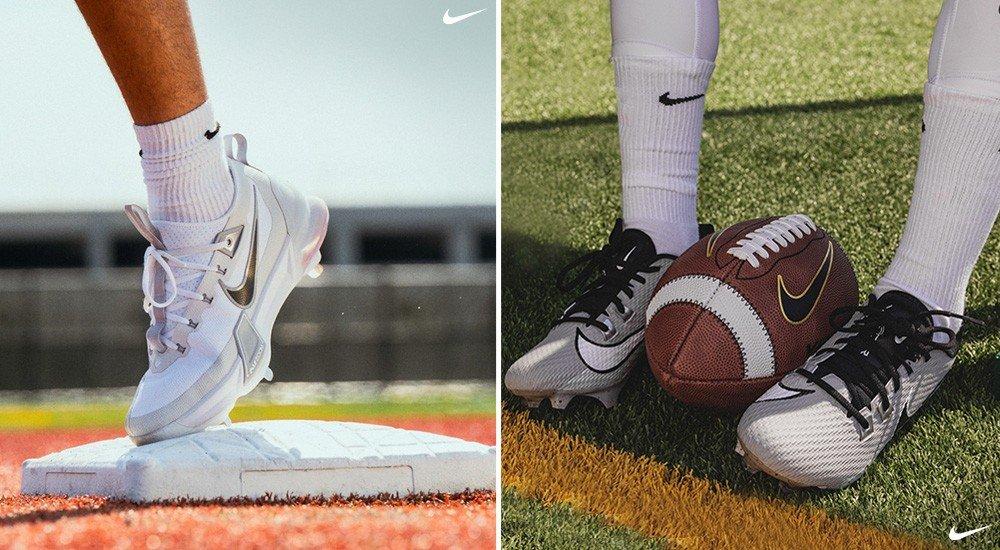
Exploring the Differences: Baseball Cleats vs. Football Cleats
When you’re hitting the field, whether it’s for baseball or football, the right footwear makes a world of difference. But can you swap your baseball cleats for football cleats? The short answer is no, and here’s why. The design of each sport’s footwear is tailored to the unique demands and movements involved. This means baseball cleats vs football cleats have some key distinctions that make them unsuitable for each other’s games.
The Anatomy of a Baseball Cleat
Baseball cleats are designed for the specific actions in baseball. Think about it: digging in to hit, rounding bases, and fielding ground balls.
- Toe Spikes: Many baseball cleats feature a metal or molded spike right at the toe. This is excellent for getting a strong grip when a batter is swinging or when a runner is pushing off from a base. However, this same spike can be a serious hazard on a football field.
- Cleat Pattern: The overall cleat pattern on the sole of a baseball cleat is usually more focused on lateral stability and quick stops and starts, rather than the aggressive, multidirectional traction needed in football.
- Ankle Support: Baseball cleats generally offer less ankle support compared to many football cleats. This is because the primary movements in baseball are more horizontal and less about the vertical impacts and twisting motions common in football.
The Science Behind Football Cleats
Football, on the other hand, is a game of explosive power, sudden changes in direction, and impact. Football cleats are built to handle this.
- Cleat Placement and Design: Football cleats have a more aggressive and varied cleat pattern. They often feature longer, more strategically placed cleats, including heel cleats, to provide maximum grip during powerful pushes, tackles, and cuts. The goal is to dig into the turf and prevent slippage.
- Ankle Support: Many football positions, especially those involving a lot of running and tackling, require higher-cut cleats. These offer enhanced ankle support to help prevent sprains and other injuries during high-impact plays.
- Durability: Football cleats are built to be more robust. They need to withstand the constant pounding, twisting, and contact that occurs throughout a game. The materials and construction are generally tougher than those found in baseball cleats.
Why Wearing Baseball Cleats for Football is a Bad Idea
So, let’s directly address: Can you wear baseball cleats for football? The answer is a resounding and firm “no” for safety and performance reasons.
Safety Concerns: The Primary Risk
The most crucial reason not to wear baseball cleats for football is safety.
- Toe Spike Hazard: The toe spike on many baseball cleats is a major danger on a football field. In the close-quarters contact of football, that spike can easily catch an opponent’s leg or foot, causing severe lacerations, punctures, or even more serious injuries like broken bones or torn ligaments. Football rules explicitly prohibit toe spikes for this very reason.
- Reduced Traction: While baseball cleats offer good grip for baseball movements, they don’t provide the same level of multidirectional traction needed for football. Poor traction can lead to slips, falls, and twists, increasing the risk of ankle injuries, knee injuries, and other strains. You won’t be getting the optimal grip you need for explosive plays.
- Inadequate Ankle Support: The lower-cut design of many baseball cleats offers less ankle support. This can leave players vulnerable to ankle rolls and sprains when making quick cuts, absorbing tackles, or landing awkwardly – all common occurrences in football.
Performance Limitations
Beyond safety, wearing the wrong type of cleats will hinder your performance.
- Slipping and Sliding: Without the proper cleat configuration, you’ll find yourself slipping more often, especially on softer turf or during wet conditions. This means less power transfer from your legs, missed tackles, and difficulty making sharp cuts.
- Less Agility: The cleat pattern on baseball shoes isn’t optimized for the rapid, multi-directional movements that define football. You might find yourself feeling less agile and less able to react quickly to the play.
- Foot Fatigue: Baseball cleats are designed for different biomechanics. Wearing them for football could lead to increased foot fatigue and discomfort due to the different stresses placed on your feet.
Deciphering the Differences: Baseball vs. Football Footwear
Let’s break down the specific differences in baseball vs. football footwear in a clear way.
| Feature | Baseball Cleats | Football Cleats | Impact on Football Performance/Safety |
|---|---|---|---|
| Toe Cleats | Often have a prominent spike or molded cleat at the toe. | Generally no prominent toe cleat; some have wider, flatter toe studs. | Safety Hazard: Toe spike can cause severe injury to opponents. Performance: Lack of toe digging in for some football techniques. |
| Cleat Pattern | Designed for lateral stability and quick stops/starts. | Aggressive, multidirectional patterns with longer studs for maximum grip. | Performance: Less efficient for explosive pushing off in multiple directions; can lead to slipping. |
| Ankle Support | Usually low-cut or mid-cut, offering moderate support. | Available in low, mid, and high-cut designs, with high-cuts offering significant ankle support. | Safety: Less protection against ankle rolls and sprains during tackles and sharp cuts. |
| Durability | Built for baseball’s demands, but often less rugged. | Constructed with robust materials to withstand high impact and stress. | Performance/Durability: May wear out faster under football’s intense conditions; less protection from impacts. |
| Weight | Can vary, but some are lighter for speed. | Often heavier due to reinforced construction and more aggressive cleat designs. | Performance: Slightly heavier cleats might marginally impact speed, but the benefits of grip and support outweigh this. |
| Stiffness | Sole can be more flexible for sprinting and fielding. | Often have a stiffer sole to provide a stable platform for power. | Performance: Stiffer sole offers better power transfer for explosive movements; a flexible sole might feel less supportive. |
Appropriate Cleats for Football: What to Look For
When searching for appropriate cleats for football, you need to prioritize certain features.
Cleat Types for Football
Football cleats come in various configurations, each suited to different positions and playing styles. Understanding these will help you choose the right cleat type for football.
- Low-Cut Football Cleats: These offer maximum ankle mobility and are generally lighter. They are favored by skill players like wide receivers and defensive backs who rely on speed and agility. However, they provide the least ankle support.
- Mid-Cut Football Cleats: A good compromise between mobility and support. They offer more ankle protection than low-cuts without significantly restricting movement. Many running backs and linebackers opt for mid-cuts.
- High-Cut Football Cleats: These provide the most ankle support and are often the most robust. They are typically worn by offensive and defensive linemen who need stability for blocking and pushing, as well as linebackers who deal with a lot of contact. The trade-off is reduced ankle mobility and typically a heavier shoe.
Cleat Studs: Molded vs. Detachable
- Molded Cleats: These have cleats permanently attached to the sole. They are generally more durable and are a good all-around choice. They often have a mix of bladed and conical studs for good traction.
- Detachable (Screw-in) Cleats: These allow you to swap out studs for different conditions or replace worn-out studs. You can often find different lengths and types of studs (e.g., metal for firm ground, rubber for softer ground). Metal cleats are generally not allowed in youth or high school football due to safety concerns. Always check league rules.
Can I Use Baseball Cleats for Soccer?
This is another common question about sports shoe compatibility. Similar to football, you generally cannot wear baseball cleats for soccer. Can I use baseball cleats for soccer? No.
Soccer requires specialized cleats designed for quick changes of direction on grass or artificial turf, with a focus on ball control. Baseball cleats, with their toe spike and different stud patterns, are unsuitable and potentially dangerous for soccer players. Soccer cleats have a distinct stud pattern that maximizes grip for dribbling and kicking, and they lack the problematic toe spike.
Using Athletic Shoes for Football: A Temporary Fix?
What about simply using regular athletic shoes for football if you don’t have football cleats? This is also not recommended for any serious play.
Regular athletic shoes, like trainers or running shoes, do not have cleats. This means they offer very little traction on grass or turf. You will slip constantly, making it impossible to perform effectively and significantly increasing your risk of injury from falls. While you might be able to jog around a bit, attempting any football-specific movements like cutting, tackling, or even sprinting will be met with a lack of grip.
Frequently Asked Questions (FAQ)
Q1: Are baseball cleats illegal in football?
Yes, in almost all organized football leagues (youth, high school, college, and professional), baseball cleats are illegal due to the dangerous toe spike.
Q2: Can I wear soccer cleats for football?
No, soccer cleats are also generally not allowed for football. While they lack the toe spike, their stud patterns are designed for soccer’s specific movements and may not provide the necessary traction or support for football, and some stud types might be disallowed.
Q3: What kind of cleats do I need for football?
You need football cleats. The type of football cleat (low, mid, or high-cut) and stud configuration (molded or detachable, depending on league rules) will depend on your position and personal preference.
Q4: My baseball cleats have molded plastic spikes, not metal. Can I wear those for football?
Even with molded plastic spikes, baseball cleats are typically not designed with the proper cleat placement and pattern for football. The toe cleat, even if plastic, can still pose a safety risk. It’s best to stick to designated football cleats.
Q5: Will wearing baseball cleats for football affect my performance?
Yes, significantly. You will experience reduced traction, making it harder to accelerate, change direction, and stop. This can lead to fumbles, missed tackles, and a general lack of responsiveness on the field.
Q6: Are there any situations where wearing baseball cleats for football might be okay?
For very casual, non-contact backyard play with no rules, you might get away with it. However, as soon as you introduce any element of competition or contact, it becomes unsafe and inappropriate. It is never recommended for organized play.
In conclusion, the answer to “Can you wear baseball cleats for football?” is a definitive no. The safety risks and performance limitations associated with using baseball cleats vs football cleats are too significant to ignore. Always ensure you have the appropriate cleats for football to protect yourself and play your best game. Prioritizing the right cleat type for football and avoiding using athletic shoes for football or other sports shoes in its place is crucial for every player.