
No, it is generally not recommended to wear football cleats for soccer. While they are both sports requiring specialized footwear, there are significant differences in design and function that can impact performance and safety.
The world of athletic footwear is vast and often confusing. When you’re involved in sports, having the right gear is crucial. This is especially true for sports played on a field, where the connection between your feet and the ground dictates your agility, speed, and stability. Football and soccer are two prime examples. Many people wonder if they can simply cross over their athletic footwear, asking, “Can you wear football cleats for soccer?” The short answer is no, and the reasons are rooted in the distinct demands of each sport.
Football boots and soccer shoes, though both featuring studs or cleats for traction, are engineered with different philosophies and objectives in mind. This article will delve into the specifics of why this crossover is not advisable, exploring the design nuances of each type of cleat, the potential risks involved, and alternative solutions for athletes seeking the best sports shoes for their needs. We’ll also touch upon the availability of turf shoes as a middle ground for certain playing surfaces.
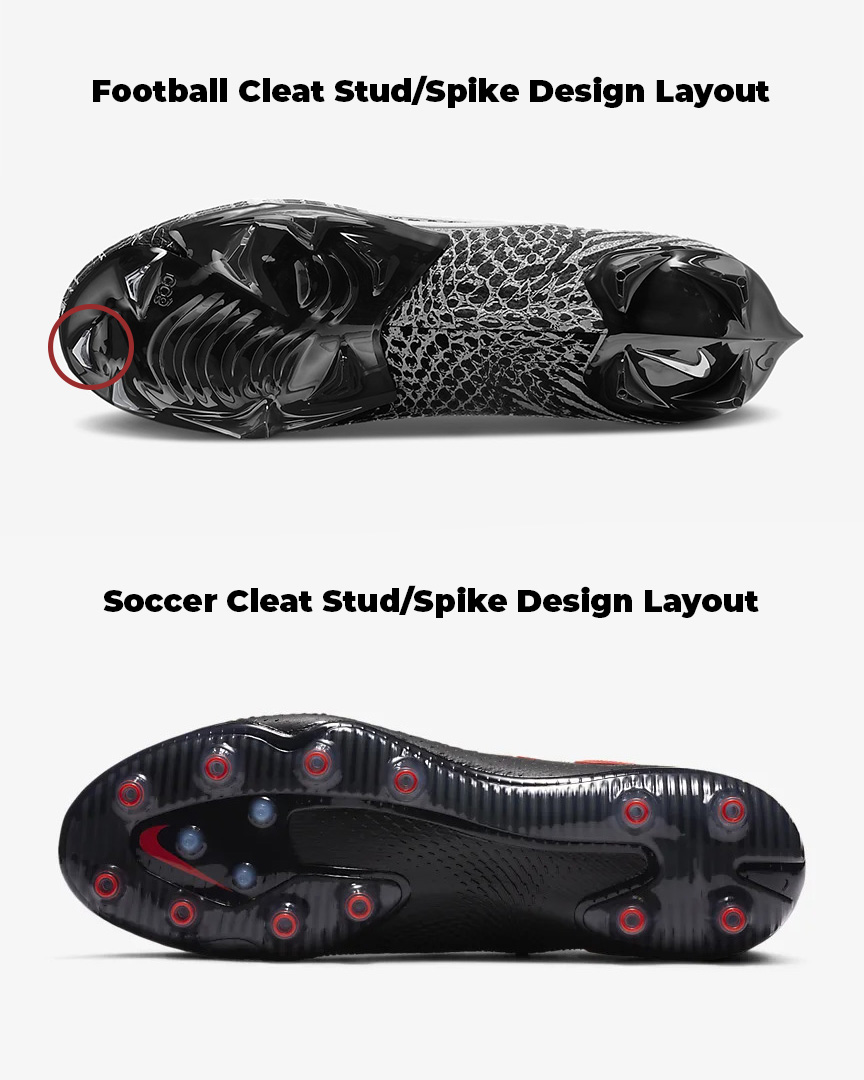
Image Source: juventussandiego.com
Deciphering the Differences: Soccer Cleats vs. Football Cleats
To truly grasp why playing soccer in football cleats is a bad idea, we need to break down the core differences in their construction and purpose.
Soccer Shoes: Agility and Ball Control
Soccer, or football as it’s known internationally, is a game of finesse, quick changes of direction, and precise ball control. Soccer shoes are designed to enhance these attributes.
- Cleat Pattern: The most noticeable difference is the cleat pattern on the sole. Soccer cleats typically feature a more conical or bladed stud shape that allows for quick turns and pivots without digging too deeply into the turf. They are often arranged in a way that provides maximum surface area for acceleration and deceleration. Many soccer cleats have a distinctive row of studs along the front edge of the outsole, aiding in ball striking and control.
- Outsole Flexibility: Soccer shoe outsoles are generally more flexible than football cleats, especially in the forefoot. This flexibility allows players to articulate their feet more naturally, improving touch on the ball and the ability to make delicate passes and dribbles.
- Upper Material and Fit: Soccer shoes often have a snug, glove-like fit. The upper material, whether it’s synthetic leather or kangaroo leather, is designed to provide excellent feel for the ball. Many are also quite lightweight, prioritizing speed and agility.
- Ankle Support: While some soccer shoes offer minimal ankle support, the emphasis is generally on freedom of movement. High-top soccer cleats are less common than in football.
Football Boots: Power and Stability
American football is a game of power, explosive bursts of speed, and often, brute force. Football boots are built to provide the necessary support and traction for these actions.
- Cleat Design: Football cleats often have longer, more aggressive studs, sometimes with bladed patterns. This aggressive design is meant to dig into the turf, providing maximum grip for pushing off, making sudden stops, and maintaining stability during tackles and blocks. Many football cleats also feature a higher number of studs, distributed differently to support the rotational forces common in the sport.
- Reinforced Construction: To withstand the rigors of contact sports, football boots are often more robustly constructed. This can include reinforced toe boxes and stiffer midsoles to provide support and protection.
- Ankle Support: A significant distinguishing feature of many football boots is their ankle support. High-top designs are very common, aiming to provide stability and reduce the risk of ankle sprains during high-impact movements and collisions.
- Weight: While there are lighter football cleats, many are heavier than their soccer counterparts due to the added support and reinforcement.
Why Playing Soccer in Football Cleats is Problematic
Now that we’ve established the fundamental design differences, let’s explore the specific issues that arise when you try to wear football cleats for soccer.
Traction and Agility Concerns
The aggressive, deep-digging studs on football cleats, while excellent for the lateral movements and power required in football, can be detrimental in soccer.
- Over-Traction: In soccer, players need to change direction rapidly and gracefully. Football cleats can dig too deeply into the turf, causing players to get “stuck” during sharp turns. This can lead to:
- Loss of Balance: The excessive grip can make it difficult to pivot smoothly, increasing the risk of stumbling or falling.
- Injuries: Forced twisting motions due to cleats not releasing from the ground can put undue stress on ankles, knees, and even hips.
- Ball Control Interference: The bulkier cleat design and the way they interact with the ground can interfere with a soccer player’s ability to feel and control the ball with their feet. The precise touch required for dribbling, passing, and shooting can be compromised.
Risk of Injury
The differing designs directly translate into varying levels of risk when used in the wrong sport.
- Ankle Injuries: Football boots, especially high-tops, are designed to limit ankle movement. While this is beneficial for preventing certain types of injuries in football, it can restrict the natural ankle flexion and extension needed for agility in soccer. This restriction can force unnatural movements, potentially leading to sprains or other ligament damage. Conversely, cleats that are too long can also cause ankle sprains if they catch during quick pivots.
- Knee Injuries: The inability of football cleats to release from the ground quickly during turns can cause rotational forces to be transmitted up the leg, increasing the risk of anterior cruciate ligament (ACL) tears and other knee injuries.
- Toe and Foot Injuries: The stiffness and cleat patterns of football boots might not be ideal for the fine motor control and constant foot articulation required in soccer, potentially leading to discomfort or even stress fractures over time.
Performance Impact
Beyond the safety concerns, wearing the wrong cleats will inevitably affect how well you play.
- Reduced Agility: The inability to pivot and turn efficiently will slow down a soccer player. Quick footwork and evasive maneuvers will become more challenging.
- Poor Ball Feel: As mentioned, the design of football cleats can hinder precise ball control, making dribbling, passing, and shooting less accurate and effective.
- Discomfort and Fatigue: The heavier, stiffer nature of some football boots can lead to increased fatigue during a soccer match, which is typically played with continuous movement.
Exploring Alternatives: Turf Shoes and Other Sports Shoes
If you’re playing on artificial turf or a harder surface, you might encounter the term “turf shoes.” These can offer a compromise.
Turf Shoes
Turf shoes are designed for playing on artificial grass or very hard, dry natural grass. They feature many small, rubber nubs or multi-directional cleats on the outsole instead of the longer, more aggressive studs found on traditional cleats.
- Traction: Turf shoes provide good traction without digging excessively into the surface, making them suitable for a wider range of artificial surfaces.
- Versatility: They are a good option for players who frequently switch between different playing surfaces or who play on fields that are not well-maintained.
- Comfort: Generally, turf shoes offer more cushioning and support than traditional soccer cleats, making them comfortable for extended wear.
- Cleat Compatibility: When considering cleat compatibility, turf shoes are a safer bet for soccer if you’re playing on a synthetic surface where traditional cleats might be too aggressive.
Other Sports Shoes
It’s important to distinguish soccer shoes and football cleats from other sports shoes. Running shoes, basketball shoes, and tennis shoes are all designed for very different movements and surface interactions and are entirely unsuitable for soccer.
- Running Shoes: Designed for forward propulsion, with cushioning and support for impact on hard surfaces. They lack any kind of cleat for lateral traction.
- Basketball Shoes: Offer ankle support and grip for court sports, but the outsole pattern is designed for hardwood or rubber courts, not grass or turf.
- Tennis Shoes: Provide lateral support for side-to-side movements on courts but lack the specialized traction needed for a soccer field.
A Closer Look at Cleat Types and Surfaces
The type of cleat you need is heavily dependent on the playing surface. This is a critical aspect of cleat compatibility.
Natural Grass Surfaces
- Firm Ground (FG): This is the most common type of cleat for natural grass. They have a mix of bladed and conical studs, offering a balance of traction and maneuverability.
- Soft Ground (SG): For wet, muddy fields, SG cleats often have fewer, longer, and more widely spaced metal studs that can dig into the soft ground for better grip. Football cleats can sometimes resemble SG cleats in their aggressive stud length.
- Artificial Ground (AG): Specifically designed for artificial turf, AG cleats typically have shorter, more numerous, and often hollowed-out studs to prevent snagging and reduce pressure on the joints.
Artificial Turf Surfaces
- Artificial Grass: As mentioned, turf shoes or AG cleats are best. Traditional FG cleats can be too aggressive, leading to snagging and potential injury. The small rubber nubs on turf shoes distribute pressure and provide adequate grip.
Fathoming the Nuances of Football Cleat Construction
Football cleats often incorporate specific design elements tailored to different positions. While we’re focusing on why they’re unsuitable for soccer, appreciating these differences further highlights their specialization.
Linemen vs. Skill Positions
- Linemen: Often wear higher-top, more supportive cleats with longer, more aggressive studs to provide stability during powerful pushes and blocks.
- Skill Positions (e.g., Receivers, Running Backs): May wear lower-profile, lighter cleats with patterns optimized for quick acceleration and change of direction, but still with a focus on power and grip that differs from soccer.
Common Misconceptions and When a Crossover Might Seem Possible
It’s easy to see a cleat and assume it’s universally applicable. However, the devil is in the details.
“They both have studs, so what’s the big deal?”
While both soccer shoes and football cleats have studs, the shape, length, placement, and material of those studs are engineered for very different purposes. A cleat designed to anchor you for a powerful block is not designed to allow you to pirouette around an opponent.
“What about really old or worn-out football cleats?”
Even worn-out football cleats can retain aggressive stud shapes that can cause issues. Furthermore, the overall construction – the stiffness of the sole, the ankle support – might still be inappropriate for soccer.
“I saw someone playing soccer in football cleats and they were fine.”
Anecdotal evidence can be misleading. While some individuals might get away with it, they are likely not playing at a high level or are simply lucky. The risk of injury or compromised performance is significantly higher. It’s always better to err on the side of caution and use appropriate soccer equipment.
The Importance of Proper Soccer Equipment
Investing in the right soccer cleats is not just about performance; it’s a crucial aspect of injury prevention. High-quality soccer shoes will provide the necessary traction, flexibility, and ball feel that are essential for the sport.
When choosing soccer shoes, consider:
- Playing Surface: FG, SG, AG, or turf.
- Player Position: While less critical than in football, some soccer players might prefer certain cleat types based on their role.
- Fit: A snug but comfortable fit is paramount.
- Material: Leather offers a softer touch and molds to the foot, while synthetic materials can be lighter and more durable.
Frequently Asked Questions (FAQ)
Q1: Can I wear my football cleats for indoor soccer?
A: Absolutely not. Indoor soccer is typically played on hard courts or specialized turf, requiring indoor soccer shoes with flat, non-marking rubber soles for grip. Football cleats, even without studs, would be too aggressive and could damage the court or cause slips.
Q2: What is the difference between soccer cleats and football boots regarding stud material?
A: Football cleats may sometimes feature metal studs, particularly for soft ground conditions or specific positions, offering deeper penetration into the turf. Soccer cleats on firm ground almost exclusively use molded rubber or plastic studs. Metal studs on football cleats are a definite no-go for soccer due to the risk of damaging the field and causing serious injury.
Q3: Are there any exceptions to the rule of not wearing football cleats for soccer?
A: It’s highly unlikely. The fundamental design differences in traction, flexibility, and support make football cleats unsuitable for soccer. The risks far outweigh any perceived benefit. It’s always best to stick to dedicated soccer cleats or appropriate turf shoes for soccer.
Q4: Will wearing football cleats for soccer void my warranty on the shoes?
A: While a warranty typically covers manufacturing defects, using the shoes for an unintended purpose like playing soccer in football cleats could potentially be grounds for voiding a warranty if damage occurs as a result of that misuse.
Q5: Where can I find information on appropriate soccer equipment?
A: Reputable sporting goods stores, soccer specialty shops, and online retailers that focus on soccer equipment are excellent resources. Many professional soccer players and coaches also share advice on selecting the right soccer shoes.
In conclusion, while both football boots and soccer shoes are types of athletic footwear designed for traction on the field, their specific designs cater to the vastly different demands of their respective sports. The aggressive studs, reinforced construction, and often higher ankle support of football cleats are fundamentally incompatible with the agile, quick-footed, and precise movements of soccer. Opting for proper soccer cleats or suitable turf shoes is essential for both performance and safety on the soccer pitch. Don’t let the shared term “cleats” deceive you; the right sports shoes make all the difference.