
Becoming a football scout involves a passion for the game, a keen eye for talent, and a systematic approach to evaluating players. Can you become a football scout without playing professionally? Yes, while a playing background can be beneficial, it’s not always a mandatory requirement to embark on a successful football scouting career. With dedication and the right knowledge, anyone can develop the skills needed for talent identification.
This comprehensive guide will walk you through every step of becoming a football scout, from foundational knowledge to advanced strategies and career progression. We’ll cover everything from what a scout does, the essential skills you’ll need, how to get started, the importance of scout training, and how to navigate the competitive world of football scouting.
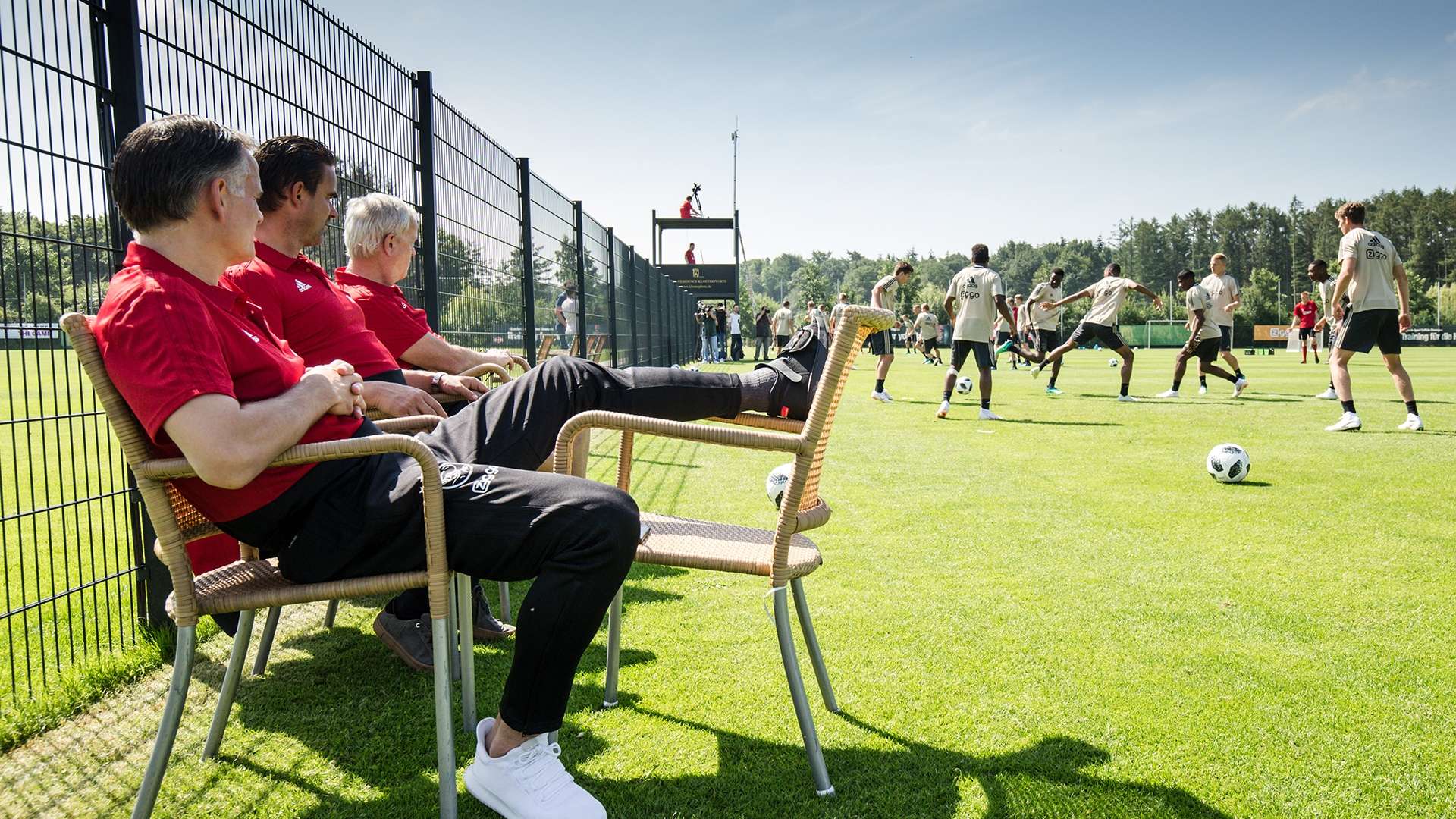
Image Source: assets.goal.com
What Does a Football Scout Do?
At its core, a football scout’s job is to find and evaluate players who can improve a football club’s team. This involves attending matches, observing training sessions, and conducting in-depth football analysis of individual players and teams. They report their findings back to the club’s management, often providing detailed assessments of a player’s strengths, weaknesses, potential, and suitability for the club’s playing style and needs.
Key Responsibilities of a Football Scout:
- Talent Identification: Spotting players with the potential to succeed at various levels, from youth academies to professional senior teams.
- Player Evaluation: Assessing technical skills, tactical understanding, physical attributes, mental strength, and personality.
- Match Observation: Watching live games to see how players perform under pressure and in different match situations.
- Training Observation: Attending training sessions to gauge a player’s work ethic, coachability, and attitude.
- Reporting: Creating detailed written reports on players, often using specific scouting templates and analytical frameworks.
- Networking: Building relationships with coaches, agents, other scouts, and club officials.
- Market Research: Keeping abreast of player movements, contract situations, and emerging talent across different leagues and countries.
Essential Skills for Aspiring Football Scouts
To excel in football scouting, a blend of innate abilities and learned skills is crucial. You need more than just a love for watching football; you require a structured approach to observation and analysis.
1. A Deep Knowledge of the Game
This goes beyond simply knowing the rules. It means understanding different tactical formations, player roles within those formations, the nuances of positional play, and the evolution of the game. A good scout can recognize how a player fits into a team’s strategy or how they can enhance it.
2. Exceptional Observation Skills
The ability to see what others miss is paramount. This includes noticing a player’s off-the-ball movement, their decision-making under pressure, their communication on the pitch, and their body language. Talent identification relies heavily on this acute observational capacity.
3. Analytical Prowess
Scouting isn’t just about spotting good players; it’s about dissecting why they are good and what their potential limitations are. This involves analyzing their technical execution, tactical intelligence, physical capabilities, and psychological resilience. This forms the basis of effective football analysis.
4. Communication Skills
Scouts must be able to articulate their findings clearly and concisely in written reports and verbal discussions with coaches and management. This means using precise language and backing up opinions with evidence from observations.
5. Patience and Persistence
Finding the next big star takes time. Scouts often spend hours watching games, sifting through data, and attending less glamorous matches. Persistence is key to building a reputation and a successful football scouting career.
6. Objectivity and Impartiality
It’s important to remain unbiased, looking at all players fairly, regardless of their club affiliation, reputation, or background. Your evaluations should be based purely on performance and potential.
7. Networking Ability
Building connections within the football world is vital. This can lead to opportunities, information sharing, and mentorship. Strong relationships within scouting networks can open many doors.
How to Get Started in Football Scouting
The path to becoming a football scout can vary, but here’s a structured approach to help you get your foot in the door.
1. Gain Experience at Grassroots Levels
Start by observing local games, amateur leagues, and youth tournaments. This is an excellent way to practice your talent identification skills without the pressure of a professional environment. It also helps you build an initial understanding of youth football scouting.
- Volunteer: Offer your services to local clubs, youth academies, or community sports organizations.
- Attend Local Matches: Make a habit of watching as many games as possible at different levels.
- Analyze Youth Players: Focus on their technical fundamentals, decision-making, and potential for growth.
2. Educate Yourself on Scouting Principles
Formal education and self-study are crucial. There are many resources available to help you learn the trade.
- Online Courses: Numerous organizations offer courses in football analysis and scouting.
- Books and Articles: Read books and articles by experienced scouts and coaches.
- Watch and Learn: Study how professional scouts operate by watching documentaries or reading interviews.
3. Develop Your Reporting Skills
Learn how to write effective scouting reports. These reports are your primary tool for communicating your findings.
- Focus on Key Attributes: What specific aspects of a player’s game are you evaluating?
- Use Objective Language: Avoid vague descriptions; be specific and provide examples.
- Structure Your Reports: Most clubs have a preferred format, but generally, reports include player details, match context, technical, tactical, physical, and psychological assessments, and a concluding recommendation.
4. Build Your Network
Start connecting with people in the football industry.
- Reach Out: Contact local club officials, coaches, or even scouts you admire.
- Attend Industry Events: Conferences, seminars, and workshops are great places to meet people.
- Use Social Media: Platforms like LinkedIn can be valuable for professional networking.
5. Seek Opportunities for Formal Scout Training
While practical experience is key, formal scout training can significantly enhance your qualifications and knowledge base.
Scouting Qualifications and Courses
There are various organizations offering formal qualifications in football scouting. These courses can provide a structured curriculum, expert instruction, and a recognized credential.
| Organization/Course Type | Focus Areas | Benefits |
|---|---|---|
| The Football Association (The FA) | Coaching badges often include scouting modules. Specific FA scouting courses may be available. | Recognized within the English football system, foundational knowledge. |
| National Football Academies (e.g., USA, Canada) | Often offer sports management or coaching programs with a scouting component. | Academic rigor, broad understanding of sports management and potentially specific scouting techniques. |
| Specialized Scouting Institutes | Dedicated courses focusing on talent identification, player assessment, football analysis, and reporting. Examples include the International Professional Scouting Organisation (IPSO). | In-depth, specialized knowledge, often taught by experienced scouts, potentially leading to direct industry connections. |
| Online Learning Platforms (Coursera, Udemy, etc.) | Courses on sports analytics, football analysis, performance analysis, and sports psychology. | Accessibility, flexibility, often more affordable, broad range of topics to complement scouting skills. |
| Coaching Badges (UEFA A, Pro) | While primarily for coaching, these often require extensive knowledge of player evaluation and team tactics, which is highly relevant to scouting. | Deep tactical and player development insight, respected qualifications. |
When choosing a course, consider the instructors’ experience, the curriculum’s relevance to modern scouting, and whether the qualification is recognized within the football community you wish to work in. Investing in quality scout training is a significant step toward a professional football scouting career.
Developing Your Scouting Methodology
A structured approach to football scouting ensures consistency and accuracy in your evaluations. This involves developing a personal methodology for observing and assessing players.
1. Pre-Match Preparation
Before attending a game, do your homework.
- Know the Teams: Understand their formations, playing style, and key players.
- Identify Targets: If you have specific players to watch, research their recent form and history.
- Understand Your Brief: What is the club looking for? Are they seeking a specific profile or general talent?
2. During the Match: Focused Observation
Watch the game with a purpose. Don’t just watch the ball.
- Focus on Your Target Player: Track their movements, decisions, and interactions.
- Observe Off-Ball Activity: What do they do when they don’t have possession? Are they positioned well? Do they track back?
- Assess Decision-Making: How quickly and effectively do they make choices under pressure?
- Note Key Attributes: Technical (passing, dribbling, shooting), Tactical (positioning, reading the game), Physical (pace, strength, stamina), and Mental (attitude, resilience).
3. Post-Match Analysis and Reporting
This is where the raw data becomes actionable intelligence.
- Compile Your Notes: Organize your observations systematically.
- Write Your Report: Use a clear, concise, and objective format.
- Player Profile: Basic information, position, age.
- Match Context: Competition, score, opposition.
- Technical Assessment: Passing range, first touch, dribbling, shooting accuracy, etc.
- Tactical Assessment: Positional awareness, understanding of team tactics, movement off the ball, defensive contribution.
- Physical Attributes: Pace, strength, agility, stamina, aerial ability.
- Mental Attributes: Work rate, leadership, temperament, decision-making under pressure, coachability.
- Strengths & Weaknesses: Summarize key points.
- Potential: What is their ceiling?
- Recommendation: Suitability for the club, comparison to existing players.
Table: Key Performance Indicators (KPIs) in Football Scouting
| Category | Specific KPIs to Observe |
|---|---|
| Technical | Pass completion rate, dribble success rate, shot accuracy, first touch control, crossing accuracy, tackling success rate. |
| Tactical | Positional discipline, successful defensive pressures, interceptions, key passes, successful duels won, off-ball movement efficiency. |
| Physical | Distance covered, sprints per game, acceleration, agility tests (if available), aerial duel success rate, recovery speed. |
| Mental | Number of turnovers committed, successful tackles won, response to errors, communication frequency, body language under pressure. |
Specializing in Different Areas of Scouting
Football scouting is a broad field, and specializing can help you carve out a niche.
Youth Football Scouting
This is often the entry point for many aspiring scouts. It focuses on identifying young players with potential and monitoring their development.
- Focus: Technical fundamentals, physical development, learning ability, attitude, and passion for the game.
- Challenges: Player development is ongoing, so continuous monitoring is crucial. Identifying potential versus current ability is key.
- Skills: Patience, ability to assess raw talent, communication with parents and youth coaches.
Professional Football Scout
This involves scouting established players for senior teams.
- Focus: Immediate impact, tactical suitability, consistency, experience, and ability to perform at a higher level.
- Challenges: Players are often more expensive and have established reputations. Requires in-depth analysis of how they fit into an existing squad and team system.
- Skills: Sharp football analysis, understanding of market values, negotiation awareness, strong networking within professional circles.
Opposition Scout
This specialized role involves analyzing upcoming opponents to provide tactical insights to the coaching staff.
- Focus: Team formations, key player strengths and weaknesses, set-piece routines, defensive and attacking patterns.
- Challenges: Requires detailed analysis of multiple games and a deep understanding of tactical strategies. Reports must be actionable and delivered quickly.
- Skills: Highly analytical, excellent understanding of tactics, ability to identify patterns and weaknesses, clear and concise reporting.
Navigating Scouting Networks and Opportunities
Joining scouting networks and understanding how to find opportunities is crucial for career advancement.
Freelance Scouting
Many scouts start as freelancers, offering their services to multiple clubs.
- Pros: Flexibility, exposure to different clubs and styles.
- Cons: Income can be inconsistent, requires significant self-promotion.
Club-Affired Scouting
This is the ultimate goal for many – becoming an employed scout for a specific club.
- Entry Points:
- Internships: Gaining experience within a club’s scouting department.
- Starting at Lower Levels: Getting a role with a smaller club and working your way up.
- Demonstrating Value: As a freelancer, if your reports are consistently valuable, a club might offer a permanent position.
Leveraging Scouting Networks
- Attend Industry Events: Meet scouts, coaches, and agents.
- Online Platforms: Some platforms connect scouts with clubs seeking their services.
- Professional Associations: Joining scouting associations can offer networking and development opportunities.
The Future of Football Scouting: Data and Technology
The role of a professional football scout is evolving. Data analytics and video scouting platforms are becoming increasingly important tools.
- Video Scouting: Watching footage of players from various leagues and competitions remotely. This allows scouts to cover more ground and identify potential targets efficiently.
- Data Analytics: Using statistics and performance metrics to identify players who might be undervalued or possess specific attributes that complement a team.
- Examples: Expected Goals (xG), progressive passes, defensive actions per 90 minutes.
- Hybrid Scouting: Combining traditional on-the-ground observation with data analysis and video scouting for a more comprehensive approach to talent identification.
Even with the rise of technology, the human element of scouting remains vital. A scout’s ability to assess intangible qualities like personality, attitude, and game intelligence cannot be fully replicated by algorithms.
Challenges in a Football Scouting Career
The path to becoming a professional football scout is not always easy.
- Competition: It’s a highly sought-after profession, with many people vying for limited positions.
- Travel: Scouting often involves extensive travel, which can be demanding.
- Pressure: Scouts are under pressure to find players who will be successful and justify their salaries.
- Subjectivity: While data helps, scouting still involves subjective judgment, which can lead to differing opinions.
- Uncertainty: Freelance work can be unpredictable, and club jobs may come with job security concerns depending on performance and club stability.
Frequently Asked Questions (FAQ)
Q1: Do I need to have played professional football to become a scout?
No, while playing experience can be an advantage, it is not strictly necessary. A deep understanding of the game, excellent observational skills, analytical abilities, and dedicated scout training are more critical. Many successful scouts have come from diverse backgrounds, including coaching, analysis, or even through passionate amateur observation.
Q2: What is the average salary for a football scout?
Salaries vary significantly depending on the level of the club, the scout’s experience, and whether they are employed full-time or work freelance. Entry-level or part-time scouts might earn a modest income, while experienced scouts at top clubs can command substantial salaries.
Q3: How long does it take to become a professional football scout?
There isn’t a fixed timeline. Some individuals might break into scouting through internships or connections within a few years, while others might spend many years honing their skills at grassroots levels before landing a professional role. Dedication, continuous learning, and networking are key to accelerating this process.
Q4: What kind of reports do football scouts write?
Scouts write detailed reports on players, assessing their technical, tactical, physical, and mental attributes. These reports often follow a specific format provided by the club and include an overall evaluation of the player’s potential and suitability for the team. The quality and accuracy of these reports are crucial for a scout’s reputation and career.
Q5: Is football scouting a good career choice?
For those with a deep passion for football and a knack for talent identification, football scouting can be a very rewarding career. It offers the chance to be closely involved with the game at a high level, contribute to team success, and travel. However, it requires significant dedication, patience, and resilience to overcome the inherent challenges of the profession.