
The duration of football practice varies significantly by age group and competitive level, with youth football practices typically lasting between 60 to 90 minutes, high school practices ranging from 2 to 3 hours, and college and professional (NFL) practices often extending from 2.5 to 4 hours, not including extensive film study and meetings. This guide delves into the intricacies of football practice duration, exploring what influences it and what players can expect.
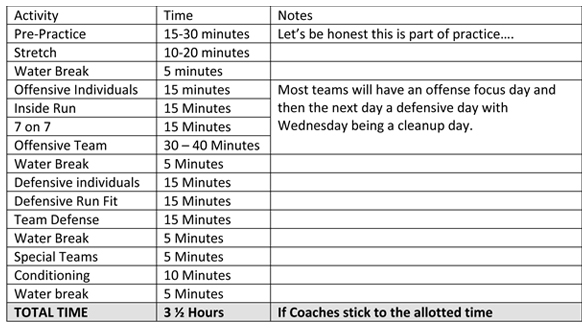
Image Source: assets.nfhs.org
Delving into Football Practice Duration
The question of “how long is football practice?” doesn’t have a single, simple answer. The time commitment involved in football training is substantial, but it’s not uniform. It’s a complex equation influenced by many factors, from the age of the players to the stage of the season and the specific goals of the coaching staff. Let’s break down the typical football practice length across different levels of play.
Factors Shaping Football Practice Length
Several key elements contribute to determining how long a football practice will be. Understanding these can shed light on why schedules differ so dramatically.
- Age and Skill Level: Younger players generally have shorter, more focused practices. As players mature and develop, their capacity for sustained effort and complex skill acquisition increases, allowing for longer sessions.
- Competitive Level: Professional leagues like the NFL have stringent rules and player welfare considerations, but also immense pressure to perform, leading to long hours. College football demands a similar, if not greater, commitment due to the dual role of student-athletes. High school and youth levels often operate under different time constraints, including school schedules and parental availability.
- Stage of the Season: Pre-season practices are often longer and more intense as teams build conditioning and install schemes. In-season practices might be shorter to allow for recovery between games, but they are still highly focused and efficient.
- Coaching Philosophy and Strategy: Some coaches prefer shorter, high-intensity practices, while others opt for longer, more comprehensive sessions. The team’s offensive and defensive schemes also play a role in the necessary practice time.
- League Rules and Regulations: Governing bodies for different football leagues often set limits on practice time and contact during practices, especially for younger age groups, to ensure player safety and prevent overtraining.
- Available Facilities and Time Slots: Practical considerations like field availability and daylight hours can also influence how long a practice can be scheduled.
Youth Football Practice Duration: Building Fundamentals
For young players, the emphasis is on teaching the basic skills, rules, and sportsmanship. Youth football practice duration is typically kept manageable to avoid burnout and ensure enjoyment.
- Typical Time: Practices usually run between 60 to 90 minutes.
- Focus: Skill development (throwing, catching, tackling technique), understanding plays, and teamwork.
- Intensity: Lower intensity, with a strong emphasis on positive reinforcement and fun.
- Contact: Rules often limit full-contact drills and emphasize safe tackling.
- Frequency: Practices might occur 2-3 times per week.
This shorter football training session length is crucial for developing a love for the game without overwhelming young athletes. The primary goal is foundational learning and fostering a positive experience.
High School Football Practice Length: The Grind Begins
As athletes move into high school, the intensity and demands of football increase. High school football practice length reflects this progression.
- Typical Time: Practices can last from 2 to 3 hours, sometimes extending to 3.5 hours during peak pre-season conditioning.
- Focus: Advanced play installation, strategic execution, position-specific drills, conditioning, and team strategy.
- Intensity: Moderate to high, with significant emphasis on physical conditioning and mental toughness.
- Contact: More live drills and full-contact periods are common, but still regulated for safety.
- Frequency: Often 4-5 times per week, with potential for weekend sessions.
The football practice commitment at this level is significant, requiring players to balance academics, social life, and the demands of a competitive sport. Understanding the college football practice schedule often serves as a model, even if the actual hours are slightly less.
College Football Practice Schedule: A Full-Time Job
College football is often described as a quasi-professional endeavor, and the college football practice schedule reflects this intensity. Student-athletes dedicate a considerable amount of time to the sport.
- Typical Time: Practices can range from 2.5 to 4 hours per day. However, this is often part of a larger block of time dedicated to the team, which includes meetings, film study, and treatment.
- Focus: Highly detailed offensive and defensive schemes, opponent preparation, in-depth film analysis, strength and conditioning, and specialized position work.
- Intensity: Very high, pushing athletes to their limits physically and mentally.
- Contact: Significant amounts of full-contact work are common, but rules often limit consecutive days of heavy contact.
- Frequency: Daily practices during the season, often with additional film and strategy sessions.
The NCAA limits the number of hours per week that student-athletes can spend on “countable athletically related activities” (CARA), which includes practice, meetings, and film study. This limit is typically around 20 hours per week during the season. However, the intensity and efficiency within those hours are paramount. The football practice hours here are structured to maximize development and game preparation.
NFL Practice Time: The Pinnacle of Professionalism
At the professional level, the NFL practice time is highly structured and regulated, balancing peak performance with player longevity and safety.
- Typical Time: Practices themselves are generally around 2.5 to 3 hours.
- Focus: Extremely detailed game planning, opponent-specific adjustments, perfecting execution of plays, and maintaining peak physical condition.
- Intensity: Extremely high during on-field sessions, with a constant drive for perfection.
- Contact: Rules strictly regulate contact during practices to minimize injury risk. Many drills are “thud” (controlled contact) rather than full tackling.
- Frequency: Daily practices during the season, with significant time also allocated to meetings, film study, and rehabilitation.
While the on-field football training session length might appear similar to college, the professional environment is characterized by a higher degree of specialization, individual attention, and the constant analysis of every detail. The overall football practice commitment extends far beyond the physical act of practicing. Players often arrive early, stay late, and dedicate significant personal time to film study, nutrition, and recovery to maintain their elite status.
Deciphering Typical Football Practice: A General Overview
When we talk about a typical football practice, it’s important to recognize the variations. However, a general structure and approach can be observed.
A standard practice often includes:
- Warm-up and Stretching: Preparing the body for physical exertion.
- Position Drills: Specific skills and techniques for each position group (e.g., quarterback footwork, receiver route running, defensive back coverage).
- Special Teams Work: Drills for kickoffs, punts, field goals, and punt returns.
- Offensive/Defensive Unit Work: Practicing specific plays and schemes against air or scout teams.
- 11-on-11 Situational Drills: Running plays in simulated game situations (e.g., red zone, third down, goal line).
- Team Scrimmage (sometimes): Controlled live play between offense and defense.
- Cool-down and Stretching: Aiding in recovery.
The length of each segment varies based on the day’s focus and the overall football practice duration.
Fathoming the Football Practice Commitment
The football practice commitment is more than just showing up for a set number of hours. It encompasses a dedication to physical conditioning, mental preparation, and continuous learning.
- Physical Conditioning: Beyond practice, athletes are expected to engage in strength training, speed and agility drills, and proper recovery to handle the rigors of the sport.
- Mental Preparation: This includes studying playbooks, watching film of opponents and oneself, and developing strategic understanding.
- Nutrition and Rest: Proper diet and adequate sleep are critical components of a successful athlete’s routine, directly impacting performance and injury prevention.
- Team Chemistry: Practices are also vital for building camaraderie and communication among teammates.
The football practice hours are just one piece of a much larger puzzle of athletic development and success.
Examining the Components of a Football Training Session Length
Let’s look at how a typical 3-hour practice might be structured, keeping in mind this is a generalized example:
| Activity | Duration | Focus |
|---|---|---|
| Arrival, Prep, Warm-up | 30 minutes | Physical readiness, team meeting |
| Position Drills | 45 minutes | Skill refinement, technique |
| Special Teams Drills | 20 minutes | Execution of kicking and return plays |
| Offensive/Defensive Install | 45 minutes | Learning and practicing new plays/schemes |
| Situational Drills (11-on-11) | 30 minutes | Game-like scenarios, execution |
| Conditioning/Agility | 10 minutes | Finishing physical work |
| Cool-down, Stretching | 10 minutes | Recovery, injury prevention |
| Total On-Field Time | 3 hours |
This breakdown illustrates how the football training session length is divided to cover various aspects of the game.
Frequently Asked Questions About Football Practice Duration
Here are some common questions people have about how long football practices are:
Q1: Are football practices always the same length?
A1: No, the football practice duration can vary daily and weekly depending on the team’s schedule, the phase of the season, and the specific goals for that day’s session.
Q2: Do NFL players practice as long as college players?
A2: While the on-field football training session length might be similar (around 2.5-3 hours), the overall time commitment for NFL players, including film study and meetings, is exceptionally high. College players often have more mandated hours for team activities.
Q3: What is the shortest football practice you might see?
A3: For very young youth leagues, practices might be as short as 60 minutes. For older, more experienced players, even shorter, highly focused practices (around 2 hours) can occur to emphasize efficiency and player recovery.
Q4: Does weather affect how long football practice lasts?
A4: Yes, severe weather can lead to shortened practices or cancellations for safety reasons, particularly at the youth and high school levels.
Q5: What is the typical football practice length for a high school team in pre-season?
A5: During pre-season, high school football practice length can often extend to 3 hours or even slightly more, as teams focus on conditioning, installing the playbook, and building team cohesion before the regular season begins.
Q6: Can I find a specific league’s football practice schedule online?
A6: While general guidelines for football practice duration are available, specific schedules for local youth or high school teams are usually communicated directly to players and parents by the coaching staff.
Q7: Who is responsible for setting the football practice hours?
A7: The head coach, in consultation with assistant coaches and sometimes athletic directors or league officials, determines the football practice length and schedule.
Q8: Is there a maximum number of hours a team can practice?
A8: Yes, various leagues and governing bodies, such as the NCAA and NFHS (National Federation of State High School Associations), have rules that limit the total number of hours players can spend on athletic activities per week to ensure player welfare and prevent overtraining. These limits are crucial in shaping the overall football practice commitment.
Q9: How much time does a football player spend on film study versus on the field?
A9: The ratio varies greatly. In college and the NFL, film study and meetings can easily equal or exceed on-field practice time. For younger players, the emphasis is more on on-field skill development.
Q10: What happens if a team practices too long?
A10: Practicing excessively can lead to increased fatigue, higher risk of injury, and decreased performance due to overtraining. Adhering to league-mandated limits and smart coaching practices is essential for managing the football practice commitment effectively.