
An NFL football needs to be inflated to between 12.5 and 13.5 pounds per square inch (PSI). This specific range is set by the official NFL rules to ensure fairness and consistent play.
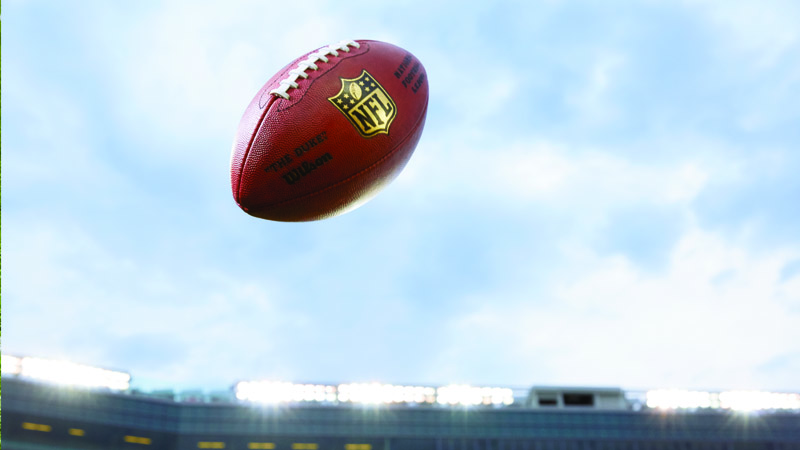
Image Source: blog-admin.siriusxm.com
Deciphering NFL Football Inflation
Have you ever wondered why an NFL football feels just right in a quarterback’s hand or why it bounces a certain way? It all comes down to how much air is inside. The NFL football pressure is a crucial element that dictates how the ball behaves on the field, affecting passes, kicks, and even how it’s held. The precise football inflation level is not just a suggestion; it’s a rule that every team must follow.
The Science Behind the Feel
The feel of an NFL football is a combination of its weight, its pebbled texture, and, importantly, its internal air pressure. When a football is properly inflated, it has a firm yet yielding quality. Too little air, and it becomes soft, floppy, and unpredictable. Too much air, and it becomes rock-hard, making it difficult to grip and potentially leading to more fumbles. The target NFL ball PSI strikes a perfect balance.
Why Does Inflation Matter So Much?
- Grip: Quarterbacks need to be able to grip the ball securely to throw it with accuracy and power. The right inflation level allows them to get a good hold of the laces and the leather.
- Aerodynamics: The air inside helps the ball maintain its shape and travel through the air in a predictable manner. This affects how far passes travel and how they spiral.
- Bounce: The inflation level impacts how the ball bounces off the ground, which is important for punts and kickoffs.
- Fairness: Uniform inflation ensures that all teams are playing with the same equipment, preventing any unfair advantage.
The Official NFL Ball PSI Range
The National Football League has specific guidelines for the proper football air pressure. This is not a casual measurement; it’s a meticulously defined range to ensure competitive integrity.
The Rulebook’s Word
According to NFL football rules, the official game balls must be inflated to a pressure between 12.5 and 13.5 pounds per square inch (PSI). This range is vital for maintaining the ball’s integrity and ensuring a consistent playing experience. This isn’t just about preference; it’s about adhering to the regulations that govern the sport.
What PSI Means
PSI stands for Pounds per Square Inch. It’s a unit of measurement for pressure. So, when we talk about NFL ball PSI, we’re talking about how much force the air inside the ball exerts on its inner surface, spread out over each square inch.
Measuring the Air
To ensure compliance, referees and equipment managers use specialized gauges to check the football air measurement. These gauges are calibrated to provide accurate readings. A football that is consistently checked and maintained within the specified PSI range ensures that every game starts with the same basic playing conditions for both teams.
Factors Influencing Football Inflation
While the NFL ball PSI range is set, several factors can influence how a ball’s air pressure changes and how it feels.
Temperature’s Impact
Temperature plays a significant role in the football inflation level. As air heats up, it expands, and as it cools down, it contracts. This means a ball that is at the correct PSI in a warm locker room might be slightly underinflated when brought out into the cold on game day, or vice versa.
- Warm Weather: Air inside the ball expands, increasing the internal pressure.
- Cold Weather: Air inside the ball contracts, decreasing the internal pressure.
This is why coaches and equipment staff are often seen checking and adjusting ball pressure before and during games, especially when weather conditions change. The NFL football pressure can fluctuate slightly due to ambient temperature.
Humidity and Materials
The materials used to construct the football, primarily leather, also interact with the environment. While less significant than temperature, humidity can subtly affect the leather and, in turn, the perceived firmness of the ball. The natural materials can absorb or release moisture, leading to minor variations in the ball’s overall feel.
Age and Wear of the Ball
As a football ages and is used repeatedly, the bladder and the stitching can slightly lose their integrity. This can sometimes lead to a gradual loss of air over time, even if there isn’t a visible puncture. This is why new footballs are often preferred for critical moments in a game.
The NFL Ball’s Physical Characteristics
Beyond air pressure, other physical attributes of an NFL football contribute to its performance. Understanding these helps paint a complete picture of what makes a regulation ball.
Football Circumference and Shape
The iconic prolate spheroid shape of an NFL football is designed for aerodynamics. The football circumference is measured at its longest and shortest points, and these dimensions are strictly regulated.
- Long Circumference: 28 to 28.5 inches
- Short Circumference: 21 to 21.25 inches
This specific shape, along with the pebbled texture, allows for a good grip and a stable flight path when thrown or kicked.
Football Weight
The football weight is also standardized. A regulation NFL football must weigh between 14 and 15 ounces. This weight, combined with the correct inflation, gives the ball its characteristic heft and feel. A ball that is too light might float unpredictably, while one that is too heavy would be difficult to throw.
The Laces
The laces on an NFL football are more than just decoration; they are functional elements that provide an additional gripping surface for players, especially quarterbacks. The size and placement of these laces are also part of the official regulations.
How Tight Is an NFL Football?
The question of how tight is an NFL football directly relates to its inflation. When a ball is within the 12.5 to 13.5 PSI range, it feels firm to the touch. If you were to squeeze it, you would feel resistance, but it would also have a slight give. It shouldn’t feel rock-solid, nor should it feel squishy or soft.
The “Squeeze Test” (Unofficial)
While not an official measurement, a common way to gauge whether a ball might be in the right ballpark is to give it a firm squeeze with your hand. You should feel the ball resist your grip but also feel it compress slightly under pressure. It shouldn’t deform significantly; it should maintain its shape well.
The Role of the Ball Boy/Girl
Ball boys and girls are often responsible for ensuring the balls are properly inflated before a game. They use specialized pumps with pressure gauges and will add or release air to meet the NFL football rules. Their attention to detail is critical for the smooth running of the game.
Consequences of Improper Inflation
When an NFL football is not within the specified football inflation level, it can have significant consequences for the game.
“Deflategate” and Its Aftermath
Perhaps the most famous instance related to football inflation is the “Deflategate” scandal involving the New England Patriots. In this case, allegations arose that game balls used by the Patriots in a playoff game were intentionally underinflated. While the exact details and interpretations remain debated, the incident highlighted the immense importance the league places on the NFL ball PSI.
The scandal led to a review of the protocols for measuring and securing game balls. It underscored that maintaining the proper football air pressure is not a trivial matter but a key aspect of ensuring fair play and the integrity of the competition. Penalties for intentionally manipulating ball pressure can be severe, impacting teams, coaches, and players.
Impact on Player Performance
- Fumbles: Balls that are too soft can be harder to grip, increasing the likelihood of fumbles.
- Pass Accuracy: Underinflated balls might not travel as predictably, affecting a quarterback’s ability to make accurate long passes. Overinflated balls can be harder to control and release cleanly.
- Kicking: Kickers rely on a consistent feel and flight path. Improper inflation can disrupt their rhythm and accuracy.
Ensuring Proper Inflation: The Process
Maintaining the correct football inflation level is a systematic process that involves preparation and ongoing checks.
Pre-Game Preparation
Before any NFL game, a selection of footballs is prepared. These balls are often kept in a controlled environment to minimize the impact of temperature fluctuations. Equipment managers carefully inflate each ball using calibrated pumps and pressure gauges, ensuring they fall within the 12.5 to 13.5 PSI range.
On-Field Checks
During the game, referees have the authority to check the balls at various points. If a ball is suspected of being outside the acceptable PSI range, it can be removed from play and replaced. This vigilance is a key part of upholding the NFL football rules.
The “K-Ball” System
In the NFL, a specific set of balls designated as “K-Balls” are used for kicking plays (kickoffs, punts, field goals). These balls are often selected for their quality and consistent inflation. They are kept separate and are meticulously checked to ensure they meet the strict football air measurement standards for kickers.
FAQs About NFL Football Air
Here are some common questions people have about how much air is in an NFL football.
Q1: Can I use an NFL game ball at home?
A1: Yes, you can purchase NFL game balls. However, they come slightly deflated for shipping. You will need a proper football pump and a PSI gauge to inflate them to the correct NFL ball PSI range (12.5-13.5 PSI) if you want them to feel and perform like the ones used in games.
Q2: Who is responsible for checking the football pressure?
A2: The referees are ultimately responsible for ensuring that game balls meet the NFL football rules regarding inflation. Equipment managers and ball boys/girls prepare the balls, but referees have the final say and conduct checks.
Q3: What happens if a ball is found to be outside the PSI range?
A3: If a ball is found to be outside the 12.5 to 13.5 PSI range during a game, it is typically removed from play and replaced with a properly inflated ball. Depending on the circumstances and whether intent is suspected, there could be penalties involved, as seen in the “Deflategate” incident.
Q4: Does the type of football (e.g., official game ball vs. practice ball) affect the required air pressure?
A4: While the official game balls must adhere strictly to the 12.5-13.5 PSI range, practice balls or recreational footballs may have slightly different recommended inflation levels. However, for the most authentic NFL feel and performance, aiming for that range is generally a good guideline even for practice.
Q5: How often should an NFL football be checked for air pressure?
A5: Game balls are checked before the game and can be checked by referees during the game if there’s any suspicion. For optimal performance, even practice balls should be checked periodically, as air can slowly escape over time.
Q6: What tool is used for football air measurement?
A6: A calibrated tire pressure gauge or a specific football pressure gauge is used for football air measurement. These tools ensure accurate readings of the NFL ball PSI.
Q7: Is there a difference in inflation for different positions?
A7: No, the NFL football rules mandate the same inflation range for all footballs used in a game, regardless of the position that will use them. This ensures consistency across all aspects of play.
Q8: How does the football’s circumference relate to its air pressure?
A8: The football circumference is a fixed dimension set by the rules. The air pressure within that fixed shape is what gives the ball its firmness and how it feels. The pressure inflates the bladder inside the leather shell, giving it its rigid, yet slightly yielding, form.
By maintaining the correct football inflation level, the NFL ensures a consistent and fair playing field, where the skill of the athletes, not the condition of the ball, is the deciding factor. The precise NFL ball PSI is a small detail with a massive impact on the game of football.