
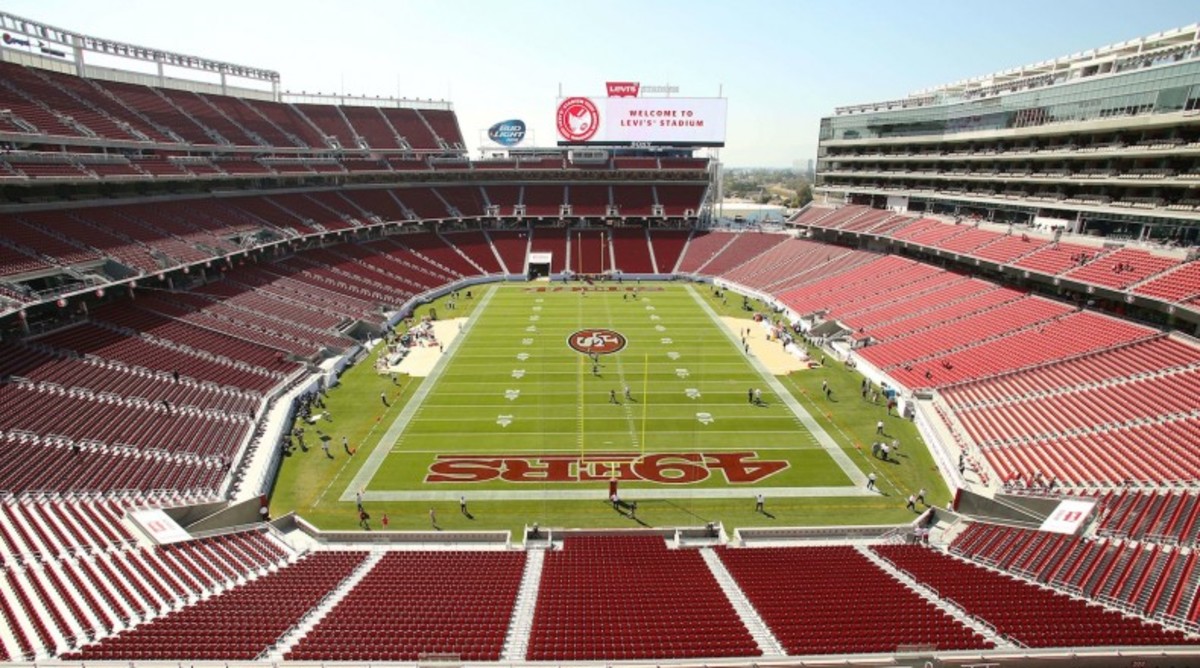
Image Source: athlonsports.com
How Much Is A Football Field? Deciphering the Costs of Creating a Sporting Arena
The cost of a football field varies greatly, ranging from a few thousand dollars for a basic, unlined field on existing land to millions for a fully equipped professional stadium. This price is influenced by many factors, including the type of football (American or soccer), the quality of materials, the labor involved, and the inclusion of amenities like lighting, seating, and drainage.
Creating a space for the roar of the crowd and the thrill of the game involves more than just marking lines on the ground. Whether it’s for a local community league, a high school team, or a professional organization, building a football field is a significant investment. Let’s dive deep into what goes into that cost, from the ground up.
The Foundation: Land and Preparation
The very first, and often most substantial, cost is the land itself. The price of land varies dramatically based on location. A plot of land in a major metropolitan area will be significantly more expensive than a rural site. Beyond the purchase price, the land needs to be prepared.
Site Selection and Acquisition
- Location, Location, Location: Proximity to population centers, accessibility for players and fans, and local zoning laws all play a role in land cost.
- Size Matters: You need more than just the playing surface. Consider space for parking, concessions, restrooms, and potential future expansion. This adds to the overall land requirement and cost.
Initial Site Work and Grading
Once the land is secured, it needs to be made ready for construction.
- Clearing and Grubbing: Removing trees, stumps, rocks, and other debris is the first step. This can involve heavy machinery and labor.
- Excavation and Grading: The land needs to be leveled and shaped according to the specific football field dimensions required for play. Proper grading ensures good drainage, which is crucial for maintaining the field’s quality. This is especially important for a soccer field size, which often requires a perfectly flat surface.
- Soil Testing: Analyzing the soil composition is vital. It helps determine the best type of turf (natural grass or artificial) and any necessary soil amendments to improve drainage and fertility.
Building the Playing Surface: Grass vs. Artificial Turf
The heart of any football field is its playing surface. The choice between natural grass and artificial turf significantly impacts initial cost, ongoing maintenance, and long-term value.
Natural Grass Fields
Natural grass fields offer a classic feel and are often preferred by players for their cushioning and natural play. However, they demand extensive maintenance.
- Initial Installation: This involves preparing the soil, laying down high-quality sod or seeding with specialized turf varieties, and establishing a robust irrigation system.
-
Key Considerations:
- Turf Type: Different grass varieties (e.g., Bermuda, Zoysia, Ryegrass) are suited to different climates and levels of play. Some are more drought-resistant or can withstand heavy foot traffic better than others.
- Drainage Systems: A well-designed drainage system is paramount. This can involve French drains, sand-based root zones, and specialized underlayments to prevent waterlogging, especially for college football field dimensions that see heavy use.
- Irrigation: An efficient watering system is essential for maintaining healthy grass. This includes sprinklers, control systems, and potentially water storage solutions.
- Soil Amendments: Fertilizers, topdressing, and aeration are ongoing needs to keep the grass healthy and the football field area in top condition.
-
Estimated Costs for Natural Grass:
- Basic Preparation and Seeding: \$5,000 – \$20,000 (for a very basic field on existing land)
- Professional Sod Installation with Drainage: \$50,000 – \$200,000+ (depending on size and complexity)
- Full-scale, Championship-quality Field: \$200,000 – \$1,000,000+ (including advanced drainage, irrigation, and top-tier turf)
Artificial Turf Fields
Artificial turf has become increasingly popular due to its durability, lower maintenance requirements, and ability to withstand heavy use and varied weather conditions.
- Installation Process: This involves preparing the base layer, installing shock pads (for safety and performance), laying down the turf blades, infilling with sand and rubber pellets, and then brushing the surface.
-
Key Considerations:
- Turf Quality: The type of synthetic fibers, the density of the blades, and the backing system all affect performance and cost. High-quality turf often mimics the feel of natural grass more closely.
- Infill Material: Traditionally, sand and rubber crumb (often made from recycled tires) are used. Newer infills, like organic materials, are also available but can be more expensive.
- Shock Pads: These are crucial for player safety, providing cushioning to reduce impact on joints and the risk of injury. They add a significant layer to the cost.
- Lifespan: Artificial turf typically lasts 8-10 years, after which it needs replacement.
-
Estimated Costs for Artificial Turf:
- Basic Artificial Turf Installation: \$500,000 – \$1,000,000 (for a standard NFL field size)
- High-Quality Turf with Shock Pads: \$800,000 – \$1,500,000+
- Factors influencing turf cost: The size of a football pitch (a soccer pitch is generally larger than an American football field), the brand of turf, and the complexity of the installation.
Essential Infrastructure and Amenities
Beyond the playing surface, a functional football field requires a host of supporting infrastructure and amenities. These can significantly increase the overall project cost.
Lighting Systems
For evening games and practice sessions, lighting is essential.
- Type of Fixtures: LED lights are the current standard, offering energy efficiency and long lifespan, but they have a higher upfront cost than traditional metal halide or high-pressure sodium lamps.
- Coverage and Intensity: The number and placement of lights are critical to ensure uniform illumination across the entire field, meeting the specific requirements for broadcast or general play. Football stadium dimensions often require extensive and powerful lighting arrays.
- Installation: This includes the poles, wiring, and electrical connections.
- Estimated Costs: \$20,000 – \$150,000+ (depending on the number of lights, type, and installation complexity)
Fencing and Barriers
Security and crowd control are important considerations.
- Perimeter Fencing: To keep unauthorized individuals off the field and to define the playing area.
- Spectator Barriers: To keep fans at a safe distance from the playing action.
- Estimated Costs: \$5,000 – \$50,000+ (depending on the type and extent of fencing)
Seating and Spectator Areas
For organized play, seating for spectators is often necessary.
- Basic Bleachers: Simple metal benches are the most economical option.
- Stadium Seating: Individual seats, often with backrests, are more comfortable but also more expensive.
- Press Boxes and Luxury Suites: For professional or high-level collegiate play, these add significant cost.
- Estimated Costs:
- Basic Bleachers (100-200 seats): \$5,000 – \$25,000
- Mid-range Seating (500-1,000 seats): \$50,000 – \$250,000+
- Full Stadium Seating (thousands of seats): Millions of dollars.
Restrooms and Concession Stands
For public fields, these facilities are often required.
- Construction Costs: Building durable and accessible restrooms and concession areas can be substantial.
- Plumbing and Utilities: Connecting to water, sewer, and electrical lines adds to the cost.
- Estimated Costs: \$50,000 – \$500,000+ per facility, depending on size and amenities.
Scoreboards and Audio Systems
Enhancing the fan experience.
- Scoreboards: From basic digital displays to massive video boards, the cost can range from a few thousand to hundreds of thousands of dollars.
- Public Address (PA) Systems: Essential for announcements, music, and game day commentary.
- Estimated Costs: \$5,000 – \$250,000+
Dimensions and Area: The Canvas for Cost
The physical size of the playing field is a direct driver of material and labor costs. While general football field dimensions are standardized, slight variations can occur, and the overall football field area impacts everything from turf needed to the extent of drainage and lighting.
American Football Field Dimensions
A standard American football field length is 100 yards (300 feet) between the goal lines. Including the end zones, which are typically 10 yards (30 feet) deep each, the total playing length is 120 yards (360 feet). The width of the field is 53.3 yards (160 feet).
- Total Playing Area: 120 yards x 53.3 yards = 6,396 square yards.
- Conversion to Square Feet: 360 feet x 160 feet = 57,600 square feet.
This measurement is often referred to as the dimensions of a gridiron. When discussing a regulation football field, these are the standard measurements. The NFL field size adheres strictly to these dimensions.
Soccer Field Size (Football Pitch)
The size of a football pitch (soccer) has a wider range than American football fields. FIFA regulations specify:
- Length: Minimum 100 meters (110 yards), Maximum 110 meters (120 yards).
-
Width: Minimum 64 meters (70 yards), Maximum 75 meters (80 yards).
-
Example Size (Mid-range): 105 meters x 68 meters = 7,140 square meters.
- Conversion to Square Feet: Approximately 76,850 square feet.
As you can see, a typical soccer pitch is larger than an American football field, which can translate to higher material costs for turf and base preparation.
Football Stadium Dimensions
When we talk about football stadium dimensions, we are referring to the entire structure, including seating, concourses, and surrounding facilities, not just the playing field. This dramatically increases the scale and complexity of the project, pushing costs into the tens or hundreds of millions.
Maintenance and Ongoing Costs
The initial construction cost is only part of the financial picture. Ongoing maintenance is crucial for preserving the field’s quality and longevity.
Natural Grass Maintenance
- Mowing: Regular cutting to specific heights.
- Watering: Consistent irrigation, especially during dry periods.
- Fertilizing: Applying nutrients for healthy growth.
- Aeration and Topdressing: Improving soil structure and drainage.
- Pest and Disease Control: Treating for common turf issues.
- Re-sodding/Seeding: Repairing worn areas or replacing damaged sections.
Artificial Turf Maintenance
- Brushing: Keeping the infill evenly distributed and the blades upright.
- Infill Top-up: Replenishing infill material that may be lost over time.
- Cleaning: Removing debris, leaves, and other foreign objects.
- Deodorizing/Sanitizing: Especially important for high-traffic fields.
- Periodic Deep Cleaning/Grooming: Professional services to maintain performance.
The Human Element: Labor and Professional Services
A significant portion of the cost is attributed to labor and the expertise of various professionals.
- Engineers and Designers: For site planning, grading, drainage, and structural design.
- Construction Crews: Skilled laborers for excavation, grading, installation, and building.
- Turf Specialists: For sod laying, seeding, or artificial turf installation.
- Electricians and Plumbers: For lighting, irrigation, and facility utilities.
- Project Managers: To oversee the entire construction process.
Cost Breakdown Summary
To provide a clearer picture, here’s a simplified breakdown of potential costs for different types of fields. These are estimates and can vary widely:
| Feature/Field Type | Basic Community Field (Natural Grass) | High School Field (Artificial Turf) | Professional Stadium (Partial Estimate) |
|---|---|---|---|
| Land Preparation | \$5,000 – \$25,000 | \$20,000 – \$75,000 | Included in larger stadium cost |
| Playing Surface | \$10,000 – \$50,000 | \$600,000 – \$1,000,000 | \$2M – \$5M+ |
| Drainage System | \$5,000 – \$20,000 | \$50,000 – \$150,000 | Integrated into stadium design |
| Irrigation System | \$3,000 – \$15,000 | \$20,000 – \$60,000 | Advanced systems |
| Lighting | \$0 – \$10,000 (basic poles) | \$50,000 – \$150,000 | \$1M – \$5M+ |
| Fencing | \$2,000 – \$10,000 | \$10,000 – \$30,000 | Extensive security fencing |
| Seating | \$0 – \$5,000 (minimal bleachers) | \$20,000 – \$100,000 | \$10M – \$100M+ |
| Scoreboard/Audio | \$0 – \$2,000 | \$5,000 – \$30,000 | \$100K – \$1M+ |
| Restrooms/Concessions | \$0 – \$10,000 (existing facilities) | \$50,000 – \$200,000 | \$1M – \$10M+ |
| Estimated Total | \$25,000 – \$132,000 | \$805,000 – \$1,795,000 | \$25M – \$200M+ (for entire stadium) |
Factors Influencing the Final Price Tag
Several key elements can push the cost of a football field higher or lower:
- Geographic Location: Labor and material costs vary significantly by region.
- Quality of Materials: Opting for premium turf, lighting, or seating will increase the upfront investment.
- Complexity of Design: Custom features, elaborate drainage, or unique architectural elements add to the expense.
- Existing Infrastructure: Building on a site that already has utilities and access roads will be cheaper than starting from scratch.
- Brand Names: Reputable brands for turf, lighting, and equipment often come with a higher price tag.
- Regulations and Permitting: Local building codes and permit fees contribute to the overall cost.
- Unexpected Issues: Site conditions can reveal unforeseen problems like poor soil, hidden utilities, or groundwater issues that require costly remediation.
Frequently Asked Questions (FAQ)
Q1: What is the average cost of an NFL football field?
A1: An NFL field size typically uses high-quality artificial turf or meticulously maintained natural grass. Including the specialized base preparation, drainage, lighting, and other amenities expected at this level, the cost can easily range from $2 million to $10 million or more for just the playing field itself, not including the stadium structure.
Q2: Can I build a simple football field on my property?
A2: Yes, you can create a basic, unlined field for casual play on suitable land. This would primarily involve ensuring the area is cleared and reasonably level, costing a few thousand dollars for basic preparation. However, for anything resembling a regulation football field or for organized sports, the costs increase significantly.
Q3: What is the difference in cost between a soccer field and an American football field?
A3: Generally, a soccer field size is larger than an American football field length and width. This means more turf, more base material, and potentially more extensive lighting and boundary markings are required, which can make a soccer pitch slightly more expensive to build from the ground up, assuming comparable quality.
Q4: How long does it take to build a football field?
A4: The timeline can vary from a few weeks for a very basic natural grass field to 6-12 months or even longer for a complex artificial turf field with extensive stadium amenities. This includes site preparation, installation of the playing surface, and the addition of all necessary infrastructure.
Q5: Is natural grass or artificial turf more expensive in the long run?
A5: While artificial turf has a higher upfront cost, its lower maintenance requirements (no mowing, watering, fertilizing) can make it more cost-effective over its lifespan of 8-10 years, especially for fields that experience heavy usage. Natural grass requires continuous investment in maintenance, which can add up significantly over time.
In conclusion, the question of “how much is a football field” has a complex answer. It’s a journey from raw land to a vibrant playing arena, with each step adding to the investment. Whether for amateur leagues or professional giants, the cost reflects the dedication to providing a safe, high-quality, and engaging sporting experience.