
Giving Tylenol to a toddler can help lower a fever or ease pain. Parents often ask, “How much Tylenol for toddler?” or “How often to give Tylenol to toddler?” It’s very important to give the right amount, known as the safe Tylenol dose for 2 year old (or any toddler age). You can usually give a dose of Tylenol every 4 to 6 hours, but never give more than 5 doses in a 24-hour period. Always check the label or ask a doctor or pharmacist for the right dose based on your child’s weight. Giving too much can be harmful.
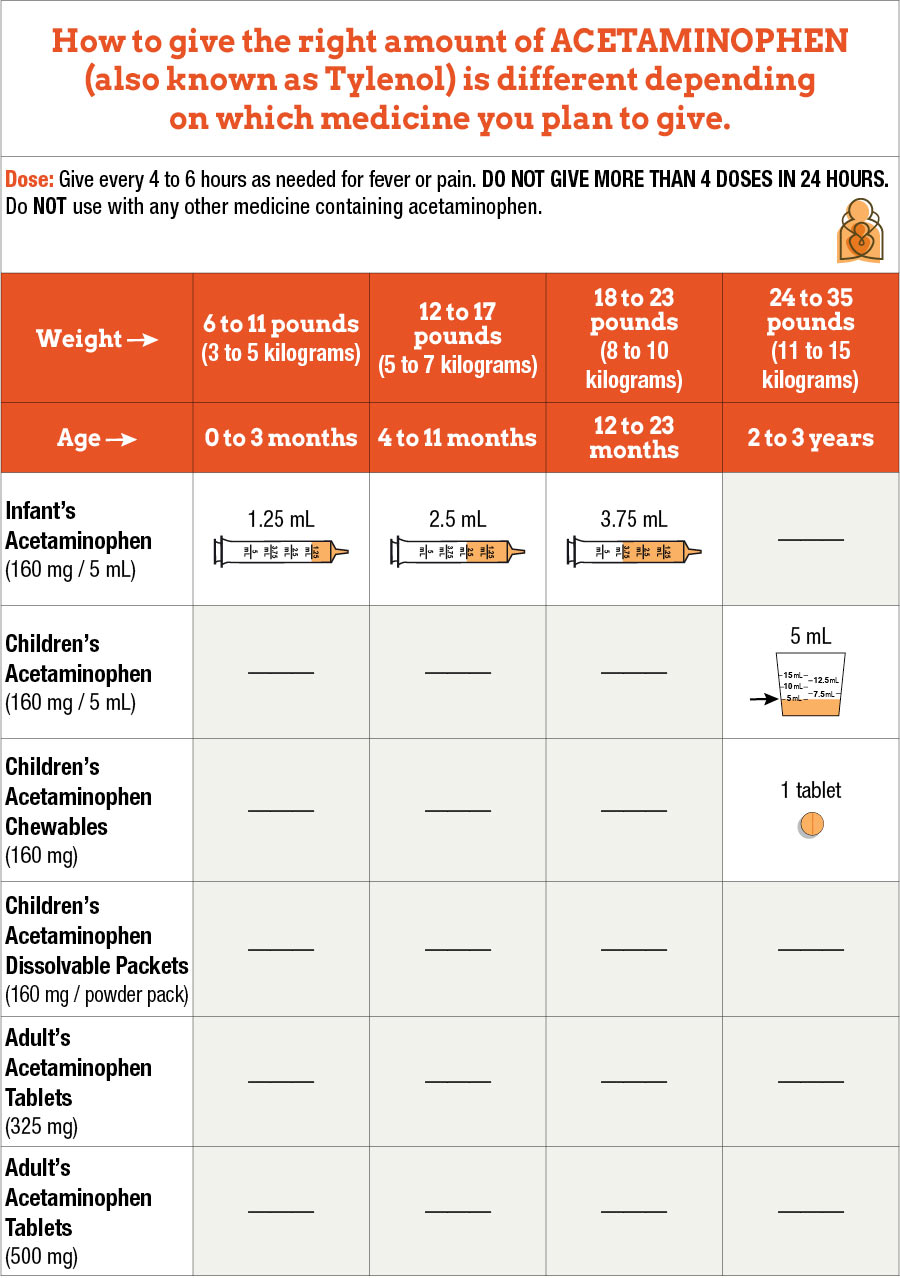
Image Source: www.healthychildren.org
Grasping Why Dosing Matters
Giving medicine to children is not the same as giving it to adults. Children’s bodies are smaller and still growing. They process medicine differently. That’s why getting the dose just right is very important.
Using the wrong amount of Tylenol, or acetaminophen as it is also called, can be risky. Too little might not help your child feel better. Too much can hurt their liver. This is why knowing the correct Acetaminophen dosage for kids, especially toddlers, is a big deal for safety.
Key Facts About Tylenol
- Tylenol contains the active ingredient called acetaminophen.
- It helps lower fever and reduce pain.
- It comes in different forms and strengths, especially for babies and children.
- The right dose depends mostly on the child’s weight. Age is a backup way to check the dose, but weight is better.
Figuring Out the Right Amount
The most important rule for giving Tylenol to a toddler is to use their weight to find the dose. A Tylenol dosage chart for toddlers will usually list doses by weight first, then by age.
Think of it this way: A bigger child needs a little more medicine than a smaller child, even if they are the same age. Weight is the best way to know how big a dose they need.
Using age alone can be risky because children the same age can weigh very different amounts. Always try to know your child’s current weight before giving Tylenol.
Checking How Strong the Medicine Is
Tylenol for children comes in liquid form most often. But, the strength of the liquid can be different. This is very important!
- Infant Tylenol: Used to come in a stronger form.
- Children’s Tylenol: Is less strong than the old Infant Tylenol.
A few years ago, the company that makes Tylenol changed the strength of Infant Tylenol to be the same as Children’s Tylenol. This was done to help stop confusion and lower the chance of giving too much medicine.
However, some older bottles might still be around, or other brands of acetaminophen might have different strengths. Always read the label on the bottle you have! The label will tell you how many milligrams (mg) of acetaminophen are in each milliliter (mL) of liquid.
For most liquid Children’s Tylenol now, the strength is 160 mg per 5 mL. This is the common strength you will see for Liquid Tylenol dose for child products aimed at toddlers.
- Why strength matters: If you use a dose meant for the weaker Children’s Tylenol but accidentally use the stronger Infant Tylenol (if you happen to have an old bottle or a different brand with higher concentration), you will give too much medicine.
So, always check the label to confirm the strength before you figure out the dose.
Getting the Dose Just Right
Using the right tool to measure the medicine is just as important as knowing the right dose number. Kitchen spoons are NOT accurate. They can hold different amounts.
Most liquid children’s medicines come with a special tool for measuring. Use only this tool.
Look for tools like:
- An oral syringe (looks like a small tube with markings and a plunger)
- A dosing cup (a tiny cup with lines marked in mL or teaspoons)
- A dropper (less common for toddler doses, but check markings)
The best tool is usually an oral syringe. It lets you measure the liquid very exactly. The marks on the syringe or cup are usually in milliliters (mL). Some might also show teaspoons (tsp). Always try to use the mL measurement if the dosage chart gives the dose in mL, as this is more precise.
Make sure the markings on your tool match the dose you need to give. For example, if the chart says give 7.5 mL, make sure your syringe or cup has a line for 7.5 mL.
The Tylenol Dosage Guide
Here is a general guide for Children’s Tylenol liquid (strength 160 mg per 5 mL). This is a Tylenol dosage chart for toddlers and older babies.
IMPORTANT: This chart is a guide. It is best to check the label on your specific Tylenol bottle and follow the directions there, or ask your doctor or pharmacist. Always use weight if you know it.
Children’s Tylenol (160 mg per 5 mL liquid)
| Weight (Pounds) | Weight (Kilograms) | Age (Approximate) | Dose (mL) | Dose (mg) |
|---|---|---|---|---|
| 6-11 lbs | 2.7-5 kg | 0-3 months | Consult doctor | Consult doctor |
| 12-17 lbs | 5.4-7.7 kg | 4-11 months | 2.5 mL | 80 mg |
| 18-23 lbs | 8.2-10.4 kg | 12-23 months | 3.75 mL | 120 mg |
| 24-35 lbs | 10.9-15.9 kg | 2-3 years | 5 mL | 160 mg |
| 36-47 lbs | 16.3-21.3 kg | 4-5 years | 7.5 mL | 240 mg |
| 48-59 lbs | 21.8-26.8 kg | 6-8 years | 10 mL | 320 mg |
| 60-71 lbs | 27.2-32.2 kg | 9-10 years | 12.5 mL | 400 mg |
| 72-95 lbs | 32.7-43.1 kg | 11 years | 15 mL | 480 mg |
Remember:
* Find your child’s weight on the chart.
* Look across to see the Dose in mL.
* Use the special measuring tool that came with the medicine to give that exact amount.
* If you don’t know your child’s weight, use their age as a backup, but know that weight is better.
* For babies under 4 months, always ask a doctor before giving Tylenol.
This table helps you find the Children’s Tylenol dose by weight. It also acts as a Tylenol age chart toddler, showing the typical age range for each weight group.
How Often Can You Give It?
After you give a dose of Tylenol, you need to wait before giving the next one.
You can give a dose every 4 to 6 hours as needed.
- This means you must wait at least 4 hours between doses.
- If your child’s fever or pain comes back after 5 hours, it’s okay to give another dose.
- If they are still feeling okay after 6 hours, you don’t need to give more unless needed.
Do not give more than 5 doses in any 24-hour period. This is very important to prevent giving too much acetaminophen, which can hurt the liver.
Keep track of when you give each dose. Writing it down can help.
Giving Tylenol for Toddler Fever
A fever is a common reason to give a toddler Tylenol. A fever means the body is fighting off an sickness. It is usually defined as a temperature of 100.4°F (38°C) or higher.
Fever itself is not always bad. It’s a sign the body’s defenses are working. You don’t always need to treat a fever, especially if your child is still playing and drinking.
However, if your toddler is uncomfortable, cranky, not drinking well, or the fever is high, giving fever medicine for toddlers dose like Tylenol can help them feel better.
Here are some points about Tylenol for toddler fever:
- It usually takes about 30 to 60 minutes for Tylenol to start working to lower a fever.
- It may not bring the temperature all the way back to normal, but it should help lower it.
- The goal is to make your child more comfortable, not just to get the number on the thermometer down.
- Keep offering fluids like water or electrolyte drinks to keep your child from getting dry (dehydrated).
When to Call the Doctor for Fever:
- If your child is under 3 months old and has a fever of 100.4°F (38°C) or higher. This is an emergency.
- If the fever is 104°F (40°C) or higher at any age.
- If the fever lasts for more than 24 hours in a child under 2 years old.
- If the fever lasts for more than 3 days (72 hours) in a child aged 2 years or older.
- If your child seems very sick, is hard to wake up, has a stiff neck, trouble breathing, or a strange rash.
- If you are worried for any reason. Trust your gut feeling.
Focusing on a Safe Tylenol Dose for 2 Year Old
Toddlers aged 2 years old usually weigh between 24 and 35 pounds (about 11 to 16 kg).
Using the chart for a child in this weight range who is 2 years old, the typical dose of Children’s Tylenol liquid (160 mg/5mL) is 5 mL. This equals 160 mg of acetaminophen.
This 5 mL dose is the safe Tylenol dose for 2 year old in this weight range.
- Give this dose using the measuring tool.
- Wait at least 4 hours before the next dose.
- Do not give more than 5 doses in 24 hours.
If your 2-year-old is much smaller or larger than average for their age, it is even more important to use their weight to find the dose on the chart or to ask a doctor. For example, a small 3-year-old might need the same dose as an average 2-year-old if they weigh the same.
Other Types of Acetaminophen for Kids
While liquid is most common for toddlers, acetaminophen for kids also comes in other forms:
- Chewable Tablets: These are usually for older children (often 6 years and up) who can chew safely. They come in different strengths. You must be sure your toddler can safely chew and not choke before using these. Read the package carefully for age and weight guidance.
- Suppositories: These are placed in the child’s bottom. They can be useful if a child is throwing up and cannot keep down liquid medicine. The dose is based on weight. Ask your doctor if this form is right for your child and how to use it.
For toddlers, the Liquid Tylenol dose for child is usually the easiest and safest way to give the medicine.
Reading Medicine Labels Carefully
Every time you give your child medicine, get in the habit of reading the label.
Check these things:
- Active Ingredient: Make sure it says Acetaminophen.
- Concentration/Strength: Find the number like “160 mg / 5 mL”. Make sure it matches the type of medicine you think you have (Infant or Children’s liquid).
- Dosage Instructions: Look for the chart or directions telling you how much to give based on weight or age.
- Age/Weight Limits: See if the product is meant for your child’s age or weight group. Some products are only for children 2 years and older unless a doctor says otherwise.
- Expiration Date: Never use medicine that is past its use-by date.
- Warnings: Read about possible side effects or when not to use the medicine.
Reading the label helps prevent mistakes, especially with Acetaminophen dosage for kids.
Watching for Side Effects
Tylenol is generally safe when given at the right dose. But like all medicines, it can sometimes cause side effects.
Most side effects are mild, like:
- Upset stomach
- Throwing up (vomiting)
Serious side effects are rare but can happen, especially if too much is given. Signs of too much acetaminophen can include:
- Nausea or vomiting that doesn’t stop
- Pain in the upper belly area
- Feeling very tired
- Skin turning yellow (jaundice) or eyes turning yellow (a sign of liver problems)
- Dark colored urine
If you think your child got too much Tylenol, or if they show any of these serious signs, get medical help right away. Call your doctor or go to the nearest emergency room.
Storing Medicine Safely
Keep all medicines, including Tylenol, up high and out of sight and reach of children. Toddlers are curious and can climb.
Use safety caps and make sure they are closed tightly.
Store medicine away from heat and moisture, like not in the bathroom medicine cabinet. A cool, dry place is best.
Proper storage keeps the medicine safe and keeps your child from getting into it.
When to Talk to a Doctor or Pharmacist
Even with charts and instructions, sometimes you might be unsure. It’s always okay, and smart, to ask for help.
Talk to your child’s doctor or a pharmacist if:
- Your child is under 4 months old and needs Tylenol.
- You don’t know your child’s weight and are unsure about the age dose.
- You are not sure which Tylenol product you have or what the strength is.
- You lost the measuring tool and don’t know how to measure the dose.
- Your child has other health problems or takes other medicines.
- Your child seems very sick.
- The fever or pain doesn’t get better after giving Tylenol, or gets worse.
- You think your child might have gotten too much medicine.
- You just feel unsure about anything.
Healthcare professionals are there to help you give the right and safe Tylenol dose for 2 year old, or any age toddler.
Putting It All Together
Giving Tylenol to your toddler to help them feel better is common. The key is to do it safely.
- Know your child’s weight. This is the best way to find the dose.
- Use a Tylenol dosage chart for toddlers based on weight.
- Make sure you have the right strength of liquid Tylenol (usually 160 mg per 5 mL).
- Always use the special measuring tool that came with the medicine (like a syringe or marked cup).
- Give the dose every 4 to 6 hours as needed.
- Never give more than 5 doses in 24 hours. This rule is very important for How often to give Tylenol to toddler.
- Read the label on the bottle every time.
- Use Acetaminophen dosage for kids carefully; it’s not the same as adult medicine.
- Watch your child for any unusual signs after giving the medicine.
- Call the doctor or pharmacist if you are ever unsure about the dose or if your child seems very sick.
Using Tylenol correctly for toddler fever or pain can bring comfort to your child and peace of mind to you. Always put safety first by checking the dose, checking the strength, and measuring carefully.
Frequently Asked Questions (FAQ)
Q: Can I give my toddler Tylenol and Ibuprofen at the same time?
A: Generally, no. Do not give Tylenol (acetaminophen) and Ibuprofen (like Motrin or Advil) at the exact same time. You can sometimes use them one after the other if directed by a doctor, but you need to know the right times for each. Giving both together or too close can be confusing and risky. Stick to one medicine unless your doctor tells you exactly how to switch or time them.
Q: My child spit up some Tylenol. Should I give another dose?
A: This is tricky. If you are sure they spit up all of it right away, you might be able to try giving the dose again one time. But if you are not sure how much they kept down, or if they spit up sometime after taking it, it is best NOT to give another dose. Wait until the next scheduled dose time (at least 4 hours from the first dose you tried to give) to avoid giving too much. When in doubt, wait or call your doctor.
Q: What if I lost the measuring syringe or cup?
A: Do NOT use a kitchen spoon (teaspoon or tablespoon). They are not accurate enough. If you don’t have the right measuring tool, get one from a pharmacy or store that sells baby items. You can often buy oral syringes separately. Or, call your pharmacist. They can help you measure a dose or might give you a new syringe.
Q: My toddler weighs between two weight ranges on the chart. Which dose should I use?
A: If your child is close to the higher weight range, you would typically use the dose for that higher range. For example, if the chart says 24-35 lbs gets 5mL and 36-47 lbs gets 7.5mL, and your child weighs 35 lbs, the dose would be 5mL. If they weigh 36 lbs, the dose would be 7.5mL. If they are right on the edge or you are unsure, it’s safer to use the lower dose or ask a doctor or pharmacist.
Q: How long does Tylenol last for fever or pain?
A: Tylenol usually works for about 4 to 6 hours. That’s why the dose is typically given every 4 to 6 hours as needed.
Q: The bottle says “Children’s Tylenol ages 2-11”. Can I give it to my 18-month-old?
A: Products often list an age range. For Tylenol (acetaminophen), the dose is mainly based on weight. If your 18-month-old’s weight falls into the weight range listed on the chart for that product (like the 12-23 months age group which typically weighs 18-23 lbs), you can give it based on weight. However, some doctors prefer that you only give Tylenol to babies under 2 years old after talking to them first. Always check the weight dose on the chart and consider calling your doctor if your child is under 2 and the bottle says 2+.
Q: Is Acetaminophen dosage for kids the same for all brands?
A: The active ingredient (acetaminophen) dose per pound of body weight is the same. However, different brands of liquid medicine might have different concentrations (like 160 mg in 5 mL, or maybe something else). This is why you must check the label of the exact bottle you have and use the dosing instructions for that bottle. Do not use a dose chart from one brand if you are using a different brand unless you have checked that the strengths are exactly the same.
Q: Can I mix Liquid Tylenol dose for child with juice or milk?
A: It is usually best to give the medicine by itself using the syringe or cup. This way, you know your child got the full dose. If you mix it with a small amount of drink, make sure they drink all of the mixture right away. Do not mix it into a large bottle or cup of drink, as they might not finish it all, meaning they don’t get the full dose.
Using the right dose of Tylenol helps keep your toddler safe while easing their symptoms. Always read the label, use the right tool, and when in doubt, ask a healthcare expert.