
Image Source: images.ctfassets.net
A Parent’s How Often To Give Toddler Motrin Safety Guide
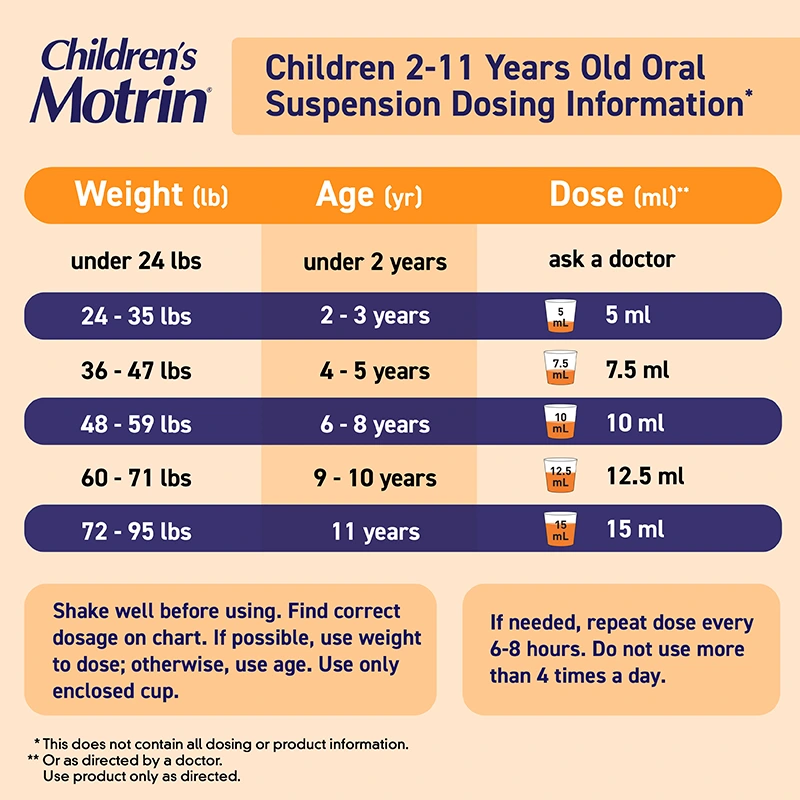
Can I give my toddler Motrin often? What is the right amount? How often can a 2 year old have Motrin? When your child is sick, you want to help them feel better fast. Motrin, also called ibuprofen, is a common medicine parents use to lower fever and ease pain in toddlers. But knowing how much to give and how often is very important for their safety. Typically, your toddler can have Motrin every 6 to 8 hours. But this depends on how much they weigh. Giving Motrin based on weight is key. You must not give it more often than every 6 hours. There is also a limit on how much they can have in one day. This guide helps you use Motrin safely for your toddler.
Deciphering Children’s Motrin
Children’s Motrin is a liquid medicine. Its main part is ibuprofen. Ibuprofen is a type of medicine called a non-steroidal anti-inflammatory drug (NSAID). That’s a long name. It just means it helps with swelling, pain, and fever.
Motrin helps toddlers feel better when they have:
- Fever from colds, flu, or shots.
- Pain from earaches, sore throats, or teething.
- Aches from getting sick.
Giving the right amount at the right time makes sure the medicine works well and is safe. Giving too much or giving it too often can be bad for your child.
Key Things About Giving Motrin Safely
Three big things matter when giving Motrin to a toddler:
- Your child’s weight: This is the MOST important thing. Medicine is dosed by weight, not just age.
- How old your child is: Age matters too, but weight is the main guide. Motrin is usually for children 6 months and older.
- The strength of the medicine: Children’s Motrin comes in different strengths. The label will say how much medicine is in each small amount of liquid. You must use the right strength for your child’s age group if the label tells you.
Always check the label on the bottle. It has important safety rules and dosing steps.
Finding the Right Amount to Give (Dosage)
Finding the right Motrin dosage for your toddler starts with knowing their weight.
H4 Why Weight Matters Most
Children of the same age can weigh very different amounts. A bigger child needs more medicine than a smaller child of the same age. Giving medicine based on weight makes sure they get enough to help them, but not so much that it harms them.
Never guess your child’s weight. Use a scale if you can. If you were at the doctor’s office recently, use the weight they wrote down.
H4 Checking the Motrin Label and Chart
Look at the box or bottle of Children’s Motrin. You will see a chart. This chart helps you find the right dose.
The chart usually has two parts:
- Weight (in pounds or kilograms): Find your child’s weight here.
- Dose (how much liquid to give): This number tells you how many milliliters (mL) or teaspoons (tsp) of medicine to give.
It’s very important to use the measuring tool that comes with the medicine. This is usually a plastic syringe or cup. Kitchen spoons are not accurate for medicine.
H4 An Example Chart (Always Check Your Bottle!)
NOTE: This is an example chart. ALWAYS USE THE CHART ON YOUR SPECIFIC BOTTLE OF CHILDREN’S MOTRIN or ask your doctor. Different products have different strengths.
| Child’s Weight (Pounds) | Child’s Weight (Kilograms) | Typical Dose (mL) – Check YOUR bottle strength! |
|---|---|---|
| 12-17 lbs | 5.5-7.9 kg | 1.25 mL |
| 18-23 lbs | 8.0-10.9 kg | 2.5 mL |
| 24-35 lbs | 11.0-15.9 kg | 3.75 mL |
| 36-47 lbs | 16.0-21.9 kg | 5 mL |
| 48-59 lbs | 22.0-26.9 kg | 6.25 mL |
| 60-71 lbs | 27.0-32.9 kg | 7.5 mL |
Remember: This is just an example. Your bottle might be different! Always use the label on the medicine you have.
H4 Pediatric Ibuprofen Dosage Guidelines
Doctors and medicine companies follow pediatric ibuprofen dosage guidelines. These rules help them figure out the safe amount of medicine per pound or kilogram of weight. The dose chart on the bottle is based on these guidelines.
- The goal is to give enough medicine to work, but not too much.
- These rules are based on many studies.
- They help prevent harm from the medicine.
If your child’s weight is not on the chart, or if you are unsure, call your doctor or nurse. They can tell you the exact right amount to give.
The Rule for How Often to Give Motrin (Timing)
Now that you know the right amount, the next big question is how often to give it. This is the Motrin dosage toddler frequency.
H4 Hours Between Doses
You must wait a certain number of hours between doses of Motrin. This waiting time lets the medicine work and then start to leave the child’s body.
- Wait at least 6 hours between doses.
- You can wait longer, like 8 hours, if your child is doing okay.
- Do not give a dose sooner than 6 hours after the last dose.
Waiting 6 hours is the minimum time. It helps prevent too much medicine from building up in your child’s body.
H4 Children’s Ibuprofen Schedule
Planning when to give the medicine is part of the children’s ibuprofen schedule.
Think about a 24-hour day. You can give Motrin throughout the day or night if needed.
- If you give a dose at 7:00 AM, the next dose cannot be before 1:00 PM (7 AM + 6 hours).
- If you give a dose at 10:00 AM, the next dose cannot be before 4:00 PM (10 AM + 6 hours).
- If you wait until 10:00 AM and your child is okay until 6:00 PM, you can give the next dose at 6:00 PM. That is 8 hours between doses, which is fine.
The timing depends on when your child needs it, but you must follow the minimum waiting time. This is the toddler fever reducer timing. It applies to pain too.
The Maximum Daily Amount of Motrin
There is a limit to how much Motrin your child can have in one 24-hour period. This is the maximum daily amount Motrin.
H4 How Many Doses in One Day?
Usually, a child should have no more than 4 doses of Motrin in a 24-hour period.
A “24-hour period” is not just from midnight to midnight. It is 24 hours starting from the time you gave the first dose.
- Example: You give the first dose at 3:00 PM on Monday. The 24-hour period ends at 3:00 PM on Tuesday. In that time, your child should have no more than 4 doses total.
Giving more than 4 doses in 24 hours is giving too much medicine.
H4 Why a Daily Limit is Important
Giving too much Motrin over a day can lead to serious health problems.
- It can hurt the stomach or even cause bleeding.
- It can affect the kidneys.
- It can cause other bad side effects.
Always keep track of when you give each dose. Write it down if you need to. This helps you know when the next dose is safe and if you are close to the daily limit.
How Often Can a 2 Year Old Have Motrin?
Let’s look at a common age: a 2-year-old. How often can a 2 year old have Motrin?
- Just like any toddler, a 2-year-old can have Motrin every 6 to 8 hours.
- The dose depends on the 2-year-old’s weight, not just that they are 2 years old.
- They should not have more than 4 doses in a 24-hour period.
If your 2-year-old weighs 25 pounds, you would find 25 pounds on the dose chart on the bottle to see the right amount of liquid to give. Then, you would give that amount every 6 to 8 hours as needed, not going over 4 doses in 24 hours.
Age charts, like a Motrin dosage chart by age, can be a starting point. But always use weight with the chart on your specific medicine bottle. If a 2-year-old is very small or very large for their age, the weight is the guide for the dose.
Side Effects and Signs of Too Much Motrin
Most of the time, Motrin is safe when used correctly. But side effects can happen.
H4 Common Side Effects
Some toddlers might have mild side effects like:
- Upset stomach
- Throwing up
- Diarrhea
- Being a little fussy
Giving Motrin with food or milk can sometimes help with an upset stomach.
H4 Side Effects of Too Much Motrin
Giving too much Motrin or giving it too often increases the chance of bad side effects. Signs of side effects of too much Motrin can include:
- Severe stomach pain
- Throwing up blood, or throw up that looks like coffee grounds (brown/black bits)
- Poop that is black or looks like tar (sign of bleeding in the stomach or gut)
- Less pee than normal
- Being very sleepy or hard to wake up
- Trouble breathing
- A rash or hives (signs of an allergic reaction)
- Swelling of the face, lips, tongue, or throat
These serious signs need help right away. Call your doctor or go to the emergency room.
If you think you have given too much Motrin by mistake, call your doctor, a poison control center, or go to the emergency room right away. Do not wait for signs of a problem.
Giving Motrin Safely – Step-by-Step
Putting it all together, here are the steps for giving your toddler Motrin safely:
H4 Step 1: Check if it’s the Right Medicine
Make sure the bottle says “Children’s Motrin” or “Children’s Ibuprofen.” Check the child’s age limit on the label (usually 6 months and older).
H4 Step 2: Find Your Child’s Weight
Get the most recent weight for your child. Weight in pounds is most common in the US.
H4 Step 3: Check the Medicine Strength
Look at the label on the bottle. See how much medicine is in each small amount (e.g., 100 mg per 5 mL). This is important because different products have different strengths.
H4 Step 4: Use the Dose Chart
Find the dose chart on the label or box.
Match your child’s weight to the weight on the chart.
Find the amount of liquid to give (mL or tsp) for that weight.
If you cannot find the weight, or are unsure, call your doctor or nurse.
H4 Step 5: Measure Carefully
Use the measuring tool that came with the medicine (syringe or cup).
Measure the liquid exactly to the line for the correct dose you found on the chart.
Double-check the amount before giving it.
H4 Step 6: Give the Medicine
Give the medicine to your child. You can mix it with a little drink or food if needed, but make sure they take the whole dose. Giving with food or milk can help prevent stomach upset.
H4 Step 7: Write Down the Time and Amount
Write down the time you gave the dose and how much you gave. This is very important for knowing when the next dose is due and for keeping track of the maximum daily amount Motrin. A simple note on your phone or a piece of paper works.
H4 Step 8: Wait the Right Amount of Time
Wait at least 6 hours before giving the next dose. You can wait longer (like 8 hours) if your child doesn’t seem to need it sooner.
H4 Step 9: Watch Your Child
See how your child is doing. Is the fever going down? Are they in less pain? Are there any side effects?
H4 Step 10: Do Not Exceed the Daily Limit
Do not give more than 4 doses in any 24-hour period.
When to Ask for Help
Using Motrin safely is important, but so is knowing when the problem is more serious. Call your doctor or get medical help if:
- Your child is under 6 months old and has a fever (rectal temp of 100.4°F or higher). Motrin is usually not for babies under 6 months.
- Your child’s fever is 104°F (40°C) or higher at any age.
- Your child looks very sick, is very sleepy, or is hard to wake up.
- Your child has trouble breathing.
- Your child has a stiff neck, bad headache, or a new rash with the fever.
- Your child is showing signs of not having enough fluids (dehydration), like crying without tears, having a dry mouth, or not peeing much.
- Your child has a fever that lasts for more than 3 days.
- Your child’s pain is bad and does not get better with Motrin.
- Your child is taking other medicines. The doctor needs to know this.
- You are not sure how much medicine to give.
- You are worried for any reason.
Doctors and nurses are there to help you make sure your child is safe and gets the right care.
Important Safety Tips to Remember
- Always check the label: Every time you give medicine, look at the box or bottle for the dose chart and rules.
- Use the right tool: Only use the syringe or cup that came with the medicine to measure.
- Check the strength: Make sure you are using Children’s Motrin and know its strength. Infant drops used to be much stronger, but now liquid and drops are often the same strength per mL. ALWAYS check the label.
- Weight over age: Dose by weight using the chart, not just age.
- Wait the time: Wait at least 6 hours between doses.
- Know the limit: Do not give more than 4 doses in 24 hours (maximum daily amount Motrin).
- Write it down: Keep a note of doses given.
- Store safely: Keep all medicines up high and out of the reach of children.
- Never double dose: If you miss a dose, do not give extra next time. Just give the next dose at the right time, waiting at least 6 hours since the last one.
- When in doubt, ask: Call your doctor, nurse, or pharmacist if you have any questions.
Following these steps and rules helps you safely manage your toddler’s fever or pain with Motrin. Safety is the most important thing.
FAQ: Common Questions About Toddler Motrin
H5 What if my toddler throws up the Motrin?
If your toddler throws up the medicine right after taking it (within 15-20 minutes), they might not have gotten the full dose. You can try giving one more dose. But if they throw up again, do not give more. Call your doctor. If they throw up much later after taking the medicine (an hour or more), it likely stayed in their system. Just wait until the next dose is due (at least 6 hours from the first dose).
H5 Can I give Motrin and Tylenol at the same time?
Generally, no. It is not recommended to give Motrin (ibuprofen) and Tylenol (acetaminophen) at the exact same time. Some doctors might suggest switching between them for tough fevers, but only if they give you a specific plan with clear timing. Do not do this without talking to your doctor first. Giving both medicines together or too close can be confusing and raise the risk of giving too much of one or both medicines.
H5 Is Children’s Motrin the same as Infant Motrin?
They both contain ibuprofen. In the past, Infant Motrin drops were much stronger (more medicine in a smaller amount) than Children’s Motrin liquid. This caused many dosing errors. Because of this, companies changed things. Now, most Infant and Children’s ibuprofen products have the same strength (e.g., 50 mg per 1.25 mL or 100 mg per 5 mL). BUT you must check the label on the bottle you have. Always check the dose chart on your bottle based on weight. Do not assume they are the same.
H5 Does Motrin work faster or better than Tylenol?
Motrin (ibuprofen) and Tylenol (acetaminophen) are both good for fever and pain. They work in slightly different ways. Some parents find Motrin lasts longer (up to 8 hours) compared to Tylenol (usually 4-6 hours). Motrin also helps with swelling, which Tylenol does not. Both can be used safely when dosed correctly by weight. The best choice can depend on your child and what their doctor suggests.
H5 What if the fever doesn’t go down after giving Motrin?
Medicine doesn’t always make the fever go completely away, but it should help lower it and help your child feel a little better. If the fever doesn’t budge, or if your child seems very sick even with medicine, call your doctor. Sometimes a fever means your child has an infection that needs other treatment.
H5 My child weighs between two weights on the chart. What do I do?
If your child’s weight is between two weights on the dose chart, it is usually safest to use the dose for the lower weight. For example, if the chart shows doses for 24-35 lbs and 36-47 lbs, and your child weighs 35.5 lbs, use the dose listed for 24-35 lbs. Or, call your doctor or pharmacist to be sure. They can give you the exact dose based on their precise weight.
Interpreting Pediatric Ibuprofen Guidelines
Using medicine for toddlers can feel scary. But knowing the basic rules makes it much safer.
- Dose by weight.
- Wait at least 6 hours between doses.
- Do not give more than 4 doses in 24 hours.
- Use the right measuring tool.
- Always check the specific bottle label.
- Talk to your doctor if you are unsure or if your child seems very sick.
Keeping these points in mind helps you follow pediatric ibuprofen dosage guidelines and keep your little one safe while helping them feel better. Your doctor or nurse is your best helper when you have questions about any medicine for your child.