
So, how do you beat zone defense in football? You beat zone defense by exploiting its inherent weaknesses through precise passing, effective running, and understanding the coverage. Zone defenses aim to keep everything in front of them, leaving openings for offenses that can stretch the field, exploit seams, and utilize quick, accurate passes.
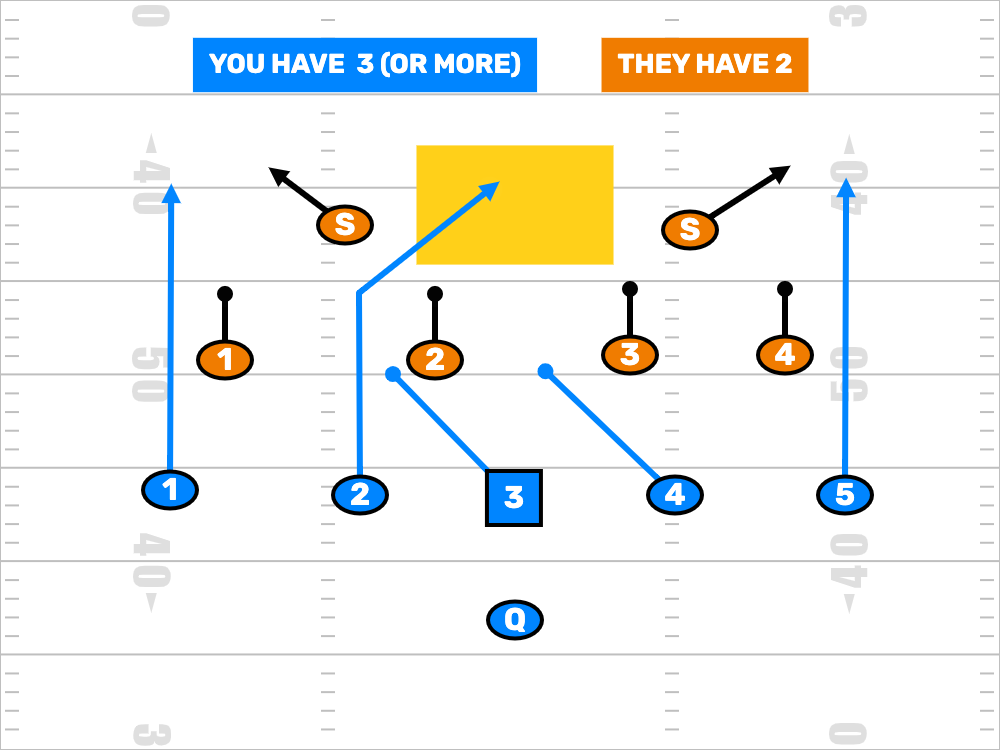
Image Source: firstdown.playbooktech.com
Deciphering Zone Defense: The Fundamentals
Zone defense is a popular scheme in football where each defensive player is responsible for guarding a specific area or “zone” of the field, rather than a particular offensive player. The goal is to create a wall of defenders that prevents big plays and forces offenses into predictable, shorter gains. This type of defense can be frustrating for offenses because it minimizes one-on-one matchups and emphasizes collective coverage.
There are several common types of zone defenses:
- Man-to-Man Zone: While often grouped with man coverage, this hybrid assigns a defender to a zone but also makes them responsible for picking up any receiver who enters their area. If a receiver leaves their zone, the defender communicates and “hands off” the receiver to another defender.
- Cover 2: Two deep safeties split the deep halves of the field, and five underneath defenders (three linebackers and two cornerbacks) cover the short to intermediate areas. This is designed to prevent deep passes but can leave windows in the intermediate zones.
- Cover 3: One deep safety covers the middle of the field, with two cornerbacks and another safety covering the deep thirds. The remaining four defenders cover the short zones. This is a balanced coverage, strong against the run and intermediate passes, but can be vulnerable to plays in the seams between defenders.
- Cover 4 (Quarters): Four defensive backs cover the deep zones, typically in quarters. This is a very deep-oriented coverage, excellent at preventing long bombs, but can be susceptible to short and intermediate routes if not executed perfectly.
- Zone Blitz: This involves a defensive player blitzing while other defenders drop back into coverage zones, creating confusion and pressure.
Zone Defense Weaknesses
Every defensive scheme has vulnerabilities, and zone defenses are no exception. Knowing these weaknesses is the first step to attacking them effectively.
- Seams: The areas between zones are prime targets. If defenders don’t communicate and shift properly, these gaps can be exploited for significant yardage.
- Holes: Similar to seams, the spaces between underneath defenders and deep defenders can be open for intermediate passes.
- Overload and Displacement: By forcing defenders to cover multiple areas or move out of their assigned zones, you can create mismatches or open space.
- Deep Halves: In Cover 2, the flat areas outside the safeties can be vulnerable. In Cover 3, the area behind the flat-corner and inside the deep-third safety is a target.
- Communication Breakdowns: Zone defense relies heavily on communication. If defenders aren’t talking and adjusting, coverage can falter.
- Running Lanes: If linebackers are keyed on passing, they might be slow to react to the run, opening up lanes.
Zone Offense Strategies: Exploiting Zone Coverage
Attacking zone defense requires a different approach than playing against man coverage. The focus shifts from isolating individual matchups to finding and exploiting spaces within the defensive structure.
Key Zone Offense Principles
- Ball Movement: Quick, accurate passes are crucial. The ball needs to get out of the quarterback’s hands before the zone can collapse.
- Route Variety: Mix up short, intermediate, and deep routes to keep defenders guessing and force them to cover different depths.
- Pre-Snap Motion: Motion can help identify coverage and potentially draw defenders out of their zones or create leverage.
- Targeting Tendencies: Identify which zones are typically weak or which defenders are slow to react.
- Stretching the Field: Using routes that go deep or wide can force zone defenders to spread out, creating openings underneath.
Passing Against Zone
Passing is often the most effective way to exploit zone defense. The goal is to throw the ball where the defenders are not, or where they have to make a difficult adjustment.
Targeted Routes and Concepts
- Out Routes and Comebacks: These routes are designed to attack the boundary and force corners or safeties to widen. A well-timed comeback route behind an outside linebacker or a flat-corner can be highly effective.
- In Routes and Slants: These routes aim to penetrate the middle of the field. If linebackers or safeties are playing too shallow, in-breaking routes can gain significant yardage. Slants can exploit the space between defenders.
- Crossers and Drags: Crossing routes are excellent for forcing defenders to navigate traffic and potentially get picked off. A well-executed drag route can catch a zone flat-footed.
- Digs and Posts: These intermediate routes are designed to hit the seams of zone coverages. A post route can split two safeties, while a dig route can exploit the space between an underneath defender and a deep defender.
- Screens: Screen passes are effective against aggressive zone blitzes or when linebackers are dropping deep. They can freeze the pass rush and allow receivers to get into open space.
- Mesh Concepts: Two receivers run crossing routes at different depths, forcing defenders to make decisions about who to cover. This can create confusion and open windows.
- Flooding Zones: Sending multiple receivers into a specific zone to overload the defender responsible for that area.
Quarterback’s Role
The quarterback’s ability to read the zone and make quick decisions is paramount.
- Pre-Snap Reads: Identify the defensive alignment and any potential leverage. Look for tendencies in how defenders are playing their zones.
- Post-Snap Reads: Watch for defender eyes and movements. Identify open windows and anticipate where defenders will break.
- Timing and Accuracy: Deliver passes with precision to the spots where receivers can catch and run, or where defenders cannot make a play.
- “High-Low” Reads: Read a defender by looking at a high route and a low route in their zone. If the defender commits to the high route, throw low, and vice versa. This is a classic way of exploiting zone coverage.
Running Against Zone
While passing is often the focus, a strong running game can also be effective against zone defense, especially if the defense is keyed on preventing the pass.
Exploiting Run Gaps
- Inside Zone and Outside Zone: These are staple zone running plays where the offensive line and running back move laterally to find a crease. The goal is to stretch the defense horizontally and then hit the hole.
- Cutback Lanes: If the defense over-pursues a run to one side, a running back can cut back against the grain to find open space. This requires good vision and agility from the back.
- Misdirection: Plays like reverses, jet sweeps, and option plays can pull defenders out of position, opening up running lanes.
- Blocking Schemes: Using pulling linemen or trap blocks can create immediate holes by getting blockers in front of the running back.
Offensive Line’s Role
The offensive line’s job in the run game against zone is to create angles and seal defenders away from the running lane.
- Zone Blocking: Each offensive lineman is responsible for a zone, attempting to block the nearest defender and create a wall.
- Sealing Defenders: Aim to get defenders turned and sealed to the outside or inside, preventing them from pursuing the ball carrier.
- Second Level Blocks: Tight ends and offensive linemen need to get to the linebackers and safeties to create wider running lanes.
Zone Breakdown: Advanced Techniques
Achieving a “zone breakdown” means effectively disrupting the defensive zone coverage to create big plays. This isn’t about a single play but a strategic approach over the course of a game.
Strategies for Zone Breakdown
- Systematic Attack: Don’t just throw the ball randomly. Have a plan to attack specific zones and defenders.
- Tempo and No-Huddle: A fast tempo can prevent the defense from getting into their well-organized zone formations and can lead to fatigue, resulting in missed assignments.
- Play-Action: Using play-action passes can draw linebackers up, creating deeper passing windows.
- Rub Routes: Routes where one receiver intentionally runs across the path of a defender covering another receiver. If not handled properly, this can create separation.
- Crossing Patterns from Different Formations: Attacking zones from multiple formations can confuse the defense and force them to adjust their zone responsibilities.
Common Zone Breakdown Plays
Here are some specific plays and concepts that are highly effective against zone:
- “Mesh” Concept: Two receivers run crossing routes at different depths. A third receiver can run a shallow drag or a post to further confuse defenders. This is excellent for picking apart linebackers in zone.
- “Post-Wheel” Combination: A post route draws safeties deep, while a wheel route from the backfield or a slot receiver attacks the flat, often with a linebacker trailing.
- “Curl-Flat” Combination: A receiver runs a curl to the intermediate area, while another runs to the flat. This forces a defender (often a cornerback or outside linebacker) to decide which player to cover.
- “Over” Routes: Receivers running deep across the field can exploit the middle seams of Cover 2 or Cover 3 defenses.
- “Drag” Routes: Quick, short routes across the middle of the field can be effective against Cover 3 and Cover 2 if the linebackers don’t carry them vertically.
Adapting to Different Zone Coverages
Understanding the specific zone coverage being played is crucial for tailoring your offensive attack.
Attacking Cover 2
Cover 2 has two deep safeties, leaving the intermediate and short areas vulnerable.
-
Key Vulnerabilities:
- The “Hole” or “Seam” between the Safeties: This is the prime target for deep crossing routes or posts.
- The Flats: The areas outside the safeties and in front of the cornerbacks can be open for quick outs, screens, or outs to the tight end.
- The “Curl Flat” Window: The area where the corner is responsible for the flat and the safety is responsible for the deep half.
-
Effective Plays:
- Post-Corner: A receiver runs a post, then breaks outside to the corner. This can freeze the safety and create an open window.
- Screens to the Flats: Quick screens to receivers or running backs in the flat can exploit the aggressiveness of the defensive ends or outside linebackers.
- Crossing Routes: Routes that go from one sideline to the other can force the safeties to make choices or get them out of position.
- Tight End Seams: A tight end running up the seam between the safeties can be a huge gain against Cover 2.
Attacking Cover 3
Cover 3 has one deep safety and three underneath zones.
-
Key Vulnerabilities:
- The “Seams” between the Curl/Flat Defenders and the Deep Third Safeties: These are targets for dig routes or out routes.
- The “Middle of the Field” between Linebackers: If linebackers play too shallow, intermediate posts or crossers can find openings.
- The Flats: Similar to Cover 2, the flats are vulnerable.
-
Effective Plays:
- Flood Concepts: Sending three receivers to one side of the field (e.g., a deep out, an intermediate in, and a flat route) can overload a zone defender.
- Dig Routes: Routes that break sharply inside to the intermediate level can exploit the space behind the linebackers and in front of the deep safeties.
- Out Routes: Attacking the boundary, especially on comeback routes, can force corners to make plays on the ball.
- Mesh Concepts: Excellent for drawing linebackers into coverage and creating openings for other receivers.
Attacking Cover 4 (Quarters)
Cover 4 is designed to prevent big plays by dropping four defensive backs deep.
-
Key Vulnerabilities:
- The Short to Intermediate Areas: With four deep, the underneath zones can be less populated, creating opportunities for shorter, quicker passes.
- The “Seams” in the Middle: While safeties are deep, the seams between the underneath zone defenders can still be exploited.
- The Boundary: Corners are responsible for deep halves, leaving the short boundary vulnerable to quick outs or fades.
-
Effective Plays:
- Curl-Flat Combinations: Forces the cornerback to choose between playing the flat or staying with the curl.
- Screens: Can be effective as they freeze the pass rush and give the offense time to get receivers in front of the pursuit.
- Quick Slants and Ins: Attack the middle of the field before the safeties can get over.
- Draw Plays: If the defense is consistently playing four deep, they may not have enough players in the box to stop the run.
Zone Defense Counters: Making Adjustments
Successful offenses don’t just have a game plan; they adapt. Zone defense counters are the adjustments made in response to how the defense is playing.
Offensive Adjustments
- Identifying Coverage Tendencies: Does the defense favor a specific zone coverage? Do certain players consistently get beat in coverage?
- Exploiting Matchups: Even in zone, some defenders are better than others. Try to force weaker defenders into coverage responsibilities.
- Using Personnel: Utilize tight ends and fullbacks to chip block and then release into the flat, or use shifty slot receivers against larger linebackers.
- Tempo Changes: Varying the pace of play can keep the defense off balance and prevent them from settling into their preferred zone structure.
- Running the Ball: If the defense is overly committed to stopping the pass, a strong run game can be a great equalizer. This also helps tire out linebackers.
The Role of Play-Calling
Play-calling should evolve throughout the game. If the initial zone attack isn’t working, don’t be afraid to switch to a different approach.
- Pre-Snap Motion: Use motion to identify coverage and potentially draw defenders out of their zones.
- RPO’s (Run-Pass Options): These plays give the quarterback the option to hand off, pass to a receiver on a short route, or even throw to a receiver on a bubble screen, depending on how the defense reacts to the run fake. This is a powerful tool against zone.
- Audibles: Give the quarterback the ability to change plays at the line of scrimmage based on the defensive look.
Frequently Asked Questions (FAQ)
Q1: What is the best way to attack a Cover 2 zone?
A1: The best way to attack Cover 2 is by exploiting the seams between the two deep safeties with deep crossing routes or posts, and by attacking the flats with quick passes or screens to receivers or running backs.
Q2: Can I run the ball effectively against zone defense?
A2: Yes, you can run the ball effectively against zone defense, especially if the defense is focused on preventing the pass. Use zone blocking schemes, cutback lanes, and misdirection to gain an advantage.
Q3: What are the most important zone offense principles?
A3: The most important zone offense principles include quick ball movement, route variety, using pre-snap motion, targeting defensive tendencies, and stretching the field horizontally and vertically.
Q4: How do I create a “zone breakdown”?
A4: You create a zone breakdown by systematically attacking the weak points of the zone coverage, using concepts like mesh routes, flood concepts, and rub routes to confuse defenders and create open space.
Q5: What is a “high-low” read in passing against zone?
A5: A “high-low” read is when a quarterback reads a defender’s reaction to two routes in their zone: one deep and one shallow. If the defender covers the deep route, the quarterback throws to the shallow route, and vice versa.
Q6: Which routes are best for passing against zone?
A6: Routes like out routes, comeback routes, in routes, slants, crossers, digs, and posts are generally effective against zone coverage because they exploit the gaps and spaces within the defensive scheme.