
Image Source: hurstpediatricdentistry.com
Tips For How To Floss Toddler Teeth Without A Fuss
When should you start flossing children? You should start flossing your child’s teeth as soon as any two teeth touch each other. This often happens when baby teeth come in, usually around ages two to three. What is the best floss for kids? Special kids’ flossers, often shaped like small handles, or soft, tape-like floss are usually best. They make it easier to reach small spaces. Can you prevent toddler cavities? Yes, you absolutely can! Good toddler dental hygiene, including regular flossing and brushing, is key to helping prevent toddler cavities. This helps keep their child gum health in good shape too. Flossing is a very important part of a complete kids oral care routine. It gets rid of food bits and germs that brushing misses. This article will give you dental tips for toddlers to make flossing easy and fun. We will focus on the best flossing baby teeth technique and how to start primary teeth care early. We will even talk about making flossing fun for toddlers.
Why Flossing Matters for Little Ones
Flossing might seem like a grown-up thing. But it is very important for small children too. Their tiny teeth need special care. Early primary teeth care sets up good habits for life. It also keeps their mouths healthy.
The Role of Primary Teeth Care
Baby teeth are very important. They are not just placeholders for adult teeth. They help your child chew food well. They help them speak clearly. They also hold space for the adult teeth. If a baby tooth gets a cavity and falls out too early, the other teeth might shift. This can cause problems for the adult teeth later. So, caring for these first teeth is a big deal.
Why Toddler Dental Hygiene is Key
Germs, called bacteria, live in everyone’s mouth. When children eat sugary foods, these germs make acid. This acid attacks the teeth. It makes tiny holes, called cavities. Brushing helps clean most tooth surfaces. But it cannot reach between teeth. That is where flossing comes in. Flossing cleans these tight spots. It removes food and germs that hide there. This helps protect the tooth surfaces that touch each other. This is why toddler dental hygiene must include flossing.
How Flossing Helps Prevent Toddler Cavities
Cavities are a big problem for toddlers. They can cause pain. They can make eating hard. If not fixed, they can lead to infections. Flossing is a powerful tool to prevent toddler cavities. It clears away plaque. Plaque is a sticky film of germs. This film builds up on and between teeth. It is the main cause of cavities. By removing plaque, flossing stops acid attacks. This keeps the tooth enamel strong. Strong enamel means fewer cavities.
Guarding Child Gum Health
Flossing does more than prevent cavities. It also helps keep gums healthy. Food bits and plaque can get stuck along the gum line. This can make gums red, swollen, and bleed easily. This is called gingivitis. It is an early form of gum disease. Flossing gently cleans along the gum line. It removes these irritants. This keeps the gums pink and healthy. Good child gum health is key for overall mouth health. Healthy gums support healthy teeth.
When to Start: Timing is Key
Many parents wonder, “When to start flossing children?” The answer is simple. Start as soon as two of your child’s teeth touch each other.
Spotting When Teeth Touch
For some children, this happens around age two. For others, it might be later. It depends on how their teeth grow. Look closely at your child’s teeth. See if any teeth are side-by-side and have no space between them. Often, it’s the back molars that touch first. But it can also be the front teeth. Once you see two teeth touching, it is time to add flossing to your kids oral care routine. Do not wait for all baby teeth to come in. The sooner you start, the better. Early flossing helps remove food and plaque before they can cause trouble.
Picking the Right Tools: Best Floss for Kids
Choosing the right floss can make a big difference. It can make flossing easier and more pleasant for both you and your child. There are a few main types of floss. Each has pros and cons for little ones. The goal is to find the best floss for kids that works for your family.
Types of Floss for Toddlers
- Traditional String Floss: This is the classic kind. You pull a length from a dispenser. You wrap it around your fingers.
- Pros: It is cheap. It can reach all tooth spaces. You can adjust the length.
- Cons: It can be hard to use in a small mouth. It needs good finger control. Toddlers might find it tricky to hold.
- Floss Picks (Flossers): These are small plastic tools. They have a short piece of floss already stretched between two prongs. They often come in fun shapes and colors for kids.
- Pros: They are very easy to use. They are good for small hands (if your child tries to help). They reach back teeth easily. Many kids like the fun designs.
- Cons: They are not as good for the environment. Some might be too big for very tiny mouths.
- Water Flossers (Oral Irrigators): These machines use a stream of water to clean between teeth.
- Pros: They are very gentle on gums. They can be fun for kids. They are great for kids with braces.
- Cons: They can be messy. They are more expensive. They do not remove sticky plaque as well as string floss. They are not usually recommended as the only flossing method for toddlers. They are more of an add-on.
Finding the Best Floss for Your Child
For most toddlers, floss picks are the easiest to start with. They are designed for smaller mouths. Their handles make it simple to guide the floss. Look for kid-specific floss picks. These often have smaller floss heads and fun grips.
Here is a quick look at common choices:
| Floss Type | Ease of Use for Parent | Ease of Use for Toddler | Effectiveness for Plaque | Cost | Notes |
|---|---|---|---|---|---|
| Traditional String Floss | Medium | Hard | High | Low | Requires good finger control. |
| Kid-Specific Floss Picks | High | Medium (for helping) | High | Medium | Very popular choice for toddlers. |
| Water Flosser | High | High (for helping) | Medium | High | Good for sensitive gums or braces. |
When choosing, think about your child’s age and how cooperative they are. You want something that you can use quickly and gently. This will make flossing less of a chore.
The How-To: Flossing Baby Teeth Technique
Once you have the right tools, learning the proper flossing baby teeth technique is next. It needs a gentle touch and some patience. Remember, this is part of their growing kids oral care routine.
Getting Ready
- Wash your hands: Always start with clean hands.
- Pick your spot: Choose a place where you can see your child’s mouth well. A well-lit bathroom is ideal.
- Position your child: This is key for good access and safety.
- For younger toddlers, lay them on their back. Their head should be in your lap. This gives you a clear view.
- For older toddlers, have them sit on the floor. You can sit behind them, cradling their head. Or, they can stand in front of you. They should lean their head back. This lets you look down into their mouth.
Step-by-Step Flossing Guide
No matter which floss you choose, the steps are similar.
If using string floss:
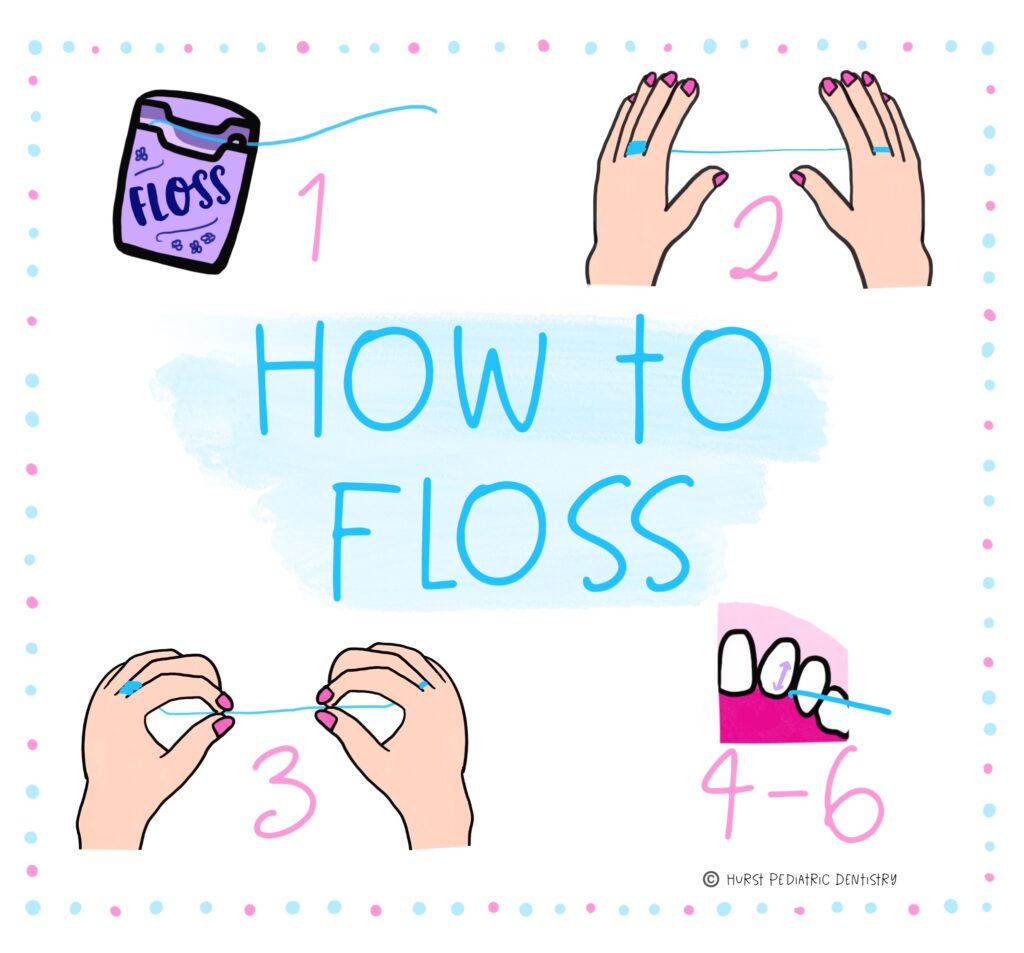
- Get a good length: Pull about 18 inches (45 cm) of floss. Wrap most of it around your middle fingers. Leave about 1-2 inches (2.5-5 cm) in between to work with.
- Hold it tight: Use your index fingers and thumbs to hold the floss firmly. Keep about half an inch (1 cm) of floss between your fingers.
- Guide it gently: Carefully guide the floss between two teeth. Use a gentle “seesaw” motion. This means moving it side-to-side slightly. Do not snap it down. This can hurt the gums.
- Make a “C” shape: Once the floss is between the teeth, curve it into a “C” shape against one tooth. Slide it gently up and down. Go just under the gum line. Do this 2-3 times.
- Clean the next tooth: Curve the floss into a “C” shape against the other tooth. Slide it up and down. Again, go just under the gum line 2-3 times.
- Move to a clean section: Pull the floss out. Unwind a fresh section from your fingers for the next gap. Use a clean part of the floss for each new space. This stops germs from spreading.
- Repeat: Do this for all teeth that touch. Pay special attention to back teeth. They are often harder to reach.
If using a floss pick:
- Hold the pick: Hold the handle of the floss pick firmly.
- Guide it gently: Gently guide the floss on the pick between two teeth. Use a soft “seesaw” motion to get it past the contact point. Do not force it.
- Slide and clean: Once it is between the teeth, gently slide the floss up and down against one tooth. Go just under the gum line. Do this 2-3 times.
- Clean the next tooth: Move the pick to clean the side of the other tooth in the same space. Slide it up and down 2-3 times.
- Remove and repeat: Pull the floss pick out. Move to the next space where teeth touch.
Important Tips for the Technique:
- Be gentle: Toddler gums are soft. Hard pressure can cause pain or bleeding.
- Focus on one tooth at a time: It is about quality, not speed.
- Do not rush: Take your time. A calm approach helps your child stay calm.
- Look for signs: If you see any bleeding, it often means the gums are inflamed. This is usually due to plaque buildup. Keep flossing gently. The bleeding should stop after a few days of regular flossing. If it continues, talk to your dentist.
- Make it part of the routine: Floss at the same time each day. Maybe after dinner, before bed. This helps it become a habit. Consistency is key for good kids oral care routine.
Beyond the Basics: Dental Tips for Toddlers
Flossing is one piece of the puzzle. A full kids oral care routine includes more. Good dental tips for toddlers cover brushing, diet, and regular dental visits. All these work together to keep primary teeth care excellent.
Brushing Best Practices
Brushing is the main way to clean teeth.
* Use a tiny brush: Get a soft-bristled toothbrush for toddlers. Its head should fit their small mouth.
* Use fluoride toothpaste: A smear (like a grain of rice) of fluoride toothpaste is fine for kids under three. For kids ages three to six, use a pea-sized amount. Fluoride helps make teeth strong.
* Brush twice a day: Brush for two minutes, morning and night.
* Help them: Most toddlers do not have the skill to brush well on their own. You need to do most of the brushing. Let them try. But then, you finish the job.
* Brush all surfaces: Brush the outside, inside, and chewing surfaces of all teeth.
* Make it fun: Play a song for two minutes. Use a fun timer. Let them pick their brush.
Smart Snacking and Drinks
What your child eats and drinks matters a lot for their teeth.
* Limit sugar: Sugary foods and drinks feed the bad germs in the mouth. This leads to cavities. Offer these less often.
* Choose healthy snacks: Give fruits, veggies, cheese, and plain yogurt. These are good for teeth.
* Water is best: Offer water between meals. Limit juice and sugary drinks. Even milk and juice can cause problems if a child sips them all day.
* No bedtime bottles (with milk/juice): Do not let your child go to sleep with a bottle of milk, formula, or juice. The sugars sit on their teeth all night. This can cause severe cavities, called “baby bottle tooth decay.” Offer only water in a bottle for bedtime.
First Dental Visit and Regular Check-ups
- First visit by age one: The American Academy of Pediatric Dentistry suggests a child’s first dental visit by their first birthday. Or, within six months of their first tooth coming in. This early visit helps the dentist check for any problems. It also lets your child get used to the dental office.
- Regular check-ups: After the first visit, follow your dentist’s advice for how often to come back. Usually, this is every six months. Regular visits are crucial for preventing toddler cavities. The dentist can spot small problems before they become big ones. They can also offer fluoride treatments or sealants if needed. These help protect teeth even more.
Building a full kids oral care routine is about all these parts working together. Flossing, brushing, healthy eating, and dental visits create a strong defense for your child’s teeth.
Making Flossing Fun: Strategies for Success
Getting a toddler to cooperate can be hard. Flossing is no different. But with patience and creativity, you can turn it into a positive experience. The goal is making flossing fun for toddlers.
Play and Pretend
- Floss a toy: Let your child floss a toy animal’s teeth. Use a big toy with big teeth. This helps them see what you are doing. It also lets them feel in control.
- Sing a song: Make up a silly song about flossing. Or sing a known song for the time it takes to floss.
- Tell a story: Create a short story about the “sugar bugs” hiding between teeth. Tell how the floss “sweeps them away.”
- Use a mirror: Let your child watch you floss their teeth in a mirror. They might be curious and interested.
- Make it a game: “Let’s find all the food pieces hiding in your teeth!” Or “Let’s make your teeth extra slippery and shiny!”
Rewards and Praise
- Praise effort: Give lots of praise. “You are doing great!” “What a brave flosser!” “Your teeth look so clean!” Focus on their cooperation, not just perfection.
- Sticker charts: Use a sticker chart. Each time they floss, they get a sticker. After a few stickers, they get a small reward. This could be extra story time, a small toy, or choosing a movie.
- Positive reinforcement: Never make flossing a punishment. Always keep it positive. If they fight it, take a break and try again later.
Patience and Persistence
- Small steps: Do not try to floss all teeth at once at first. Start with just a few teeth. Add more each day.
- Be consistent: Do it at the same time each day. This helps it become a natural part of their routine. Toddlers thrive on routine.
- Stay calm: If your child cries or fights, stay calm. A stressed parent can make the child more stressed. Take a breath. Try again.
- Let them help (a little): Let them hold the floss pick. Let them try to put it in their mouth. Then, you take over to do the actual cleaning. This gives them a sense of control.
- Model good behavior: Let your child see you floss your own teeth. Children learn by watching.
Making it a Routine
- Pair it with brushing: Flossing always comes before brushing. Or right after brushing. Pick a set time.
- Part of bedtime: Many families find flossing before bed works well. It is part of the “getting ready for sleep” routine.
- Keep it short: For toddlers, short and sweet is best. Aim for quick, effective flossing. As they grow, you can take more time.
Remember, the goal of making flossing fun for toddlers is to build a lifelong healthy habit. It might take time, but it is worth the effort for their toddler dental hygiene.
Overcoming Challenges
Even with the best tools and fun ideas, flossing a toddler’s teeth can sometimes be a struggle. It is normal to face resistance. But do not give up! Your role in their kids oral care routine is vital.
Dealing with Resistance
- Choose your battles: If your child is very tired or upset, it might not be the best time to floss. Try again later. Pick a time when they are well-rested and happy.
- Stay firm but gentle: Children need boundaries. Explain that flossing is part of staying healthy. Be firm that it needs to be done. But do it with a soft voice and gentle hands.
- Offer choices (limited): “Do you want to floss now or in two minutes?” “Do you want to use the blue flosser or the green one?” Giving small choices can make them feel more in control.
- Distraction: Use a favorite song, a funny face, or a quick story to distract them while you floss.
- Keep talking: Explain what you are doing. “I am just getting those tiny food bits out.” “We are making your teeth super clean!”
Tears and Tantrums
- Acknowledge feelings: “I know you do not like this. It is okay to feel that way.” Validate their feelings. Then, gently continue.
- Short and quick: If they are truly upset, do it as fast and gently as possible. Get it done. Then give hugs and comfort.
- Do not give up: Giving up means they learn that throwing a tantrum works. Consistency is key. They will eventually learn that flossing is not an option, but a part of daily life.
When to Seek Help
- Ongoing bleeding: If your child’s gums bleed a lot and often, even after a week or two of regular, gentle flossing, talk to your dentist.
- Signs of pain: If your child complains of tooth pain, avoid certain foods, or shows signs of sensitivity, see a dentist right away.
- Major resistance: If you are truly struggling every single time, and it feels like a battle you cannot win, ask your pediatric dentist for advice. They have many dental tips for toddlers. They can share tricks or show you how to best position your child. They might even have special tools.
- Visible problems: If you see brown spots, white spots, or holes on your child’s teeth, these could be signs of cavities. Get them checked quickly. Early detection of issues is a key part of preventing toddler cavities.
Remember, every child is different. What works for one might not work for another. Be patient with yourself and your child. You are building healthy habits that will last a lifetime. This good toddler dental hygiene protects their primary teeth care and child gum health.
Frequently Asked Questions (FAQ)
Q1: How often should I floss my toddler’s teeth?
A1: You should floss your toddler’s teeth at least once a day. Most dentists recommend doing it before bed. This removes food and plaque that built up during the day.
Q2: My toddler cries every time I try to floss. What should I do?
A2: It is common for toddlers to cry. Stay calm and gentle. Try making it fun with songs or stories. Offer small rewards like stickers. If the crying is very bad, do it quickly and then give lots of comfort. Do not give up, as consistency teaches them it is part of the routine.
Q3: Is a water flosser good enough for a toddler?
A3: A water flosser can be a good addition to the kids oral care routine. It is gentle and can be fun. But it might not remove sticky plaque as well as string floss or a floss pick. It is best used with string floss or floss picks, not as a replacement. It helps flush out loose food bits.
Q4: My toddler’s gums bleed when I floss. Is this normal?
A4: A little bleeding at first can be normal. It often means there is some inflammation due to plaque buildup. Keep flossing gently every day. The bleeding should stop within a week or two as the gums get healthier. If it keeps bleeding a lot, or if you are worried, talk to your dentist.
Q5: What if my toddler swallows toothpaste or floss?
A5: A tiny bit of fluoride toothpaste (rice grain size) is okay. If your child swallows a pea-sized amount, it is usually fine. If they swallow a lot, call your doctor or poison control. For floss, try to keep it out of reach. If they swallow a small piece, it usually passes without issue. But try to prevent it.
Q6: Can toddlers get cavities in their baby teeth?
A6: Yes, toddlers can absolutely get cavities in their baby teeth. In fact, early childhood cavities are a common problem. That is why preventing toddler cavities with good toddler dental hygiene (brushing, flossing, diet) is so important.
Q7: At what age can my child start flossing their own teeth?
A7: Most children do not have the hand skills to floss well on their own until around age 8 to 10. Until then, you need to do it for them. You can let them try to help with a floss pick around age 4 or 5. But you still need to finish the job for them.
Q8: What kind of floss pick is best for toddlers?
A8: Look for floss picks that are designed for kids. They often have smaller floss heads and child-friendly handles. Many have fun shapes or colors, which helps with making flossing fun for toddlers. Some brands make flossers specifically for small mouths.
Q9: How important is flossing compared to brushing for toddlers?
A9: Both flossing and brushing are very important for kids oral care routine. Brushing cleans the main surfaces of the teeth. Flossing cleans between the teeth, where brush bristles cannot reach. These areas are where many cavities start. So, both are vital for good primary teeth care and child gum health.
Conclusion
Flossing your toddler’s teeth is a big part of keeping their smiles healthy. It helps prevent toddler cavities and keeps their child gum health strong. Remember to start flossing as soon as two teeth touch. Choose the best floss for kids, like child-friendly floss picks. Learn the gentle flossing baby teeth technique. Make flossing part of their daily kids oral care routine. You can make it fun for toddlers with games and praise. It may take some time and patience. But building these good toddler dental hygiene habits now will help them have healthy teeth for their whole lives. Your effort today is a gift for their healthy smile tomorrow.