
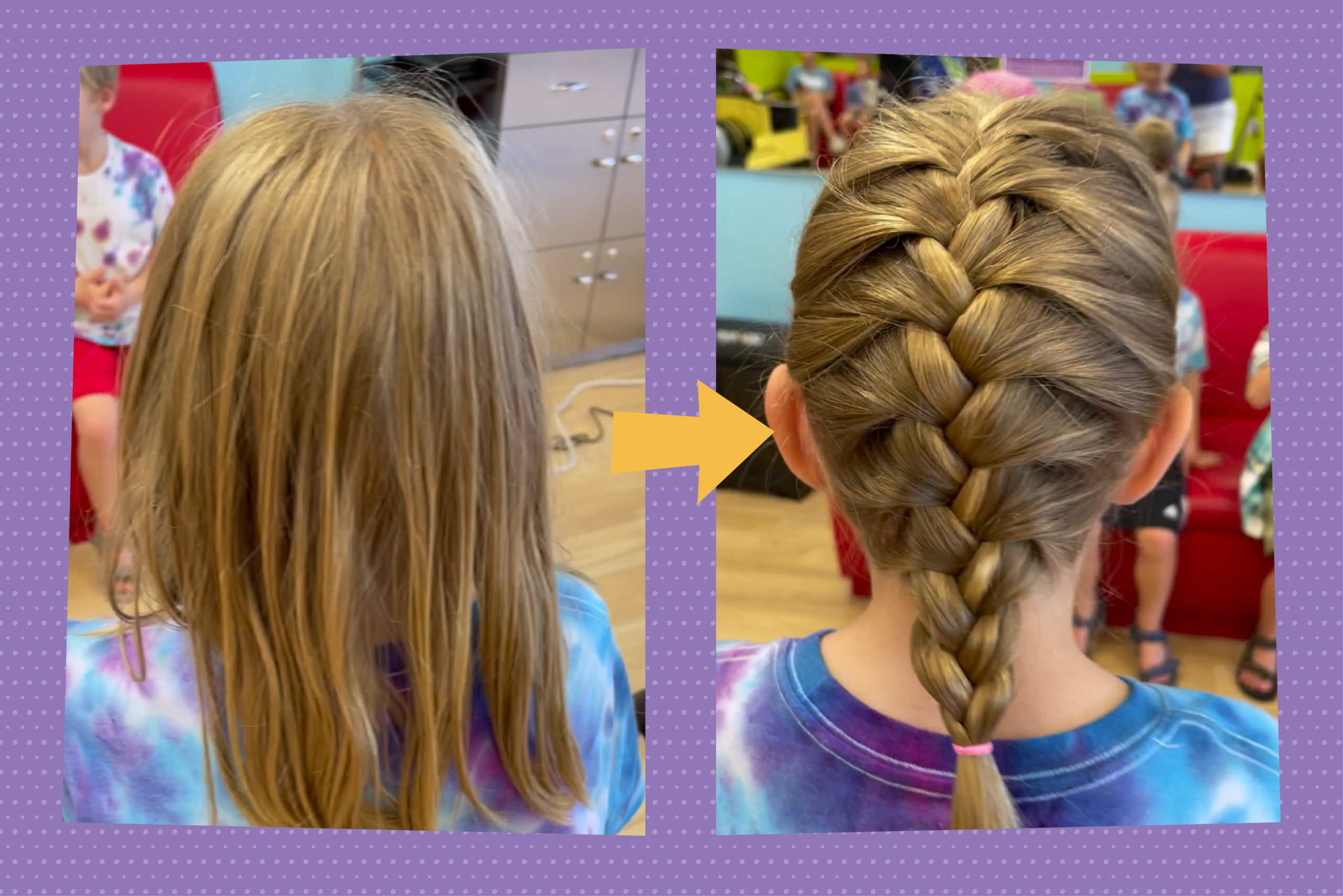
Image Source: pigtailsandcrewcuts.com
A Guide: How To French Braid Toddler Hair With Ease
How to French braid toddler hair? How to keep toddler hair still for braiding? French braiding toddler hair can be easy. It just takes patience and the right steps. This guide will show you how to braid small hair. We will also share tips to keep your child happy. You will learn gentle ways to braid. This helps make braiding fun for everyone. We will cover the steps. We will talk about tools you need. You will also get advice for fine hair. This post is a full French braid tutorial for beginners.
Preparing for a Smooth Braid Time
Getting ready makes braiding easier. Toddlers can be squirmy. So, be prepared before you start. This saves time and stress. A calm start helps your child stay still.
Gathering Your Braiding Tools
Having everything nearby is key. Go find your tools first. Put them where you can reach them. This stops you from running around.
- A good brush or comb: Choose one that glides through hair. A soft brush is best for tangles. Look for wide-tooth combs too.
- Spray bottle with water: A little water helps control flyaways. It also makes hair easier to grip. Use it sparingly.
- Hair clips or elastics: Small clips hold hair out of the way. Clear elastics are good for finishing braids. Use soft ones.
- Hair product (optional): A light styling cream can help. It smooths hair. It adds a little hold too. We will talk more about the best products for toddler hair braiding later.
- A comfortable chair: Your child needs to sit still. A booster seat can help. Make sure they are safe.
- Distraction items: Toys, books, or a tablet can help. These keep little hands busy. This helps you work.
Getting Your Child Ready
A happy child makes braiding easier. Think about their mood. Try to braid when they are rested. Do it after a nap. Or after breakfast.
- Talk to them: Explain what you are doing. Say, “We are going to make pretty braids!” Use happy words.
- Choose the right time: Avoid braiding when they are hungry. Do not braid when they are tired. A good mood means less wiggling.
- Make it fun: Put on their favorite show. Play a song. Sing with them. Make it a game.
- Let them help: Give them a comb. Let them “style” a doll’s hair. This makes them feel involved.
- Be patient: Some days are harder than others. It is okay if it does not work out. Try again later.
Grasping the French Braid Basics
A French braid looks fancy. But it is just three strands. You add more hair as you go. This makes it stay close to the head. It is an easy french braid for kids once you get the hang of it. This is your French braid tutorial for beginners.
The Three-Strand Braid Refresher
First, know how to do a simple braid. This is the base of a French braid.
- Divide hair: Take a small section of hair. Divide it into three equal parts. Call them left, middle, and right.
- Cross over: Take the right strand. Cross it over the middle strand. Now, the right strand is in the middle.
- Cross over again: Take the left strand. Cross it over the new middle strand. Now, the left strand is in the middle.
- Repeat: Keep crossing the outside strands over the middle. Do this until you run out of hair.
- Secure: Tie the end with an elastic.
This is the basic movement. You will use it many times.
Step-by-Step French Braiding for Toddlers
Now, let’s do a French braid. This method is gentle hair braiding techniques for toddlers. It helps keep them comfortable.
- Start at the top: Take a small section of hair. Start at the top of their head. Right above their forehead.
- Divide into three: Split this section into three equal parts. Just like the basic braid. Left, middle, right.
- First cross: Cross the right strand over the middle one. Then, cross the left strand over the new middle one. You have done one regular braid stitch.
- Add hair from the right: Now, before you cross the right strand again, pick up a small new section of hair from the right side of their head. Add this new hair to your original right strand. Combine them.
- Cross right and added hair: Take this bigger right strand (original + new hair). Cross it over the middle strand.
- Add hair from the left: Before you cross the left strand, pick up a small new section of hair from the left side of their head. Add this new hair to your original left strand. Combine them.
- Cross left and added hair: Take this bigger left strand (original + new hair). Cross it over the middle strand.
- Keep going: Repeat steps 4 through 7. Each time you cross an outside strand over the middle, pick up more hair from that side. Add it to the strand before crossing.
- Work your way down: Keep adding hair until you reach the nape of the neck. Or until you run out of hair to add.
- Finish with a regular braid: Once all hair is added, finish with a regular three-strand braid. Braid to the end of the hair.
- Secure the braid: Use a soft elastic to tie off the end.
Practice makes perfect. Do not worry if it is not perfect the first time. Your child will still look cute.
Braiding Fine Toddler Hair
Braiding fine toddler hair can be tricky. It slips out easily. It also looks thin. But you can still do a French braid. These toddler hair braiding tips help fine hair.
Tips for Fine Hair
- Use water or product: A light mist of water helps. A tiny bit of hair cream or mousse helps too. This gives hair more grip. It also stops flyaways.
- Small sections: Take smaller sections of hair. Especially when you start. Also, when you add new hair. Big sections will slip out.
- Keep tension: Hold the hair firmly. Do not pull too tight. But keep a steady grip. This stops the braid from loosening.
- Braid tightly: Braid closer to the scalp. This makes the braid more secure. It also looks fuller.
- Bobby pins: Use small bobby pins. Pin any loose bits. Match the pin color to their hair.
- Texture spray: A very light texture spray can help. It adds grip to slippery hair. Use it sparingly.
- Clean hair vs. second-day hair: Sometimes, hair that is not freshly washed holds better. It has a bit more grip. Try braiding on second-day hair.
Keeping Toddler Hair Still for Braiding
“How to keep toddler hair still for braiding?” This is a big question. It is often the hardest part. Here are some key toddler hair braiding tips.
Making Braiding Time Calm
- Distraction is key: Offer a favorite toy. Let them watch a short cartoon. Give them a special book. Anything that keeps their hands busy.
- Snack power: A small snack can work wonders. Puffs, fruit, or crackers. Keep them occupied.
- Sit in a high chair or booster: This limits movement. It also puts their head at a good height.
- Do it from behind: Stand or sit behind your child. This helps them not see your hands. It makes them less likely to bat them away.
- Quick sessions: Do not try to do a long, complex braid. Keep it short. A simple braid is fine. Build up to longer styles.
- Give breaks: If they get fussy, take a break. Let them play for a bit. Then try again.
- Make it a game: “Let’s see how fast we can make your hair pretty!” Use timers. Make it fun.
- Praise them: “You are doing so well!” “Thank you for sitting still!” Positive words work wonders.
- Braid when they are sleepy: Sometimes, a sleepy child is a calm child. Try a braid before bedtime.
Gentle Hair Braiding Techniques for Toddlers
Being gentle is very important. Toddlers have sensitive scalps. Pulling hurts. It can make them hate braiding.
- Detangle first: Always brush out tangles slowly. Use a wide-tooth comb. Start at the ends. Work your way up.
- Use a spray bottle: Mist hair lightly with water. This helps remove static. It also makes hair smoother.
- Avoid pulling: Do not pull their hair tight. Keep a light grip. But do not let it be too loose. Find a good balance.
- Smooth sections: Use your fingers to smooth each section. Before you braid it. This keeps it neat.
- Comfortable elastics: Use soft hair ties. Avoid rubber bands. They can break hair.
- Take your time: Do not rush. Rushing leads to pulling. It also makes the braid messy.
- Check in: Ask, “Does this feel okay?” Pay attention to their reactions. If they flinch, stop.
French Braid Pigtails Toddler Style
French braid pigtails toddler style is a classic. It is cute and keeps hair out of their face. It is also good for practice. You work on one side at a time.
Steps for French Braid Pigtails
- Part the hair: Use a comb. Make a clean part down the middle of their head. Go from the forehead to the nape of the neck.
- Clip one side: Take one half of the hair. Clip it out of the way. This keeps it separate.
- Start one braid: On the unclipped side, take a small section of hair. Start at the top. Near the part. Divide it into three strands.
- French braid down: Begin French braiding this section. Add hair from the top of the head. Add hair from the side. Keep adding hair as you go down.
- Braid to the end: Once you reach the nape of the neck, finish with a regular three-strand braid. Braid all the way to the end.
- Secure the first pigtail: Tie off the end with a soft elastic.
- Release the other side: Unclip the second half of the hair.
- Repeat on the second side: Do the exact same steps on the other side. Try to make it match the first braid.
- Adjust if needed: Check if both braids are even. Pull gently on loops to loosen them. Or tighten if needed.
French braid pigtails are great. They stay in well. They look neat all day.
Best Products for Toddler Hair Braiding
Using the right products helps. They make hair easier to manage. They also help the braid last longer. Here is a table of best products for toddler hair braiding.
| Product Type | Purpose | Tips for Toddlers |
|---|---|---|
| Detangling Spray | Removes tangles, adds slip | Look for tear-free formulas. Use a light mist. |
| Leave-in Conditioner | Adds moisture, makes hair soft, reduces frizz | Use a pea-sized amount. Focus on ends. |
| Hair Balm/Cream | Smooths flyaways, adds light hold | Use a tiny amount. Warm in hands first. |
| Mousse (light hold) | Adds texture, helps hold braids | Use a very small dollop. Light hold only. |
| Soft Hair Elastics | Secures braids, prevents damage | Use fabric-covered ties. Avoid rubber bands. |
| Boar Bristle Brush | Distributes natural oils, smooths hair | Gentle on scalp. Good for fine hair. |
| Wide-Tooth Comb | Detangles wet or dry hair gently | Best for first detangling. Avoid pulling. |
| Water Spray Bottle | Dampens hair for better control | Mist hair lightly. Do not soak it. |
Always choose products made for kids. Look for gentle ingredients. Avoid harsh chemicals.
Dutch Braid vs French Braid Toddler Hair
You might hear about Dutch braids. How are they different from French braids? Which one is better for toddler hair?
French Braid vs. Dutch Braid
Both braids add hair as you go. The main difference is how you cross the strands.
| Feature | French Braid | Dutch Braid |
|---|---|---|
| Look | Braid sits into the hair. Looks sleek. | Braid sits on top of the hair. Looks raised. |
| Technique | Cross outside strands over the middle strand. | Cross outside strands under the middle strand. |
| Ease for kids | Often easier to learn first. | Can be a bit trickier to master at first. |
| Volume | Flatter, more classic look. | Appears fuller, more defined. |
Which to Choose for Toddlers?
For toddlers, the French braid is often easier. It is a good starting point. The motions are simpler to get used to. Once you are good at French braiding, try a Dutch braid. It uses the same idea. But the “under” motion feels different. Both styles are great toddler hair styles with braids.
More Toddler Hair Styles with Braids
French braids are wonderful. But there are other easy braids for kids too. Expanding your skills gives you more options.
Simple and Sweet Braids
- Classic Three-Strand Braid: The simplest braid. Great for ends of French braids. Or just a single braid.
- Ponytail Braid: Put hair in a ponytail first. Then braid the ponytail. This keeps hair very neat.
- Half-Up Braids: Take two small sections from the front. Braid them. Bring them together at the back of the head. Tie them there.
- Fishtail Braid (older toddlers): This uses two sections instead of three. You take small strands from the outside. You cross them over to the inside. It looks like a fishbone. It is harder for very young toddlers.
- Bubble Braids: Not a true braid. You make small ponytails. Then you add more elastics down the length. This makes “bubbles.” It is very cute and easy.
- Twist Braids: Take two sections of hair. Twist them around each other. This is faster than a true braid.
Toddler Hair Braiding Tips for All Styles
- Start simple: Do not try complex styles right away. Master the basics first.
- Use visual aids: Show them pictures of other kids with braids. Or let them choose a style.
- Practice on a doll: If you are new to braiding, practice on a doll. Or a friend’s hair. This helps you get better.
- Check for comfort: Always check that the braid is not too tight. Make sure it does not pull on their scalp.
- Nighttime care: Braid hair loosely for sleeping. This prevents tangles. It also protects the braid.
- Take down carefully: When removing braids, be gentle. Use a detangling spray. Start from the bottom. Work your way up. Do not rip the elastics out. Cut them carefully if needed.
Conclusion
French braiding toddler hair does not have to be hard. With practice, it becomes easy. Remember to be patient. Use gentle hair braiding techniques for toddlers. Distract your child. Use the right tools and products. Soon, you will be making beautiful braids. Your child will love their new hairstyles. And you will feel like a pro. Keep trying, and have fun with it!
Frequently Asked Questions (FAQ)
H4. What is the best age to start French braiding a toddler’s hair?
You can start French braiding at any age. It depends on hair length. It also depends on your child’s patience. Some parents start at 18 months. Others wait until 3 or 4 years old. The child needs enough hair to hold a braid.
H4. How long does a French braid typically last on a toddler?
A French braid can last one to two days. It depends on their activity. It also depends on hair type. Fine hair might loosen faster. Sleeping can make it messy. A loose braid for sleep can help.
H4. Can I French braid wet hair?
Yes, you can French braid wet hair. It often helps control tangles. It also makes hair smoother. But do not braid hair that is soaking wet. It can be hard to dry inside the braid. This can lead to frizz. Lightly damp hair is best.
H4. How do I prevent frizz when French braiding toddler hair?
To prevent frizz, use a detangling spray. Or a leave-in conditioner. Braid when hair is damp. Use a light hair balm. Smooth each section before braiding. Use a soft brush. Keep your hands slightly damp.
H4. What if my toddler cries or gets upset during braiding?
Stop right away. Do not force them. Take a break. Offer a distraction. Try again later. Or try a simpler style. Make braiding a positive thing. Never a punishment.