
Image Source: lookaside.fbsbx.com
Early Steps: How To Help Your Toddler Talk & Communicate
Many parents ask, “When should I worry if my toddler is not talking?” Generally, if your toddler is not saying single words by 15 months, or not putting two words together by 24 months, it is a good idea to talk to your child’s doctor. Early communication is a big step in a child’s life. It helps them share feelings, ask for things, and learn about the world. This guide will show you simple ways to help your little one find their voice. We will explore how toddlers learn to speak. We will also share fun activities and helpful tips. These ideas can make talking and connecting easier for your child.
I. Deciphering Toddler Talk: The Journey of Language
Watching your toddler learn to talk is exciting. Each new sound, word, or sentence is a big win. Knowing what to expect helps you support them best.
A. Grasping Toddler Speech Development Stages
Children learn to talk in steps. Each step builds on the last. Here are the typical stages of how toddlers learn to speak:
- Birth to 3 Months:
- Babies make cooing sounds.
- They cry to show needs.
- They smile when you talk to them.
- They quiet down or smile when they hear your voice.
- 4 to 6 Months:
- Babies babble with sounds like “ba,” “ma,” “ga.”
- They laugh and squeal.
- They look at you when you talk.
- They make sounds to show joy or upset.
- 7 to 12 Months:
- Babbling sounds more like speech. It has long and short sounds.
- Babies use many different sounds.
- They may say “mama” or “dada” for parents.
- They wave goodbye.
- They shake their head “no.”
- They look at common objects when you name them.
- They may say their first real word.
- 12 to 18 Months:
- Toddlers say single words. They may say 1 to 3 words.
- They point to things they want.
- They follow simple requests like “come here.”
- They use gestures like pointing.
- Their vocabulary grows slowly.
- 18 to 24 Months:
- Vocabulary grows fast. They may know 50 words or more.
- They start to put two words together. For example, “more milk” or “bye-bye car.”
- They ask simple questions like “What’s that?”
- They point to body parts.
- They follow two-step directions.
- 24 to 36 Months (2 to 3 Years):
- They say sentences with 3 to 4 words.
- They use pronouns like “me,” “you,” “my.”
- They say their name and age.
- They understand simple stories.
- Their speech is clearer. Others can mostly understand them.
Remember, every child is different. They learn at their own speed. These stages are guides. They show what most children do. If your child is a bit behind, it’s often fine. But it is good to know what to watch for.
B. Key Language Milestones for a 2-Year-Old
When your child turns two, their language skills really take off. These are key language milestones 2 year old children often reach:
- Words: They should use at least 50 single words.
- Two-Word Phrases: They start to combine two words. These phrases are like “big dog” or “drink water.”
- Following Directions: They can follow two-step directions. For example, “Get your ball and give it to me.”
- Naming Things: They can name many common objects and pictures. They can also name family members.
- Asking Questions: They start to ask simple “what” and “where” questions. For example, “What’s that?” or “Where teddy?”
- Using Actions: They use gestures with words. They may point and say “that.”
- Self-Talk: They talk to themselves while playing. This is how they practice language.
If your 2-year-old is not meeting most of these milestones, it might be helpful to speak with their doctor. Early checks can make a big difference.
II. Simple Steps to Boost Toddler Communication
You are your child’s first and best teacher. There are many easy things you can do each day to help them talk more. These tips are fun and fit right into your daily routine.
A. Activities to Encourage Talking
Making talking fun helps children learn. Here are great activities to encourage talking:
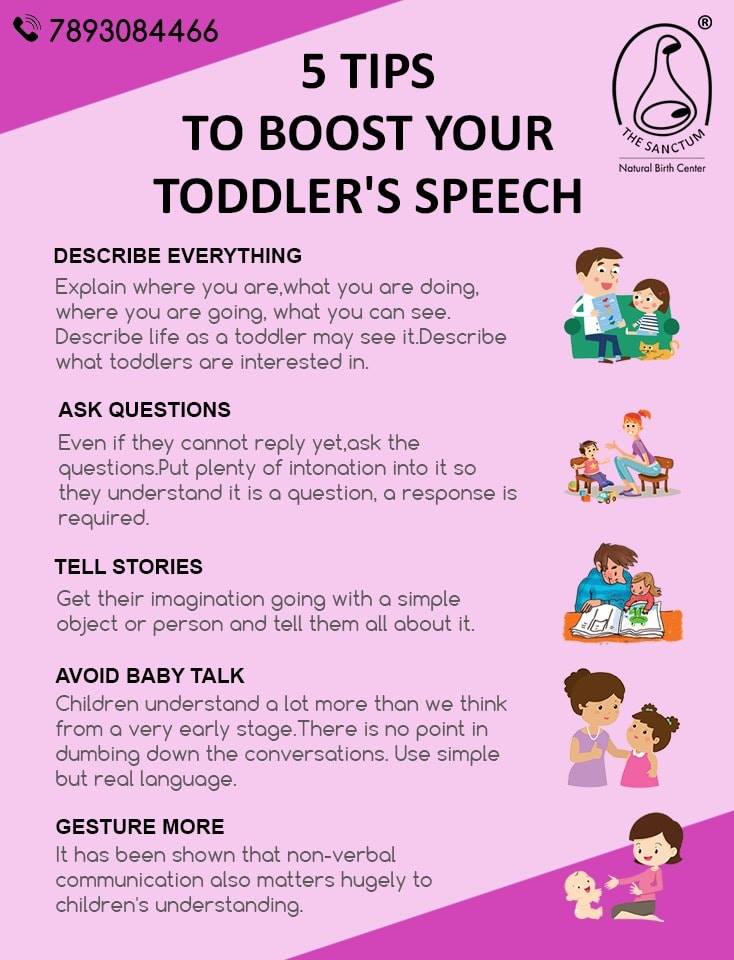
- Talk, Talk, Talk: Narrate everything you do. “Mommy is cutting the apple. See, red apple!” “Now we are putting on your shoes. One shoe, two shoes.” Describe what you see, hear, and feel. This fills their world with words.
- Respond to Their Sounds: When your baby babbles or makes a sound, answer them. Say, “Oh, you said ‘ba-ba’? Are you talking about your bottle?” This teaches them that their sounds mean something. It also shows them that talking is a two-way street.
- Use Gestures and Signs: Pair words with actions. Wave “bye-bye.” Point to a “dog.” You can also teach simple baby signs. Words like “more,” “eat,” “milk” can be shown with hand gestures. This helps them communicate before they can speak words. It can also ease frustration.
- Sing Songs and Nursery Rhymes: Music is a wonderful way to learn words. Sing simple songs like “Twinkle, Twinkle Little Star” or “Old MacDonald.” The rhythm and repetition help children remember words and sounds. Action songs, like “If You’re Happy and You Know It,” are even better. They link words to movement.
- Play “I Spy”: Use simple versions. “I spy something red!” Then point to a red toy. This helps them link words to objects.
- Sound Play: Make animal sounds, car sounds, or funny noises together. “Moo,” “Woof-woof,” “Vroom,” “Choo-choo.” This helps them practice making different sounds.
B. Ways to Improve Toddler Communication
Good communication is more than just talking. It’s about listening and taking turns. Here are effective ways to improve toddler communication:
- Model Clear Speech: Speak clearly and slowly. Use simple sentences. Avoid baby talk. Your child learns to talk by listening to you.
- Expand on Their Words: When your toddler says a single word, add to it. If they say “car,” you say, “Yes, that’s a big red car!” If they say “juice,” you say, “You want more apple juice?” This shows them how to build longer sentences. It also teaches them new words.
- Ask Open-Ended Questions: Instead of “Do you want milk?” (a yes/no answer), ask “What would you like to drink?” or “Tell me about your day at the park.” This encourages them to use more words. It helps them think more.
- Give Choices: Instead of telling them what to do, offer two choices. “Do you want the blue shirt or the red shirt?” “Do you want an apple or a banana?” This helps them use words to tell you what they want. It gives them a sense of control.
- Wait for Them to Talk: Give your child time to answer. Don’t jump in too fast. Sometimes, they need a moment to think and form their words. If they point, wait. See if they try to say the word first.
- Follow Their Lead: Talk about what your child is interested in. If they are looking at a toy truck, talk about the truck. “Wow, look at that truck! It’s big. It has wheels. Vroom, vroom!” When you talk about their interests, they are more likely to listen and engage.
C. Building Vocabulary for Toddlers
A large vocabulary helps children talk and understand more. Here’s how to boost vocabulary building for toddlers:
- Label Everything: Point to objects and say their names. “Ball,” “cup,” “shoe,” “tree.” Do this often throughout the day.
- Use Descriptive Words: Instead of just “ball,” say “bouncy ball,” “red ball,” “big ball.” Use words that describe size, color, shape, and feel. “Soft blanket,” “cold milk,” “round cookie.”
- Repeat New Words: Children learn through repetition. Say new words often. Use them in different sentences. “Look, a duck! The duck is swimming. Can you see the duck?”
- Talk About Actions: Use action words (verbs). “Jump,” “run,” “eat,” “sleep,” “play.” “Let’s jump up and down!” “The dog is running fast.”
- Connect Words to Real Life: When you read about an animal, show them a picture of the real animal. If you talk about a car, point to a car outside. This helps them link words to the world around them.
- Picture Books: Use picture books to point out and name objects. Ask “What’s this?” and wait for them to answer. Then say the word clearly.
III. The Power of Play and Books
Play and reading are not just fun. They are powerful tools for language learning. Children learn best when they are having a good time.
A. Reading Tips for Toddler Language Growth
Reading together is one of the best ways to help your child talk. Here are great reading tips for toddler language:
- Make Reading Fun: Choose books with bright pictures and simple stories. Let your child pick the book. Read with energy and different voices for characters.
- Point and Name Things: As you read, point to the pictures and say their names. “Look, a dog!” “Here’s a car!” Ask, “Where’s the cat?”
- Ask Simple Questions: Instead of just reading, ask questions about the book. “What color is the apple?” “What sound does the cow make?” “What do you think will happen next?”
- Let Them Turn Pages: This gives them control and makes them feel part of the story. It also helps with fine motor skills.
- Talk About the Pictures: Even if your child cannot say the words, talk about what is happening in the pictures. “Oh, look, the bunny is hopping!”
- Read Often: Read every day, even for just a few minutes. Make it a calm, happy time. This builds a love for books and words.
- Repeat Favorite Books: Children love hearing the same stories again and again. Repetition helps them learn new words and phrases. They start to memorize parts of the story.
B. Play-Based Learning for Speech Development
Play is a child’s work. It is how they explore, learn, and grow. Play-based learning for speech is very effective.
- Role-Playing Games: Pretend play is great for language. Play “house,” “store,” or “doctor.” Give your child a role and talk through the actions. “You are the doctor. What will you do now?” “I am the customer. Can I buy some apples?”
- Sensory Play: Use sand, water, playdough, or rice bins. Talk about what you are doing and feeling. “This sand is soft.” “The water is cold.” “Let’s squeeze the playdough.” This gives you many words to use.
- Imaginative Play: Provide open-ended toys like blocks, dolls, or animal figures. Let your child lead the play. Narrate what they are doing. “The bear is sleeping. Shhh!” “Oh, the car is going fast!”
- Simple Games: Play games like “peek-a-boo,” “pat-a-cake,” or “fetch the ball.” These games often have sounds or words tied to actions. They teach turn-taking, which is key for conversations.
- Building Together: Build a tower with blocks. Talk about the blocks. “Big block,” “small block,” “red block.” Count them as you stack. “One, two, three blocks!”
- Outdoor Play: Point out things you see outside. “Look, a bird!” “Do you hear the wind?” “Let’s find a big leaf.” Nature offers endless new words.
IV. Parenting Strategies for Fluent Little Talkers
Creating a supportive home is key. Your daily interactions shape your child’s language journey.
A. Effective Parenting Strategies for Toddler Language
Your actions as a parent greatly impact your child’s speech growth. These parenting strategies for toddler language can make a big difference:
- Create a Language-Rich Home: Make talking a natural part of every day. Talk during meals, bath time, and car rides. Have conversations with family members. Let your child hear many words.
- Reduce Screen Time: Too much screen time can slow down language growth. Children learn best from real-life interactions. Limit TV, tablets, and phones. The American Academy of Pediatrics suggests no screen time for children under 18-24 months, except for video-chatting with family. For 2-5 year olds, limit to 1 hour per day of high-quality programs.
- Be Patient and Supportive: Learning to talk takes time. Your child will make mistakes. They may stutter or use wrong words. Be patient. Give them praise for trying. “Good job trying to say that word!” Focus on their effort, not just perfection.
- Get Down to Their Level: When you talk to your child, get on your knees. Look at them. This helps them see your mouth movements. It also shows them you are fully focused on them.
- Follow Your Child’s Interests: If your child is looking at a truck, talk about the truck. If they are pointing to a bird, talk about the bird. When you talk about what interests them, they are more likely to pay attention and learn.
- Celebrate Small Wins: Every new sound, word, or attempt to talk is a big step. Cheer them on! “Yay, you said ‘ball’!” This makes them feel good and want to try more.
- Set Aside Special Time: Even 15-20 minutes a day of focused playtime can boost language. Put away distractions. Just play and talk with your child.
V. Recognizing Challenges: When to Seek Help
Most children learn to talk on their own time. But sometimes, a child might need extra help. Knowing the signs of speech delay is important. Early help can make a big difference.
A. Signs of Speech Delay to Watch For
It’s natural to compare your child to others. But it is more helpful to know the typical toddler speech development stages and look for specific signs of speech delay.
| Age Range | Potential Signs of Speech Delay |
|---|---|
| 12-15 Months | • Does not babble (“mamama,” “bababa”). • Does not point to show needs or wants. • Does not respond to their name. • Does not use gestures like waving or shaking head “no.” |
| 16-18 Months | • Does not use any single words. • Does not point to body parts when asked. • Does not try to imitate sounds or words. • Loses language skills they once had. |
| 19-24 Months | • Says fewer than 50 words. • Does not combine two words (e.g., “more juice”). • Does not follow simple directions (e.g., “get your shoes”). • Has very limited pretend play. |
| 24-36 Months | • Is hard for family members to understand most of the time. • Does not use simple sentences. • Does not ask questions. • Struggles to imitate words or sounds. • Shows extreme frustration when trying to communicate. |
| Any Age | • Does not make eye contact. • Does not seem interested in communicating. • Makes sounds but no words. • Speech sounds very unclear for their age. • Loses words or skills they once had. |
These are general guidelines. If you see some of these signs, it does not always mean there is a problem. But it does mean it is time to check with an expert.
B. Knowing When to Worry About Toddler Not Talking
We touched on this at the start. Now, let’s look deeper at when to worry about toddler not talking. If you have concerns, trust your gut. It is always best to speak with your child’s pediatrician.
Here are specific times to seek advice:
- No Words by 15-18 Months: If your toddler is past 15 months and still has no words, or very few, talk to your doctor. A word should be used with meaning. For example, “ball” used for a ball, not just any round object.
- No Two-Word Phrases by 24 Months: By their second birthday, most toddlers start to put two words together. If they are not, it’s a sign to look into.
- Difficulty Being Understood: If your 2-year-old is mostly understood only by family members, and not by others, it might be a concern. By age 3, most children’s speech should be largely clear to strangers.
- Lack of Imitation: If your child does not try to copy your words or sounds, this can be a flag. Imitation is a key part of learning language.
- Loss of Skills: If your child used to say words or babble, but now they do not, this is a serious sign. Seek help right away.
- Limited Interaction: If your child does not make eye contact, does not smile back, or does not seem to want to interact with others, this can be a sign of a wider developmental concern.
Your child’s doctor can check their hearing. They can also refer you to a speech-language pathologist (SLP). An SLP is a speech expert. They can assess your child’s language skills. They can suggest ways to help. Early help makes the biggest difference for children with speech delays. It helps them catch up faster.
Conclusion
Helping your toddler talk and communicate is a rewarding journey. It takes time, patience, and lots of love. By making talking a joyful part of your daily life, you give your child a strong start. Remember to talk often, read together, and play with purpose. Watch for their milestones. If you have any worries, do not hesitate to ask your child’s doctor for guidance. Every little sound, word, and sentence is a victory. Celebrate them all! Your efforts now will build a strong path for your child’s future communication.
Frequently Asked Questions (FAQ)
Q: How much talking should I do with my toddler each day?
A: Talk as much as you can! Narrate your day. Ask questions. Respond to their sounds. The more words they hear and the more chances they get to use them, the better. Make it a natural part of your daily life.
Q: Is it okay if my toddler points instead of talking?
A: Pointing is a good way to communicate at first. But you want them to move from pointing to using words. When they point, say the word for what they are pointing at. Then, gently encourage them to say the word too. “You’re pointing to the ball! Can you say ‘ball’?”
Q: My toddler understands a lot, but doesn’t say many words. Is this normal?
A: It is common for toddlers to understand more than they can say. This is called receptive language (understanding) vs. expressive language (talking). However, if your child’s expressive language is very limited by age 2, even if they understand a lot, it is wise to talk to your doctor or a speech expert.
Q: Will baby talk hurt my toddler’s language development?
A: Using some “baby talk” can be sweet and bonding. But it is best to mostly use clear, proper words. Your child learns to talk by hearing correct speech. You can use a higher, sing-song voice for some words, but always use the correct words themselves. For example, “It’s time for bed-dy-byes!” is okay sometimes, but be sure to also say “It’s time for bed.”
Q: How can I help my shy toddler talk more?
A: Create a safe and calm space. Do not pressure them to talk. Offer choices. Play games where talking is natural and fun. For example, animal sounds. Read favorite books. If they are very shy and it affects their communication, talk to your doctor. They can give ideas or suggest a speech expert.
Q: Does learning two languages at once cause speech delays?
A: No, learning two languages at the same time does not cause speech delays. Bilingual children may sometimes mix words from both languages or take a bit longer to start talking in each language. But they will catch up. It is a great gift to raise a child who can speak two languages.