
How do you measure a toddler’s foot? Can you measure kids’ feet at home? What is an accurate foot measurement for toddlers? You absolutely can measure your child’s foot size right in your own home! Getting an accurate foot measurement for toddlers is key to buying shoes that fit well, helping their feet grow properly. You can measure toddlers’ feet when they are standing, which is important because their feet spread out when they put weight on them. When you measure infant feet, they will likely be lying down or sitting.
Putting shoes on a toddler can be a wrestling match! Finding shoes that fit well is another challenge. Little feet grow fast. They also change shape. Shoes that are too small or too big can cause problems. Measuring kids’ feet at home helps you buy the right size. This guide will show you simple ways to get a good toddler shoe size measurement without leaving your house.
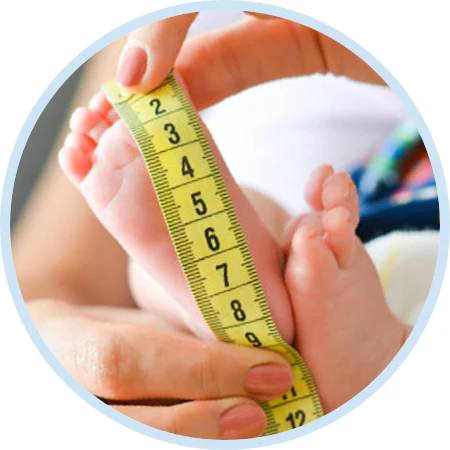
Image Source: www.striderite.com
Why Measuring Matters A Lot
Little feet are still forming. Bones are soft. Nerves are not fully developed. This means kids might not tell you their shoes hurt. Shoes that don’t fit can cause:
- Blisters and sore spots
- Toes that curl or get squished
- Trouble walking or running
- Poor foot growth later
Measuring lets you pick shoes that give feet room to grow and move. This is a big part of a good toddler shoe fitting guide.
When to Check Their Foot Size
Toddlers’ feet grow fast!
- Up to 3 years old: Check size about every 2-3 months.
- After 3 years old: Check size about every 3-4 months.
Also, look for signs they need new shoes:
- Their toes touch the end of the shoe.
- Shoes feel tight on the sides.
- They complain their feet hurt (if they can talk well).
- They take their shoes off a lot.
- There are red marks on their feet after taking shoes off.
Regularly measuring kids feet at home helps you catch these signs early.
Ways to Measure Toddler Feet
You have a few choices for measuring toddlers’ feet at home:
- Paper and Pencil: Simple tools you likely have. This is a common way for measuring kids feet at home.
- Kids Foot Measuring Device: Special tools made for this. Some are like the ones in shoe stores.
- Printable Chart: You print this at home and use it. A printable foot measuring chart can be handy.
Each way can work. Let’s look at how to use each one.
The Simple Paper and Pencil Method
This is easy and needs just a few things. It helps you get an accurate foot measurement for toddlers.
Gather Your Items
You will need:
- Two pieces of paper. Make sure they are bigger than your child’s foot.
- A pencil or pen. Keep it straight up and down when you use it.
- Tape (like masking tape).
- A ruler or a measuring tape.
- Socks your child will wear with the new shoes. Make sure they put them on first.
Getting Ready
- Find a hard floor. A carpet is too soft.
- Tape the paper to the floor. Do this near a wall.
- Put the paper longways, pointing away from the wall.
Position Your Child
This is where the standing foot measurement toddler part comes in.
- Have your child stand on the paper.
- Their heel should gently touch the wall.
- Make sure their foot is flat on the paper. Their toes should not be curled up.
- Try to get them to stand still. This can be tricky with toddlers! Maybe sing a song or give them a small toy to hold.
- Their weight should be on their foot. This is important for getting the right length and width.
If your child cannot stand yet (like an infant), you will measure differently. We will cover how to measure infant foot later. For a toddler, standing is best.
Tracing the Foot Shape
- Hold the pencil straight up and down (at a 90-degree angle) against their foot. Do not hold it at an angle under their foot.
- Carefully trace all the way around their foot.
- Make sure to get the widest part and the longest part.
- Go slowly around the toes and the heel.
- Trace both feet! One foot is often a little bigger than the other. You will use the measurement from the bigger foot.
Marking Length and Width
Once you have the outline:
- Draw a straight line from the very back of the heel outline to the tip of the longest toe outline. This is the length.
- Draw a straight line across the widest part of the foot outline. This is the width.
Measuring the Lines
Now, use your ruler or measuring tape.
- Measure the length line you drew. Measure from the heel line to the toe line. Write this number down. This is your measuring toddlers foot length.
- Measure the width line you drew. Write this number down.
Do this for both feet.
Check Your Work
- Did your child’s heel touch the wall?
- Was the pencil straight up and down?
- Was their foot flat?
- Did you trace both feet?
If yes, you likely have a good measurement.
Using a Kids Foot Measuring Device
There are tools you can buy to measure feet at home. These can make getting an accurate foot measurement for toddlers easier because they help hold the foot still and have clear marks.
Types of Devices
- Plastic Sliding Devices: These are common and easy to use. They have a place for the heel and a slider to move to the longest toe.
- Foot Rulers: Simple rulers with a heel stop.
- Brannock Device Toddler: The metal tool used in many shoe stores is called a Brannock device. There is a small version for kids. These are very accurate but can be more costly and might be hard to use on a very wiggly child compared to simpler home devices. Home versions are usually simpler and made of plastic.
How to Use a Device
Steps are similar no matter the device type:
- Put Device on Floor: Place the device on a hard, flat floor.
- Position Foot: Have your child stand on the device. Make sure their heel is snug against the back cup or line. This is another way to do a standing foot measurement toddler.
- Check Position: Ensure their foot is flat and straight on the device.
- Measure Length: Slide the bar or marker down to the tip of the longest toe. Read the size or measurement marked on the device.
- Measure Width (if your device does this): Some devices have a slider for width. Measure across the widest part of the foot.
- Measure Both Feet: Always measure both feet. Use the size from the bigger foot.
Using a device can be faster than the paper method. It helps keep things straight.
Using a Printable Foot Measuring Chart
Many shoe stores or websites offer a printable foot measuring chart. These can be a good option for measuring kids feet at home.
How They Work
- You print a chart on paper.
- The chart has lines or outlines for different sizes.
- You place your child’s foot on the chart to see which size they fit.
Tips for Using a Printable Chart
- Print Correctly: Make sure you print it at “100%” or “actual size.” Do not let your printer shrink it. There is often a test box (like 1 inch or 1 cm) you should measure with a ruler to check.
- Use on Hard Surface: Tape the chart to a hard floor.
- Position Child: Have your child stand on the chart. Their heel should line up with the heel line on the chart. Remember, standing foot measurement toddler is best.
- Check Longest Toe: See where their longest toe reaches on the chart. This tells you the size.
- Measure Both Feet: Use the bigger foot.
- Watch for Accuracy: These can be less accurate than other methods if not printed right or if the child moves a lot.
Comparing the Methods
Let’s look at the pros and cons of each method for an accurate foot measurement for toddlers.
| Method | Pros | Cons | Best For |
|---|---|---|---|
| Paper and Pencil | Cheap, easy tools to find, good length. | Can be hard to keep child still, width is tricky, tracing needs care. | First time measuring, on a budget. |
| Kids Foot Measuring Device | Often faster, designed for feet, better for width. | Costs money, needs the child to stand still on it. | Regular checks, if you buy shoes often. |
| Printable Chart | Free or low cost, shows sizes directly. | Accuracy depends on printing, can be flimsy. | Quick checks, comparing to a specific brand’s chart. |
Step-by-Step: The Paper Method Again, With Extra Detail
Let’s go over the paper method step-by-step again, making sure every part is clear for measuring toddlers foot length.
Step 1: Get Ready
- Gather your tools: paper, pencil, tape, ruler, socks.
- Put socks on your child. Choose socks they wear with the shoes you plan to buy.
- Find a hard floor area near a wall.
- Tape one piece of paper to the floor. Tape it well so it does not move. Place the long side of the paper away from the wall.
Step 2: Position the First Foot
- Have your child stand on the taped paper.
- Gently guide their heel back until it touches the wall. The paper should be under their foot.
- Make sure their foot is flat and straight. Their toes should not be curled. Their weight needs to be on this foot (standing foot measurement toddler).
Step 3: Trace the First Foot
- Hold the pencil straight up and down, right against their foot. Think of it like a building standing tall.
- Start at the heel (where it meets the paper, near the wall).
- Slowly draw a line around their foot. Go around the toes, the side, and back to the heel spot.
- Try to keep the pencil touching their foot the whole time.
- Ask for help if your child moves a lot! One person can keep the child calm or steady, while the other traces.
Step 4: Mark Length and Width on the Tracing
- Look at the outline you made. Find the point farthest back (the heel). Find the point farthest forward (the tip of the longest toe).
- Use your ruler to draw a straight line connecting these two points. This is the foot length.
- Now find the widest part of the foot outline. Draw a straight line across this part. This is the foot width.
Step 5: Measure the Lines
- Take your ruler.
- Measure the length line you drew. Start at zero on the ruler. Write down the number (in inches or centimeters). This is the foot’s length measurement.
- Measure the width line you drew. Write down this number too.
Step 6: Repeat for the Second Foot
- Untape the first paper if needed. Get the second piece of paper.
- Tape the second paper to the floor near the wall.
- Have your child stand on this paper with the other foot. Heel to the wall. Foot flat. Weight on the foot.
- Trace this foot just like you did the first one.
- Mark the length and width lines.
- Measure the length and width lines and write them down.
Step 7: Compare Measurements
- Look at the length numbers for both feet.
- Look at the width numbers for both feet.
- Which foot is longer? This is the number you will use for shoe size.
- Which foot is wider? This number helps you choose shoes that are wide enough.
Using the larger measurement from the bigger foot is key for getting an accurate foot measurement for toddlers for shoe buying.
Considering Wiggle Room
Shoes should not fit exactly to the measurement. Feet need space to grow and move. This is part of a good toddler shoe fitting guide.
- Length: Add about 1/4 to 1/2 inch (or 0.6 to 1.2 cm) to your length measurement. This gives toes room to wiggle and grow. Some shoe brands suggest a specific amount of extra room.
- Width: The width you measured is a guide. Shoes need to be wide enough at the widest part of the foot. It is harder to measure width perfectly at home with paper, but it gives you an idea. Devices can be better for width.
This added space is often called “growing room” or “wiggle room.”
Translating Measurement to Shoe Size
Here is where things get a little tricky. There is no one chart that works for all shoe brands. A measurement of 5 inches in length might be a size 7 in one brand and a size 8 in another!
- Find the Brand’s Chart: The best way is to find the size chart for the specific brand of shoes you want to buy. Look on their website.
- Use Your Length: Take the longer foot length you measured (plus the extra room you decided on). Find this number on the brand’s size chart. It will tell you which shoe size it matches. This is how you use your toddler shoe size measurement.
- Width: Some brands offer different widths (like Narrow, Medium, Wide). Your width measurement helps you choose. If your child’s foot is wide, you might need a Wide size.
Example (This is Made Up – Always Use the Brand’s Chart!)
Let’s say your child’s longer foot measured 5 inches (about 12.7 cm). You decide to add 0.5 inches (about 1.2 cm) for growth. Your target length is 5.5 inches (about 13.9 cm).
You look at Brand X’s size chart:
| Foot Length (Inches) | Foot Length (cm) | Brand X Size |
|---|---|---|
| 4.75 | 12.1 | 6 |
| 5.00 | 12.7 | 6.5 |
| 5.25 | 13.3 | 7 |
| 5.50 | 13.9 | 7.5 |
| 5.75 | 14.6 | 8 |
Based on this example chart, a target length of 5.5 inches matches a Brand X size 7.5.
Always double-check the brand’s chart! Do not just guess. Your toddler shoe size measurement is a starting point.
Beyond the Measurement: Checking the Shoe Fit
Getting the right measurement at home is the first step. The next step is making sure the shoe feels right on your child’s foot. This is the hands-on part of the toddler shoe fitting guide.
When They Try Shoes On
- Put the shoes on with the socks they plan to wear.
- Make sure the tongue is straight and the laces/straps are fastened not too tight, not too loose.
- Have your child stand up. This is important! Feet spread when standing.
- Have them walk around. Do they seem okay? Do they trip?
Checking the Fit While On
- Length: Gently press down on the front of the shoe. Feel for your child’s longest toe. You should have space between the toe and the end of the shoe. About a thumb’s width (or the 1/4 to 1/2 inch you added earlier) is usually right. It should feel firm, not soft, between your thumb and their toe.
- Width: Feel the sides of the shoe at the widest part of their foot. It should feel snug, not tight. You should not see bulges on the sides.
- Heel: Check that the heel is not slipping out when they walk. A little slip at first is okay with some shoe types, but a lot of slipping is bad.
- Flexibility: Bend the shoe where the toes bend. The shoe should bend easily there. The sole should not be too stiff.
- Overall Feel: Does the shoe seem comfortable? Is it too heavy? Is it easy for them to walk in?
Buying shoes online after measuring at home means you have to do this fit check yourself when the shoes arrive. If they do not feel right, send them back. Do not keep shoes that do not fit, even if the measurement seemed correct.
Special Case: How to Measure Infant Foot
Measuring infant feet is different because they cannot stand up reliably. You still want to get a measure infant foot length.
For Non-Standing Babies
- Supplies: Paper, pencil, ruler.
- Position: Have your baby lie down or sit in your lap. Their leg should be gently bent, and their foot flat against a surface (like a piece of paper on a clipboard or book).
- Mark: Gently hold their foot flat. Make a mark on the paper at the back of the heel. Make another mark at the tip of the longest toe.
- Measure: Take their foot away. Use a ruler to measure the distance between the two marks. This is the infant foot length.
- Compare to Chart: Just like with toddlers, use the brand’s size chart and add some wiggle room (maybe 1/4 inch or 0.6 cm for very young babies).
You can also use soft measuring tapes or string and a ruler for infants, but make sure the foot is straight and flat when marking. Some baby shoe charts are based on age, but measuring is always better than just guessing by age.
Tips for a Wiggly Toddler
Getting a standing foot measurement toddler who loves to move can be hard!
- Make it Fun: Turn it into a game. “Can you be a statue?” “Let’s draw your foot!”
- Distraction: Give them a toy, a book, or a snack to keep their hands and mind busy while you work.
- Be Quick: Have everything ready so you can do the tracing or measuring fast.
- Teamwork: One parent distracts or holds the child steady, the other measures.
- Practice: Maybe let them “measure” your foot first.
- Try Again Later: If they are really fighting it, stop and try again when they are in a better mood. A rushed measurement will not be accurate.
- Use Bedtime: Some parents find measuring works best when the child is sleepy and calm, perhaps just before bed.
Getting an accurate foot measurement for toddlers takes patience, but it is worth it for comfortable shoes.
Summing Up: Getting the Best Measurement
Measuring kids feet at home is a great skill to have. It saves time and helps you make better shoe choices.
- Always measure both feet.
- Always measure with the socks they will wear.
- For toddlers, use a standing foot measurement toddler.
- For infants, measure while they are lying or sitting with the foot flat (measure infant foot).
- Use paper, a device, or a printable chart. A kids foot measuring device can be very helpful.
- Measure length carefully (measuring toddlers foot length). Try to get width too.
- Add wiggle room (1/4 to 1/2 inch) to the length measurement.
- Use the brand’s specific size chart to find the right toddler shoe size measurement. Do not use a general chart.
- Always do a physical fit check once the shoes are on their feet, even if the measurement matched the chart. Follow a good toddler shoe fitting guide when they try the shoes on.
By taking the time to measure accurately, you can help ensure your child’s feet are healthy and happy in their shoes.
Frequently Asked Questions (FAQ)
Q: Should I measure my child’s feet in the morning or evening?
A: Feet can swell slightly during the day. Measuring in the afternoon or evening is often best. This gives you the size when their feet are likely at their largest.
Q: My child has different sized feet. Which size should I use?
A: Always use the measurement from the longer foot. Buying shoes that fit the bigger foot ensures neither foot is squished.
Q: How much space should be at the end of the shoe?
A: A general rule is about a thumb’s width between the longest toe and the end of the shoe when they are standing. This is roughly 1/4 to 1/2 inch (0.6 to 1.2 cm). This provides needed wiggle room and space for growth.
Q: Are printable size charts accurate?
A: A printable foot measuring chart can be accurate if printed at the correct scale (100% or actual size) and used properly on a hard surface with the child standing correctly. Always check the scale box on the printout. However, they can be less sturdy and harder to use on a wiggly child compared to a firm device.
Q: Do I need a Brannock device?
A: A standard metal Brannock device is a professional tool. While there is a brannock device toddler model, it’s usually not needed for home use. Simpler plastic kids foot measuring device options are much easier to use at home and give good results for measuring kids feet at home.
Q: My child’s foot measurement matches a size, but the shoe feels too big/small. What should I do?
A: Go with how the shoe feels on their foot when they are standing and walking. Shoe size charts are guides, but variations between brands and shoe styles exist. The physical fit check is the most important part of the toddler shoe fitting guide. If the shoe does not fit right, try a different size or style.