
So, why is a football called pigskin? The truth is, modern footballs aren’t made from pigskin, and they haven’t been for a very long time. The term “pigskin” is a nickname that stuck from the early days of the sport, when balls were indeed made from the inflated bladders of pigs.
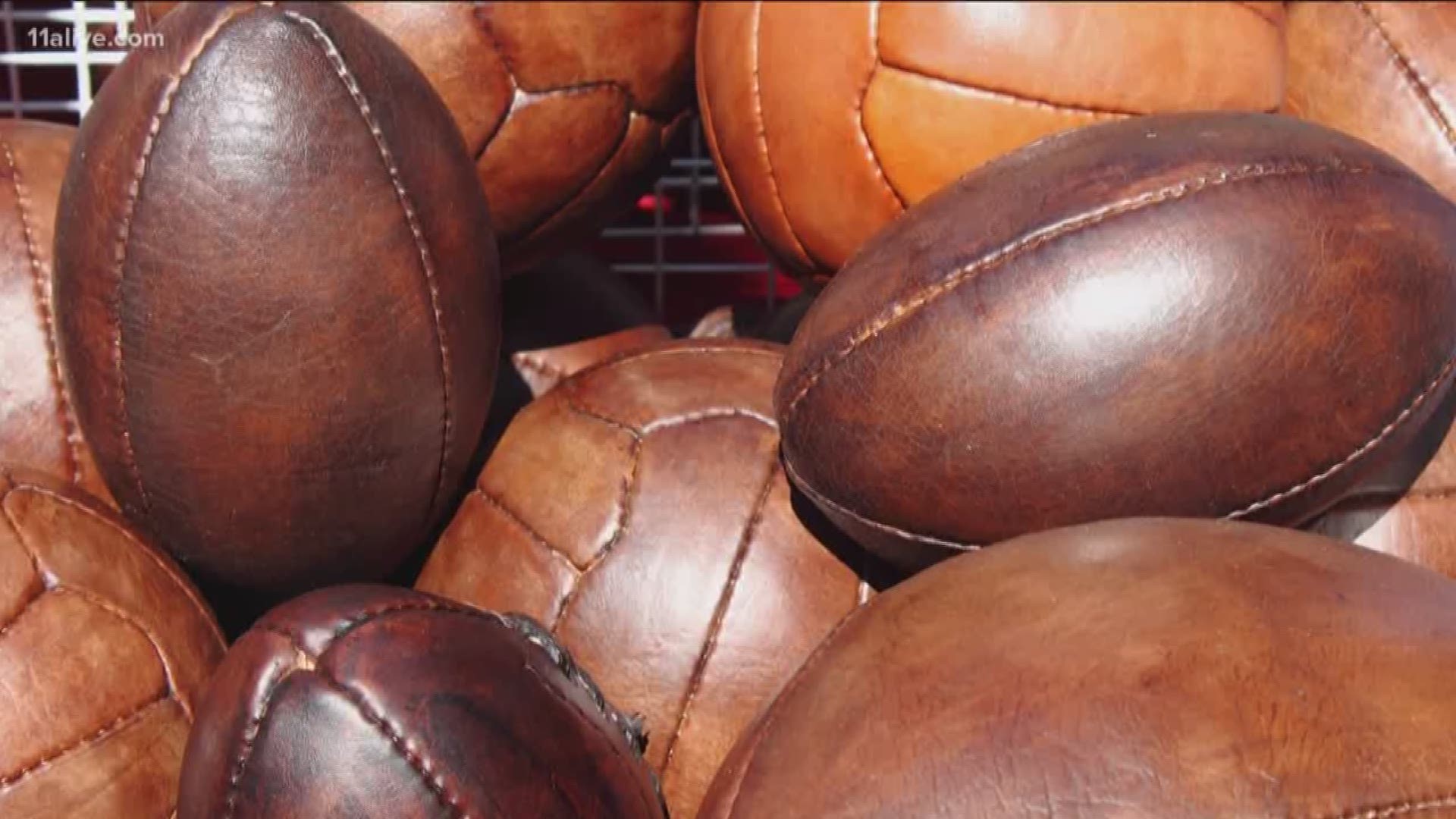
Image Source: media.11alive.com
The Curious Case of the Pigskin Nickname
The moniker “pigskin” for a football is a curious one, especially when you consider the materials used in the game today. While the word conjures images of muddy fields and athletic prowess, the actual origins of the term are rooted in the very early days of football history and the evolution of football as a sport. The nomenclature of football is a fascinating journey, revealing how simple, practical materials became enduring slang.
Early Footballs: From Bladders to Balls
To grasp why we call it pigskin, we need to rewind the clock. The very first versions of what would eventually become American football were not the precisely engineered, leather-bound spheres we see today. In fact, early footballs were far more rudimentary and closely resembled inflated bags.
The most common material for these early balls was the animal hide football, specifically the inflated bladder of a pig. Why a pig? Pigs were readily available farm animals, and their bladders, when cleaned and inflated, provided a reasonably round and resilient shape for kicking and carrying. This was a practical solution for a developing sport that lacked the specialized manufacturing capabilities we have now.
- Pig Bladders: These were the most common material for the earliest balls. They were cleaned, dried, and then inflated.
- Other Animal Bladders: While less common, bladders from other animals might have been used in a pinch.
- Early Construction: These bladder-based “balls” were often covered with leather strips for durability and a better grip, though this was also a primitive form of construction.
The simplicity of these early implements meant that the term “pigskin” wasn’t just a casual nickname; it was a fairly accurate description of the primary component of the ball. This direct association between the material and the object is key to why the name persisted.
The Transition to Leather
As the sport gained popularity and organized rules began to emerge, the need for more durable and standardized equipment became apparent. This led to a gradual shift away from inflated bladders towards more robust leather football construction.
The transition wasn’t instantaneous. For a while, footballs might have still incorporated animal bladders for the inner casing, but the outer shell was increasingly made from stitched leather panels. This provided a more consistent shape, better durability, and a more predictable bounce and trajectory.
The American football origins are deeply intertwined with rugby, and the evolution of their respective balls mirrors this shared history. Early rugby balls were also made from inflated bladders. As the sports diverged, so did the design of their balls, but the old nicknames often lingered.
Why “Pigskin” Stuck Around
Despite the move away from actual pig bladders, the term “pigskin” remained. Several factors contributed to this:
- Tradition and Nostalgia: Like many sports, football has a rich tradition. Old terms and phrases often become embedded in the culture, even when the literal meaning has changed. “Pigskin” evoked a sense of the game’s humble beginnings.
- Memorability and Character: “Pigskin” is a more evocative and memorable term than “leather ball” or “inflated bladder.” It has a certain grit and character that resonated with the physicality of the sport.
- Widespread Use: Once a nickname gains traction, especially among players and fans, it’s hard to dislodge. It became part of the common football terminology.
It’s a bit like calling a computer a “terminal” or a CD a “disk.” The technology has changed, but the old name persists because it’s familiar and part of the established lexicon.
The Modern Football: Materials and Manufacturing
Today’s footballs are marvels of engineering, designed for optimal performance in throwing, catching, and kicking. The days of using actual pig bladders are long gone, replaced by advanced synthetic materials and precise manufacturing techniques.
Materials in Today’s Footballs
Modern American footballs typically consist of three main components:
-
The Casing: This is the outermost layer, providing the surface that players interact with.
- Leather: High-quality, genuine leather is still the preferred material for professional and collegiate footballs. It offers superior grip, feel, and durability. The leather is specially tanned and treated to withstand the rigors of the game and provide a consistent surface.
- Synthetics: For recreational or practice balls, composite leather or durable synthetic materials are often used. These are typically more affordable and can offer good grip and water resistance.
-
The Bladder: This is the inflatable inner core that gives the ball its shape and allows it to be pressurized.
- Butyl Rubber: This is the most common material for the bladder. Butyl rubber is excellent at retaining air, ensuring the ball stays inflated for extended periods.
- Latex: While less common due to its tendency to lose air faster, some balls might use latex bladders for a slightly different feel.
-
The Lining: This is the layer between the casing and the bladder, providing structure and helping the ball maintain its shape.
- Nylon or Polyester Threads: Multiple layers of wound nylon or polyester threads are used to create a strong, supportive structure. The winding pattern and tension are crucial for the ball’s shape retention and bounce.
Manufacturing Process: A Far Cry from Bladders
The creation of a modern football is a sophisticated process:
- Panel Cutting: Leather hides are precisely cut into the distinctive “pebble” shape, typically four panels.
- Skiving and Stitching: The edges of the leather panels are “skived” (thinned) to allow for a tight seam when stitched. The panels are then meticulously stitched together by hand or machine, creating the iconic football shape.
- Bladder Insertion: The uninflated butyl rubber bladder is inserted into the partially stitched casing.
- Inflation and Shaping: The bladder is inflated to the correct pressure. As it inflates, it pushes the leather panels outward, creating the ball’s signature prolate spheroid shape. The laces are then sewn on, often around the seams.
- Final Touches: The ball is deflated slightly for shipping, the surface is often embossed with logos and branding, and then it undergoes quality control checks.
This contrasts sharply with the early footballs, which were essentially inflated animal bladders, sometimes loosely wrapped in leather.
The Influence of “Pigskin” on Football Terminology
The term “pigskin” has permeated football terminology in various ways, extending beyond simply referring to the ball itself.
Idioms and Slang
The word “pigskin” has become part of the idiomatic language of football. Phrases like:
- “Toss the pigskin”: A common way to say “throw the football.”
- “On the pigskin”: Referring to being on the field of play.
- “Punt the pigskin”: To kick the ball downfield.
These phrases are deeply ingrained in the sport’s culture, particularly in North America.
Historical Sports Equipment and Nomenclature
The history of sports equipment is full of examples where old names persist despite changes in materials. Examining historical sports equipment provides context. For instance:
- “Baseball”: While baseballs today are made with cork or rubber cores, wound yarn, and leather covers, the name “base ball” likely originated from earlier games played with vaguely ball-like objects.
- “Ping Pong”: The name for table tennis comes from the sound of the ball hitting the paddles and table.
The nomenclature of football follows this pattern. The name “football” itself, while descriptive, doesn’t specify which kind of football (soccer, rugby, American football). The specific term “pigskin” arose to distinguish the American game and its particular ball, even as the material changed.
Table: Evolution of Football Materials
| Era | Primary Ball Material | Description | Nickname Association |
|---|---|---|---|
| Ancient/Early | Inflated animal bladders | Simple, often round or oval, made from cleaned and inflated animal organs. | Pig bladder dominant |
| 19th Century | Inflated bladders with leather cover | More structured, with leather panels stitched around an inner bladder. | Still “pigskin” |
| Late 19th/Early 20th Century | All-leather construction with bladder | Development of the prolate spheroid shape, more robust stitching. | “Pigskin” remains |
| Mid-20th Century Onward | Leather casing, butyl rubber bladder, synthetic lining | Standardized manufacturing, specialized materials for performance. | “Pigskin” as slang |
| Modern | Premium leather or synthetic, butyl bladder, strong lining | Advanced materials and construction for durability, grip, and aerodynamics. | “Pigskin” as slang |
This table illustrates the tangible shift in football history regarding the materials used, yet the enduring legacy of the “pigskin” nickname.
Why Not “Cowhide” or “Leather-Skin”?
If modern footballs are made of leather (often cowhide), why didn’t the nickname evolve to something like “cowhide” or “leather-skin”?
- The Pigskin Association: The initial and most widely used material for the inflated inner part of the ball was the pig’s bladder. This gave “pigskin” its initial foothold. Cowhide was used for the outer casing, but the bladder was the core component that gave the ball its form.
- Sound and Rhythm: “Pigskin” has a distinct sound and rhythm that is catchy and memorable. “Cowhide-skin” is a bit more cumbersome.
- Establishment: By the time high-quality cowhide became the standard for the outer casing, “pigskin” was already firmly established as the slang term for the football. The nickname had taken root and become an integral part of the sport’s vernacular.
The term “pigskin” is a perfect example of how football terminology can become detached from its literal origins. It’s a linguistic fossil, a remnant of a past era that continues to be used out of habit, affection, and tradition.
Debunking Myths: Are Modern Balls Ever Made from Pigskin?
It’s important to clarify that modern, regulation-size American footballs, particularly those used in professional and high-level collegiate play, are definitively not made from pigskin. The reasons are practical and performance-based:
- Consistency: Pigskin, like any animal hide, can have variations in thickness, texture, and durability. This would lead to inconsistent ball performance, affecting accuracy and feel for players.
- Durability: While tough, pig bladders are not as robust or air-retentive as modern butyl rubber bladders.
- Hygiene and Processing: The complex cleaning and processing required for animal bladders would be more time-consuming and costly than using synthetic materials for the bladder.
- Regulation Standards: Governing bodies like the NFL and NCAA have strict specifications for football size, weight, and construction materials. These standards ensure fair play and are met using modern, reliable materials.
The evolution of football equipment has been driven by a desire for greater control, consistency, and durability. Using actual pigskin for the entire ball would contradict these goals.
The Enduring Legacy of “Pigskin”
The story of why a football is called pigskin is a charming anecdote from football history. It highlights how:
- Practicality breeds innovation: Early players used readily available materials to create the tools of their sport.
- Language evolves organically: Nicknames and slang can become more enduring than literal descriptions.
- Tradition holds strong: Even as technology and materials advance, cultural associations and historical terms often remain.
When you hear a commentator say, “He’s got a cannon for an arm, and he’s firing the pigskin downfield,” remember that they’re referencing a legacy that began with a humble pig bladder. The American football origins are more rustic than many realize, and the term “pigskin” is a direct, albeit outdated, link to that past. It’s a testament to the sport’s journey from its informal beginnings to the globally recognized phenomenon it is today. The leather football of today carries the spirit and the nickname of its much simpler ancestors.
Frequently Asked Questions (FAQ)
Q1: Are modern footballs really made from pigskin?
A1: No, modern regulation footballs are made from high-quality leather (typically cowhide) or synthetic materials, with a butyl rubber bladder. The term “pigskin” is a nickname from the early days when balls were made from inflated pig bladders.
Q2: When did footballs stop being made from pig bladders?
A2: The transition away from pig bladders happened gradually throughout the late 19th and early 20th centuries as manufacturing improved and demand for more durable and consistent equipment grew. Leather casings and more robust bladders became standard.
Q3: Why is the nickname “pigskin” still used?
A3: The nickname stuck due to tradition, nostalgia, and its memorable, characterful sound. It became deeply embedded in football culture and terminology, even after the materials changed.
Q4: Was soccer ever called “pigskin”?
A4: While both sports evolved from similar ball games, the term “pigskin” is almost exclusively associated with American football and its specific ball shape and history. Soccer balls have their own historical development and terminology.
Q5: What are the main parts of a modern football?
A5: A modern football consists of a casing (leather or synthetic), an inner bladder (usually butyl rubber), and a lining (synthetic threads) for structural support.